

The Cross - Reconciled to God, each other, the world
LENT 5
Reconciliation. Colossians 1:19-20
Welcome to SBD. Through the sundays of Lent leading up to Easter we’re focussing on one of the central events in the Christian faith, the cross of Jesus Christ. In these last weeks we have seen how the cross deals with our guilt (justification), our slavery (Redemption) and our shame (cleansing/expiation). This week we’re going to focus on how the cross deals with our alienation. We’re going to think about how the cross reconciles. We’re going to do that by looking at some verses from our reading in Colossians 1 on page … vv19-20.
What do I mean by alienation? Here’s an ancient story.
Once a man and a woman lived in an unimaginable paradise. They had everything they could possibly want. They enjoyed an intimate relationship with God, with one another and with the world in which they lived. They had a freedom to know and to explore.
But, they chose to betray the trust God had given them… Soon, instead of rushing to meet him, they hid from him; instead of selflessly loving one another, they began to blame and accuse; instead of developing the richness of their home, they experienced it as a place of frustrating labour. The story ends with an eviction. The couple are exiled to the east, from where no good thing can come. They are alienated from God, from one another and from home.
The Jewish Intellectual Edward Said, begins his essay Reflections on Exile with these words: “Exile is strangely compelling to think about but terrible to experience. It is the unhealable rift forced between a human being and a native place, between the self and its true home: its essential sadness can never be surmounted.”
Now, I am sure many of you are familiar with that story from the opening chapters of the Hebrew Bible. It’s a story which has been told by Jews and Christians for thousands of years. It gives an account of our experience of tense sadness in the world.
See on the one hand we’re aware that the world is a place of great beauty and goodness. It is full of endless riches and feels like home. [Science museum - Testament to the work of human discovery and ingenuity for the common good - you can watch IMAX 3D film about life under the oceans ..extraordinary - coral reef, touch it. - miracle: on a precise day once a year the coral spawns - new life… ] endless riches.
But, we are also aware that the world is a hard place in which to make our home. often something is wrong. We feel displaced. Something is wrong. [Our work in the world, without which we feel less than human, often feels nothing like discovery for the common good. And more like slog and frustration. It can easily become selfish. Those same coral reefs that regenerate every year cannot do so fast enough to counter their destruction caused by human greed. Great beauty and goodness in the world but…something is deeply wrong
We’re aware too that human beings are extraordinary creatures with an intense ability to create and to love. This last week i cam across another amazing growing charity operating in Hackney. The happy baby community provides support for women who are pregnant or have small children and are survivors of trafficking. But, we are also aware that human beings struggle to get on. We argue, we fight, we wage war, we retreat from one another. [Syria: 450k dead in 7 years/national, racial, class pride - we flock with those like us, we love those who love us. Roots of Bitterness can set in.
Finally, many people are aware that there is more to the world than meets the eye. There is a sense of something, maybe somebody, which is transcendent. [Walk the city. encounter churches, temples, synagogues, meetings in homes where - something transcendent is being sought] But, we’re also aware that the transcendent is elusive. We often ignore it or struggle to find it. When we encounter it we often recoil from it or reject it or hate it. [Last week have you found even yourself withdrawing from God?].
All this is what it means to be alienated from the world, from each other, from God. We live east of Eden.
Now the story says that When alienation sets in there is need for reconciliation. Parties who are set against each other need to be brought back together. Severed relationships need to be mended and restored. The ancient Jewish prophets imagined humanity reconciled to God, to each other and to the world. They called it, Shalom, Peace. [Extraordinary set of images to imagine what that will be like Wolf/lamb; child/snakes nest] All things will be reconciled
Colossians 1:19-20 tells us that God has already done that comprehensive work of reconciliation through the blood of Christ shed on the cross. Have a look at it.
Notice first God’s passionate desire for reconciliation. God takes the initiative. ‘God was pleased to have all his fullness dwell in Christ’ [Many of us when we fall out with each other. We specialise in the silent sulking approach, you don’t say anything but you let the other person know that they have deeply wounded you and you wait for them to come and talk to you] Colossians 1 says God does not sulk in a corner brooding over how mean human beings have been to him. Rather, he draws close. He holds nothing back. He is pleased to allow all his fullness to dwell in Christ who dwells with us in order that he might reconcile all things to himself.
Notice too that reconciliation is costly. The God who draws close in Christ does so to shed his blood on the cross. It’s about violent death. At one level we know that reconciliation is costly. If you have ever fallen out with someone then it will often take a lot out of you emotionally, spiritually and physically to restore the relationship. Have you ever felt that? And the greater the offence, the greater the cost particularly if you are the innocent party.
[Marilyn Robinson’s novel Home is the sister novel to her acclaimed Gilead. It tells the story of Glory Boughton - a teacher in her 40s who has never married and returns home to care for her dying Father. At the same time her youngest brother, Jack, the prodigal son, who has been gone twenty years, returns home seeking refuge and to make peace with the past. He is welcomed with love.. But reconciliation is costly. Old wounds are opened. Deep hurts and regret. And the fear of a repeat performance looms..
Reconcilation is costly. The greater the offence the greater the cost particularly if you are the innocent party.
God was pleased to have all his fulness dwell in Christ, and through him to reconcile to himself all things… by making peace through his blood shed on the cross.
God draws close as the rejected creator and lover in order to make peace with his creatures who have chosen to be… his enemies.
21 Once you were alienated from God and were enemies in your minds because of[g] your evil behavior. 22 But now he has reconciled you by Christ’s physical body through death to present you holy in his sight, without blemish and free from accusation—
Enemies? Now you might say.. hang on a minute. Isn’t that overstating the case? I might not be that interested in God but I am not his enemy. We may not be on speaking terms but I don’t wish him any ill.
Maybe it’s only when we get up close to the God of the Bible that we realise we might be his enemy after all. See, what if I said to you that this God says that He alone is the way to spiritual life and you can contribute nothing, you must come to him. What if I said to you that this God demands that you serve him with every part of your life that he has given you? What if I said to you that this God says you can hold nothing back from him? He wants everything.
Maybe you don’t feel quite so neutral towards him then. Maybe we say ‘no’ and we fight him for control of our life. Maybe it’s not so far fetched to say that we are his enemies in need of reconciliation.
Neither is it simply a one sided affair. As if we don’t like God and that hostility on our part just needs to be overcome by some good PR. We just need to see how great God actually is. No, the enmity is on both sides. Our human rejection of God, our taking of the gifts but rejecting the giver. Our human self-love. Living like we are God. All this that the Bible calls sin - has provoked God’s righteous, holy anger.
We have rejected God in his world and he is perfectly within his rights to reject us. It’s a punishment we perversely welcome and deserve.
But still he comes after us in love. Even while we are still his enemies he loves us and he gives himself for us. In the shedding of his blood he does the costly work of reconciliation. In Christ, God takes upon himself his anger against our sin so that we will never have to bear it. He takes our place. This is an incredible discovery.
Once when i was at university and a foolish young man, I inadvertently had managed to offend this guy who was a bit of a nutter. Apparently he was on his way round to my house to ‘kill me’ some friends of mine waited outside my house to bar his way incase he came. All the time i was totally unaware that this was happening - I was sleeping in my bed (suffice to say the misunderstanding was cleared up). But look, we were in terrible danger, having rejected God, perhaps we weren’t even aware of it. But while we were sleeping soundly in our beds, Jesus met that danger in our place and dealt with it. In paying for our sins Jesus absorbs the deep brokenness and alienation which have invaded reality and he mends it. He makes possible a new relationship between God and humanity, within humanity and between humanity and the world. In all the circles of our alienation He creates and brokers peace.
The Apostle Paul says an extraordinary thing in Ephesians 2 – he says, “Christ is our peace”. That’s unique. All the prophets of the world’s religions in one way or another call their followers to live lives of peace; all the people of good will who do the hard work of reconciliation from marriage counselling to inter-community relations to international diplomacy invite people to make peace. But, here we are promised that there is a man in whom dwells all the fullness of God and he is our peace!
This is an extraordinary claim.
[Imagine: Tony Blair – UN Envoy for Middle East – Jerusalem “I am your peace!” unimaginable. (actually maybe you could imagine it but would be ridiculous. no mere human being would make that claim.] Christ is our peace. An extraordinary claim.
Let me end by working that out in the three circles of alienation where Jesus reconciles all things to God. First of all he turns us from being God’s enemies to being God’s friends as we trust in him. Access to God! He allows us to draw near to God the Father with confidence. Important to hear that because Maybe some of us are fearful of drawing near to God. We think that we’re not good enough. Maybe some of us are working hard to try and get close to God. Maybe some of us have allowed ourselves to grow distant from God. Listen: Jesus is our peace. Rest in Him. There is hope. [This is the great reality of adoption. Through union with Christ the Son, we now have the same Father. Jesus taught his disciples to pray Our Abba. More intimate word than Father.. more respectful than Daddy. Dad. Pray to your Dad in heaven. This is who he is to you. You who were once God’s enemies as you rest in Christ’s reconciling work - you now are able to call him Abba]
But, secondly Jesus our peace restores us to relationship with one another. If you put two or more human beings together for any length of time then conflict will emerge. There are no exceptions. Our default is to quickly blame each other. Or retreat into our comfortable tribes. The good news of the Gospel is that Christ is our peace. If we rest in him and see the cost of our reconciliation then maybe we stop blaming the other and are open to forgive. Christ our peace can and does restore broken human relationships. [CTC Europe. Prague, Urban church plants 50 different cities, 20 European countries. Our best friends - the Germans. Berlin and Hamburg guys.. Communion - moving because 100 years ago.. and again 75 years ago our ancestors were killing one another. And now we break bread together because Christ is our peace.]
In the church of Jesus Christ, God is creating a new humanity - a disparate people, enemies, people who are chalk and cheese - he makes us One in Christ. Jesus says doesn’t he: ‘Don’t just love those who love you (who are like you) - everyone does that. Love your enemies.. Love the different. Love those who are difficult to love. Then you’ll be true children of your Father in heaven.’ In our church, in your workplace, at the schoolgates - move beyond your comfort zone - talk to people you’ve never talked to before. Find out about them. Christ is our peace. We commit ourselves to the peace of our church and our communities and our world because of Christ.
Finally, Jesus our peace ultimately reconciles the whole created order to God – all things whether on heaven or on earth. His body in which God’s fullness dwells, is raised from the dead. He promises that in and through this body the whole material created order will be renewed. We will one day no longer be alienated in this world. It will once again be our home. So, in and through Christ our peace we anticipate that life now. We seek the good of the earth. We pursue shalom. Because we know in Christ who is our peace there is hope.
Christ is our peace. Through him God has reconciled to himself all things in heaven and on earth by making peace through his blood shed on the cross.

The Cross - Removal of Shame
The idea of being clean through and through. Body and soul and mind. Pure, white as snow is very appealing isn’t it. To be clean, fresh, light and clear. That’s what we’re thinking about today.
As we’re approaching Holy week and Easter in this season of Lent we are thinking about the Cross; the death of Jesus and what it achieves;
It Rescues us from Judgement
Redeems us from Slavery
and today we’ll see that the Cross removes our Dirt and Shame
The Cross 3
Expiation
Leviticus 16
The idea of being clean through and through. Body and soul and mind. Pure, white as snow is very appealing isn’t it. To be clean, fresh, light and clear. That’s what we’re thinking about today.
As we’re approaching Holy week and Easter in this season of Lent we are thinking about the Cross; the death of Jesus and what it achieves;
It Rescues us from Judgement
Redeems us from Slavery
and today we’ll see that the Cross removes our Dirt and Shame
Cleanses us through and through.
The Bible has a radical way of describing this.
It talks about the BLOOD of jesus - which is another way of speaking about his death - cleansing us. Cleansed by blood!
It’s a Strange image..
Blood leaves one of the hardest stains to remove. We forget that, living in the era of daz ultra and ariel automatic. But in an age that knew little if anything about detergents blood would mark the end of a cherished garment - ruined. This idea then ..Revelation 7:14 ‘they have washed their robes and made them white in the blood of the lamb’”must have been doubly startling for their original readers.
The cross, the death of Jesus, his blood - cleanses..
Now, the OT book of Leviticus, from which our reading came, is the Bible preparing us to understand the cleansing of the cross through the laws and instructions given to Israel about the problem and the removal of uncleanness.
The people of God, Israel, redeemed from slavery in Egypt, are living in the desert and God teaches them how to be his people and one of the strange things you notice is that there is almost an obsession with the idea of cleanness and purity ..
certain animals are clean and can be eaten, others are unclean and so were not to be eaten. contact with a dead body, human or animal, makes you unclean for a period of time.
if you’re a woman who is menstruating, or who has given birth, or if you’ve just had sex, or if you have other bodily discharges - you are unclean for a time. It’s not necessarily a moral thing you’re just unclean.
if you have a skin disease -you are unclean and have to announce your presence when you’re out and about with the words ‘Unclean! Unclean!’ !!!
and it’s not just people.. places and objects could be made unclean - homes, clothes, utensils and would either need to be destroyed or made clean again..
what’s this all about?
some have argued that what we have here are primitive hygiene laws.. some may have been helpful others we now know were utterly unnecessary and in fact unnacceptable..
worse still, it’s priests who are given the crucial role in assessing what is clean and what is not! this seems to reinforce the primitive nature of things. In the days before doctors and other medical personel, clergymen often acted as principle advisers on health matters. Today, mercifully, things are different..
But I don’t think that the Bible implies that these laws on cleanness and purity were first and foremost about health. The reason the priests were involved was because these laws and behaviours in the community were pointing to an uncleanness more serious than being unwell or physically less than whole.. God is teaching us here about an inner, spiritual, heart uncleanness..
Listen to the words of Jesus in Mark 7 . He’s speaking to his disciples:
18 “…nothing that enters a person from the outside can defile them.19 For it doesn’t go into their heart but into their stomach, and then out of the body.” (In saying this, Jesus declared all foods clean.) 20 He went on: “What comes out of a person is what defiles them. 21 For it is from within, out of a person’s heart, that evil thoughts come—sexual immorality, theft, murder, 22 adultery, greed, malice, deceit, lewdness, envy, slander, arrogance and folly. 23 All these evils come from inside and defile a person.”
Jesus says there is a spiritual uncleanness within the human heart which spews out thoughts and attitudes and behaviours that are evil - that is they fail to love God and others, they are self serving and destructive. These things defile us. They pollute our lives..
Existentially - the way these things defile us is through deep seated feelings of shame and fear and dislocation..
Right at the beginning of the Bible in Genesis 3 when our human parents, Adam and Eve, reject God’s authority and eat the forbidden fruit.. choosing to do life their way… they experience fear.. they hide from God when he comes for his daily walk with them in the garden; where before there was trust now there is fear.. they experience overwhelming shame .. before their sin, we’re told that the man and woman were naked and felt no shame.. now they cover up with fig leaves. They’ve taken God’s place - decided to run their lives and immediately they feel totally out of their depth and out of place - a psychological dislocation - shame. and they are alienated from one another - they shift blame. before they had perfect fellowship but community is now wrecked..
so sin defiles with shame and fear and dislocation
these things of course are complex just as in leviticus sometimes the things that defile are not things of our own doing so in part it will not be our sin that defiles us but the sins of others.. wrongs that have been done to us.. or the good that was withheld us.. sin, whether our own or someone elses defiles us..
and it is very difficult to remove this sense of defilement of dirtiness..
Trevor Nunn the veteran theatre director famously said that Shakespeare had ‘more wisdom and insight about our lives’ than any religious tract. I would argue that the two are not mutually exclusive. Wasn’t Shakespeare reflecting on the Bible’s teaching of the stain of sin as Lady Macbeth scrubs and scrubs her hands to remove spots of murderous blood that she can still see? ‘What, will these hands ne’er be clean’
—
But the book of Leviticus goes further still. The defilement of sin results not just in debilitating feelings of shame but in separation from God..
When Israel camped in the wilderness they pitched their tents with a clear boundary around the campsite and at the very centre of the camp was God’s tent - the tabernacle: God present among his people. The tabernacle itself had clear boundaries, an outer court, that gave way to an inner court, from which could be entered the holy sancturay and then at the centre the holy of holies. Now no one could enter the holy of holies where the ark of the covenant, God’s throne was - a great thick NO ENTRY curtain hung at the entrance. Well, one man on one day of the year could enter but we’ll come to that.. Priests who worked in the inner court and holy sanctuary could only enter there after ritual washings and bathings and putting on clean clean clothes.. People who, according to those instructions we talked about earlier, were temporarily unclean could not come into the outer court at all. And people and things who were very unclean were put outside the camp completely! The place of shame.. This exact set up was repeated when Israel later settled in the promised land and God’s tabernacle became the Temple at the centre of the walled city of Jerusalem.
You see what it was teaching?
That God is clean.. Pure.. Holy. That people are unclean, impure, not holy. we cannot come into God’s presence as we are. His holiness would consume our impurity like Fire consumes hay!
So here’s the problem - defiling feelings of shame, fear, dislocation point to a deeper problem of alienation from God. That if unchecked will go on and on forever..
We desperately need to be cleansed, to be washed clean.. Well thank God that he is the God who removes our shame.
—
It would be an interesting exercise to do a word search of the Bible and search for all references to dirt and uncleanness. A Biblical theology of dirt.. the Problem of sin. Then do a word search for ‘cleanse’ or ‘water’ or ‘fountain’ and what you’d see as the OT story unfolds are promises of cleansing begin to come. The OT forsees a day when, as the prohoet Zechariah puts it, a fountain will be opened to cleanse people from their sins..
And the fore-taste of that promise is here in Leviticus 16. The sacrificial system of the temple and the day of atonement. How could sinful people approach a holy God? How could the offence of their sin be taken away so they could come to God? Answer: Through sacrifice - an animal dies in my place. The goat/lamb - same thing- It bears the wrath of God against my sin for me. And I am therefore free to approach God. Do you see? In a real sense - Everything is cleansed by the blood of the lamb..
Did you notice in the reading the second lamb/goat? The scapegoat. The scapegoat, the second lamb illustrates the effect of the first lamb. lamb number one pays for my sins which means - lamb no2 - that my sins, my defilement has been removed from me far away - as far as the east is from the west that’s how far he has removed our sins from us. And removed from God my sins no longer stand in the way of knowing God.
Jesus Christ in his death on the cross he is the lamb whose blood cleanses
The NT book of Hebrews shows us how Jesus is the fulfilment of the OT sacrifices. Hebrews 13v11. ‘The high priest carries the blood of animals into the most holy place as a sin offering there’s the idea of sacrifice - the blood of the lamb is payment in my place. But look at what the payment is for - uncleanness. the verse continues but the bodies are burned outside the camp. And so Jesus also suffered outside the city gate to make the people holy through his own blood.’
What’s it saying? It’s saying that God himself, Jesus Christ is the sacrificial lamb and scapegoat, paying the penalty for all our uncleannesses and bearing them away. This is the wonder of the gospel. That Jesus, the perfect, pure, clean eternal son of God.. became the most filthy, defiled, polluted being that the world has ever seen as he hung on the cross bearing our uncleannesses in order to pay their price and remove them. He was sent outside the camp. He did it for us. It is his death, his blood that makes us clean. He is the fountain opened to cleanse us from our sins. And when he breathed his last on the cross the gospel writers tell us that the curtain in the temple barring the way to the holy of holies that great ‘keep out’ sign - was torn in two from top to bottom.
There is a fountain filled with blood drawn from Immanuel’s veins. And sinners plunged beneath that flood lose all their guilty stains.
So 2 crucially applications
First. Be cleansed. Jesus shed his blood for your cleansing. To remove the stain that separates you from God. Have you thrown your life upon Jesus Christ - The faith that unites you with his saving death? Do that. be cleansed.
Second. Be deeply cleansed. Cleansing has been accomplished at the cross for all who would trust in christ. Accomplished. Objectively - in Christ you are clean. But cleansing then needs to be applied to our hearts - to our fear, our shame, our sense of alienation from God and one another.
All of us, to a greater or lesser degree, still carry shame in our bodies. The shame that comes from our sin or from the sin of others. For example if, for whatever reason, we didn’t really recieve the love from our parents that we needed we can be left in a place of shame about ourselves and our presence on earth. ‘something’s wrong with me, i’m unwanted, i’m just a burden’ The thought of further burdening people by asking for help fills us with shame so we’re Isolated and Independent having to create an unassailable place of safety within ourselves. Avoiding rejection, disappointment, challenge, detection is exhausting and impossible and we may end up seeking relief in addictions which only add to our shame!
And worst of all we struggle to grasp God’s grace or even need it. We can’t believe that grace includes us - in fact we can usually make a very strong case for it not applying in our case. We may feel ambivalent, we don’t really want God - we keep him at arms length. And yet if we can stop this inner protest for a moment, quieten our hearts, we realise how barren our souls are, how much we need God’s blessing.
So Shame needs to be renounced. It is not ours to carry. It belongs to Christ on the cross. We need to intentionally name shame for what is is and pass it over to God to take for us. In exchange we can make room and receive our inheritance of honour and blessing and security from God.
Maybe try this, try writing a letter to God outlining your shame - naming the things. And then leave it at the cross. allow Jesus to bear it for you and wait to receive back your true honour and comfort and peace right into your whole being replacing your shame. It’s something we may need to repeat as more surfaces.
The book of Hebrews 12v15 written to the whole church says: “See to it that no-one misses out on the grace of God.” See we are here for each other. I’ve said to you before that if we can share our hidden struggles with a trusted friend shame cannot survive. the opposite of addiction is not sobriety but connection, community. We need one another.
Let me end with this:
In the parable of the prodigal son, one of the reasons the father is looking for the son is so that he can run to meet him. This is regardless of the humiliation of a stately gentleman lifting his robes and quickening his step that society would have felt at the time. The scene would have played out in front of the whole community, who knew of the son’s disresepect to his father, they would have been ready to lynch the son should he ever dare to show his face there again. But the father made sure that he reached him first and so dictated very clearly the terms of his return - the father took on the humiliation so that the son could come home with dignity.
Jesus has taken the path of total shame to secure our return to the father’s house. And he will be with us as we make our way to the cross and he will meet us there with his resurrection and healing. He makes me clean.

The Cross - Redeemed from Slavery
The scriptures preach to us the multifaceted achievements of the cross. The death of Jesus rescues us from judgement, removes our shame, reconciles us to God.
and - what we’re thinking about today - The cross Redeems you
To redeem is to purchase something or more accurately to buy something back. It’s the language of the pawn shop where I redeem my property - i pay to get it back.
Or it’s the language of ransoming a hostage or liberating a captive slave. Purchasing freedom.
The cross of redemption tells you what you are really worth. what you are worth to God.
Lent 2
Redemption
Exodus 12:1-13
During this season of lent we are thinking about the Cross. The death of Jesus which lies at the very centre of Christian faith.
The scriptures preach to us the multifaceted achievements of the cross. The death of Jesus rescues us from judgement, removes our shame, reconciles us to God.
and - what we’re thinking about today - The cross Redeems you
Redemption
To redeem is to purchase something or more accurately to buy something back. It’s the language of the pawn shop where I redeem my property - i pay to get it back.
Or it’s the language of ransoming a hostage or liberating a captive slave. Purchasing freedom.
The cross of redemption tells you what you are really worth. what you are worth to God.
The question of worth is critical to us. Tough calculations are being made about peoples’ worth every day, whether cynically or with heavy hearts. Company directors must do this as they plan for the future with the constant risk of treating employees as mere resources or even economic liabilities. Military leaders face similar issues. How do you value the life of one man caught behind enemy lives? Was saving private ryan a price worth paying?
For most of the time however it is the sense of our own worth that most concerns us. who am I? am i worth anything at all. does it matter what i do? does it matter if i hurt myself or others?
What am I worth?
The cross of redemption tells you what you are really worth, bestows a value upon you that can transform you.. sets you free
Redemption in the Bible has several key ideas which we’ll look at in turn
- 1. Enslavement. being held captive.
- 2. Redemption. A price paid.
- 3. Possession - being bought back, restored to an owner.
So let’s look at each of these in turn beginning with slavery, captivity
YOU WERE ENSLAVED
The central historical event in the OT part of the bible, in the history of God’s people, the Jews was the Exodus from Egypt. God’s people were in Egypt from the time of Jacob and Joseph when they were a large extended family enjoying the favour of their Egyptian hosts. But over the years the family has grown into a small nation. And this growing immigrant people become a threat to the new Pharoah. He begins to persecute and oppress them with ever increasing cruelty. Persecution becomes slavery and slavery leads to death. Pharoah slaughters the Hebrew firstborn. And the people cry out to God.
Slavery is an awful thing isn’t it?
Steve McQueen’s brutal depiction in his film adaptation 12 years a slave depicts the inhuman cruelty of slave owners on the plantations. Modern slavery is a tragic reality.
The Bible condemns all slavery and also uses the slavery of the Exodus as an illustration of a deep and universal enslavement. A Spiritual slavery.
We love to think that we’re free. Freedom is one of the highest values in our culture. ‘It’s my life. I do what i like. Nobody should tell me what to do. especially God. Well, we’ve got rid of God now - we’re free.’
But here’s what the Bible says. Human beings are made to worship. We all seek our significance, satisfaction, security beyond ourselves because we’re creatures made by and for God. When we stop depending on God for those things that we need we don’t cease to be worshippers - no we must find other ‘gods’ beyond ourselves from which to derive security and significance.. and so we make good things like work, or relationships or pleasure into ultimate things. good desires become overblown and sinful and destructive. we devote the worship of our time and energy and dreams and expectations to things that can never fully deliver and so we become enslaved.
Jesus said, ‘anyone who sins is a slave to sin’ anyone who rejects the rule of God becomes a slave to a different master.
sometimes this slavery to sin is very evident where the raging thirst and the empty promises of a false god leads us into patterns of addiction. our sinful desires control us, master us…in destructive ways.
but often slavery can have an almost respectable facade but we are nonetheless slaves.. he works so hard, she’s devoted to her family, he’s living the dream..
There’s no way out of slavery.. our fallen nature means that our desires are boundaried and desiring God is not within our ability.
And furthermore slavery leads to death. It’s the Law.. The law of sin and death. God’s Law. That if you sin you must die. It’s unavoidable. We’re Enslaved.
We desperately desperately need a redeemer!
We need a redemption
2. To be Redeemed.
Let’s go back to ancient Egypt and the Exodus.
Pharoah the slave master was killing first born sons. But one Israelite child is hidden and survives..
Moses … drawn out of the bullrushes ..by Pharaoh’s daughter no less. Brought up in the palace
becomes God’s instrument of redemption.
God speaks to Moses at the burning bush and says ‘I have seen the misery of my people in Egypt. I have heard them crying out because of their slave drivers, and I am concerned about their suffering. 8 So I have come down to rescue them from the hand of the Egyptians’ In the reading we had from Exodus 6 God speaks about redeeming with his mighty hand, with an outstretched arm and mighty acts of judgement..
The sense is that God is going to expend a huge ransom price to redeem his precious people..
He overcomes the will of Pharoah through 10 plagues. The last plague - the angel of judgement will pass through Egypt bringing death! But families can be spared if they instead kill a lamb and paint it’s blood on their front door. Death will see the blood and passover.
The last plague breaks Pharoah’s will. The slaves pour out of Egypt until they come to the barrier of the Red sea and it seems that all is lost. Pharoah sends his death squads in pursuit. The slaves backed into a corner ..But God turns the tables. Opening the sea for his redeemed people and closing it on his enemies.
Rescued, Liberated, Redeemed.
And again it’s a picture, a trailer, a foretaste of THE great redemption from spiritual slavery and death that would be won by Jesus. Jesus - The lamb who was slain. Jesus - The lamb of God who takes away the sins of the world. Jesus had seen our slavery and heard our cries and He came down, not to be served but to serve and to give his life as a ransom for many.
Jesus of Nazareth, in his powerful ministry confronts sin and evil and the demonic and death at every turn and he overcomes it. He heals, he drives out demons he raises the dead. Jesus, leading people out of the slavery of sin and death until he comes to the barrier of the cross - Betrayed and deserted, stitched up for a crime he didn’t commit. A cowardly governor gives in to the baying mob. Jesus is sentenced and strung up. All is lost it seems. Evil has won. Sin gets it’s death.
If you’ve ever read CS Lewis’ the lion the witch and the wardrobe you’ll know the scene where Aslan, the lion is tethered with ropes to the stone table and all the evil and hideous creatures dare to come close and they mock him and spit on him and shave off his mane and when the white witch plunges her cruel knife into Aslan’s good heart, they shriek in celebration. Sin longs to kill God.
But the stone table breaks.
At the cross - Sin does not Kill God. God kills sin. God defeats his enemies. The only real power sin has is the Law. The law of sin and death. God’s law that says if you sin you must die. That’s the captivity the chains, the enslavement.
I sin and my spiritual enemies come to God and say Giles must die. It’s the law, your law.
But what if God says - there has been a death. I died for him. What if Jesus - who is not under the law of sin and death because he never sinned. What if he, the lamb, shed his blood for me and for you? Then death must passover me and passover you. It’s not just for a penalty to be exacted twice. What if, united to Jesus by faith, by simple trust I can say, I have already died well then the law of sin and death no longer stands against me. Sin no longer has any power over me. Is no longer my master.
Enslaved
Redeemed
Final thing.
Possessed
See this is really important.
When someone pays the great price to liberate you from slavery. You now belong to them. They’ve paid for you. Purchased your life at great cost. They own you now.
Hear it in the passage we had read. God says to Israel:
I will redeem you with an outstretched arm and with mighty acts of judgment. I will take you as my own people and I will be your God.
Now you might say well that doesn’t sound much like being liberated! It sounds like just moving from one kind of slavery to another kind. From one master to another. And i guess you’d be right. But human freedom is not about escaping authority it’s about choosing the right authority. We are worshippers, we always look to something beyond ourselved to provide our significance and satisfaction and security. We’re always crowning something as ‘God’ in our lives. True freedom comes with being bought back into the possession of the true, living, loving God. The God who would shed his own blood to make you his.
It’s a bit like liberating a fish from a polluted lake. You catch the fish and bring it wriggling to the side. But rescued into the fresh air and freedom of a world to explore is not actually liberation to the fish. Put the fish back into the boundaries of a pure flowing river and it finds it’s true freedom.
In the same way we were made to live under the authority and rule and lordship of God. to be bought back and possessed by God is our perfect freedom.
A freedom that we are to enjoy now..
There’s a famous book written by a man called Frederick Douglass in 1845 entitled Narrative of the life of an american slave. Douglass had been a slave on the plantations and now he was a freeman. But one of the most interesting things Douglas described was how difficult it was to live free even though he was now free. He struggled to shake off the habits of slavery.
Sin is very powerful - until you come to Christ the redeemer you are powerless. But if you’ve been redeemed by Christ then sin is no longer your master. Jesus is. There is real power to be free. It’s not easy. It took a moment to get the Israelites out of Egypt, it took a lifetime to get Egypt out of the Israelites. A lifetime for them to begin to learn to trust God.
Listen to Paul in Romans 6
v12 do not let sin reign in your mortal body so that you obey its evil desires. Do not offer the parts of your body to sin as instruments of wickedness, but rather offer yourselves to God as those who have been brought from death to life and offer every part of yourself to him as an instrument of righteousness. 14 For sin shall no longer be your master, because you are not under the law (anymore), but under grace.
what is that breaks the power of cancelled sin?
come to the cross, come to the cross where Jesus is paying the price to ransom you. to liberate you from slavery. see that it was not with perishable things such as silver or gold that you were redeemed but with the precious blood of Christ.
see how much you are worth to God. You have been bought at such a price! see how he treasures you as his own precious possession. not a slave but an adopted child.
come to the cross and bring your broken sense of worth - perhaps an emptiness that you seek to fill in enslaving ways. leave that at the cross and receive God’s true verdict. how much you are valued. Let that love fill you and set you free - to live for him.

The Cross - Rescued by Love
The cross (accompanied by the resurrection) is the means by which humanity is brought back into relationship with God, with one another and with our very selves. It is the place of salvation, healing and restoration rescue.
It transforms our human destiny and can transform our lives now..
Lent 1
Justification
Mark 14:32-42
We have just entered the season of Lent - 40 days of preparation before the festival of Easter.
During this season on Sundays we are going to be thinking about the Cross. The death of Jesus Christ. How that event changes our whole lives and existence.
The cross is the very heart of Christianity. It is the chief symbol of Christianity - it’s not a fish or bread and wine or even a symbol of an empty tomb that adorn our churches or that we wear round our necks but a cross. An instrument of execution! The death of Jesus is at the heart of Christianity.
You can see this if you look at the accounts of Jesus’ life in the gospels. In total, the 4 gospels, which record his life, devote roughly one third of their content to the climactic final week of Jesus’ life leading up to the cross. John’s gospel devotes roughly half its content to that final week!
Why is the death of Jesus so important? what does it mean? what good could possibly have been achieved by this great man dying? Was it a supreme gesture of love. God saying to the world - ‘see how much i love you!’ But surely it would have been more loving for Jesus to stick around - sort out some of the mess. Was it God drawing alongside us in our suffering? Giving us an example to follow?
The bible would say it is all those things (and in fact we will spend our last of these sermons thinking about the death of Jesus as an example for us to follow. )But the death of Jesus is not primarily these things.
the truth is we cannot understand the death of Jesus just by our own reason. fortunately we are not left to that. the entire bible, especially the Old Testament interprets the meaning of the cross to us. and shows us why the Cross stands at the absolute centre of christianity and of reality.
The cross (accompanied by the resurrection) is the means by which humanity is brought back into relationship with God, with one another and with our very selves. It is the place of salvation, healing and restoration rescue.
It transforms our human destiny and can transform our lives now..
In the next 3 weeks we will see how the death of Jesus
Redeems us from slavery
Removes our shame
Reconciles us to God and one another
this week we will see how by the death of Jesus we are rescued from judgement!
Judgement! Don’t like the sound of that.. But listen, just as the multi faceted beauty of a diamond is only truly seen when it is placed by the jeweler on a dark cloth - so the awesome significance and beauty of the cross can only be truly understood when seen against its dark background – the judgment of God. So you’ve got to go with it.
And so we turn to Mark 14, the garden of gethsemane and the night before Jesus is to die.. And we see that the death of this spiritual leader - Jesus- is utterly unique.
In his account of the death of Socrates, Plato tells us that “When he was handed his cup of hemlock Socrates received it cheerfully, without a tremor, without any change of colour or expression … [we’re told that Socrates rebuked his weeping friends with these words] ‘One should make one’s end in a tranquil frame of mind’ [and then he slowly drifted into unconsciousness.] The typical noble death of a great leader.
Well, things are almost the complete opposite here in the garden of Gethsemane. Jesus’ friends sleep like babies. While he… writhes in unutterable anguish as the reality of his imminent death comes upon him. That word ‘troubled’ means ‘to be overcome with horror’ Don’t think too long about this illustration but sometimes with young children and busy roads i have a kind of premonition (it makes me very careful with my kids by busy roads) of one of my children being hit and killed by a car - and how would i feel - to see the blood - the lifeless body, the nausea, the fear, rising up to choke you. How would you feel if that was your loved one? OK now forget that image. But you see that’s horror. And that’s what Jesus Christ is experiencing here. That and something much worse.. v34 ‘My soul is overwhelmed with sorrow to the point of death” Do you see what he’s saying? That the anguish and torment he is seeing is so crushing it seems enough itself to kill him. He’s alarmed that he is about to die then and there from the sorrow! Luke’s account tells us that as Jesus wrestled with the temptation to flee from his Father’s will he began to sweat blood.
What is going on? How can the one who with a word could still the storm or raise the dead himself be scared of dying?? What is it that is so terrifying about this man’s death? Was Socrates braver than Jesus or were their cups filled with different poisons?
V35 Going a little farther he fell to the ground… “Abba father take this cup away from me.” Take this cup away from me.
What is this cup?
“The cup” throughout the Hebrew Scriptures is a symbol of divine judgment. Isaiah (Isaiah 51) speaks of the ‘cup of God’s wrath.’
In Psalm 75, the psalmist gives us a striking picture of it:
“In the hand of the LORD is a cup full of foaming wine mixed with spices; He pours it out and all the wicked of the earth drink it down to its very dregs.”
Do you see it? A cup full of foaming wine mixed with spices. And to drink it is to drink down the very wrath of God.
In the prophet Jeremiah it gets even darker. Cos in Jeremiah 25 we are told that everyone is in line to drink from this cup.
“Take from my hand this cup filled with the wine of my wrath… You must drink it!.. I am calling down a sword (listen!) upon all who live on the earth, declares the LORD Almighty.”
we are all due to receive this cup foaming with the wine of God’s wrath and we all are to drink it down to its very dregs.
In many many places in the Old and New Testament the bible is clear about God as Judge and a day of judgement at the end of time for all.
Now we 21st C londoners are, perhaps understandably, deeply uncomfortable with the idea of divine judgement. the angry God who pours out his punishments. It is feared that if you believe in such a god then you too are likely to be violent, dangerous, bigoted.’ No, If we are gonna believe in any God at all we will believe in a God of love, of forgiveness not of anger and punishment. So we reject huge chunks of the Bible’s revelation of God.
In our liberal culture - we are appalled by ideas of punishment and retribution. Until that is we are the victims of some terrible crime and then everything changes. A good friend of mine was in Bosnia shortly after the war. She met a woman who had been the victim of terrible atrocities. she had watched her children raped and murdered in front of her. And the thing she wanted to know was.. ‘will there be justice? will there be a reckoning for those people who abused and murdered my children?’If my friend had only believed in the liberal God of love.. she would have had to say ‘no - there is no punishment. God just forgives all.’
Is that really a God of love? A weak by stander who shrugs at the pain of others. No, love and judgement are not opposites, they live together. love without judgement is not love at all! the true, loving God, rises up against all evil and will see to it that all wrongs are punished. Every hurt, every detail. Not in fly off the handle fits of rage. God, the perfect judge is perfectly measured in his infinite loving justice. And actually, contrary to popular opinion, if you believe in this God you are far less likely to be violent and dangerous yourself. It is the victim who does not believe in a loving God of justice who has to take bitter vengeance into his own hands!!
It is GOOD that God is a God of judgement. It is loving that he is. We cry out “Where is justice when the innocent are slaughtered? Where is justice for war criminals for paedophiles and rapists? Murderers and Home-wreckers? And the Answer:- It’s there foaming in that cup. The goblet of God’s fury is full of every wickedness humanity has ever conceived, all distilled down into the wine of His wrath.
Which means …..that it also contains God’s justice…. FOR YOU
… In that cup is God’s justice for your self-centredness and pride and wickedness and unbelief. In that cup is your arrogant refusal to bend the knee to Jesus Christ. … and mine. And this cup Must be drunk. God’s justice Will be meted out. He Will avenge His anger at human sin and rebellion. He’s not joking – sin IS serious and there will be an accounting.
And yet.. and yet… here in the garden – look who it is who’s going to drink the cup! God himself is about to drink it. The wine of God’s wrath is being passed from the Father to the Son. The reason Jesus came into the world – to take God’s anger at sin on himself in his suffering on the cross.
Here is a great exchange. A remarkable intervention; substitution. Humanity stands in line to drink from the cup of God’s wrath. We have sinned and justice will come. The cup Must be drunk. But Jesus intead comes and he takes the place of billions at the cross where he drinks and drinks and drinks of the cup until ‘it is finished’ – the sentence against us satisfied in him so that we are free, completely pardoned. justly justified!
the cross - the place of rescue.
if i am trusting Jesus by faith then through union with Christ my judgement has fallen on him and i will never suffer that but will know God forever.. The LOVE of God at the cross changes my eternal destiny once and for all.
but the love of God at the cross is also there to change ME in the here and now.. day by day, week by week. I need to keep coming back to the cross - to receive it’s health and healing into the core of my being.
I need to regularly visit Jesus here in Gethsemane.
The love of Jesus for you and for me.
Have you ever wondered - Why, here in Gethsemane, did God give Jesus this horrifying foretaste of what his death was going to be like? Wasn’t that a risk? Couldn’t Jesus have fled? Didn’t it mean that Jesus had to decide? To decide for God, to decide for us. .. ‘Not my will but your will. Your will be done…’ But that is precisely the point…
Jonathan Edwards, the new england puritan, in his great sermon ‘Christ’s agony’ puts it like this: ‘God brought him to the mouth of the furnace, to its raging flame to see where he was going so he could voluntarily enter into it and bear it for us, knowing what it was. So that when he took that cup on the cross, knowing what it was so was his love to us infinitely the more wonderful and his obedience to God infinitely the more perfect.’
Why did Jesus take the cup? Did he do it for his glory? he already had it. Did he do it for his Father’s approval? He already had it. There was only one thing he didn’t have - He didn’t have you. You were lost. He wanted you home. And He would rather lose himself than to lose you. Fully knowing what it would cost him. You are loved.
Do you see? This is the love you’ve been looking for all your life. No family love, no friend love, no mother love, no romantic love, no spousal love, no professional acclaim - approaches this. All those other loves if you rest your life upon them will let you down - this love will not.
All your sense and experience of being unloved, unwanted - Jesus takes that into himself on the cross and he exchanges it for his love for you. ‘I want you,’ he says.
All your desperate searching for approval which leads to all kinds of self centredness and addictions or over work and fear - Jesus takes that into himself on the cross and exchanges it for his love and approval. ‘I did this for you.’ he says ‘You are worth that much to me.’
All your anxiety about money and status and your future and your salvation - Jesus takes that into himself on the cross and exchanges it for his security and his status and his future. ‘You are mine’ he says.
All your desperate vain searching to fill your empty sense of self with possessions and pleasure and success - Jesus takes that on the cross and exchanges it for himself. He gives us himself to fill us.
What are the exchanges that you need to make at the cross?
Do we dare to prove God’s grace and stay at the cross long enough with our specific sins and pain and loss to make the exchange? To encounter God’s mercy and grace and love.
This is how we are changed at the cross. Grace transforms us. Our heart’s deepest need is to know the love of Christ.
The Grace of Giving - Nigel Beynon
While there is a place for an appeal to emotions, or reason or conscience - here Paul focuses on a different reason for being generous. In a word it’s what the Bible calls ‘grace’. As you may know grace is underserved favour – it’s getting something good – when you deserved the opposite. Paul thinks it’s at the heart of generosity.
2 Corinthians 8:1-9
Question we’re asking tonight is – what makes us generous? We’re thinking about giving money. As you’ve probably heard we’re thinking about the general costs of St Barnabas and also our children’s worker role. We’ve got a gift day next Sunday.
By the way – if you’re a visitor let me be clear this appeal for money doesn’t apply to you. This is for us regulars.
But visitor or regular – the question for all of us is – what makes us generous?
In this passage Paul is organising a collection for Christians in Jerusalem who are short of food – and he wants the Corinthians to give to that. So this isn’t giving to your local church – this is giving to relief work – but I want to focus on the underlying motive for giving - whatever you are giving to.
And so our question is - how does Paul encourage the Corinthians to be generous?
Now there are some things he could have said – but doesn’t. They are good things to say – other parts of the Bible say them.
So he could have said – look at the need, people are desperate for food. I could talk about the needs we have and what we’ll lose if we don’t increase our giving. That would be an appeal to our emotions and empathy.
He could have said – look at the strategic importance of giving – look at what it will achieve – how it will unite the Gentile and Jewish parts of the church. I could talk about the work Nic does as our children’s worker – the opportunities that have opened up with local schools. That would be an appeal to our mind and reason.
He could have said – you are obligated to give to other Christians – you’re family. I could say the same. I don’t know if you’re aware of this – but the Bible talks about churches being responsible for looking after their leaders. So 1Timothy 5 says “The elders who direct the affairs of the church well are worthy of double honour especially those who work is preaching and teaching. The Scripture says – the worker deserves his wages.” That gets repeated elsewhere.
I’ve been slow to get this actually. I thought Christians were to give money away – but what you gave to – didn’t matter that much. It could be a Christian relief organisation, or a friend who was a missionary, or your church. But I’ve realised the Bible says you’re responsible for your teachers. So I say this as a member of SBD – we are responsible for our staff. I think that means – the priority in our giving is our church. To talk like that would be an appeal to our conscience – to do what is right.
But – while there is a place for those reasons, an appeal to emotions, or reason or conscience - here Paul focuses on a different reason for being generous. In a word it’s what the Bible calls ‘grace’. As you may know grace is underserved favour – it’s getting something good – when you deserved the opposite. Paul thinks it’s at the heart of generosity.
He talks here about what you could call gracious giving – or generosity that has grace at its heart. First of all he gives a model of this gracious giving looks like.
- Gracious giving – a model, v1-5
V1-3 READ
Paul starts by telling the Corinthians about some other Christians – in Macedonia. Now they were in extreme poverty. When they heard about Paul’s collection - they could easily have said – sorry Paul, things are really tight - we can’t help.
But instead they have welled up in generosity and gave beyond their ability.
Not only that but they were eager to give. v4 READ.
Normally people beg for money. But this beg for the privilege to give money.
Lastly v5 READ.
Often people see giving as just a horizontal thing - person in need – I give to them.
But Paul says the Macedonians gave themselves first to the Lord – they saw their giving as a vertical thing between them and God. They see themselves and all they have as belonging to God. And from that attitude they give. It is extraordinary, rich, generosity. Notice – v1 – Paul calls it – the grace God has given them.
I said a moment ago that the thing about grace – is that it’s undeserved. You can’t demand grace – can’t have any rights to grace. But grace chooses to give anyway.
Because of that grace when someone acts in grace – it makes you ask – why are you doing that? Because there’s nothing deserving about it – you don’t have to – it’s just the giver choosing – to give. So it’s a bit mad. It doesn’t make sense.
And the Macedonians are like that – they are generous out of their poverty – begging to give – beyond their ability –– it’s extraordinary. It’s a bit mad – this grace driven generosity.
I heard a story of Christian businessman travelling in Korea passed a field – and in the field a young boy was pulling a plough – and an old man held the handles. This bloke thought it looked funny – so he took a photo of it.
Then he said to the guide he was with – I guess they are very poor. His guide said – well, these two men are Christians. When their church was being built, they wanted to give something – but they had no money. So they sold their ox – and gave the money to the church. This spring they are pulling the plough by themselves.
That’s a bit mad isn’t it – I mean it’s wonderful – beautiful – but a bit crazy. That’s what the Macedonians are like – Paul is saying look at them – here’s a model gracious giving.
However, they aren’t just a model – Paul also says they are a mark of being genuine. That’s the second thing we’re going to think about – gracious giving is mark of being genuine.
- Gracious giving – a mark of being genuine, v7-8
End of v7 - v8 READ.
Paul is saying is – I want to test whether you’re sincere and genuine – by comparing you with this model from the Macedonians.
At first that sounds a bit weird – sounds like he’s playing them off against each other. But Paul isn’t setting up a competition – it’s more he sees the Macedonians as a model of giving. So it raises the question – how will the Corinthians do – compared to the model.
Or to put it another way Paul sees this gracious giving as a mark of being a genuine Christian. So he asks – how will the Corinthians do with this mark or test?
A while ago I was on holiday in Turkey – and I wanted to get the kids a present. Went to the market on the last day – got Greta a skirt – but found Jacob harder. Then I saw a stall with football shirts – we support Arsenal – I wonder if have they got an Arsenal top. Turns out they had every top – found an Arsenal shirt – it was a bit odd - the colours of the badge were a bit dubious – stitching was unusual – the stall owner saw me looking at it – genuine Arsenal shirt. Genuine item. I got it for Jacob – mainly because it was funny – it obviously wasn’t genuine – if Puma (who make their kit) had a trademark – it wasn’t on this shirt!
Paul is talking about the trademark of a real Christian.
The Bible gives us a few marks of genuine Christians. Confessing Jesus is Lord, loving each other, obeying God. We don’t do them perfectly, we often fail – but having something of them – is the mark - we are Christians.
Well here Paul puts giving – gracious giving - into that bracket. It’s a mark of being genuine.
That has struck me. Because I easily think of giving as more optional or secondary thing – something that some Christians do but not all. But for Paul - it’s fundamental – it’s the trademark.
Now that doesn’t mean if we’ve never given anything away – we can’t be a Christian. And it doesn’t mean if we’ve given lots of money away we must be a really spiritual Christian. It doesn’t work in an absolute way like that.
But – as we’ll see in a minute – generosity is so fundamental to being a Christian – that in a real Christian there will be some sign of generosity. May take some time, may be messy - two steps forward one step back. But for Paul this is a mark of being genuine.
Now why is that? Why is Paul telling us about this model of crazy generosity – why is it a mark of real Christians? What is it about gracious giving that makes it so special?
This is the heart of what I’m trying to say.
- Gracious giving – flows from God’s grace to us, v9
v9 READ.
You see how the verse starts with ‘for’ – could be ‘because’. In other words – v7 – give to others and v8 - this is a bit of test actually – for – because – v9 you know the grace of grace of Jesus.
In other words we give - because we know the grace of Jesus. Our giving flows from his giving to us.
Now what is his grace – or giving – like?
Well he says – Jesus was rich. He was very rich wasn’t he? In heaven Jesus was rich in glory and majesty. Rich in being worshipped by countless angels. Rich in his perfect relationship with his Father. He simply couldn’t be any richer.
But he became poor. He became poor as left being worshipped and became one of us, weak and mortal. He became poor as he lived with hostility and rejection. He became poor most of all as he died – took our sin onto himself – took God’s judgement - so he was actually cut off from God the Father – he became as poor as you could be.
We talk about a rags to riches story don’t we – well this is riches to rags.
Worship to mockery
Glory to humiliation
Perfect union with his Father – rejection by his Father.
Heaven to hell.
Riches to rags
And he did it “so that through his poverty you might become rich.” Because of what he’s done – trust in him and we’re made rich – rich in forgiveness – in having our all our wrong wiped away. We’re made rich as we’re adopted by God – and call him Father. Made rich as he gives us his Spirit and changes us. Rich as he makes us part of his family. Made rich with an eternal inheritance – one day to be with him in a perfect world.
So Jesus as the richest person in the world – as he dies for us he becomes the poorest – to make us the richest.
And here’s the thing – he didn’t have to do it. Nothing made him do it. We didn’t deserve it. He just chose to give.
That’s grace - that’s crazy, mad, illogical grace.
And Paul is saying - knowing that grace – receiving that grace - leads us to be gracious to others. Be gracious - for v9 - because – you know the grace of Jesus.
I’ve been thinking how to illustrate this and struggling – but it made me think of the film 28 days later. If you haven’t seen it then it starts with animal activists freeing some monkeys that have the rage virus - they are very angry monkeys. Once freed they attack humans – who get the virus and go mad with rage - and it spreads and unleashes a zombie type apocalypse – as rage spreads and humans attack and kill.
The rage virus spreads by blood - I remember a scene where one of the unaffected humans left - Frank the taxi driver – and there is a zombie above him – a drop of blood falls from the zombie – and Frank looks up and it lands in his eye - see him - change - as he goes mad with rage.
Now if you’re thinking what on earth has this got to do with 2Cor – fair point. But what I want us to get the idea of being infected by something – so you are then gripped by it.
That’s what Paul is talking about. Only it’s not rage – it’s grace. Grace is infectious – like a virus – so that when Jesus is gracious to you and crazily generous to you – you get infected – and you start to be gracious too.
We could say it spreads by blood - the blood of Jesus – who was so rich yet made himself poor as he poured out his blood – to make us rich. So when you trust in that blood – you get the grace virus - you are changed to be generous too.
That’s what happened to the Macedonians – that’s why they are so crazily generous. Because they’ve been infected by grace.
That’s why gracious giving is the mark of a Christian. Because grace is infectious – and so you show you’ve received grace from God – by displaying it in your life and showing grace to others.
There are lots of other things the Bible says about giving – there are other reasons given - appeals to our emotions, our reason or our conscience – but I think the heart of why we are generous is grace – and that is an appeal to the heart. Look at the grace of the Lord Jesus – if you get that – it changes your heart.
Maybe this week – maybe each day – you read v9 to yourself.
Or if you think about money or if you hear about a rich person on the news or walk past a big expensive house - say to yourself – I am rich beyond belief. What price can I put on forgiveness, acceptance by God, a place in heaven? I have infinite riches. And that has happened through grace - Jesus – the richest person in the universe – became the poorest. For me. As we dwell on that – pray that our hearts would be melted – by his grace. Pray that we would get the grace virus – go a bit mad as we give to others.
Life Together 4 - On Mission together with Jesus
We're thinking about church; about the Christian community.
Community, real relationships - to know and be known, to love and be loved is something we all long for. It’s inherent to our humanity. The God in whose image we are all created is in himself a community of loving relationships. The glorious Trinity - Father, Son and Holy Spirit.
When humanity fell out of relationship with this God - we also lost one another. Community is fractured at every level of existence.
So.. part of God’s salvation through Jesus Christ, his restoration of humanity back to the image of our creator is to bring us back into true community together, Christ is our peace. And the beginnings of that - the full realisation will only be seen when Jesus returns to establish his kingdom - but the beginnings, the first fruits is the Christian church.
So
Church is not a human institution. It’s not an optional extra that you can tick or leave when you become a Christian. As if being a Christian is just about my personal relationship with Jesus which occasional church attendance may or may not resource. No, becoming a Christian means being incorporated into Christ’s body - the church. Becoming part of the new humanity.
Furthermore It is for the sake of the watching world outside that the church exists
The church at its heart has a missionary dynamic. That’s what we’re thinking about today.
1 John 4:12-16
We're thinking about church; about the Christian community.
Community, real relationships - to know and be known, to love and be loved is something we all long for. It’s inherent to our humanity. The God in whose image we are all created is in himself a community of loving relationships. The glorious Trinity - Father, Son and Holy Spirit.
When humanity fell out of relationship with this God - we also lost one another. Community is fractured at every level of existence.
So.. part of God’s salvation through Jesus Christ, his restoration of humanity back to the image of our creator is to bring us back into true community together, Christ is our peace. And the beginnings of that - the full realisation will only be seen when Jesus returns to establish his kingdom - but the beginnings, the first fruits is the Christian church.
So
Church is not a human institution. It’s not an optional extra that you can tick or leave when you become a Christian. As if being a Christian is just about my personal relationship with Jesus which occasional church attendance may or may not resource. No, becoming a Christian means being incorporated into Christ’s body - the church. Becoming part of the new humanity.
Furthermore It is for the sake of the watching world outside that the church exists
The church at its heart has a missionary dynamic. That’s what we’re thinking about today.
William Temple, Archbishop of Canterbury during the second world war said that, ‘The church is the only society that exists for the benefit of those who are not yet members.’
Jesus’ last words on earth to his disciples, his church before he returned to his Father were things like: John 20:21 ‘As the Father sent me now I am sending you’
Matthew 28:19 Go… and make disciples of all nations’
So right at the heart of what it means to be the church is the idea of mission.. The church takes the message of Jesus to the world.
Now of course there is a big problem in our contemporary global culture with mission or, as it’s sometimes called evangelism - which comes from the greek for the word gospel- ‘evangel’.
Mission is a taboo practice. It’s fine for you to believe what you want but other people are fine believing what they want and to try and persuade them that you are right and they are wrong is not acceptable. it’s the kind of superiority and arrogance that leads to the conflict in our world. Why would you want to abuse people like that? Keep it to yourself.
So what do we do? If Mission is at the heart of who we are? Struggle with dread on the one hand guilt on the other?
Well i think we can deal with some of those of that dread, some of that fear by thinking about the gospel again, thinking about our cuture’s voice and whether it’s right and by thinking about what it means for the church to be sent on mission together with Jesus. Mission as a community project.
Lets start with the gospel the message that we share and live out because sometimes we forget, we forget what God has done.
This is how God showed his love among us: He sent his one and only Son into the world that we might live through him. 10 This is love: not that we loved God, but that he loved us and sent his Son as an atoning sacrifice for our sins.
In the news a few Christmasses ago, some extraordinary footage emerged of the rescue of a man who was stranded at the bottom of the Atlantic in an upturned boat. Harrison Okene, was in the tugboat off the Nigerian coast when it capsized and sank. The rest of the crew drowned but he managed to find an air pocket in the boat’s hull - where he stayed, semi submerged in pitch darkness, sipping on a bottle of coke for sustenance and praying for a miracle.
3 days later, divers arrived at the scene to search for the bodies. One was carrying a camera. In the footage, a hand can be seen suddenly emerging in the darkness. Assuming it to be attached to a corpse the diver reaches out to grab the limb, only for it to grab him back. Both the diver and those watching on a screen on the surface can then be heard screaming in shock, which turns to excitement when they realise they have found a survivor.
“The rest of my life is not enough to thank God for this wonder” so said Harrison Okene - hours after his rescue.
It’s a wonderful story of rescue, survival, relief. Light breaking into darkness and despair. But that story is only a snapshot…a tiny metaphor for the REALITY of the salvation of God that we have received if we are Christians.
Humanity turned away from God into spiritual dakness, rejecting His life and glory - the valley of the shadow of death. In a place of great danger - invoking the express train justice of a holy God.
And God who is rich in mercy came himself - the one we had irretrievably offended - and he put on flesh and bone to rescue us - Jesus. To sacrifice his innocent life. To take our place in front of the express train of God’s justice - to in himself absorb it’s full and mighty blow. That we might live through him. Forgiven forever. THIS IS LOVE. The love of God for his world. A love to be received. It’s not forced upon anyone. A love who is a person, a saviour - JESUS.
“The rest of my life is not enough to thank God for this wonder”
Sometimes we forget the wonder. You were dead and God has made you alive. Transferred from the dominion of darkness into the Kingdom of his Son. You were outside and now you are home.
Sometimes these realities don’t drive our hearts and our love and our joy like they could. we need to pray and remind each other.. And we need to step out Philemon 6
The love of Jesus compels us to go to people because they are loved and they don’t even know it. Because they are in danger but Jesus has come.
The problem with Churches deciding that they won’t do evangelism for fear or being accused of offence. The problem with that is that Jesus is not just for us. God’s love, his salvation is not just for us. The gospel is not good advice that you can take or leave. It’s Good News
The word gospel - evangelion was in existence long before the NT. For example, when the Athenian army, against all odds, defeated the mighty Persian forces at the battle of Marathon in 490BC a runner was sent immediately to announce the victory inorder to quell the panic, the suicides in Athens. That very first Marathon proclaimed literally the Gospel before he dropped down dead! ;
The Christian message is Gospel. A News announcement that needs to be heard. News of great joy for all people; News that changes everything.
There’s a probem with us deciding to be silent
But there’s also a big problem from our secular culture’s side telling Christians it’s ok to believe in Jesus but you shouldn’t try to convert anyone; you shouldn’t claim that you have the truth.
Because when a culture says that what they’re really saying is YOU christians have to abandon your view of the universe (that Jesus is God) in favour of our view of the universe (That he is not). And i want to say, OK but how is that any less narrow than me saying to you I want to persuade you to abandon your view of the universe in favour of mine!
The point is we all have our exclusive convictions. everyone is proselytising for their view of the universe.
We as a culture are rightly trying to deal with the superiority, the anger, the violence, the disunity that absolute religious truth claims can create. But The solution of saying ‘everyone can believe what they want to believe but no-one is allowed to claim they have the truth and seek to persuade others’ - is itself an exclusive truth claim. It is ONE view of the universe that trumps and silences all others - doing exactly that which it seeks to outlaw. And that at best is disingenuous at worst it is dishonest - and it doesn’t work. To silence people from talking just drives us further apart.
But this brings us to the question of How?
How do we share the gospel with people in a culture where it’s taboo to seek to convert others ideas? How do you even engage where there is such suspicion and apathy?
two things i’m gonna say now
Mission as a whole life thing
and Mission as a whole church thing
one little aside - don’t assume there is always just apathy and suspicion. I’ve been amazed by Matt and Janita doing second saturday and often the willingness of people to talk about spiritual things and even be prayed for on the street. You see God is at work he supremely is the great evangelist and we are called to get involved to seek to be sensitive to God the Holy Spirit.
but anyway
Mission as a whole life thing
What comes to mind when you think about missionaries? The past and starchy englishmen travelling to Africa and India or the Jesuits in the amazon rain forest. Giving their lives. Or perhaps you think of contemporary missionaries. We pray for a family who were part of our church here in Hackney - The Aylings who felt called to go to Japan - and they were selected and trained and commissioned and now they are full time missionaries in Sapporo. Learning the language and culture, immeresed, making friends - Taking the gospel to an alien culture. Very exciting and challenging.
But here’s the thing. Sentness, Mission, evangelism is at the heart of what it means to be church. Why does the church exist? To worship God but at the heart of worship is making God known, his fame his deeds, sharing his love and calling the nations to worship Him.
The church doesn’t exist and occasionallly we do some evangelism. The church is a community of the SENT. We don’t do mission. We are missionaries.Learning the language and culture, immersed making friends. Bringing the alien message of Jesus to the community in which we find ourselves.
We need to reclaim this central part or our identity, our purpose together.
It’s so utterly differnt to the reigning worldview that biological life is just here by accident you’re not here for any purpose. Heidigger called it ‘thrownness’ You’ve just been thrown into the world. There’s no meaning, no purpose, no point.
But Jesus says no, not thrownness but sentness is the mark of your life
i send you everyone has a mission.
Perhaps you’re bored in your job and in life, a bit aimless. Perhaps you’re frustrated because you always wanted to do something for God. Perhaps you wanted to be a missionary. You read biographies of missionary courage and adventure. Well get this. YOU ARE A MISSIONARY. We all are. Here’s the mission team for Dalston. Let’s get on with it.
Just like the Aylings sent to Japan. You and I - sent to London. On Mission. Primary identity
And if we take that to heart how will that affect our lives?
How will it affect our prayers? for each others’ workplaces and colleagues and book clubs? do we need up together at lunchtimes if we work near each other? do we attend each others book clubs?
How will it affect the way we use our money? our giving?
The way we use our time? Are you too busy with the practicalities of your life, your job to think about people? Have you forgotten what you were sent here for?
How will our missionary identity affect the way we make decisions about our jobs? about our future? about our children? presumably we make those decisions with lots of advice and prayer from one another??
I was talking to my 9 year old Zac about this aspect of the sermon while he was playing Roblox on my laptop. And i told him that He was a missionary to Queensbridge Primary school to which he answered, “Then I don’t do my job good.” I said, well people know you’re a christian and you invite your friends to church and to TRU. ..How can your parents and your church help you to do your job better?”
“Teach me what to say to people”
“OK .. and we could pray for you?”
“Yeah” he said
how do we communicate the alien message of Jesus to people. It was Leslie Newbigin who was a missionary in India in the early 20th C and who thought and wrote loads about mission who said that the the Church is the explanantion of the gospel - the bridge of understanding to our culture.
This is why - second point. Mission is a
Whole church thing
Talking to friends about concepts like sin, judgement, salvation, resurrection can just feel very difficult - so weird, such a gear change. Perhaps we have spoken to our friends and they’re just not interested. We want people to know Jesus and what he has done but where do we go to try and make connection.
Here’s a suggestion. Start with church. People understand concepts of friendship, support,, love, challenges of forgiveness, reconciliation. Community - to truly know and be known, love and be loved is what we all long for. So start with church. Tell people what you did this weekend. Cos there’s nothing like the church when it’s working right
When our kids were small and at nursery or reception at school we invited some of their little friends over for a Chrismas dinner. One couple - it was the first time they had been out in a year! another couple - the first time since their kids were born! because baby sitters - you can’t get them, and you don’t know if you can trust em, and it’s such an expensive night out! Fiona and I rather embarassedly told them that we’d been going out quite alot. Because we were part of a church where people we love and who love us and our kids want to and offer to come and be with our kids for FREE!! These other parents couldn’t believe this. Tell us about your church they said.
I remember a good friend of mine telling his colleagues on a monday morning that 15 different people from his church had been round through the weekend and helped him completely redecorate the council flat he had just bought and moved into saving him thousands of pound or hours of work. They couldn’t believe it. tell us about your church.
Even if you can never bring friends or work colleagues who live in the depths of surrey to meet your church family you can tell them. And describing this community of different persons united by love could open a doorway…
It’s great if you can invite your friends to meet your church.
In fact it’s good to maybe have a slightky different perspective of what evanglism could be. Rather than thinking how can i convert my friends, think of it this way, we want to extend our family how can we welcome people into that?
Jodi was telling me about getting invited to Joel Palmer’s 8th birthday last sunday. Taking Zoe, hanging out with parents of Joel’s school friends. It reminded me that Pete is always first person on my son Zac’s birthday party invite list. We are family. We love each other like brothers and sisters abd love our neighbours like they are the lost children of God.
One of my greatest joys is a Saint Barnabas’ wedding. And not just because we tear up the dance floor and welcome new friends into the party. But because friends and family of the bride and groom say to me. “Your church people are amazing: the welcome, the friendliness, the musicians, the flower arrangers, the people who cleaned the church and decorated the garden and made a thousand cucumber sandwiches” and i say thanks ‘and did you like my sermon?”
whether it’s a wedding, or our carol service and kids party, or the arts festival and 5th birthday we did here involving performances by all our friends who create music or theatre here. these are amazing examples of mission as a community project. all the different parts of the body, different gifts and strengths working together. one person who designs invites, another who moves chairs and get’s things ready, another who’s an inviter and welcomer, another who makes music, another who’s a delightful encourager, another who cracks ridiculous jokes, another who explains things really well.. We need each other, We work together..
And it is as we are seen to love one another - a community of different persons united in love that the true community of different persons united in love - God the Father, Son and Holy Spirit is SEEN
1 John 4v12 No one has ever seen God; but if we love one another, God lives in us and his love is made complete in us.
Life together 3 - No more secrets
What is it that no one else knows about you?
Maybe there are details of your life that you would hate to be disclosed. The idea fills you with dread, with terror. A decision you wish you’d never made; an event you want to forget, a pattern of behaviour that you can’t shake. Maybe it’s not something you did but something done to you. Perhaps you wrestle with tormenting thoughts and feelings that you are convinced no one will understand.
Secrets. We all have them. Human nature seems wired to withhold and tuck away areas of our lives we deem undesirable. The best option seems to be keeping our secrets in check and out of sight.
We dare not come into the light to show who we truly are because we fear shame and we fear rejection.
But there’s great danger in keeping secrets hidden. Secrets have the power to hurt everyone you know and love.
1 John 1:5-10
No more secrets
in our community. in our church
by which i mean: NOT that everyone knows your deepest secret but SOMEONE does.
No more secrets among us
What is it that no one else knows about you?
Maybe there are details of your life that you would hate to be disclosed. The idea fills you with dread, with terror. A decision you wish you’d never made; an event you want to forget, a pattern of behaviour that you can’t shake. Maybe it’s not something you did but something done to you. Perhaps you wrestle with tormenting thoughts and feelings that you are convinced no one will understand.
Secrets. We all have them. Human nature seems wired to withhold and tuck away areas of our lives we deem undesirable. The best option seems to be keeping our secrets in check and out of sight.
We dare not come into the light to show who we truly are because we fear shame and we fear rejection.
But there’s great danger in keeping secrets hidden. Secrets have the power to hurt everyone you know and love.
Brené Brown is a straight talking social scientist from Texas who had a breakdown and who’s TED talk ‘the power of vulnerability’ went viral. It’s been watched 33 million times.
She describes Shame as ‘the swampland of the soul’
The warm wash of shame is something we all know. Those who feel no shame have no capacity for empathy or connection. But that doesn’t mean that shame is a good thing.
Shame runs two tapes on loop in our heads ‘You’re never good enough’ and ‘who do you think you are?’
Shame is not the same as guilt, says Brené Brown
Whereas Guilt is a focus on behaviour
Shame is a focus on the self
Guilt says I did something bad
Shame says I am bad
Guilt says ‘I’m sorry i made a mistake’
Shame says ‘I’m sorry, I AM a mistake’
Shame is highly correlated with addiction depression, violence, aggression, bullying, eating disorders, suicide. Whereas Guilt is inversely correlated to those things.
This is very biblical stuff from someone who wasn’t a christian when she gave that talk.
guilt is good - leads us to forgiveness and life.
shame paralyses us.
And shame only needs 3 things to grow. Secrecy, Silence and judgement.
No wonder shame is an epidemic in our super-judgemental, PC, witch hunt culture.
And the church with its expectations of good behaviour and sorted lives can all to often be tragically judgemental also:
Listen to Dietrich Bonhoeffer in his classic book Life Together:
“the pious church permits no one to be a sinner. Hence all have to conceal their sins from themselves and from the community. We are not allowed to be sinners. Many Christians would be unimaginably horrified if a real sinner were suddenly to turn up among the pious. So we remain alone with our sin, trapped in lies and hypocrisy, when we are in fact sinners!”
Secrets and shame.
we keep our secrets, they end up keeping us.
Keeping us isolated and alone.
Isolated from others. Parts of us unavailable - a piece of my heart walled up and you can’t come in.
Isolated from God. If your highest motivation is to protect a secret you’re not gonna choose to put yourself in a relationship with God who knows all
and Isolated from ourselves. ‘keep our secrets long enough and we run the risk of losing track of who we truly and fully are as little by little we come to accept instead the highly edited version which we put forth in the hope that the world will find it more acceptable than the REAL thing.’
Sin and Shame grows in the darkness. Already affecting things far more than we care to admit. But secrets also have a horrible way of bursting into the open creating mess and harm. It’s a bit like when you’re in the swimming pool with a beach ball and you try and keep it under your body under the water and it’s difficult and any moment it moves around the side of your body and bursts the surface of the water. So Secrets have the power to hurt everyone you know and love.
No more secrets
God does not want us to live burdened in fear, hiding, pretending, lacking assurance, in the darkness.
God wants us to live in freedom. in fellowship with others, known for who we are struggles and all, assured and loved. In the light… with the hope of change.
But how?
The path to freedom begins with an act. the act of confession.
firstly confession to God.
1 John 1:8-9 “If we say we have no sin we deceive ourselves and the truth is not in us. If we confess ours sins God is faithful and just and will forgives us our sins and cleanse us from all unrighteousness…”
Relationship with God never ever has been about us having to have it all together before we can come to him!
The people who God engages with and uses in the Bible are sinful, selfish, broken people. Why? because these are the only kinds of people there are! People like you and me. All of us are broken. We all have issues and struggles and baggage. If we could have cleaned up our act would God have sent his son to die for us? He knows what we are! he loves us as we are. So stop hiding from God!
Start living raw and real, brutally honest before God. Confess to him your sin. Pour out your true self to God.
We’re often tempted to simply give an excuse or to offer to God a justification or explanation of our motives and intent. Now of course there may well be reasons; brokenness behind the sins that we commit that God wants to heal in us - we’ll come to that. But there’s a danger that we use these as excuses to minimise the importance of the sin we’re confessing. Don’t do that. Be raw and real. be like David in Psalm 51. Chastened by the discovery of his secret adultery and unlawful killing he doesn’t just resolve to change. (He probably knows that he can’t). He repents to change. He doesn’t deflect, minimise or rationalise. He calls himself a sinner and evil and admits his inability to fix the problem. Brutal honesty before God. Speak what you’ve done. It makes it real. Pour out your heart. he wants you to receive his forgiveness.
Confession to God …is the key but it’s only the beginning.
the second crucial step is to confess to someone else.
be raw and real, specific, hide nothing, face to face with another.
that sounds hard doesn’t it? excruciating? No way. They’d be so disappointed. They’d reject me. They’d never understand. … You think? We’re all sinners. None of us are sorted. We’re to love one another.
some people say - you don’t need to confess to others as long as God knows.. He forgives!
But James 5v16 says, the Bible says..
‘confess your sins to one another and pray for one another, that you may be healed.’
you cannot heal without this…
confess your sins to one another
It’s not confessing your sins to a priest - it’s any christian can hear and pray
Neither is this open confession - it’s a trusted person, an other.
It’s not imply your sins - it’s confess your real. Be specific. Raw and real.The other person can’t read your mind..
It might feel excruciatingly embarassing but look at the result … that you may be healed..
‘you’ individually and ‘you’ as a community - healed …as you confess your sins to one another. We need to be healed.
why is confession to another so powerful in healing the individual and the community?
2 answers (there’s undoubtedly more):
because Confession to another brings assurance
and because confession to another exposes sin.
Confession to another brings assurance of forgiveness. Listen again to Dietrich Bonhoeffer from life together:
“Why is it often easier for us to acknowledge our sins before God than before another believer? God is holy and without sin, a just judge of evil, and an enemy of all disobedience. But another Christian is sinful, as are we, knowing from personal experience the night of secret sin. Should we not find it easier to go to one another than to the holy God? But if that is not the case, we must ask ourselves whether we often have not been deluding ourselves about our confession of sin to God – whether we have not instead been confessing our sins to ourselves and also forgiving ourselves. And is not the reason for our innumerable relapses and for the feebleness of our Christian obedience to be found precisely in the fact that we are living from self-forgiveness and not from the real forgiveness of our sins? Self-forgiveness can never lead to the break with sin. This can only be accomplished by God’s own judging and pardoning Word. Who can give us the assurance that we are not dealing with ourselves but with the living God in the confession and the forgiveness of our sins? God gives us this assurance through one another.’
Confession to a wise and compassionate friend brings the powerful healing assurance of God’s forgiveness.
And second confession to a wise and compassionate friend exposes sin. Bonhoeffer again:
‘Sin wants to be alone with people. It takes them away from the community. The more lonely people become, the more destructive the power of sin over them. …Sin wants to remain unknown. It shuns the light. In the darkness of what is left unsaid sin poisons the whole being of a person … In confession the light of the gospel breaks into the darkness and closed isolation of the heart. All that is secret and hidden comes to light.’
Confession disempowers shaming sin… Brene Brown says “If we can share our story with someone who responds with empathy and understanding, shame can't survive.” We’re sudddenly on the journey towards real healing. Sin is not going to keep us away from the community in doubt and despair. No. “If we walk in the light as God is in the light we have fellowship with one another (we’re brought back in to community) and the blood of Jesus his Son purifies us from all sin (assurance of forgiveness)”
Do you see how important this is? Don’t deny yourself this grace out of fear. Don’t pretend that confession to God is enough. Don’t listen to the lies of shame. You can come out of darkness into light. The world won’t end. On the contrary if you own up to your struggles you will be loved as you are. I assure you. If anyone judges you.. they are wrong. Someone you confess to might not have the resources to help you, their struggles might be too great but they can tell you that you are forgiven and loved.
Before I talk about how to choose someone to confess to. Let me say a little bit about the journey of healing.
It would be nice to say that as soon as you’ve confessed honestly to God and confessed honestly to another you will never have a problem with that particular sin anymore - healed!
But that’s not going to be the case.
What is the case is that confession starts you on a journey towards freedom in which confession and being prayed for will continue to play a part.
Confession brings secretive sin out into the open - makes it real and out there but disempowers its shame so that by God’s grace and in his way and with the help of others you can begin to unpack the baggage that lies beneath your secret sin: your addiction, your destructive thought patterns, your relational difficulties. We’ve all got baggage. Some of us have been dragging around a Transit Van load of the stuff for years. Baggage from your relationships with parents and siblings and peers. Stuff you’ve said and done; Stuff said and done to you. Stuff that should have been said and done for you but never was. Baggage. Baggage that Jesus died for on the cross and now he wants to relieve you of. To exchange beauty for your ashes, joy for your mourning, honour for your shame.
Uncomfortable as it is to revisit painful things He wants us on the journey of unpacking our stuff that he might heal us.
Some of us are already on that journey and we need to continue. We might need bible and prayer in a small group of honest friends, maybe a refresher conference. Don’t give up..
Some of us haven’t started on the journey and we need to begin. That might mean reading a practical book in this area with a trusted trio of friends. It might mean seeing a counsellor - a professional baggage unpacker. I’ve had plenty of counselling and found it helpful in beginning my journey.
Let me point you to one organisation that I am full of praise for. Journey UK. I am currently half way through their 6 month course called Journey of Grace. It’s Monday nights and a few Saturdays. You hear a short powerful talk and then in small groups (and they ensure that you’re in groups with no one that you know) you don’t pray for others..you’re there for yourself..you’re given time to pour out your heart brutally honestly to God and the two group leaders sit on either side listening, bringing assurance of forgiveness, occasionally asking a question or sharing an insight, or a bit of the bible, or putting a hand on your shoulder, blessing God’s work in you.
Journey UK has a 'taste and see' day in March - details on this postcard - and they run one off days and retreats and one to one services. They are gold dust.
The reason why I think kick-starting your healing journey with an outside organisation is helpful is that the people are so experienced in running these courses. AND you’re not then placing the burden of accountability and healing work on your close friends who you have chosen to confess to and asked to pray for you.
When you do the Journey of Grace course they won’t let you get away with just confessing to strangers. You find 3 friends - preferably local so you see them regularly - who you can confess to and ask them to be praying for you. You tell them your baggage and your progress. That’s where freedom really comes … being known, being loved and supported.
They’re not there for accountabilty or to fix you. I actually have a bit of a problem with accountability because it tends to focus on behaviour successes and failures rather than direction of the heart. What you need is to find wise and pastorally hearted friends to give you assurance of forgiveness when you confess and who just pray for what God is doing in your life.
We’re all different and we need different things on our healing journey. But we all need honesty and support. No more secrets. I hope you know you can talk to me, no judgements. just love. Look around and you will find people to talk to.
And let me end with this. If you don’t feel that you can share your secret at the moment - that’s ok. You still belong. This is God’s work and God’s timing and we can’t do it without his help. You’re not forced to do anything. God will never let go of you. But maybe this is the time for us as a church and you’ll be able to step out in courage.
What’s the stuff that you’ve never told a soul? Maybe writing it down is the first step for you. Put your secret on paper. Expose it to the air, and get it out of the confines of your heart.
This tiny spark of courage will smoulder and spark into reality when you tell that stuff to another.
No more secrets …freedom is coming
Life Together 2 - Speaking the truth in love
A small boy was at church with his dad and asked, "Dad what are those names carved into the walls?”
“That’s a list of names of people who died in the services,” his Father answered.
The boy’s eyes widened. “The morning or the evening services?”
We’ve been talking about the centrality in the plans of God of this peculiar thing called church!
The church is the beginnings of God’s New world. Humanity restored in his image.
It’s the community that all people are made for!! Come to church!
Here’s the story we told last week:
God the Trinity.. God who is in himself the perfect community of persons united in love -Father, Son and Holy Spirit. 3in1
Creates humanity in his image - that is, to be in community. Relationships are at the heart of what it means to be human.
That community is lost and broken when humanity breaks contact with God
But is now being restored again by Jesus Christ IN THE CHURCH
Ephesians 4:1-16
A small boy was at church with his dad and asked, "Dad what are those names carved into the walls?”
“That’s a list of names of people who died in the services,” his Father answered.
The boy’s eyes widened. “The morning or the evening services?”
We’ve been talking about the centrality in the plans of God of this peculiar thing called church!
The church is the beginnings of God’s New world. Humanity restored in his image.
It’s the community that all people are made for!! Come to church!
Here’s the story we told last week:
God the Trinity.. God who is in himself the perfect community of persons united in love -Father, Son and Holy Spirit. 3in1
Creates humanity in his image - that is, to be in community. Relationships are at the heart of what it means to be human.
That community is lost and broken when humanity breaks contact with God
But is now being restored again by Jesus Christ IN THE CHURCH
[BBC 1 - interludes before each programme. Playing on the idea of oneness. By showing little communities of people - fell runners from Derbyshire or kayakkers from Worcestershire]
But the church is different. We’re not an interest group or a social club. We didn’t choose each other. God arranges the parts in the body as he sees fit. The church is that part of humanity NOW being restored in the image of God - a community of different persons united in love!
Look at the church and even through its human imperfections you should be able to glimpse God himself!
Now, when we hear this vision for church some of us are daunted and some of us are frustrated. Some of us think - where on earth do i find the extra time and energy in my already hectic busy life to become part of church?? Even if i recognise - as i was trying to say last week - that church isn’t just another activity i’m juggling but THE community that supports all the other activities of my life .. that doesn’t make it any easier! I’m daunted.
Others of us have tried getting involved but we’re frustrated.. our vision of what church should be has not been realised.
Well here’s the thing and it’s really important. Our passage tells us in vv4-6 that God has ALREADY laid the perfect foundation for our fellowship. He HAS bound us together in Jesus Christ. So, our common life isn’t something that we have to strive to get in on or strive to create. It is rather a gift for us to receive with thankfulness.
Listen to Dietrich Bonhoeffer - the german theologian who opposed Hitler - in his classic little book Life together as he reflects on this:
‘Christian community is not an ideal which we must realise it is rather a reality created by God in Christ in which we may participate.’
Christian community exists and we belong. So here’s Bonhoeffer’s warning:
"He who loves his DREAM of a christian community more than the Christian community itself becomes a destroyer of the latter, even though his personal intentions may be ever so honest and earnest and sacrificial."
That’s so important. Whenever you feel frustrated. Watch out that you’re not loving your dream of church of what church could be at the expense of the church that is.
Our first calling is to just love each other. We don’t create the community we receive it and as we receive it and love one another - we grow..
And that brings me to what i want to focus on this afternoon. I want to spend our time today not doing a detailed study of this passage but by focussing on one verse and one idea. v15 “speaking the truth in love..…” I want to think about our speech life in the church. How we use words.
words are powerful things.
the tongue, says the apostle James (James 3) - such a small part of our bodies can set a world on fire!
Words are powerful.
I remember driving home from a day and night at Latitude festival with Dan Sayer early on a sunday morning and i’d had my fill of thrsah guitar and industrial techno ao I was listening to morning worship from Oundle school chapel. Celebrating a festival of music. The chaplain was speaking about the power of music as against the power of words. One interesting thing that struck me is he said that unlike the more ephemeral nature of music words ‘concretise things’. when we receive words we file them, retain them, they go onto ‘the bookshelf of our lives.’ Words are powerful.
God speaks words and the world comes into existence - Genesis 1
We’re not God but made in his image our words to have the ability to create new realities
for example
--what is a self image made out of? your regard for yourself which shapes the rest of your life? - is it not words? isnt your self image he accumulation of all the verdicts made about you by parents and teachers and colleagues and friends over the years..
So say to a child ‘you’re stupid’ and that word goes in and it affects things like a toxic chemical poisons soil. You know it does. Words have Power.
So -- words make or break community.
at a macro level if you fundamentally cannot trust the words of your government, or news media, then there is no community, there is no society.
at a micro level. you have a relationship with someone but you lie to them. the person doesn’t know… but already there’s a distance. You know you’ve got to watch what you say now. There’s a barrier between you.. established by words..
if you’re critical, or harsh… angry words… or an accusation of something … gossip.. grumbling can all do so much damage to community.. breaking trust …words have power.
‘life and death is in the power of the tongue’ says the book of proverbs.
Just as words can damage, for the same reason, world can also heal.. build, strengthen, and transform..
"Speaking the truth in love we will in all things grow up into him." (Ephesians 4:15)
So Let’s think about what this means - speaking the truth in love - by looking at two areas Rebuke and encouragement.
- Rebuke
‘Faithful are the wounds of a friend’ Says Proverbs 27
The New Testament says that we are to rebuke, admonish, correct one another. (Matt 18:15, Romans 15:14; Colossians 3:16; 2 Thess 3:15) And always this is to be done with wisdom, with gentleness, in love.
When i do marriage preparation.. when we’re talking about conflict and resolving conflict we talk about two types of people/responses - shaped by our own family backgrounds and personaility. The rhino - who leaps into an argument; loves a bit of conflict; loves a fight. At the opposite extreme is the hedgehog - the passive aggressive who when hurt curls up in a ball, extends his or her prickles and applies the silent treatment. Suffice to say, neither extreme is good.
The rhino is a nightmare. Destroys community. Words harm. Trust is destroyed.
But the hedgehog is equally dangerous. Culturally we are hedgehogs. Our culture is marked by tolerance. You don’t disagree. You don’t point out someone elses faults. Don’t cause a drama.. It’s impolite. But what are you really doing when you never rebuke another? Well, because you’re afraid - You just leave the offending person to it. You don’t want any more conflict. You nurse the hurt they’ve caused you.. You care just about yourself.
Hebrews 12v15 says this “See that no-one fails to obtain the grace of God, that no root of bitterness springs up and causes trouble and by it many become defiled.”In the Christian community. For the sake of all. When we are offended by one anothers’ sin. We are to speak the truth in love. For the sake of the person who has offended. But also for our own sake. Because bitterness grows and poisons the community..
For many of us hedgehogs that will be really reallly difficult. But we must grow in this..
For those of us who are towards the rhino end of the spectrum - speaking the truth can be too easy. ‘It’s loving to tell the truth,’ we say ‘It’s my duty’and we launch in. But actually, just like the cowardly hedgehog, it might be that the only thing we’re loving is ourselves..
Proverbs 25v15 says ‘a gentle tongue can break a bone’
what’s it mean? It means, i think, this: Truth, while so essential, is almost always not easy to hear. And gentle words are most able to break through that resistance. To break through our pride and fear. If you’re trying to tell a person something that they don’t want to hear, that they might find difficult and painful. If you are in any way harsh, or hasty, - ‘It’s loving to tell the truth, it’s my duty’ - you’ll just be enhancing their resistance to the truth.. you’ll just get their back up.
which could mean that you’re not really not really on the sude of truth at all. Truth didn’t win, you just covered yourself by doing your duty and ended up hurting someone.
Admonish one another with gentleness AND WISDOM
Prayerful wisdom to know when to speak, how to speak
The only way to speak truth in a way that can break down a person’s resistance is to be kind, gentle, humble, timely, show the utmost respect. Because when you’re on the receiving end.. when you hear someone telling you something you don’t want to hear - you want to dislike them because you want to dismiss them. But when a person loves you, is gracious and humble … it breaks down your resistance. It actually strengthens the relationship… ‘a gentle tongue can break a bone’
words that never speak the truth for fear of hurting or offending are not committed to love.
But unloving truthful words are not actually committed to truth.
Only when your words are truthful and loving at the same time is your tongue life giving..
Are we prayerful and loving .. in a fit place to rebuke others?
AND
Do we regularly give those who know us a green light to rebuke us because we need that? Can we take that? what will help us grow in maturity in this area..?
the answer is our second area of gospel speech
2. encouragement
We are St Barnabas church. Barnabas isn the Book of Acts, co worker of Paul, co author. Acts 4 gives a Big Gift of money to the work of the church. Acts 9 Conversion of Paul - trusts him - brought to disciples. first gentile Christians - Antioch - Encouragement
His name that he was given Barnabas, (he was orginally called Joseph) means son of encouragement.
encouragement - wonderful to be st barnabas
see. that phrase - speaking the truth in love - is first and foremost not about rebuke but about encouragement. speaking the truth of the gospel, of christ to one another. is the most loving thing we can do.
see it in the context. Earlier in the passage in v11 Paul talks about the gifts in the church that equip the church for works of service and they are gifts of communicating the gospel. the church is built up in love and maturity as the gospel message about what God has done in Jesus, the glory of Jesus and who we are in him is heard and received and celebrated. And that is something that all Christians are to be involved in. Speaking the truth in love to one another…
Words are powerful.
So many false and unloving words create in us our broken sense of self. Dictate our outlook and behaviour. But the gospel - that we are loved from eternity, that in Christ we are forgiven and not just forgiven we are clothed in Christ’s righteousness. we are the delight of the father. These realities must be proclaimed and heard and affirmed and received.
Whatever your earthly father or mother said to you…
What ever you think about yourself
This is what God, your heavenly Father says.. The only one whose opinion really matters … let this word go deep into your soul.. let this word become the foundation of your self image, let this word fill your heart.. God says, You are my child.. whatever happens, whatever has happened .. You are my child.. I love you… I’m pleased with you. You are mine.
when these realities grip your heart - you and i are so much more able to receive living rebuke - welcome it bring it on.. and as we look at one another our dear brothers and sisters we are far more likely to offer rebuke wisely and gently in love..
how do we speak to one another in all kinds of different ways?
we need each other. Speaking of this Bonhoeffer writes ‘The Christ in our own hearts is weaker than the Christ in the word of our brother or sister.’
we need words from outside. i need your encouragement.
Hackney Half Marathon. - clapping as hundreds of runners went by. such a joy to spot people you know! Alessio from football and Ms Perry from school and Jo and Jonny and Sarah. It’s moving to be a part of spurring them on. One of the images given to the spiritual life of the Christian is the race.. the marathon, the long distance slog of faithfulness to Christ. Fighting the desire to give up, to turn off, to stop. We need encouragement constantly that it’s more than worth it. we need the word of christ .. To keep going, keep trusting, keep rejoicing!
We need one another. We have been given one another.
v15, “…”
Life Together 1 - Belonging to one another
Here’s a radical conviction:
That it is inside the church that is found THE community that we were all made for and that we all long for. All people
Does church matter? Does church have a future?
it is inside the church that is found THE community that we were all made for and that we all long for. The church is where it’s at. It is the showhome of the New Creation!!! It is the trailer for the main event!!!
John 17:20-26
4weeks think about the subject of Christian community; Church.
Here’s a radical conviction:
That it is inside the church that is found THE community that we were all made for and that we all long for. All people
Does church matter? Does church have a future?
it is inside the church that is found THE community that we were all made for and that we all long for. The church is where it’s at. It is the showhome of the New Creation!!! It is the trailer for the main event!!!
—
I’ve always been struck by a couple of little quotes about community
The first is a definition .. I don’t know who it’s attributed to: community is ‘the place where the person you least want to live with always lives’
The second is similar - from the RC novelist GK Chesterton:
‘the man who lives in a small community lives in a much larger world, the reason is obvious in a large community we can chose our companions, in a small community our companions are chosen for us’
We live in a consumer culture where it’s all about choice and it’s all what i want and what serves me best. But could it be that True community that we were made for, that we deeply need is where the person you least want to live with lives, where your companions are chosen for you - less an interest group more a family ..
That is what the Christian church is .. It is God’s gift to us, through Christ for the sake of human flourishing .. for the sake of the world..
———
Let’s start at the beginning of community.
one of the great revelations of the Christian faith is that the eternal creator is not a lonely solitary being but a community of different persons united in love.
3 persons to be exact who find their identity in their relationship with the other - God the Father, God the Son in the unity of God the Holy Spirit. This, claims Scripture, is the true God - God as he is - 3 persons 1 God. Trinity.
We can see something of the depth of this loving tri-unity in the passage we had read for us. John 17. 3 times, as he prays, Jesus refers to his Father’s love for him. A love, v24, that predates the creation of the world.
In mysterious language Jesus speaks about how he and the father mutually indwell one another v21.. So close is their relationship!
In one sense the Trinity, of course, defies the dimensions of our human understanding, but what we can see and sense gives us deep insights into the nature of God.. That God is not some static lonely being; God is not even a person – he’s more personal than that … he is a dynamic, pulsating activity; he is a life, a drama. CS Lewis described God as a kind of dance. Because he saw in scripture that at the heart of God was this living relationship between the Father and the Son and so real was their bond of love that it too was a person - the Holy Spirit. ‘God is love’ says the Bible. The Trinity. 3 in one. A circle of glory, a dance of life..
A community of different persons united in love from all eternity..
Now move the story on and listen to what God says when he comes to create humanity. Genesis 1v26
God said .. Let us (notice the plurality of God) make humanity in our image in our likeness,
… So God created man in his own image, in the image of God he created him; male and female he created them.
God is in himself both many and one; a community of different persons united in love and it is in this likeness that human beings are made, NOT to be persons alone, persons who, as we are alone, reflect God’s likeness, but persons in community who as we are together reflect God’s likeness. This was our original human calling – to be in community with God our Creator and to be in community with one another.
But of course it is short lived.
Genesis 1 is closely followed by Genesis 3.
Humanity falls.
(they shun his command, they eat the fruit of the one tree God had withheld from them) Humanity breaks community with God and the immediate effect is the loss of community with one another. Humanity is shamed. Adam and Eve hide, they pass the blame. There is conflict. The community is broken. The image of God is marred. In Genesis 4 Cain kills Abel. Human society becomes fractured and fragmented. We have lost our true humanity.
One of my favourite films of a few years ago was a little film called
rampart. Woody Harleson plays a corrupt LA cop in the 1970s. Law unto himself - violent, drinker, womanizer - lives with his two ex-wives who live next door to each other and happen to be sisters - so that he can live near his children…
There is this tension in the film between rampant individualism and yet the longing for relationships..
See individualism says that the thing that defines personhood is my individuality, my independence, my difference from you. A person is a solitary rational individual “I think therefore I am”
But the Bible says the opposite. The Bible says that human personhood is realized in relationships. We find ourselves by relating rightly to others .. not distancing ourselves from each other. We find ourselves in giving and receiving
And when we act in a way to diminish relationships - we dehumanize ourselves.
When we become a law unto ourselves, when we boast of our self sufficiency and give ourselves up to individualism then it is that we begin to lose our true selves.
If we pursue fulfillment in our career to the detriment of relationships we don’t realize our individuality we dehumanize ourselves. If i choose to divorce because my marriage is not ‘fulfilling my needs’ I dehumanize myself. If a society organizes itself around individual consumer rights alone it impoverishes its members.
At the end of the film there’s this bitter scene where harleson’s character weeps over the loss of his children’s trust - he considers the choice between taking his own life or confessing to a crime he has committed - but it turns out that he simply loves himself far too much to do either.
What hope is there for us if our true humanity is found in relationships and yet we by our selfishness constantly retreat from and screw up community life?
The Bible’s remarkable answer is church!! Come to church!! Ha!
Because this is the gospel: Humanity has fallen from its calling to be a community of different persons united by love. But God the Trinity, in mercy and love stoops to draw people into his community that we might become the community that we were made to be.
Notice in our passage three times Jesus refers to his being sent by the Father into the world (v21, v23, v25)
God the Father sends God the Son into the world and crucially INTO OUR HUMANITY. Jesus becomes our human brother in order to pay for human rebellion in his death on the cross, to win US forgiveness and adoption into God’s family.
It’s wonderful and it’s remarkable. It is as though the trinity extends towards us, to encompass US! … we are invited in.. into the loving community that is God himself!
See it in the passage.. Praying for us Jesus prays to the Father v21 “Just as you are in me and I am in you. May they also be in us..”!!!
Human community is being redeemed. Made Divine. We, sinners!, are drawn in by the Holy Spirit into the very relationship that God the Father shares with Jesus the Son. God becomes OUR Father.. And of course that brings all Christians into a radically close relationship with one another. We are children of the same heavenly Father - we are brothers and sisters.. we are united in Christ.
A unity that we are to live out!
v21 ‘I pray that all of THEM may be one Father .. just as you are in me and I am in you.’ End of v22 ‘that they may be one as we are one.’ V23 ‘May they be brought to complete unity…'
This is extraordinary stuff. You don;t realise how closely related you are to the people you are sitting next to. Closer than your biological families!
Here’s the point:
The church is not a human invention, it’s not a somewhat embarrassing outdated institution that’s probably going to die out sometime soon. No the church is a community of different persons united by love. The church is God’s new humanity being renewed in the image of its creator for the sake of the world..
Let me say that again. The church is God’s New humanity.
Which is being renewed in the image of its creator for the sake of the world..
BEING renewed. It’s a process …going on. Jesus prays that the church may be brought to complete unity.. Unity in diversity is not easy … love is something that the church works at by God’s grace in order to become in practice what it is in fact.
God pushes us into relationships with people we wouldn’t normally hang out with, people we find difficult, companions we wouldn’t choose and God says love one another. Be united. Because in God’s eyes relationships are not functional - for what i can get out of them.. They are formational - they challenge and change me.
Unity in diversity is not easy … love is something that the church works at by God’s grace in order to become in practice what it is in fact.
So here’s what God says to us in his church
He says
love one another
be kind to one another..
be concerned for one another
be devoted to one another…
serve one another…
do good to one another
confess your sins to one another…
admonish…
exhort
comfort..
encourage…
be at peace with ..
forgive …
instruct and teach..
agree with …
be humble and gentle with ..
accept
Bear with
live in harmony with ..
ONE ANOTHER
stir one another up
spur each other on
do not judge one another….
Do not lie to one another ..
Do not grumble with one another..
Notice we Do this because of the gospel! Christians don’t love and forgive and accept because we are inherently morally better people than other people (often times we are worse.)
No
Christians forgive because we have experienced forgiveness
bear with one another because God bears with us
We love because he first loved us.
So these actions towards one another arise out of an ongoing experience of God’s grace in the gospel. The dynamic for community, (the love that we need) is given to us.
Notice also how many of these exhortations are about persevering through relational difference and difficulty. -
We tend to think that conflict is bad, a sign of relational dysfuntion, to be avoided at all costs. But conflict is both inevitable and necessary if we are to mature and grow as human beings! See when you’re experiencing conflict it’s not just ‘the other’ you’re butting up against .. isn’t it more the case that the conflict originates within? you’re encountering yourself - your issues.. your sin.. ! Difficulties in relationships send you back to Jesus. Back to the gospel. They deepen your dependence on grace and open up the possibility for personal and communal healing, forgiveness and growth!
The church is the new humanity being renewed in the image of its creator.
Now.
What we’re talking about requires a paradigm shift in the way that we are used to thinking about out lives. The prevailing view of life today is that of an individual standing on his or her own, heroically ‘juggling’ various responsibilities: family, friendships, career, leisure, chores, decisions and money. We could also add social responsibilities like political activity, campaigning organisations, residents groups, and school associations. From time to time of course the pressures overwhelm us and we are forced to drop one or more of the balls. All to often church becomes one of the balls. We juggle our responsibilities for church - measured predominantly by attendance at meetings - just as we juggle work or other social involvement.
Well. Here’s an alternative, more biblical model: To view our various activities and responsibities as spokes of a wheel. And at the centre of life, the hub of the wheel is not me as an indivdual but us as members of the Christian community. Church is not another ball for me to juggle, but that which defines who I am and gives Christlike shape to my life.
when pressure comes church is not one of the things that might need to be dropped, church is the thing that sustains my life.
Think about this in terms of one area: decision making.
Where am i gonna live? Where am i going to work? Who am i going to marry? How will i spend my money? Because of individualism it is deeply rooted in us that we are masters of our own lives. ‘It’s my money, my life, my future’ we say, ‘so it’s my decision’ or ‘ours’ if we’re a couple or a family.
But what if God has drawn us into a totally different kind of life to the life of the individual. ‘In Christ’ writes the apostle Paul in Romans 12:5. ‘we who are many form one body and…each member belongs to all the others.’
When something valuable belongs to you - a car, a home - you’re repsonsible for it .. you make decisions about it. Paul says in the church we belong to one another and so we are responsible for one another and therefore presumably make decisions together..
I know of one church who covenant with one another. ‘we expect one another to make decisions with regard to their implications for the church and to make signifcant decisions in consultation with the church..’
We are right to be wary of any hint of cult-like manipulative tendencies in human communities. But this is not ‘heavy shepherding’. The church does not make decisions for people. Rather WE are all called to make decisions with regard to the community to which we belong.
‘In Christ we who are many form one body and each member belongs to all the others.’
The church is the new humanity being renewed in the image of its creator.
And being renewed, for the sake of the world
Look with me for the last time at what Jesus prays to His Father :
V21 May [the church] be in us so that the world may believe you have sent me.
V23 May they be brought to complete unity to let the world know that you sent me and have loved them even as you have loved me.
As the world sees the Christian community it believes in the divine community.
This community of different people united by love points to God the ultimate community of different people united by love
The church loving one another is the new humanity - the image of God being renewed on earth.
we’ll talk about this more in coming weeks and how we relate to one another, how we cause one another to grow. But i leave us with that image of OUR community - SBD - at the hub of our lives. How do we do that?

Christmas Eve
This last week I had the privilege of holding a newborn child in my arms. The first son of my friends Emily and Saadat: Ezekiel Hasan Jesper Mir. Less than a week old. Beautiful little lad. I held him and he cried a few tears. And you know how it is the parents anxiously try and work out why he’s crying: is he hungry? it is wind? has he filled his nappy? is it just Giles’s face? Why’s he weeping?
And it reminded me of part of a Christmas poem written by William Blake to a newborn child entitled ‘A song.’ It goes like this:
Sweet babe, in thy face
Holy Image I can trace;
Sweet babe, once like thee
Thy Maker lay, and wept for me:
Wept for me, for thee, for all,
When He was an infant small.
why’s he weeping? For us!
John 1:1-18
This last week I had the privilege of holding a newborn child in my arms. The first son of my friends Emily and Saadat: Ezekiel Hasan Jesper Mir. Less than a week old. Beautiful little lad. I held him and he cried a few tears. And you know how it is the parents anxiously try and work out why he’s crying: is he hungry? it is wind? has he filled his nappy? is it just Giles’s face? Why’s he weeping?
And it reminded me of part of a Christmas poem written by William Blake to a newborn child entitled ‘A song.’ It goes like this:
Sweet babe, in thy face
Holy Image I can trace;
Sweet babe, once like thee
Thy Maker lay, and wept for me:
Wept for me, for thee, for all,
When He was an infant small.
why’s he weeping? For us!
Christmas is a wonderful time isn’t it? The comforts of family, festivities and food. ‘We believe in Christmas’ is the seasonal slogan of one chain of pizza restaurants.
But you know really we are too quickly satisfied by Christmas.
We don’t apply its blessings deeply enough to our lives.
Christmas is not about providing a temporary distraction from our fears and insecurities - a bit of light to take the edge off the darkest days of the year for a few weeks. No, Christmas is about providing the permanent removal of our fears and insecurities.
God wipes away our tears because Jesus wept for me and thee and all.
—
V14 in our reading. Here is the message of Christmas:
The Word became flesh …and made his dwelling among us
At a certain time: some 2000 years ago.
In a certain place: the womb of a Jewish teenage girl; a stable in Bethlehem of Judea..
The Word - the eternal God; The One who stands outside of the Universe; Who is (vv3 and 4) the source of all being and life -
… became flesh
… became a human being
… became one of us
wept for me and thee and all.
Think in your mind of someone with great authority, stature and influence. HM The Queen; Melania Trump or Boris Johnson. Imagine that person is visiting Shacklewell Primary School. They stay the whole day. They’re there at assembly - they’re given and wear their own school jumper; they eat school dinners and they sit down in the lessons alongside the children in those tiny chairs you can never get up from. They come down and they come alongside and by so doing they bestow value and they instill a future..
The Word became flesh,
and not just for a day; and not even for 30 years. The Word became flesh and remains flesh.
Jesus died a human was raised a human and now sits on the throne of the universe a human being. A member of God the Trinity has permamently entered the human race.
There is a human being in the life of the triune God!
What is man? What is the point or future for humanity? Our world, our children, ourselves beyond the grave?
Well here is God’s stamp of approval on flesh.
This is his eternal bestowal of value and significance. His commitment to the future of this physical world. God has guaranteed it.
—
But can it be true?
Was this really God in the flesh?
John - the gospel writer, Jesus’ best friend, implores us v14 ‘We have seen his glory. The Glory of the One and only who came from the Father, Full of grace and truth.’
Glory is usually associated with power and victory, grandeur and achievement. But John here seems to link glory with this description of Jesus as being ‘full of grace and truth.’
I wonder if you’ve ever met someone who could be described as full of grace?
I don’t mean a graceful poise. But grace as in undeserved kindness. full of mercy towards the unloveable; towards those who have offended; towards enemies. Full of unconditional generosity. Can you picture someone like that?
Perhaps more likely is that we know people who are full of truth. Who speak bluntly, who ‘tell it like it is.’ They’re probably not English, unless they’re from Yorkshire!
But rarely, if ever do you find both grace AND truth in One person.
Well John says that Jesus was full of grace AND full of truth. Pick up John’s gospel and you’ll see this twin reality in Jesus over and over. So in Chapter 4 Jesus painfully uncovers the sins of a serial adulteress (full of truth) but he does so so that he can he offer her the living waters of forgiveness and renewal (full of grace). Or in Chapter 13 Jesus confronts his friends about their imminent desertion and betrayal of him (truth) and yet he does it while he’s stooping to wash their feet!
And in the ultimate show of grace and truth Jesus went to the cross.
There he told the truth about the human race because Jesus was dying the death that we collectively deserve for our selfish rebellious lives.
But as he died he showed the most remarkable grace because he was dying for us! taking our darkness upon himself. the hell that we deserve so that we might be forgiven.
he wept for me and thee and all
Grace and truth.
A king who sits exalted on his throne has one kind of glory!
But the King who leaves his throne - who stoops, who comes, who suffers, who bleeds, who dies, who loves with all his heart and soul. That is another kind of glory entirely.
—
Final thing to say -Why does he do it?
The Word became flesh… we’ve seen his glory.. But why? Why did he come?
The answer is there in verse 12
To all who received him, to those who believed in his name he gave the right to become children of God
what is this?
The son of God became human ..so that humans could become children of God.
Here’s the purpose of Christmas.
The word became flesh..
Jesus once and for all time entered our humanity inorder to transform it
To redeem humanity Jesus became human
entered our darkness
to weep for us,
to live for us
to die for us,
to plunge our loved humanity into the hell that it deserves
and then to raise it up in his resurrection to life and light and love.
so that he could say to us
- you in the darkness receive my light,
- you in dislocation receive my love,
- you in death receive my life.
Thy maker lay and wept for me, for thee for all..
And to all who receive him to those who believe in his name he GIVES the right to become children of God. Reborn into a new family, a new humanity.
This is Christmas
he entered our family inorder to take us into his family.
He became what we are so that we could become what he is.
It’s Free and it’s forever.
God has given us his Son that we might become his children.

Advent. Micah 5:1-5a
The season of Advent.
Advent means coming and this season exhorts us to think deeply about the coming of God to us..
Did you know that God is not distant; nor is he indifferent to our troubles..
He has come to us in the past - Christmas, the child in the manger.
He does come to us in the present - he meets with us by his Spirit
And he will come to us again in the future - the promised second coming of Christ to judge the world and restore all things.
The advent of God.
In our passage today, 700 years before the first Christmas - the prophet Micah predicts that Jesus would be born in Bethlehem. That this child would be a King who’s greatness and peace will one day fill the earth. And so Micah’s great Advent theme is HOPE. I wonder how is your hope? Your hope for the world, for your family, for yourself. Sometimes in our frailty we can feel hopeless. But Micah says to us God is coming - in your weakness be people of hope.
The season of Advent.
Advent means coming and this season exhorts us to think deeply about the coming of God to us..
Did you know that God is not distant; nor is he indifferent to our troubles..
He has come to us in the past - Christmas, the child in the manger.
He does come to us in the present - he meets with us by his Spirit
And he will come to us again in the future - the promised second coming of Christ to judge the world and restore all things.
The advent of God.
In our passage today, 700 years before the first Christmas - the prophet Micah predicts that Jesus would be born in Bethlehem. That this child would be a King who’s greatness and peace will one day fill the earth. And so Micah’s great Advent theme is HOPE. I wonder how is your hope? Your hope for the world, for your family, for yourself. Sometimes in our frailty we can feel hopeless. But Micah says to us God is coming - in your weakness be people of hope.
Micah tells us 2 things. He tells us about:
1. the strength of weakness
2. the world’s true king
- the strength of weakness
the prophet Micah - contemporary of Isaiah. 7th C BC. Ministering to the Northern Kingdom of Israel. Time of great darkness. God’s people had failed. Nation under judgement. Wolf is literally at the door v1 Jerusalem is under siege to foreign armies. Sennacherib of Assyria. Striking the cheek - image of total defencelessness .. you’re so weak you can’t even defend your face. Micah’s days were Dark, fearful days. Human powers have failed. Great weakness..
And yet ….there is still hope ..
Here is where to place your hope
V2 God speaks through his prophet “But you Bethlehem Ephrathah, though you are small among the clans of Judah out of you will come for me one who will be ruler over Israel whose origins are from of old, from ancient times…”
God is going to send a ruler, a king. But look at this… He bypasses Jerusalem, the then capital city; he turns his back on the seat of government and human power and God turns his attention instead to little Bethlehem, in the region of Fruitful/Ephratha in the tribe of Judah. A small town so insignificant it’s not even big enough to be registered as a clan. God says to this hamlet .. From you shall come for me one who is to be ruler in Israel.
Here’s the thing: Hope will not come from the seat of human power: from parliament or palace. No, hope will spring forth from weakness, from a child of poverty born in a feeding trough, in a cattle shed, in a crappy market town. He - this child - will rule. He will shepherd - the world!!
I don’t know if you know much about The Kings of Israel. Theirs was really a story of unfulfilled hopes. Israel’s first King - David - was their greatest. A shepherd boy, youngest son, runt of the litter who became a King. He was the archetype for all the rest. An astonishing warrior - the saviour of Israel, and a godly King - a man after God’s own heart.
God promised David (you can read about it 1 Sam 7) that a special King would come from his royal line. A king who would rule with righteousness and grace over not just Israel, but the whole world and not just for a time but forever. The Messiah, a Divine King - God come to us - great David’s greater Son.
The Messiah is promised but all the Kings in David’s line over hundreds of years who rule from Jerusalem are just an increasing line of failures. Human power and strength corrupts them. They are not like David.
But now - here in Micah 5 - what does God promise to do? He will bypass the capital and the palaces and the royal hospitals and he will return to the source. Bethlehem .. King David’s home town when he was brought from obscurity as a shepherd boy to be anointed as King over Israel. God goes back to the roots to raise up the Messiah - the humble, godly Son of David.
The prophet Isaiah predicts the same thing and he pictures it like this. Isaiah 11. he says Imagine a great tree. The trunk is David growing up from his father Jesse. All the impressive branches are David’s descendents the Kings of Israel. And God comes with axe and chain saw and he fells that great tree. He cuts it back to its stump. Where is the Messiah now? Isaiah chapter 11v1 - ‘a shoot shall come forth from the stump of Jesse and a branch from jesse’s roots shall bear fruit.. (it’s a New David!) and the Spirit of the Lord shall rest upon him, the spirit of wisdom and understanding, the spirit of counsel and might..”
God brings forth his salvation through human weakness.. A shoot growing from a stump. A child of Bethlehem born in a feeding trough.. who becomes a refugee, a homeless preacher, who is crucified on a wooden cross. God saves through human weakness..
God always uses human weakness. He is not interested in capital cities or armies or presidents. Why? Why does God always save through human weakness?
He does it this way so that it is crystal clear that salvation and hope for this world are only found in God. We need God. We cannot save ourselves.
We love to think we can save ourselves so for there to be the slightest hint that human power and strength contributes to our salvation would be utterly fatal so proficient are we at avoiding God and trying to do it on our own. So, God bypasses human power when he comes to save.. It is nothing of us. It is all of him.
Let me try and explain more as we come to Micah’s second point
- the world’s true King
Some of our greatest and most enduring stories concern the return of a King. Think of Tolkeins’ great legend the Lord of the Rings and of course the legend of King Arthur. In each case: The world has fallen into darkness under the grip of an evil power. There is hopelessness, powerlessness the need of salvation. The longing for the return of a King who is from of old, who is the true heir of the King from ancient times when the world was a good place. That King must come back to restore. Why do those stories grip us? They are myth, legend, not real and yet they grip our hearts as real and true. Why? Well Because they point to the great reality, the true story to which all great stories point. Jesus Christ v2 His coming forth from Bethlehem, from the stump of Jesse as the True Davidic King is …. from of old, from ancient days. He is the True King.
His first coming, we have said, is in the strength of weakness. It’s there in v3. God becomes a baby. Think about this: the God who spoke the universe into existence, the one upon whom all life depends… he makes himself utterly dependent, vulnerable. He can’t look after himself.
He lives a humble life. A carpenter. A homeless preacher. With astonishing grace and truth and power and yet he lays down his life on a cross. They smited his cheek. And yet incredibly at his most weakest God’s power is most fully seen. Because in his laying down of his life God defeats the power of evil with love.
If Jesus’ first coming was in the strength of weakness when he comes again it will be to put the world to rights under his perfect rule. V4-
He will stand and shepherd his flock
in the strength of the Lord,
in the majesty of the name of the Lord his God.
And they will live securely, for then his greatness
will reach to the ends of the earth.
And he will be their peace.
He will shepherd his flock. Shepherds .. we normally think of one man and his dog/babe ..flat caps and whistles leaning on your crook chewing a piece of grass..
ANE shepherds were incredibly tough - led the sheep to remote places in search of pasture, slept rough, courageous, killed wild animals in protecting the flock. A good shepherd laid down his life for the sheep. Shepherds were warriors. Ancient Kings - eg. King of Assyria would call themselves Shepherds.
Jesus is therefore pictured here as this warrior King who protects his flock from all enemies bringing about security and peace. No enemy can stand against this King because he shepherds in the strength of the Lord. Brings a new understanding to Psalm 23 !!!! The Lord’s my shepherd, I’ll not want for anything… Your rod and staff they comfort me…
Jesus is the humble King. He is also the shepherd King. The Lion as well as the lamb. who is well able and will one day establish a perfect world under his rule. when he comes.. when he comes..
And they will live securely, for then his greatness
will reach to the ends of the earth.
And he will be their peace.
There’s a wonderful.. slow.. drawn out denoument to CS lewis’ Voyage of the dawn treader.
Where they are sailing eastward towards Aslan’s country. Which in Lewis’s allegory is God’s future, the future for our world. And they sail through the white gold of lilies, where to drink the water so feeds and satisfies and strengthens them that they don’t need to eat or sleep and as the sun grows larger and more and more intense so increasingly they are able to look into the sun and even beyond it where they see mountains of green grass that rise on and on and on. Aslan’s country. God’s land. It is coming. When he comes, it will come.
This is the future …eternal hope. The rule of Jesus Christ in an eternal renewed world.
This life is not all there is. In fact this life is but a moment in eternity. The title page of a great story that will go on and on forever. The title page has just a Q. Will you join the King. Kneel at his feet. Live for him? He only delays his coming because now is the time of amnesty for rebels to lay down their arms and rally to him, to receive pardon and salvation. Make your allegiance clear. He is coming..
Here is advent hope. That transcends all of our fears..
How should we prepare our lives? How do we live in the light of it?
Micah says - In your weakness be people of hope..
We despair of human powers but God has promised that he will come and restore all things ultimately.
We despair at our own weakness but ought we not rather to be encouraged as we put our trust in a great God? Think about it: If you feel weak, faltering and inadequate, if you are weak through brokenness or illness …then you are in exactly the right position for God to use you, to work through you, to bring his hope. Because God delights to use weak people, in fact God will only use weak people because they will not give the impression that humanity contributes to salvation. With them it can only be God.
So in your weakness be people of hope. Love your neighbours. Trust in God. Point to that glorious future. Let’s pray.

Advent Sunday - All Age
In december before Christmas day it is the christian season of advent
It’s all about waiting
But not just waiting for Christmas day
Advent is all about waiting for God to come
because you always have to wait for God. always
Advent Sunday
Waiting
Splat the rat
Be patient
Be eager
Be ready!
Who here just can’t wait for Christmas?
Exciting - difficult to wait
In december before Christmas day it is the christian season of advent
It’s all about waiting
But not just waiting for Christmas day
Advent is all about waiting for God to come
because you always have to wait for God. always
When God promised that he would send Jesus, his son as the saviour of the world. We had to wait. Thousands of years. But Go’d promise came true.
Now that God has promised that Jesus will come again in the future to make all things well and to give us life forever with him. We have to wait.
And when God promises in the here and now that he will answer our prayers, that he will come to us by his spirit ti help us and heal us - we have to wait.
The Bible says that a Christian is someone who has turned away from other gods, to serve the living God and to WAIT for his son from heaven.
So what are you like at waiting?
Children When you don’t get what you want straight away.. What are you like at waiting? When you’re bored, or that special day seems such a long way away. What are you like at waiting>
Or adults when the queue is long or the traffic bad or your computer is buffering and you’re late!
What are you like at waiting?
Are you patient or impatient? Do you stay eager or get angry and frustrated? Do you remain ready or just give up?
The Bible says that there are 3 things we need to be when we wait
BE PATIENT
You always have to wait for God, always
Maybe there are 2 reasons why we get impatient.
One is that we take life into our own hands. Our plans are most important.
Rather than remembering that God is in control
we’ve lost patience with God and have taken things into our own hands. Which is a big mistake because God is in control. Be patient
The second reason is maybe that we think that if we don’t receive what we are waiting for now or soon we might never receive it. We’re insecure - we need it now. But what God promises he ALWAYS delivers. He promised Abraham a son in his old age and the promise came true. He promised that Jesus would come and the promise came true. He’s promised he will come to us in our prayers and he does. He’s promised that Jesus will return and he will.
God’s sure and certain promises mean that we don’t need to fret or take things into our own hands. We can wait patiently. Abraham waitied patiently, Simeon waited patiently, JESUS waits patiently!
Maybe a way to practice this is to notice when you’re impatient or you’re asking for something now and remember that you have to learn to wait. Waiting is good. With God you have to wait.
Maybe we could try slowing down, join the longest queue at the checkout or the traffic lights to remind yourself that God is in charge not me, he will provide everything we need.
Be patient
Be eager
The bible says that we should wait patiently but we should also wait longingly for God. Long for him to come and speak to us personally when we meet, when we pray…. longing that Jesus would return.
This is not the same as impatience which tends to be angry and frustrated
This is deeper a longing for Jesus. Which leads us to pray.
The Bible says that the whole of Creation groans as it waits to be liberated, healed when Jesus comes. And we groan while we wait longingly for Jesus to set us free.
We wait patiently, trusting but longingly looking and praying. Because waiting is painful and we do want an end to it. So be eager. When you want something - when you feel that wanting growing in you - for a toy or a break in the traffic, or an answer to prayer. instead of letting that need turn into impatience, frustration - let it turn into a longing for Jesus - who is that answer to all our needs
Be patient, BE eager
last thing
Be ready
When we played spat the rat. and you’re waiting for the rat. you don’t sit down and flick through a magazine like you would in the doctors waiting room. it’s not that kind of waiting. you stand with you bat ready to splat the rat. it’s a waiting that’s like waiting at an amber light on a race track, or for a delivery in cricket. You’re active, you’re doing something
The Bible says that the last thing you want when God shows up is for you to be asleep. Or when Jesus turns up for you to be doing something that doesn’t really reflect who you are as a Christian. Be active. You’re on Jesus’ team. When Jesus comes he will mend this world in an instant! So we spend out time while we wait mending the world with love in tiny little ways and places in anticipation for the coming of the King
Be patient
Be eager - longing
Be ready and active


Advent. Malachi 2:17-3:5 Nigel Beynon
Last week Greta, my daughter, said La La Land had arrived on Netflix so Saturday evening we watched it. Her for about the 6th time. If you haven’t seen it – I’ll try not to spoil it.
I was struck by how a song in the middle of the film summed up a lot of what was going on. It’s when Mia is auditioning and they say – tell us a story. She talks/sings about her aunt in Paris and how she got her into acting. The chorus is:
Here's to the ones who dream
Foolish as they may seem
Here's to the hearts that ache
Here's to the mess we make
I thought that summed up a lot of the film because it’s all about two people’s dreams. Their hopes and ambitions – to be a film star, run a jazz club. And you see how those dreams – drive them in life. Lead them to do rubbish jobs, make certain decisions about relationships.
I think – those dreams drive them too much and other things get sacrificed. But you get a clear picture of dreams driving life.
I mention that because this passage talks about the future – thinking of advent and God coming – and that raises questions of what we are looking forward to – hoping for – dreaming of.
Or more – if we’re Christians or were to become Christian – what does God say about the future - what should we dream of?
Last week Greta, my daughter, said La La Land had arrived on Netflix so Saturday evening we watched it. Her for about the 6th time. If you haven’t seen it – I’ll try not to spoil it.
I was struck by how a song in the middle of the film summed up a lot of what was going on. It’s when Mia is auditioning and they say – tell us a story. She talks/sings about her aunt in Paris and how she got her into acting. The chorus is:
Here's to the ones who dream
Foolish as they may seem
Here's to the hearts that ache
Here's to the mess we make
I thought that summed up a lot of the film because it’s all about two people’s dreams. Their hopes and ambitions – to be a film star, run a jazz club. And you see how those dreams – drive them in life. Lead them to do rubbish jobs, make certain decisions about relationships.
I think – those dreams drive them too much and other things get sacrificed. But you get a clear picture of dreams driving life.
I mention that because this passage talks about the future – thinking of advent and God coming – and that raises questions of what we are looking forward to – hoping for – dreaming of.
Or more – if we’re Christians or were to become Christian – what does God say about the future - what should we dream of?
That brings us to the people Malachi is talking to – God speaks to them about the future because they didn’t really have any hopes or dreams.
2:17 READ.
Malachi’s hearers looked around them at people who ignored God and lived as they liked – and they were doing well on it – they were happy and successful. And they thought – what’s going on – God’s not doing anything about them – where’s his justice? In fact - they’re doing well – it’s like God’s pleased with them.
And so they thought – if you can do what you want – and God doesn’t do anything about it – why bother doing what God says – why bother putting yourself out for God – I should live for today and look after myself. The rest of the book talks about what they did.
When they offered a sacrifice they looked at their animals – they were meant to offer the best animal to God –but they thought – that will make a nice lunch for the family – God can have this lame manky one.
They were meant to give a 10% tithe of their money to God – but they thought – black Friday is coming up I’ve seen some stuff I want – God can have the spare change I’ve got on me.
When it came to relationships – they were meant to be faithful and caring – but they thought – you’ve got to put yourself first sometimes – I’ll get divorced if it suits me – I’ll marry from another religion – and can’t give too much time looking others.
In other words – they just lived for now – and so they did what seemed best for them. They had lost any sense of the future.
Let me paint a picture of what this might look like today – I’m a bit cautious of this because it sounds like I’m making specific issues – the issue – but they are just examples – I’m just giving an impression. The specifics will vary for each of us.
Today this would be the Christian who looks at people around them having a good time and thinks – why bother putting yourself out as Christian. I know it’s good to go to splinter group – but everyone else is having a glass of wine on the sofa with their spouse. I know I should be honest but everyone else exaggerates at work so they look good. I know we should give to church – but we all deserve a treat holiday sometimes so let’s do that.
As I say – they are examples – specifics vary with our situation – but you get the idea. And what is underneath this is – there no sense of the future – there’s no dream driving life – so you live for today. Do what seems best now.
Well what does God say to this? What should our dream be?
Well very simply – he says, I’m coming.
1) God will come
When the kids were younger I sometimes played hide and seek with them round the house. I was always a bit reluctant – alright – go and hide – I’ll count to 40 – 1, 2…. 39, 40. I’m coming, ready or not.
I’ve had that echoing in my head this week – because God says – very simply - I’m coming.
3v1 READ. And he goes on to describe what will happen when he comes.
Now Matthew, Mark and Luke all quote this verse – and say it’s happening in their day - the messenger is John the Baptist – getting people ready for the Lord to arrive – Jesus, God himself.
And yet there is also some confusion about Jesus coming. You might remember John the Baptist himself – sending people to Jesus to ask – are you the one who was to come or should we expect someone else?
And they were confused because Jesus wasn’t doing everything that was expected – when God came.
You know when you go for a walk in the countryside – say you’re walking up a hill – and it’s hard work – but you can see the top – nearly there – only – as you get there you realise – it’s not the top – it goes up again.
It’s a bit like that with the coming of Jesus. In the OT God promised he is coming – and it sounded like one coming – one peak if you like – but when you get there – we realise – Jesus explains – there is another peak – another coming. He has come – but he promises – I’m coming again.
And so in many ways we are in the same position as Malachi’s hearers. There are some differences - yes, God has come in Jesus, some of what is said here has happened – we’ll think about that – but he has promised to come back – so God says the same thing to us as them – ‘I’m coming – ready or not’.
Well that makes us ask – what will happen when he comes? Here we’re told – when he comes,
2) God will purify
This is v2-5. I’ve wondered how to teach this – what tone to have. Is it something positive – to look forward to? Or is this something negative and scary? A wonderful dream or an awful nightmare?
I think the answer is – it’s both. So I’ve made the point quite blank – God will purify. But he does that in two ways - let’s think about the negative side first – that is God will purify – by removing evil people.
- removing evil people
V2 READ.
You say – where is God’s justice? But you don’t know what you’re asking for?
It’s like a child complaining to their parents about their sibling – they hit me – it’s not fair – do something. But the truth is – they threw the first punch.
Do they really want their parents to act – do they really want justice? Because it won’t go well for them.
It won’t go well for many of Malachi’s hearers – they say where’s your justice – but they do plenty wrong too – they won’t be able to stand the day he comes.
This gets explicit in v5 READ. That list comes from God’s law to his people – they were meant to be faithful in marriage, tell the truth, treat workers fairly and look after the vulnerable.
But they haven’t. The rest of Malachi talks about their unfaithfulness and failures. And if you live like that - not as one off failings but as a consistent pattern of life – then you are showing – end of v5 – you do not fear God.
It’s worth pausing on this – because this is the key issue – do you fear God? This is what decides whether this coming will be a dream or nightmare. It comes through the rest of Malachi – look at 3:16-18 READ.
There are two groups – and at the end there they’re called the righteous and the wicked. But that isn’t simply – the good people and the bad people. The righteous v16 are those who fear God – or honour his name – or serve him.
Fearing God isn’t simply being scared of God – it means you know he is God – he’s in charge – you care about what he says and wants. You trust him – and you seek to serve him and obey him. It’s not perfect – far from it. But God is big and real and significant to you – he makes a difference. That’s the righteous.
On the other hand the wicked – are those who don’t fear him. They might talk about him, they might go to the temple or church, they might look the part - but functionally they ignore him. Day to day God isn’t God to them. He isn’t big and significant enough to make a real impact on them. They don’t trust him – or really listen to him – they don’t fear him.
And if that is us – this is a warning to us. Flashing red, big letters, neon light warning. God is saying – I’m coming – ready or not. If you’re not ready – if you don’t fear him – trust him – you won’t stand on that day.
God will purify - by removing evil people.
But this coming is also going to be a wonderful day – God will purify by
- removing evil from his people
V2b-3 READ
You get a lump of metal – gold or silver – but it’s got other stuff in it – dirt, some iron. It’s a mixture. So you melt it – and then you can scrape off the dross – the impurities – until it’s pure. Perfect.
That is what he promises to do with his people – because we are a mixture. There are plenty of impurities in us. Our sin – our distrust of God – our disobedience. God promises to remove that from us.
He does that when he comes.
First of all when he came in Jesus. Jesus dies for us so we can be forgiven – or purified – made perfect in God’s sight.
He does it as he comes to us now – by his Spirit - he changes us – purifies us so we live more like Jesus.
But particularly in mind here is the day he’ll finish that work. When Jesus comes back – he promises to raise us with new bodies – bodies like his – where all the dross – all the impurities are taken away – we’ll be pure and perfect.
And being made pure – it isn’t an end in itself – it leads to something else – v3-4 READ.
At the moment their worship is insulting to God – they offer rubbish animals as sacrifices, they don’t give the tithe they are meant to – they don’t live as they should.
But on the day God comes – purifies - then his people – those who fear him remember - they will worship him as they should.
Back in chapter 1 God says – 1v11 READ. God will be great – glorified – he will be praised as he should.
But for him to be glorified like that – we need to be purified – have our sin removed – so we see all he is and praise him, so we live lives that are acceptable sacrifices to him. So that we worship him as we should.
One day God will be great among the nations – because one day God will come.
And one day God will purify - by removing evil people and by removing evil from his people.
This is described later in Malachi – 4:1-2. I hope these verses make sense.
V1 READ – he will remove evil people.
V2 READ - Jesus will heal - every disease. Every wrong thought. Every wrong action. Every wrong motive. He’ll make everything right. He’ll remove evil from us – and make us pure and we will worship God.
And then we’ll leap like calves. It’s not an image I’m familiar with – didn’t grow up on a farm. But you get the idea the calf is stuck in the stall, doesn’t have much room, cramped – and then it’s released – free – and it delights in just jumping around and enjoying it’s freedom. It is happy – to be free to be what it’s made to be.
That is what being made pure and worshipping God will be like. It will be a delight – the delight and joy of being what you were made to be – pure – and the delight and joy of doing what you were made to do – enjoying God and worshipping him.
Mia sang – here’s the ones who dream, foolish as they seem.
Dreams can seem foolish –because they aren’t real, won’t happen. Or they can seem foolish because they are so good they feel too good to be true.
Well this dream in Malachi – God will come, God will purify – it’s not a dream in the sense that it’s not real – or won’t happen. God has promised. And he kept his promise and came in Jesus and died. And he will keep his promise to come again – and this wonderful dream will become reality.
But you could say it is a dream in the sense that it’s so good – it’s what we were made for - it’s all we could ever have wanted or hoped for – heaven will be everything we dreamed of.
When I was at theological college a student came from Sudan to study for a year. When he arrived he needed lots of jumpers bought for him as he was so cold. After a few months of being with this us theology students – he spoke to a friend of mine and was clearly a bit troubled. He asked – do you all believe in heaven?
Friend said – oh yes. Don’t worry – we definitely believe in heaven. Why do you ask that?
Because you never talk about it.
He was right. Right about me anyway – I say I believe in heaven but I don’t really talk about it – it’s not very real to me. If I’m honest very often it’s not the dream that drives my life. Too often I forget the future and live for now. Then I think – it’s not really worth putting yourself out for God is it? Let’s do what seems best for me now.
Malachi says – God says – I will come. I will purify. Make that your dream.
And let that drive your life – let that future be so real to you – it stops the cynicism - it’s not worth putting yourself out for God. Let that future make you see – it’s worth giving up time for others –being honest at work – giving generously – whatever it is – because you know the future. God will come – God will purify.
Here’s to the one’s who dream, foolish as they may seem.
I’m coming, ready or not.
Do you believe in heaven? You never talk about it.
I will send my messenger – then suddenly the Lord will come.
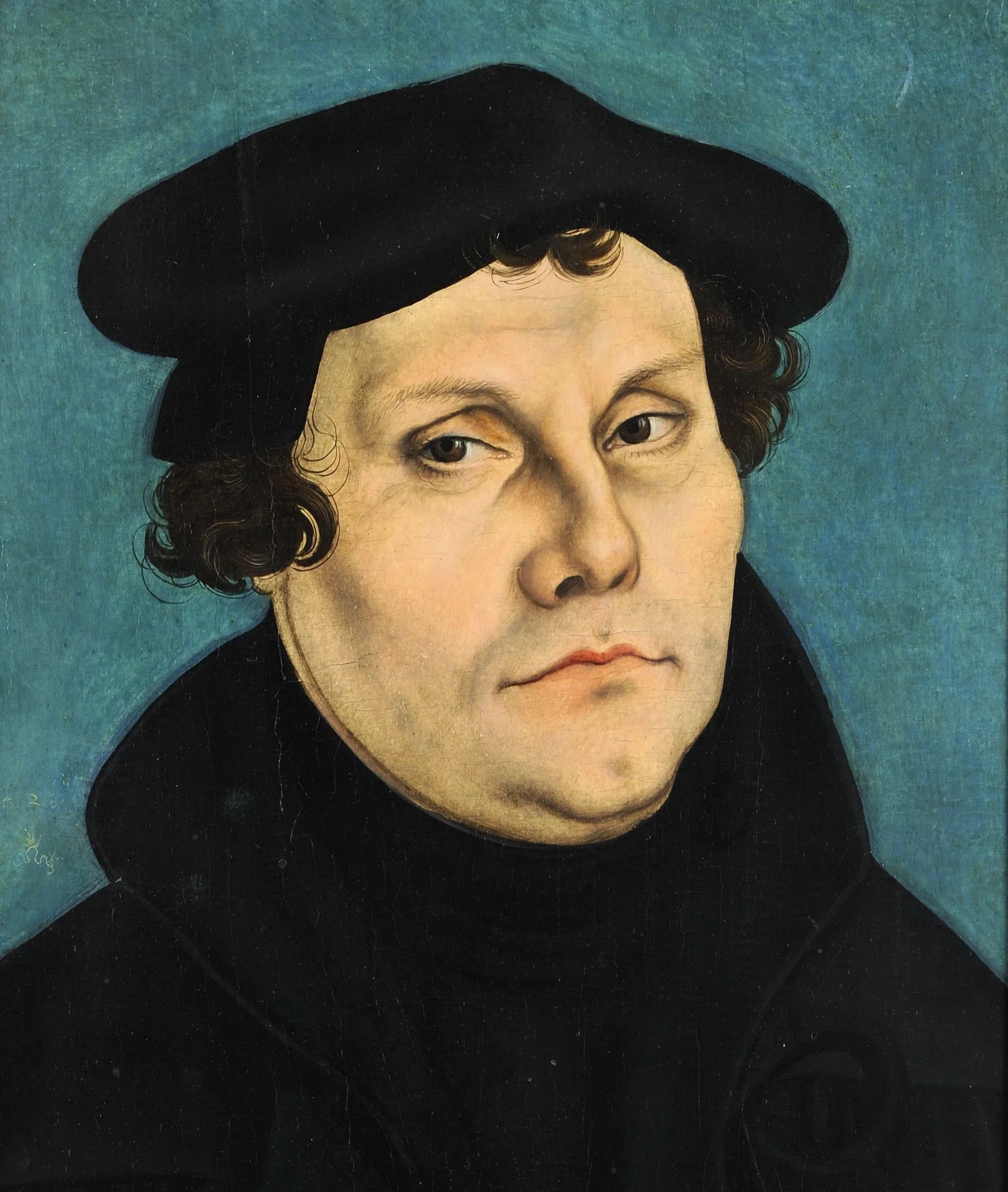
The Reformation 500 years on - Scripture Alone
Reformation 500 years on
A chain of events which changed our whole culture, changed the world as we know it.
The reformation wasn’t all good. There were some tragic events. There were some views that we definitely wouldn’t want to sign up to.
But the rediscovery of the gospel of justification by grace alone, through faith alone, in christ alone has transformed the world beyond individual salvation and a changed church.
Reformation 500 years on
A chain of events which changed our whole culture, changed the world as we know it.
The reformation wasn’t all good. There were some tragic events. There were some views that we definitely wouldn’t want to sign up to.
But the rediscovery of the gospel of justification by grace alone, through faith alone, in christ alone has transformed the world beyond individual salvation and a changed church.
Before the reformation, knowing God and being right with him rested on my good works. I did good works to climb the ladder to God. therefore the best thing you could do with your life was become a monk or a nun devote yourself to God.. any other way of living - a regular job, raising a family - second best!
But the reformation said you are so turned in on yourself even your good works are for yourself not God! The only way you can know God and be right with God is if he gives you righteousness by uniting you with Jesus. A gift of grace, received by faith alone. So All the glory is God’s! And suddenly then all your works that used to be about you become a response of thankfulness to serve others. And the monastery… and the convent become the worst place to be godly. The best place to glorify God is out in the world serving others. The so called sacred/secular divide was broken down. And it’s affected everything. For example the whole way we do work..
Luther spoke about all work being a calling from God. It’s not just monks and priests who are called. God has arranged to care for the world as each person uses their gifts within the circumstances they find themselves to serve others. All work is valuable.
From this conviction flowed the great art of JS Bach who wrote the reformation maxim Soli Deo Gloria - to the glory of God alone on all his musical scores
From it flowed the great christian social reform movements of the 18th and 19th centuries - wilberforce and the abolition of slavery, shaftesbury’s sweeping reforms for the poor and vulnerable.
Martin Luther didn’t just believe in the glory of God in all of life. He sought to live it.
And so on 13th June 1525 one of the most significant events of his life and of the reformatoin happened - Luther the monk got married. He married a nun on the run Katerina Von Borra. Luther was 41 and Katie was 26
she was quite a woman - she probably had to be. she was one of 12 nuns who luther had helped escape from a convent in fish barrels. Luther managed to find husbands and homes for the other 11. And he finally he ended up marrying Katie He gave 3 reasons for marrying her: to please his Father; to spite the pope and the devil; and as a sign of the gospel. The glory of God in all of life! The glory of God in the changing of nappies!
Luther said that marriage not the monastery was the school of godliness.
and the school of cleanliness it seems. Luther said:
‘before i was married my bed was not made for a whole year and became foul with sweat’
Actually Luther suffered with terrible depression all his life and Katie was a great help in his dark times. There was one time when words couldn’t get throught to him. She dressed in black and Luther said are you going to a funeral. No but since you believe that God is dead i thought i’d join you in mourning.
The Luther’s had 6 children - though 2 daughters tragically died. one as a baby one as a teenager. They had a busy open home. Luther built a private bowling alley on their land. Katie, who Luther called the ‘Morningstar of Wittenberg’ because of her early rising ran a small farm and brewed beer in their own microbrewery.
i could tell you so much more about the glory of God alone.. but i want to focus for the rest of our time on the last of the 5 solas
Foundational to the reformation. Sola Sriptura. Scripture alone.
Martin Luther’s rediscovery of the gospel of Justification by faith alone came when he was studying the bible.
In God’s providence the study of the Bible had come back on to the agenda largely via a secular academic movement called Humanism. Very different to modern humanism this was an academic movement that wanted to go back to ancient texts. ‘Ad Fontes’ was it’s strapline ‘Back to the sources.’
And so Luther and the Reformers re-discovered the gospel of grace in the Bible and elevated the bible over all other authorities. As the ultimate source of the revelation of God and the foundation of faith.
They stood on Scripture, studied Scipture and shared and spread Scripture.
The Reformers STOOD on the Bible
because of his beliefs and writings luther came increasingly into conflict with the church’s authority. if you undermine the church’s source of money through indulgences there’s a lot of people who are not going to be happy with you. people wrote against martin luther and called him a drunk german and he wrote against them calling them far worse things. In 1520 The pope issued a bull on Luther (not an animal, this was a decree authenticated by the stamp of the pope’s bulla, or seal). It ordered Luther to recant his beliefs about Justification by grace and faith within 60 days or face excommunication and ban (that is no one could shelter him but would have to give him up for arrest). The church’s unwillingness to even grapple with God’s word convinced Luther that setting herself up above and against God’s word the church of the day could only be a tool of Satan. Luther publicly burned the papal bull, declared the pope the anti-christ and broke with Rome.
In 1521, Luther was summoned to the Diet of Worms - this has nothing to do with a bush-tucker trial on I’m a celebrity get me out of here. A diet was a debate or council and Worms or Vorms was a place, a town.
So Luther was summoned to the Council of Vorms to appear before the Holy Roman Emperor, Charles V - a big deal..
Luther thought he had been invited to a debate. It was basically a trial for heresy, the punishment for which was death.
Luther’s prosecuter in the trial was Dr Eck, the wily old Archbishop of Trier:
And this is what Eck said:
Martin, ..Your plea to be heard from the Scripture is the one always made by heretics. … How will the Jews, how will the Turks, exult to hear Christians discussing whether they have been wrong all these years! Martin, how can you assume that you are the only one to understand the sense of Scripture? Would you put your judgment above that of so many famous men and claim that you know more than they all? You have no right to call into question the most holy orthodox faith, instituted by Christ the perfect lawgiver, proclaimed throughout the world by the apostles, sealed by the red blood of martyrs, confirmed by the sacred councils, defined by the Church in which all our fathers believed until death and gave us as an inheritance, and which now we are forbidden by the pope and the emperor to discuss lest there be no end of debate. I ask you, Martin--answer candidly and without horns--do you or do you not repudiate your books and the errors which they contain?
Luther: Your Imperial Majesty and Your Lordships demand a simple answer. Here it is, plain and unvarnished. Unless I am convinced of error by the testimony of Scripture or (since I put no trust in the unsupported authority of Pope or councils, since it is plain that they have often erred and often contradicted themselves) by manifest reasoning, I stand convinced by the Scriptures to which I have appealed, and my conscience is taken captive by God's word, I cannot and will not recant anything, for to act against our conscience is neither safe for us, nor open to us.
On this I take my stand. I can do no other. God help me. Amen.
in the most pressurised environment, before the most powerful people. facing certain death… Luther said Scripture is my supreme and final authority. Here I stand. I can do no other.
Incredible courage. And Luther didn’t die. He legged it and was then kidnapped. Many thought he was being taken off to be executed privately. The artist Albrecht Durer write in his diary ‘O God, if Luther is dead who will now teach us the Holy Gospel so clearly?’
But Luther was not dead. His kidnapper was a friend. Frederick the wise of Saxony hid Luther away in the Wartburg castle gave him a new identity to enable him to continue to write and teach.
The Reformers stood on the Bible alone.
It’s not that they said that Scipture is our only authority Solo Scriptura or Nuda Sciptura. No, there are other important authorities for the christian - creeds, confessions, the voices of tradition, church ministers - should be listened to and followed. But Scripture alone is our final authority. It is the authority that rules over and governs all other authorities.
Because Scripture is the Word of GOD. It is FROM God the Father ABOUT God the Son, and BY God the Holy Spirit inspired.
Scripture is so important. We are saved by Christ alone but the place where we encounter christ is in and through Scripture, God’s word that brings life and transformation.
The reformers weren’t setting out to change the world. They just wanted to get people back to the Bible. But going back to the Bible changed the world.
Here’s how Luther described how the Reformation happened. He says :
“I simply taught, preached and wrote God’s word; otherwise i did nothing. And while i slept or drank Wittenberg beer with my friends Philip and Amsdorf the word so weakened the papacy that no prince or emperor ever inflicted such losses upon it. I did nothing, the word did everything!”
Or as the Bible itself puts it: Hebrews 4:13
For the word of God is alive and active. Sharper than any double-edged sword, it penetrates even to dividing soul and spirit, joints and marrow; it judges the thoughts and attitudes of the heart.
The Reformers stood on the Bible as our supreme and final authority
The reformers studied the Bible. Not to know things but to have Jesus Christ. In 1533, Luther wrote: ‘for a number of years now i have annually read through the bible twice. If the bible was a great tree with large and tiny branches i have tapped at every branch, eager to know what was there and what it had to offer.’
And the reformers shared the Bible, they spread the word.
In two main ways. First by a commitment to preaching it.
Luther said that he valued preaching the bible more than anything else in life
‘if i could today become king or emperor i would not give up my office as preacher’
Luther regularly preached at the Town church in Wittenberg where his friend, Johannes Bugenhaagen was the Pastor. He’d often preach twice on a sunday and once during the week.
The reformers believed and taught that preaching is also the Word of God.
They pointed to passages like that one in Hebrews 4v13. ‘The word of God is living and active’ and noted that that passage is talking v2 about the preached word. Or they read 1 Peter 1v23 For you have been born again, not of perishable seed, but of imperishable, through the living and enduring word of God. And (v25) this is the word that was preached to you.
Preaching is the Word of God. Not in the same way that the Bible is the Word of God - Preaching is a human act, the Bible is infallible - but as an administration or extension of God’s word. For people to be saved the word needed to be distributed not left as a book on a shelf. More than that, Luther said that merely reading the word is not as fruitful and powerful as it is through a public preacher whom God has ordained to preach. I think we know this in our experience, don’t we? That God’s voice is heard in preaching.
Luther again:
“Would to God that we could gradually train our hearts to believe that the preacher’s words are God’s Word …It is not an angel or a hundred thousand angels but the Divine Majesty Himself that is preaching there. To be sure, I do not hear this with my ears or see it with my eyes; all I hear is the voice of the preacher, and I behold only a man before me. But I view the picture correctly if I add that the voice and words of the pastor are not his own words and doctrine but those of our Lord and God. It is not a prince, a king or an archangel whom i hear; it is He who declares that He is able to dispense the water of eternal life.”
Now none of this meant that the preacher is anything! Both preacher and listener are pupils of the Word. God is everything!
It actually places great responsibility on preachers to know and proclaim the gospel so as not to be in Luther’s words ‘a kind of pest to the church’… a wolf that does violence.
The point is that preaching is not a process of education or a transfer of information. Often we already know the truths contained in the sermon. But we come to the preaching of the word not to learn new things but to hear Jesus’ voice and encounter his presence afresh. What an incentive to be at church to meet Jesus in the preaching of the word as well as at his table.
The Reformers spread the bible by preaching it
They also spread the Bible by translating it.
Few people had access to a bible or could read it because the only official Bible available was the Latin Vulgate which also happened to be a particularly inaccurate translation. So the reformers set about translating the bible from the original hebrew and greek (back to the sources) into easy everyday common languages so that all people ‘might sieze and taste the pure clear word of God.’ Of Luther’s german translation someone wrote that no other had “the same majesty of diction, sweeping vocabulary, native earthiness and religious profundity of Luther.” This is what Luther himself said of his desire to show how relevant the Bible is “I endeavoured” he wrote “to make Moses so german that no one would suspect he was a Jew!”
In England, William Tyndale, wanting others to read the words of life that had saved him, set about his life’s work of translating the Bible into English.
He sailed to Germany, where it was safer to work. And there, within a few short years, Tyndale managed to translate most of the Bible. Accurate and easy to read, it turned out to be a gem of a translation with words and turns of phrase that have influenced spoken and written English more than Shakespeare.
It was illegal in England to own or even read such a translation – and the penalty was death. Some 16,000 copies of Tyndale’s Bible were smuggled into England before he was caught in 1535 and burned to death near Brussels, uttering the immortal last words ‘Lord, open the King of England’s eyes!’
Just two years after Tyndale had died uttering that prayer, it was decreed by the king that an English bible be placed in every church in England. King Henry VIII ordered ‘ye shall discourage no man from the reading or hearing of the Bible, but shall expressly provoke, stir and exhort every person to read the same as that which is the very lively word of God.’
Six English bibles were placed in St Paul’s Cathedral, crowds immediately thronging round those who could read loud enough to make themselves heard. So great was the excitement that priests complained of how, even during the sermon, laypeople were reading the Bible aloud to each other.
The message – and the excitement – were spreading.
with the Bible freely available in common language, Luther said that it was possible for a cleaner to know more of God than 10 professors in the university. You don’t need high intellect to know God, you just need to be able to read or listen - the Holy Spirit speaks
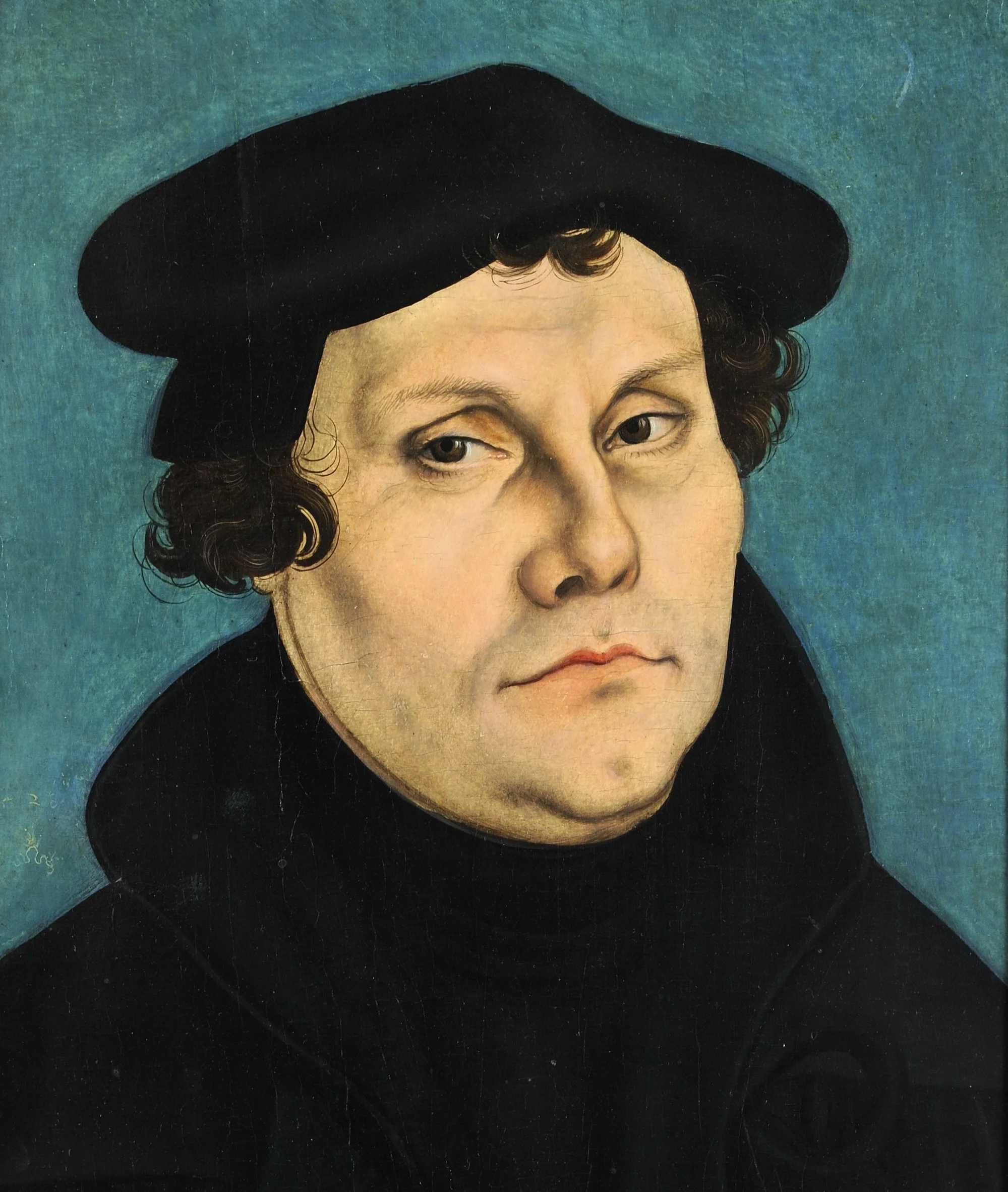
The Reformation 500 years on. Christ Alone
We saw last week that at the heart of the reformation was the rediscovery from the Bible of God’s revelation for how we can know him and how we can be right with him - how we can be justified? - that’s the Bible’s word. And the reformers great rediscovery was that justification being right with God is not a matter of our works and efforts to be holy. no, rather it has to be a free gift entirely from God. Justification is by grace alone, received through faith alone
Because of the depths of our sin, the fallenness of our hearts, we cannot save ourselves. We cannot choose god, we do not want God, we are turned away, curved in on ourselves. And even our good works are not for God but for ourselves. We cannot earn righteousness, neither are we gradually made righteous by cooperating with God’s assistance which was the official view of the church in Luther’s day. No, we must receive righteousness as a gift, totally external to us. Not a gradual change of our state but an immediate change of of our status. When we trust in Jesus God doesn’t remove our sins but he gives us the full righteousness of Christ and fully accepts us on that basis. Full welcome in. We are declared righteous, justified. We can know God, we are right with him. There is no further contribution to be made. there is no condemnation to fear. you are in the clear forever. Even your ongoing sins cannot shake your new status…
But how? How does this work?
We said that it all feels a bit abstract and out there. Can it really be true that God sees me as righteous when let’s face it in my attitudes and thoughts and behaviour - i’m not righteous. And if i’ve been given this righteousness of Jesus that clothes me - well it’s not really me is it that God loves? It doesn’t really work does it? I feel unconvinced
But secondly. If it did work. If i really am seen as righteous and that status never changes so i’m in the clear forever … what’s to stop me just carrying on in sin. Can i keep sinning so that grace may increase? Can i just do as i please? Well in theory yes… It doesn’t sound great does it?
The curial way to answer these concerns and to see that our salvation really works - really sets us in the clear forever AND it really changes us in the here and now. The way to understand this is through the third SOLA. The third of the 5 rallying cries of the reformation. Last week we has Sola Gratia and Sola Fide Grace alone, Faith alone. But the centre of it all is CHRIST ALONE Solus Christus
Salvation is found in no other name than Christ, and Christ alone
In these 3 talks we are thinking about the Protestant reformation which began 500 years ago on the 31 October 1517 when the Augustinian monk, Martin Luther, pinned his 95 theses to the door of the university church in Wittenberg, in what is now Germany. It was the 16th C equivalent of a provocative blog post intended to stir up discussion about the corruption of the church of which Luther was a part. But it was also a watershed moment in the history of Western Europe and perhaps the whole world. It marked the beginning of the end of the middle ages; magic and superstitiion giving way to a new age of reason and truth. The complex series of events that followed in Germany and Switzerland, Scotland and England formed a reformation not just of theology or ecclesiology (the way that the church looks) but also a changing of the whole social order. The reformation.
—
We saw last week that at the heart of the reformation was the rediscovery from the Bible of God’s revelation for how we can know him and how we can be right with him - how we can be justified? - that’s the Bible’s word. And the reformers great rediscovery was that justification being right with God is not a matter of our works and efforts to be holy. no, rather it has to be a free gift entirely from God. Justification is by grace alone, received through faith alone
Because of the depths of our sin, the fallenness of our hearts, we cannot save ourselves. We cannot choose god, we do not want God, we are turned away, curved in on ourselves. And even our good works are not for God but for ourselves. We cannot earn righteousness, neither are we gradually made righteous by cooperating with God’s assistance which was the official view of the church in Luther’s day. No, we must receive righteousness as a gift, totally external to us. Not a gradual change of our state but an immediate change of of our status. When we trust in Jesus God doesn’t remove our sins but he gives us the full righteousness of Christ and fully accepts us on that basis. Full welcome in. We are declared righteous, justified. We can know God, we are right with him. There is no further contribution to be made. there is no condemnation to fear. you are in the clear forever. Even your ongoing sins cannot shake your new status…
But how? How does this work?
We said that it all feels a bit abstract and out there. Can it really be true that God sees me as righteous when let’s face it in my attitudes and thoughts and behaviour - i’m not righteous. And if i’ve been given this righteousness of Jesus that clothes me - well it’s not really me is it that God loves? It doesn’t really work does it? I feel unconvinced
But secondly. If it did work. If i really am seen as righteous and that status never changes so i’m in the clear forever … what’s to stop me just carrying on in sin. Can i keep sinning so that grace may increase? Can i just do as i please? Well in theory yes… It doesn’t sound great does it?
The curial way to answer these concerns and to see that our salvation really works - really sets us in the clear forever AND it really changes us in the here and now. The way to understand this is through the third SOLA. The third of the 5 rallying cries of the reformation. Last week we has Sola Gratia and Sola Fide Grace alone, Faith alone. But the centre of it all is CHRIST ALONE Solus Christus
Salvation is found in no other name than Christ, and Christ alone
This is really the centre that holds together all the other Solas (the others by the scripture and god’s glory alone)
God really accepts me. I am forgive and righteous because he has given me his Son. he has given us Christ
God the eternal son, the second person of the trinity, jesus Christ left his throne in heaven and came down and took to himself our human nature inorder that he might die for our sins and rise for our life - God UNITING himself with our humanity.
He, Jesus …became what we are so that we might become what He is
Though He was rich yet for our sakes he became poor so that we through his poverty might become rich
UNION with Christ
Jesus uniting himself with our humanity and us becoming personally united to Jesus through our faith and by the work of the Holy Spirit. THIS was the key for the reformers for HOW we ARE counted righteous in Christ. HOW it really happens.
The reformers would point to the illustrations or analogies in the Scriptures used to impress upon the Christian the reality of union with Christ that comes when we trust him.
So one of those pictures or anaolgies is the family. We’re all born into familes, parents and grandparents and maybe siblings, uncles, aunts, cousins - a family history. We’re born joined, connected to people whose likeness we bear. And Romans 5 teaches us that this is true of all humanity, the family of humanity. All humanity is born of Adam. The father of the human race who sinned and brought death. We were all born sharing Adam’s doomed status and sinful inclinations. Born in Adam.
But Jesus comes into the world and joins himself to the human family as a new Adam, a new Man - a perfect man. And we through faith and by the power of the holy spirit can leave Adam’s clan and be born again of Christ, sharing his status and his inclinations
1 Cor 15v22 “For as in Adam all die, so in Christ shall all be made alive”
We join a new family
Another picture or analogy that is used - and this was definitely Luther’s favourite. is Marriage. It’s an image used throughout the Bible for God’s relationship to his people. God is a husband to his people. Jesus is the bridegroom. His church is the bride.
When a man and a woman are married - in a very real way they are united. There is a sharing, a joining of lives. “All that I am i give to you” they pledge to one another. “All that I have I share with you” and this really happens. Husband and wife take on each other. All of the wealth, all of the debts, all of the good things, all of the problems and brokenness. They are joined. They share.
Now remember our objection to the idea that believer’s sins are transferred to the Cross and Jesus’ righteousness is transferred to the believer. The two things are sort of beamed across the millenia. And it all sounds a bit weird. It’s all very abstract. Tom Wright says “How can a judge impute, impart, bequeath his righteousness to the defendent? Righteousness is not an object or a substance or a gas that can be passed around ….
BUT if Jesus takes our sin and we take his righteousness because we are united to him, joined to him ‘cemented to him’ said Luther just as (and in fact more deeply than) a husband is united to his wife and they share all things. If this is the case - that we are united to Jesus in his death… in his resurrection - then the objections begin to feel less problematic.
Luther loved to tell the gospel as te story fo the rich and divine bridegroom christ who marries the poor wicked harlot, redeems her from all evil and adorns her with all his goodness.
Listen to Luther “Christ is full of grace, life and salvation. The soul is full of sins, death and damnation. Now let faith come between them and sins, death and damnation will be Christ’s, while grace life and salvation will be the souls; for if Christ is a bridegroom he must take upon him the things which are his bride’s and bestow upon her the things which are his. If he gives her his body and very self how shall he not giver her all that is his? and if he takes the body of the bride how shall he not take all that is hers”
United with Jesus in his death and resurrection - Judgement for sin is removed, Christ’s righteousness is given. His status.
See this in our passage. Romans 6
v2 Joined to Jesus - everything that has happened to him is counted as having happened to us who believe. Jesus died for sin. Therefore Paul can say to us, v2 “We died to sin”
In Christ we have died. We cannot now die. The judgement for our sin has been paid. it can’t be exacted twice. There really IS no condemnation for those who are in Christ.
[Joy Bache - I’ve died already!]
v5 we have been united with Jesus in his death we will be (it’s unavoidable) united with Jesus in his resurrection
v8 If we died with Christ we believe that we will also live with him. Joined to Jesus he takes our death, he gives us his life.
Here’s the thing. At it’s heart, the gospel isn’t the good news that we have been given forgiveness or eternal life or freedom from judgement or the righteousness of christ. The good news is that we have been given Christ himself. The gospel IS Christ and Christ Alone - in whom all our salvation and the riches of grace are found.
This is wonderful news
We naturally place ourselves at the centre of our own solar system. We might think that becoming a Christian means bringing Jesus somewhere into our orbit. But no, when we trust in Jesus, he unites our lives with his and at the centre of our lives it’s not just us but Jesus himself
Listen to the great Victorian preacher and heir of the reformation, Charles Spurgeon preaching to his congregation at the Elephant and Castle:
remember that he sees us now in christ. Beholdhe has put his people into the hands of his dear son… He sees us in Christ to have died, in him to have been buried, and in him to have risen again. As the Lord Jesus Christ is well pleaseing to the Father, so in him are we well-pleasing to the Father also; for our being in him identifies us with him.
If then our acceptance with God stands on the footing of Christ’s acceptance with God, it standeth firmly, and is an unchanging argument with the Lord God for doing us good. If we stood before God in our own individual righteousness our ruin would be sure and speedy. but in jesus our life is hid beyond peril. Firmly believe that until the Lord rejects Christ he cannot reject his people. Until he repudiates the atonement and the resurrection he cannot cast away any of those with whom he has entered into covenant in The Lord Jesus Christ.”
But what about our second question?
Does the secure free gift of salvation just mean that we settle for our sin, we make peace with it?
Does the comfort of the gospel make us comfortable with sin?
Shall we go on sinning so that grace may increase?
No, no way..says the apostle Paul and with him the Reformers
Romans 6v2 We died to sin, how can we live in it any longer?
we haven’t just been given complete freedom, assurance, unchanging righteous status as an abstract thing we have been given those things because we have Christ. He, who loves us and died for us is ours and so will we then easily sin against him? If you have been walked through the death of sin, someone paying it for you and brought to life on the other side. Why oh why would you ever want to go back to play with death causing sin? If he suffered so for our sins, for us why would we heap more pain upon his sacred head? We are christians not for all the free, secure benefits provided but because we came to love Jesus. That’s what eternal life is - knowing and loving Jesus.
Grace will not lead us to shrug our shoulders at sin. the grace of Jesus leads us to gratitude and wanting to know him and be like him and please him.
linked to this is the fact that when Jesus unites himself to our lives and changes our status. although our sinful natures are not removed. our hearts ARE changed, the holy spirit of Christ gives to us new desires within us - our hearts come to life and start fighting sin. Whereas before our hearts were darkened and we wouldn’t, couldn’t desire God. we were fast bound in sin and nature’s night. Now, we have been made alive to God. Our hearts have enlarged - the Lord is at the centre and we now can choose to love him and over time God, for the sake of our joy, will see that we do…
look at v4 we were therefore buried with him through baptism into death INORDER THAT just as Christ was raised from the dead, through the glory of the father, we too may live a new life.
New life! New freedom, power - to choose life. To choose jesus.
no longer slaves to sin v6
no longer inevitable that sin reigns v12 in our lives. sin will no longer be your master v14
Finally, it is as we grasp our true status and identity in Christ - Justified. That we change and grow.
Too easily I forget that Christ is my identity. I think that I am what I do - and i swing between pride and despair. But when I remember that Christ defines me i’m much more immune to both pride and failure. In him, whatever i do, I am no failure at all, I am triumphant, I am loved. And in him what have i really to be proud of but him!
So the apostle Paul in v10 of Romans 6 says count yourselves (or better - reckon yourselves - i love that) dead to sin but alive to God in Christ Jesus.
You are dead to sin. You are alive to God. You are in Christ Jesus. Reckon yourself. Remember who you are. Be who you are.
Prince Charles - 'William, William … remember who you are.' Pulls himself up to the stature of a future king
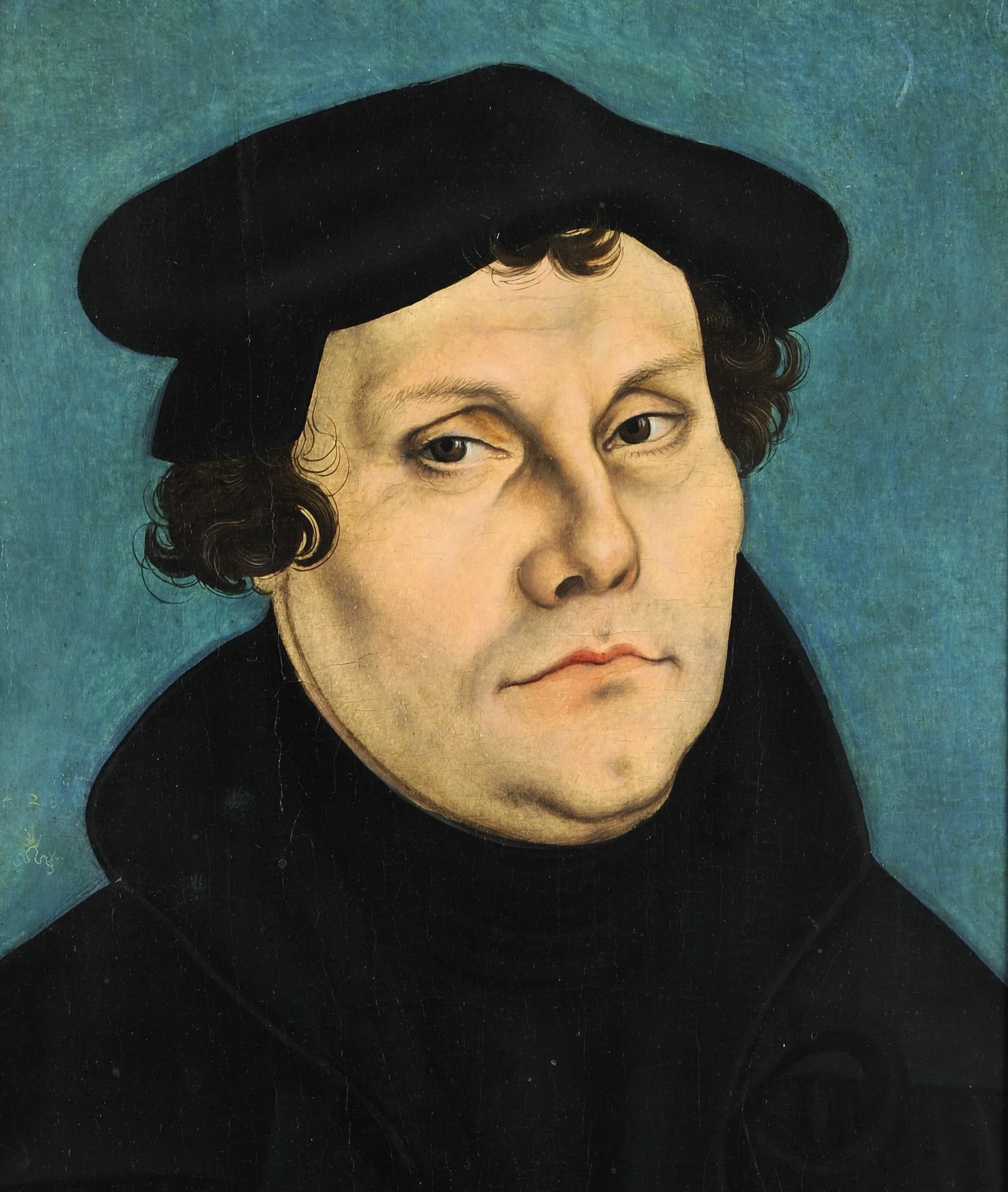
The Reformation 500 years on. Grace Alone, Faith Alone
We are going back 500 years. to the year 1517 October 31st when a german monk called Martin Luther. Nailed a pamplet - 95 theses - to his churches noticeboard - the door of the Castle Church of Wittenberg, Saxony. This action is said to have kick started what is known as the Protestant reformation
We are going back 500 years. to the year 1517 October 31st when a german monk called Martin Luther. Nailed a pamplet - 95 theses - to his churches noticeboard - the door of the Castle Church of Wittenberg, Saxony. This action is said to have kick started what is known as the Protestant reformation
Now, what comes to mind when you hear about the Reformation?
Perhaps you hated history at school and you know nothing about this stuff and you’re not to bothered about whether it stays this way. What on earth does a 500 year old monk have to say to my modern life? It feels very irrelavant. I hope to show that it’s not so please bear with me.
Maybe you do know a bit about the Reformation. You know it was political. Henry VIII took advantage of the unheavals to break with the RC church and start the Church of England thus enabling him to divorce that he didn’t feel like decpitating. That’s the Reformation - the church getting swallowed up into the murky world of politics
Perhaps you know that the Reformation was marked by argument and schism and sometimes and death. Heretics burned at the stake. Monasteries and churches and icons destroyed. Maybe you share the view of the presenter on a recent TV documentary who said, ‘In many ways the Reformation and the bitterness and division it represents reminds us of the worst aspects of our religious instincts.’ Religion is a thing of mystery and claiming to know the truth and challenge other peoples’ perception of the truth only leads to the kinds of extremism and barbarism that blights our world. The reformation was bad news.
Not to mention the fact that wasn’t the Reformation about archaic medieval religious debates about purgatory and indulgences and relics? What on earth does it mean for us??
Well….
It’s true that the Reformation started with a debate about Purgatory. Most people at the time believed in purgatory, a place of torment to which Christians went at their death to be purged of their sins before moving on to heaven. The church at the time had some major building projects going on in Rome (we all know how hard it is to fund building projects) and so a trade had grown up around selling indulgences - promises from the pope that gave people time off in purgatory. If you were particularly minted you could buy a plenary or full indulgence and skip the place altogether! Well Martin Luther in Saxony was particularly provoked by an indulgence broker called Friar Johann Tetzel. Tetzel had advertising jingles such as ‘as soon as the coin in the coffer rings, the soul from purgatory springs.’
Luther’s indignation came from a better understanding of the Bible. Better translations of the Bible were becoming available partly because of the advent of the priniting press but also because of the rise of an academic movement called humanism - a movement back to rediscovering ancient texts including the Bible. The Bible was being taken out of the hands of a corrupt church. And Luther’s 95 theses began to represent a challenge of authority - that the church was not the Supreme authority in matters of faith, rather that place belonged to Scripute Alone. Sola Scriptura was the first rallying cry of a Reformation that was a rediscovery of the Bible!
It’s also true that Henry VIII jumped on the bandwagon of this Protest (from which the word Protestant comes) against the authority of the church as an opportunity to do his own thing. But there was more going on here in England. Thomas Cranmer. Henry’s Archbishop of Canterbury founded the church of England on his Book of Common Prayer which was chock full of new theology of the Reformation. The reformation was a rediscovery of God/
Finally, it’s true that violence and discord and death were part of the Reformation and without doubt leaders of the reformation were sometimes guilty of acting towards those with whom they disagreed in ways that deny the gospel they professed.
But… these were not quarrels about small different opinions. At the heart of the reformation was a rediscovery from the Bible of God’s revelation for how we can know him and how we can be right with him eternally.
this is not a small thing. if our culture thinks it is, it shows how totally obsessed with the material and present world our culture is. For the heart of the Reformation takes us to the very reason why we exist and questions of our etrenal well being. How do we know God and get right with him?
This is why people gave their lives to speed the Reformation - like William Tyndle who had translated the Bible into English. It mattered… and it still does
A culture that blindly focusses on the material and the now at the expense of the spiritual and the eternal desperately needs the gospel of the reformation
And it’s precisely because we are a church in a culture that doesn’t believe in sin and doesn’t value truth.. and doesn’t focus on the eternal that we desperately need to be brought back to the discoveries of the Reformation and to the heart of God.
At the heart of the reformation was a rediscovery from the Bible of God’s revelation for how we can know him and how we can be right with him eternally. The theological term for this is Justification. How can human beings be justified before God, accepted by him as righteous
Martin Luther said that Justification was the doctrine by which the church stands or falls.
Luther’s discovery was that Justification must be by grace alone and through faith alone.
2 more of the rallying cries of the Reformation.
Justification by grace alone through faith alone
Martin Luther was born in Saxony in Germany in 1486
He studied briefly as a Lawyer but after a conversion experience he entered the monastery and became an Augustinian Monk. He was unbelievably zealous. In fact he surpassed all others in his observance of fasting and prayer and confession. Medieval theology taught that only sins that had been confessed could be forgiven and so Luther would soend literally hours in the confession box exhausting his confessors searching his soul for unconfessed sin. For all his righteous endeavours Luther could never find any assurance of wellbeing before God. When a close friend died and Luther took his funeral, Luther became terrified of the righteous judgement of God. He could never do enough.
In 1512 aged 26 he was sent by his order to be lecturer of Biblical studies at the New University of Wittenberg. And it was while lecturing on the Psalms and Galatians and particularly Romans that Luther came to a fresh understanding of the Christian gospel.
One key moment was Luther’s so called ‘Tower experience’ Luther had been musing on Romans 1v17 “In the gospel the righteousness of God is revealed from faith for faith. As it is written “the righteous shall live by faith””
Luther hated this verse; in the gospel the righteousness of God is revealed. How could the righteousness or justice of God be gospel? How could the judgement of God be good news??
But Luther began to see the righteousness of God revelealed in the gospel not simply as a quality of God but as a GIFT FROM GOD by which we can live. The righteousness of God us the righteousness he gives to us so that we may be righteous before him!
What did Luther mean and how did he get here?
Well Luther’s new insight came from
A new understanding of sin
A new understanding of Grace
A new understanding of sin.
Actually it wasn’t so much a new discovery as a rediscovery of something that had been lost. Luther rediscovered the teachings on sin of the 4th C North African Bishop and early church Father St Augustine of Hippo.
The medieval view of Sin was that sin was a weakness of being, a lack of good, a sickness that needed healing. That’s very similar to our culture’s view of sin isn’t it? We are a bit bad. We slip up now and again. But it’s basically a cosmetic problem. We might need some positive thinking to heal ourselves and become our best self.
Desiderus Erasmus was the leading humanist scholar of Luther’s day. In his book On the Freedom of the Will he taught that the problem of sin was basically a problem of spiritual laziness; of sloth. We need God’s grace to free our will to please him.
Well Luther discovered, as he returned to the Bible and Augustine’s commentaries, a very different, much deeper and more radical understanding of Sin.
Romans 3v10 “There is no one righteous, not even one;
11 there is no one who understands; there is no one who seeks God.
12 All have turned away, they have together become worthless;
there is no one who does good, not even one.”
Luther’s discovery from the scriptures was that sin was not sickness but rebellion against God
The problem of our sin is not cosmetic but goes as deep as it possibly can: all the way down to our hearts, shaping what we want and love.
Luther answered Erasmus’s on the freedom of the will, with his, On the bondage of the will, probably his greatest work. Here Luther argued that out intuitive sense of complete freedom with regard to decision making is an illusion. Yes we feel free - we do always do what we want. But… we cannot choose what to want. Underneath our wills, directing and governing our choices lie our hearts with all their inclinations and desires. And our hearts are naturally inclined away from God, we will never choose him. our hearts love darkness. We choose sin because that is what we want. So Luther spoke of slavery to sin, addiction, we are like rotten trees that can only produce rotten fruit - and of course we are powerless to save oursleves. Even our righteous works are not for God but for us!
The reformation’s deep view of sin is rather like the proverbial ugly duckling
Our culture hates the idea that we are rotten to the core - it’s a recipe for self hatred and we might be tempted to be embarassed of such a view. But only if I see that my plight is so bad that i cannot fix myself will i look outside myself for help and find the freedom that Christ brings. The ugly duckling is really a swan.
A new understanding of sin
A new understanding of Grace
In medieval theology, salvation was by grace. You couldn’t save yourself. Your sin needed to be healed and your soul helped by grace. And Grace was seen as a ‘thing’ at work within you; a substance or a force or a fuel administered, or imparted, through the sacraments of the church - of which there were 7 - baptism, holy communion, confirmation, confession, marriage, holy orders and the anointing of the sick. Or infused through prayers to the Saints or to Mary ‘full of grace”. So Church was a bit like a hospital with the Priest a pharmacist dispensing grace as medicine to the poorly or cans of redbull to the spiritually lazy to make them righteous.
Luther’s growing understanding of grace, needless to say, was very very different.
Grace was not a ‘thing’ at work within us but God’s unmerited favour towards us whereby the righteousness of Jesus is gifted to us not as stuff being infused into us that gradually changes our state but as righteousness imputed/given to us that immediately changes our STATUS
Our sins are not removed but - somehow, and we’ll see how in our next talk - they are no longer counted against us. Justification is not about God gradually making us righteous but here and now declaring us righteous. It is language not so much of the hospital as the law courts. Justification is not a process of healing towards God but a declaration that we have a right positive standing before God now.
21 But now apart from the law the righteousness of God has been made known, to which the Law and the Prophets testify. 22 This righteousness is given through faith in[h] Jesus Christ to all who believe. There is no difference between Jew and Gentile, 23 for all have sinned and fall short of the glory of God, 24 and all are justified freely by his grace through the redemption that came by Christ Jesus.
Did you notice that it’s freely given? Salvation is a gift from first to last. We do nothing. It’s not our works plus the essential help of God’s grace. It’s salvation by grace ALONE - all of grace. We contribute nothing. We just receive the gift by faith, by simple trust which itself is a gift of the Holy Spirit. Justification by grace alone, through faith alone.
2 applications
No contribution
Ill. imagine a painter gives you one of her paintings, framed and ready to hang in your house. And before you do so you proceed to break open the frame and get a biro to add a bit of shading to the sky!
Or imagine if you’re invited to a dinner party and the meal is served to you and you take it back to the kitchen to do a bit more work on the sauce
No - when you are given something as a finished, completed gift - The creator has laid down her paint brush, has removed his apron and said this cannot be improved on – it is not only needless but offensive to attempt your own contribution.
salvation is a gift from first to last There is nothing you and can do to contribute. In fact to seek to make a contribution is to undermine the finished work. To add is to subtract.
And yet we do. We do treat grace like a substance that assists our efforts. We do think that God favours us when we’ve read our bible and prayed or because we are a good person, do noble things, or are moral. And God frowns upon us when we’re bad and immoral. Don’t you catch yourself thinking – ‘I don’t really deserve that God should take any interest in me today, because i haven’t been a very good Christian of late..’ – as if we ever deserved anything from God! As if it wasn’t all of grace.
By nature we’re predisposed to reject grace in favour of our works because of our innate pride. You see if salvation is all of grace then all of the glory must go to God. But we are naturally prone to exalt ourselves – surely it is really about me my contribution: God likes me when i’m good, doesn’t when I’m bad. But no, it’s not about us. It is all about God and his free grace towards needy undeserving sinners.
No contribution. Humbles us ..but of course it’s the most wonderful news
and leads to our second glorious point
No condemnation
imagine that you owe a huge amount of money. you have run up a debt that you can never repay and to your shame it has been discovered. you stand before the judge helpless. you know that your debt means your life is ruined, your family is ruined. you will spend the rest of your life in debtors prison ..the rest of eternity..
Imagine how you feel. Suicidal, utterly helpless.
then imagine that your debt is cancelled. it no longer exists. no longer hangs over you. it is gone, completely.. nothing to pay. the world has changed. everything has changed, you can barely believe it
how would you feel?
There is a consistent testimony down through the years that those who have accepted that God saves by grace alone have found the message to be one of unutterably sweet liberation.
Listen to Martin Luther on his discovery of Grace alone:
‘I felt that i was altogether born again and had entered paradise itself through open gates’
or william tyndale speaking of the gospel of grace as “merry, glad and joyful tidings. that maketh a man’s heart glad and maketh him sing, dance and leap for joy.”
or John Bunyan the 17th C author of pilgrims progress on discovering that his righteousness was a gift of God and not of himself, he exclaimed, “Now did my chains fall off my legs indeed, I was loosed from my affliction”
My chains fell off, wrote John Wesley in his famous hymn, my heart was free I rose went forth and followed thee.
No condemnation
Justification by grace alone through faith alone
The only message of true liberation that has the power to make human beings unfurl and flourish
Next week in Reformation talks.
Still some fundamental questions remain:
First. How is it possible? How does it work that God can just give us righteousness and count it as ours? As if righteousness is some kind of ‘thing’? It feels very abstract, something just ‘made-up’? and as such might create some doubts in our minds. Am I right in God’s eyes? Am I?
Second. Does grace mean that sin no longer matters? With salvation in the bag might people feel we can just ‘keep on sinning that grace may increase’ - after all I like sinning and God likes forgiving.. Does the way I live really matter?
Well there is a way of understanding how God gives me righteousness AND the way we live as Christians does matter. The answer to both those questions will be seen in our next talk and our next SOLA of the reformation. Salvation is not an abstract legal transaction, salvation is in CHRIST ALONE
tune in next week ….
Luke 19:1-10
Last weekend i was stranded in Ireland as storm Ophelia hit the south coast. - the cancellations, the power cut, the candles, the guiness, the company, the stars. Disruption, danger for many - but for us it was like a gift, an unexpected pleasure, an extra day - when we could do nothing but enjoy each other’s company, amazing conversations… something that changed us a glimmer of grace…
Grace is a central idea of the Christian good news.
It describes a gift that is completely unearned, an unexpected, undeserved pleasure that comes into our lives and changes us forever.
Last weekend i was stranded in Ireland as storm Ophelia hit the south coast. - the cancellations, the power cut, the candles, the guiness, the company, the stars. Disruption, danger for many - but for us it was like a gift, an unexpected pleasure, an extra day - when we could do nothing but enjoy each other’s company, amazing conversations… something that changed us a glimmer of grace…
Grace is a central idea of the Christian good news.
It describes a gift that is completely unearned, an unexpected, undeserved pleasure that comes into our lives and changes us forever.
It could waking up to a thick covering of snow on a Monday morning
Or - being given a free ticket to an international match where your country gets a result beyond your wildest dreams
Or - finding 20 quid in the pocket of the second hand Levis you just bought for a tenner!
There’s nothing like grace when it happens.
Undeserved. Unexpected. Bringing Joy
But all too often that world of grace is hidden to us. Life is hard and our so called ‘real world’ lives by different rules. Rules which from nursery school onwards we become well versed in:
Rules like: “People get what they deserve, nothing more, nothing less.”
“The early bird catches the worm.”
“There’s no such thing as a free lunch.”
“Earn your way.”
“You get what you pay for.”
“No pain, no gain.”
“Win friends”
Do well – and you’ll be loved
Do badly – and you won’t
So life becomes like a constant audition.
I used to work as an actor. Auditions can be horrendous things:
“Mr Fouhy, please do it again with a Glaswegian accent. Thank you.. and this time… as an orangutang please. Thank you Mr Fouhy snigger snigger, we’ll let you know.
But if course this is not a joke. These rules of ungrace, coupled with the tragic brokenness of our world lead to much pain and unhappiness.
There’s Pride and self-absorption – because of the belief that unless i achieve i won’t be loved
There’s unforgiveness – because ‘she did badly and doesn’t deserve love’
There’s feeling of great inadequacy and worthlessness because ‘i can never do enough to be sure i am loved.’
There’s great insecurity and unreality – because ‘if i let people see what i’m really like they will never love me.’
We automatically assume God works to the same rules. God – holy and perfect – how can i possibly be good enough for God!!! why would i want to go to church – i feel bad enough as it is.
If Jesus were to walk in here tonight would we leap up to meet him or would we slide down in our seats praying that he won’t come anywhere near us.
But here’s the thing – these are our rules – not God’s. This is the world we have made, not God’s. God’s world is a world where grace happens..
God is not a director at an audition sitting back waiting to be impressed. Rather the Bible describes him as a loving husband, a compassionate father or a Shepherd who goes in search of lost sheep. The Bible’s claim is that God has risen from his throne – and entered our world, as a human being – Jesus of Nazareth. Far from sitting back God has coming looking for us. To do us good. To show us grace. Unearned, unexpected… saying whoever you are, no matter what you’ve done. No lectures, no cost i love you, i want to be with you. Grace ..
How do i know this?
Let me show you in the passage we had read for us
Here is Jesus entering the town of Jericho in Ist C Israel – crowds flocking to see him. Here is God walking in his world. Here is God come looking for us. And there are three things in the story
- a lost man
- a shocking surprise
- a changed life
- a lost man vv2-4
A man was there by the name of Zaccheus, he was a chief tax collector and was wealthy
Nobody likes the tax man. But believe me tax collectors in Jesus’ day were despised. For a start they were traitors – making money for Rome the occupying power. But more than that they were corrupt and brutal. As long as they paid their tribute to Rome they could collect as much tax as they liked, by whatever means they liked – torture, beatings. To be a success in the tax collecting business – you had to be prepared to resort to certain ‘techniques’ Zaccheus w’re told was both a chief tax collector and was wealthy.
For ten years i lived in King’s cross. We got to know through our church some of the girls who sold themselves on the streets – enslaved to their misery by the supply of crack drip fed to them by their pimps. I remember one of the pimps – his eyes were as hard as steel.
That was Zaccheus … a more lost and so called ‘God forsaken’ man you could not find.
And yet we’re told – he wanted to see who Jesus was. Zaccheus – chief taxcollector, wealthy – was looking for something. Perhaps he was looking for grace?
But Zaccheus had a problem – apparently the politically correct term is that Zaccheus was ‘vertically challenged.’ Look he was short – ok v3 he could not see because of the crowd. So he ran ahead and climbed a sycamore fig tree to see him, since Jesus was coming that way. This was the perfect solution. He could watch from a safe distance. He could see but remain unseen among the lush leaves of the fig tree. That lost man.
But then – a shocking surprise
Think about the most shocking surprise you’ve ever received. Something unexpected that blew you away and gave you joy. Receiving your first bike at Christmas, A surprise party. Think about that.
But grace is the shock to end all. The surprise to end all surprises.
When Jesus reached the spot he looked up
Zaccheus – suddenly caught like a rabbit in the headlights of Jesus’ gaze..
The crowd – hundreds of people – askings – what’s he looking at? ‘i don’t know looks like there’s some kid in there, up the tree. And then Jesus speaks … a name …
Zaccheus.. one word and it sets off a buzz in the crowd. Can you imagine how Zaccheus feels? He thought he was going to watch from a safe distance – now he is the centre of attention. ‘How did he know i was here?’
Zaccheus… ‘How does he know my name?’
Zaccheus… The crowd is now hushed and straining, waiting with baited breath to see a traitor get what’s coming to him..
Zaccheus .. says Jesus come down immediately.. And then the words for which no-one was prepared, least of all Zaccheus, i must stay at your house today.
Why’s he want to stay at his house? The drug dealer’s mansion built on dirty blood money? Doesn’t he know who Zaccheus is? Where he’s been? The things he’s done? That’s what the crowds mutter don’t they in v7…?
Jesus says … Yeah i know him, i know everything about him and i still want to be with him.
Doesn’t he know that Zaccheus deserves to be despised?
Jesus says… No.. Zaccheus… i like him.
Shouldn’t Jesus summon Zaccheus to a meeting a week on Friday to discuss his failures? Jesus says, Zaccheus could i come to your house – now? back to yours?
Zaccheus must have nearly fallen out of his tree!
This term ‘stay at your house’ – complete acceptance – fellowship
Zaccheus doesn’t need much persuading, he responds, he embraces Jesus’ offer V6 He came down at once and welcomed Jesus gladly. We’ll come to Zaccheus’ response in v8 in a moment. It’s important to see that before Zaccheus did anything – Jesus fully accepted him. So in v9 Jesus proclaims Today salvation has come to this house. You are forgiven Zaccheus, acceptable, you have eternal life.
It’s a shocking surprise. God doesn’t play by the rules. He disregards our performance. He accepts people just as they are. And gives salvation as a gift.
BUT you exclaim. Zaccheus had done wrong. Yes he had. What kind of God is God if he doesn’t care about wrong? Do we just brush evil under the carpet and pretend? Surely God is just, surely some price must be paid? Well yes – it must.
But this is the thing – this is the gospel. There is a way.. There is a way that God can accept us just as we are and yet also demand a price paid for our wrongs. How? The answer the Bible gives us is God pays the price himself. V10 The son of man has come to seek and save the lost. God’s grace is not some grandfatherly display of ‘niceness’ for it cost the price of Jesus’ death on the cross. Grace is free because the giver has borne the cost.
I wonder if you knew God loves like this? Far from sliding into their seats, people painfully aware of their lostness were drawn to Jesus in great numbers – drawn by his acceptance, drawn by his grace.
I wonder if you knew God loves you like this? irrespective of your performance, wherever you’ve been, whatever you’ve done. Your creator knows you by name, he loves you as you are and offers you salvation as a gift. And the Lord Jesus Christ – the great shepherd of the sheep calls you by name now. Hear him speaking your name – You … come immediately, i must stay at your house today.
Hear his call and go to him – receive the gift of forgiveness and life and begin to be transformed by the security and power of his grace.
That’s our final thing..
A lost man, a shocking surprise
And finally a changed life…
V8 Zaccheus stood up and said to the Lord, “Look Lord! Here and now I give half of my possessions to the poor and if i have cheated anybody out of anything I will pay back four times the amount.
When we encounter the grace of God – we are changed.
This is not Zaccheus trying to earn salvation. Remember the order here. God always disregards our performance it can never be enough. No the change comes after Jesus has chosen to be with Zaccheus. The change is the evidence that salvation has already come to this house.
And what a change!… The Bible that Zaccheus had – the Torah – jewish Law said that you had to give away 10% of your income to charity Zaccheus says i want to give 50. The Law said that if you’d cheated someone - pay back the amount you cheated plus 20% (Numbers 5) but Zaccheus says i’m gonna give back 400%. Zaccheus is responding to grace with his money. See Zaccheus is rich he knows he can put things more than right – he knows he can give and so he does. See the grace of God – the sacrificial and generous love of Jesus Christ has gone through Zaccheus like a lightening bolt. Zaccheus says Look Lord! You see the emotion in that? Look Lord because you love me i want to change. The gospel has begun to send him on an adventure
Jesus doesn’t demand that we change before he will accept us. No he calls us as we are by his grace, in the knowledge that that grace will change us into the people we are meant to be.
Radical disciples who are free to die to self, love our enemies, risk all for our neighbours, and give away our money with lavish generosity.
It is the dynamic of Jesus’ gracious, undying, secure love for us which keeps changing and changing and changing us, bit by bit, week by week..
Grace will always really change you
This is true in my experience, it will be in yours – that time and again when i’m trapped in my bitterness and sinful behaviour, thinking the whole world is against me. God surprises me again with his love.
And that love – unearned, unexpected - fills me with a thankfulness and joy that turns me away from selfishness and helps me to grow…
Grace will always really change you
Ephesians 3:14-21 - Nigel Beynon
A while ago I read about a Vietnam veteran Bob Campbell, of Baltimore. After Vietnam, Bob became an alcoholic. However years later – Bob says – quote - “I gave my heart to God. That night the old Bob went away. Up to that moment, I was drinking Scotch from 6.30am until 8pm at night. But after that, I didn’t drink again - and I haven’t to this day.”
I read that simply to raise the question of what we expect God to do in our lives today. For Bob there was very real action by God in his life. Very tangible and immediate effect of knowing God. I wonder what we think of that? If we are Christians – or if we were to become a Christian – what would we expect God to do in our lives today?
A while ago I read about a Vietnam veteran Bob Campbell, of Baltimore. After Vietnam, Bob became an alcoholic. However years later – Bob says – quote - “I gave my heart to God. That night the old Bob went away. Up to that moment, I was drinking Scotch from 6.30am until 8pm at night. But after that, I didn’t drink again - and I haven’t to this day.”
I read that simply to raise the question of what we expect God to do in our lives today. For Bob there was very real action by God in his life. Very tangible and immediate effect of knowing God. I wonder what we think of that? If we are Christians – or if we were to become a Christian – what would we expect God to do in our lives today?
Let me paint two possibilities – which are extremes: some Christians talk a lot about what God has done for us in Christ in the past – died for us so we can be forgiven. They talk about how one day God will act so we will go to heaven. But there is almost nothing said about God acting in our lives now. It’s all back then – or still to come.
The other extreme is to see God very active in our lives now – these Christians are often talking about how they had a problem – they were late – but they prayed and God helped them be on time – and it’s very present day – God’s acting in my life now. But it can be about God solving my problems – making my life easier. God becomes my divine PA. And while there’s lots of God acting now – I set the agenda that God works to.
These are extremes but you get the idea. How does God act? It’s all back then, or still to come but there’s nothing for today. Or - it’s all about today – but it’s all about me.
We’re going to look at Paul’s prayer for the Ephesians – see what answers that gives us.
I want to start by looking at the overall goal of this prayer – where it’s going. Then we’ll break it down a bit. So first - the big picture - Paul prays for
Power to realise Christ’s likeness
So Paul prays for God to do various things – but it all builds up to - so that end of v19 – here’s the goal – READ. He’s praying we’ll become the fullness of God.
Now that phrase – the fullness of God, or fullness of Christ – I think that means being fully like Christ. Full of his character and loves and hates – it’s full of him – or fully like him.
Now you might think – why didn’t you just say – Paul is praying for power – to be like Christ. Why did you use this odd phrase – power to realise Christ’s likeness.
Let me try and explain. Back in chapter 1:23 – we’re told Christ has died, risen and he’s head or Lord over everything – and I quote “for the church – which is his body, the fullness of him”. So the church is the fullness of Christ – or fully like Christ. It’s done and complete.
But when we get to chapter 4:12,13 – Paul says church should work in a certain way – so that the body is built up, until – one day – “we become mature, attaining to the whole measure of the fullness of Christ.” So here – we’re not fully like Christ yet – it’s something we’re working towards and growing in.
So chapter 1 – we’re fully like Christ already. Chapter 4 – growing towards it.
The difference here is the difference between how God sees us because of Christ – and what we are in practice. Or what is true of us – spiritually – and what is true of us - on the ground.
Because of Christ – in God’s eyes - we are fully like Christ. Spiritually that is true of us. We’re washed clean, perfect. Fully like him.
But in practice – on the ground – we do things wrong, we fail, we’re weak – but we’re changing and gradually becoming like Christ.
That is why I said Paul is praying that we would ‘realise Christ’s likeness’.
There are two senses of ‘realise’. First of all we realise by ‘taking something in’. Grasping it. Paul is praying that we’d realise we are fully like Christ, chapter 1. Because of his death and resurrection God sees us as Christ. That’s who we are to him. So Paul prays we’d realise that’s true – that we’d get it.
But secondly realise can mean – make it real in our lives – live it out in practice. And Paul is praying for that – that we would actually become like Christ in our lives, and words and actions.
A couple of year ago I went with the kids to see Good night Mr Tom at the theatre. Don’t know if you’ve read the book or seen the play. It’s the story of a boy called William who has a terrible upbringing with an abusive mother – then in the second world war he is an evacuee sent to live in the country with Mr Tom.
On his first night – Mr Tom says it’s time for bed – shows him his room – and William starts to get on the floor under the bed. Mr Tom, says what are you doing, get in the bed. But you get a little insight into what his life has been like. Another time Tom takes his belt off – innocently – but William cowers in fear – because he thinks he’s going to get beaten.
The story is about how William changes. It’s a beautiful story of seeing him stop being so frightened and grows in confidence, and relationships. Starts doing new things – turns out he’s a wonderful artist – he makes friends – he’s funny - he comes out of himself and grows into this lovely sweet creative boy.
You could say he realises himself. He takes in – discovers - who he really is and then he lives that out.
That’s the sort of thing I mean by saying - we are to realise Christ’s fullness. To take in who we are now – we’re like Christ. To grasp that is how God sees us – so that’s the real us.
And then to live it out – make it real. To gradually become like Christ in our daily lives.
Now that is the big picture on this prayer. To get there Paul prays for two others things.
Power to realise Christ’s lordship
V16-17 READ.
This word ‘dwell’ – doesn’t mean arriving somewhere – or visiting somewhere. It means staying somewhere permanently - making your home there.
And this Christ who dwells - is the Lord – raised above all powers and authorities. So Paul is asking that this supreme Lord would make his home in us.
I imagine a lot of us are or have lived in rented flats/houses. Thing about a rented place is that you can’t change it very much. I used to live a rented house that had shocking wall paper – you know that embossed stuff – felt like a padded cell. If you had Velcro on your clothes you had to be careful – you could end up getting stuck to the wall.
But we couldn’t do anything about it – wasn’t our house.
But imagine if you bought the place you rent – so you own it. Well first thing I would have done would hold a wallpaper stripping party. You’d start making the changes wouldn’t you? Carpet, furniture – things out, things in.
It takes some time and effort. But the longer you are there – the more you would make it what you want it to be. Until one day you could imagine your friends would look at your place and say – this place is really you.
Well Christ is in us, and he’s not renting. He’s our Lord – he owns us. And so Paul prays that Christ would make his home in us – increasingly make our lives what he wants them to be – some things out - getting rid of some things we do – some things in – adding new character and habits.
So that one day people will look at us, and say to Christ – they are very you. They reflect your tastes and character and values. Because we are Christ’s likeness. That is what Paul is praying for – power to realise Christ as our Lord.
Now do we see we the idea of ‘realising’ here. You could say all Christians have Jesus as their Lord – there’s no need to pray for it - that’s what it means to be a Christian – to accept him as your Lord or King.
But Paul prays we’d realise that. Firstly in the sense of take it in – to increasingly grasp - that Jesus is raised, ascended, he’s really in charge – and so he’s in charge of us. Paul prays we’ll get that more and more. And then realise it in the sense of living that out – so we increasingly live with Christ in charge of us – so he makes our lives what he wants them to be.
As we do that – we become more like Christ.
Now I don’t know how you’re feeling about this – what reaction this is bringing on. I imagine some of us might react to this with some pessimism or cynicism. You are well aware of how you are not like Christ – you’ve learnt how hard it is to change. Because you’ve tried and failed. So hearing Paul’s prayer – and me talk - about becoming like Christ - makes you feel fed up and cynical - because you think – that’s not going to work.
Well I have some sympathy with that. But I find it encouraging here how Paul’s prayer talks so much about God’s power at work in us. V16 READ.
Pessimism in some ways is right – we won’t change easily, habits run very deep. And Paul knows that – knows it’s an enormous job to change us –– so he asks for God’s even more enormous power. We might feel change is impossible. And it would be impossible – if we didn’t have God’s divine power – working out of his glorious riches. Or v20 READ – we can’t even imagine what God can do - that’s how powerful God is.
And with that power – there is hope. Change might be slow and hard, two steps forward, one step back – but we can have hope – whatever we’re battling with at the moment – whatever we’re tempted to give up battling – or have given up - we can have hope – we can pray this prayer – look to God – for power to realise Christ’s Lordship.
Second thing he asks for,
Power to realise Christ’s love
Now – again - straight away - you could say if we are Christians, we know Christ loves us. That’s first base, that’s Christianity 101. But again Paul wants us to realise – to take in and live out – the enormity of Christ’s love.
V17b-19a READ.
Heart of sin is to not trust that God loves us. Back in Genesis 3 the snake says to Eve – God said don’t eat the fruit – because he knows when you eat it you’ll be like him. In other words –– God is keeping things from you – he doesn’t really love you. Disobeying God will be better, fuller and richer.
We probably don’t say that explicitly – we might not always recognise it. But that is very deep in us – the suspicion that God doesn’t really love us, and going your own way will be better for us.
I’ve noticed this in me – how I can think that obeying God fully will mean I’ll miss out. That’s the boring option where you lose out. And while we doubt God’s love we’ll never fully trust God, and obey and be like Christ.
So Paul prays we will realise Christ’s love for us. He prays we’ll be convinced there is nothing higher, wider, deeper – nothing bigger than this in the universe. Nothing more certain or real.
Because if we get that then we’ll see that living his way – being like Christ – is the best way to live.
And so convinced of his love – we live like Christ.
I asked a moment ago how you were reacting to this ‘being like Christ’ prayer. I said we can be pessimistic about change – but we should take hope from God’s power. Another reaction we could have is – reluctance. We understand all this – but frankly we don’t particularly want to be like Christ – that idea doesn’t grab us – doesn’t excite us – it feels like a duty we know we should do but don’t really want to. Be more fun doing our own thing.
Again I have some sympathy with that – but I’ve found it helps to remember what we’re saying here – that God loves us. He’s not out to give us a hard time. Spoil things. He loves us beyond belief – he’s absolutely devoted to us – Christ died for us – he’s given everything for us – so of course he wants the best for us. That means living his way really is the best way to live.
In fact this life like Christ – is the way we were made to live. It’s about being truly and fully who we are – as God intended.
It’s a bit like in Goodnight Mr Tom, William gradually becomes the boy he really was – the boy he was made to be. And it’s wonderful and beautiful to watch.
It’s the same for us - as we fight sin, and say no to things, and yes to other things, and love others and serve and give – as we become like Christ – we are becoming the true us – as we were made to be. We’re becoming the best us.
We can embrace this – not reluctantly – but eagerly. As we grasp there is nothing bigger in the world than God’s love for us.
I started by asking what we expect God to do in our lives. There’s the “it’s all about the past and future – but nothing for today” camp. Or it’s all about today – but it’s all about me, my needs camp.
Well this is a long way from ‘nothing for today’ isn’t it? This is God is active and working in our lives. With power, by his Spirit. Yes it’s based on the past and it will be completed in the future – but now - Christ is making his home in us. So God is very active today, powerfully changing us.
But it’s also very different to – ‘it’s all about me’ – because this power and change is very much on God’s terms isn’t it? It’s a long way from making me have a nice time – and solving what I think are my problems - rather it’s all about God’s plan to make me like Christ.
Now that will affect things in our daily lives, the problems we face of course – that’s the terrain in which we work this out - but it’s his agenda – not ours. We see that in the ultimate purpose of all this – v21. Ultimately his work in us, making us like Christ – is about his glory. So it’s change on his terms, not ours.
God is powerful and active in our lives today – very much so – this week we can pray to him – pray this prayer - ask him and expect him - to work in us with power - so we’ll realise Christ’s lordship and love – so we become like Christ – so ultimately he receives glory.
Luke 12:13-34
Jesus speaks about money and possessions, worry and anxiety, about your security in life
jesus says that knowing him will change your relationship towards your money ..and your possessions.
Jesus speaks about money and possessions, worry and anxiety, about your security in life
jesus says that knowing him will change your relationship towards your money ..and your possessions.
To people who are beginning to follow or considering following him Jesus says v15 ‘Watch out for greed’
Following Jesus challenges your greed, your materialism. To which you we might well say, ‘greed? i may be a lot of things but i don’t think i’m greedy.’
really? says Jesus. ‘Watch out! Be on your guard against all kinds of greed.’
The reason Jesus has to say watch out is because of all the sins which can hinder our spiritual lives, greed is the most elusive. None of us thinks we are greedy not compared to ‘those others’ – but Jesus says there are all kinds of greed. You don’t need to be rich to suffer with it, you can be penniless and full of greed. Watch out.
So how do you define greed? Where do you draw the line as to what is or isn’t greedy?
Well Jesus doesn’t do that, what he does is he describes the characteristics of greed – 2 kinds – and he alerts us to the warning signs to watch out for and then he offers a cure to money sickness. A threefold cure..
- A New security
- A New beauty
- A New priority
- A New security
The first kind of greed that Jesus identifies here occurs when you make money your security. When you look to money to make you safe. This kind of greed shows itself in the desire to store up money and possessions. That’s your security.
These are the danger signs:
When you have some wealth stored up you gloat. Arrogance
When you don’t have anything or enough stored up you worry. Anxiety
Arrogance and Anxiety..
Let’s look at the first one. Listen to the rich fool gloating v19 I’ll say to myself. You have plenty of good things laid up for many years. Take life easy; eat, drink and be merry. Have you ever seen that arrogant sign of greed in yourself? i can remember the one time when my wife Fiona and i were both working – we were DINKYs - and we were able to start packing out our ISAs a bit and i would go online daily just to survey our amassing wealth and i felt very good about myself – gloating cos you’ve got some wealth stored up.
And then there’s the second one. Perhaps it’s more familiar – Anxiety. Worrying about money. Jesus talks at length about his in Vv22-32. It’s interesting to consider that worrying about money is a sign of greed. Look at v29 Jesus says Do not set your heart on what you will eat or drink, do not worry about it. To worry about money and possessions is to set your heart on money and possessions. In money i trust. And so even though you don’t have any, you are just as absorbed with money, just as money-centric as the person storing up more and more.
[It’s telling isn’t it that while Hackney is the second poorest borough in the country there are more betting shops per head of population here than anywhere in the country. The powerful appealing to the anxious greed of the poor. In money we trust. ]
Well of course the whole point of the parable of the rich fool is to expose the stupidity of seeking your security in money. to expose the deception.
Of course having lots of money can make life more convenient. You can buy every manner of gadgets and items, you can get your personal shopper to go and do your shopping for you. But of course the question is – is the time that you need to go shopping – is that really what makes life difficult? No – what makes life difficult is tragedies, accidents, sicknesses, broken relationships and death. And money doesn’t do anything to stop any of those things! In fact, the situation that leads to Jesus’ telling of the parable of the rich fool - the man coming to Jesus: ‘make my brother share the inheritance with me’ – reminds us that it is often disputes about money that lead to the breakdown of relationships. Money doesn’t solve life’s deepest difficulties – sometimes it makes them worse!
Watch out! Beware the deception that storing up money brings security.
The rich fool’s discovery was that far from being an owner, he was in fact owned.
That everything we have, including our souls, our very life belongs to God. We only possess anything in trust from him and therefore our true security is found in God alone. Jesus says find New Security in Him. Lift up your eyes from your bank statements and pay slips and look out of the window. …
V24 Consider the Ravens. (i guess if Jesus had come to 21st C London he’d have said consider the pigeons) They do not sow or reap, they have no storeroom or barn, yet God feeds them. And how much more valuable you are than birds!
Jesus says, this is the involvement of the creator sustaining his creation: It is not by chance that birds daily and consistently find food. God sustains his creatures. And if this loving God feeds them, won’t he feed you who are much more valuable to him than they are?
Jesus isn’t giving us an excuse for idleness – lie back and let God provide. The ravens work extremely hard, but they rely on God and so are free from worry or arrogance. They do not store up for themselves. They do not need to.
And so the Q is – where is your security? Will you entrust yourself to your Creator. The God who cares for you and has the whole world in his hands. Or will you anxiously or arrogantly rely on yourself, your plans, your money?
A new security
- A new beauty
God secures the ravens. But in vv27+28 God arraigns and adorns the fields There is a second kind of greed that Jesus subtly identifies here.
Just as there are some for whom money is their security and so they store it up
There are others who make money their beauty. They use possessions to make them feel worthy and important and attractive. To be approved of and loved. These people don’t store up, they spend ..in order to array themselves, their homes. As v30 says a world without God runs after things
[The TV pictures of the crowds at the Boxing Day Sales – a record turn out (perhaps you were there?) in the stampede for the half price Louis Vuitton Handbags. The pursuit of personal significance, of beauty in possessions. ]
Of course the irony is that if you construct your worth from the possessions with which you surround yourself in the end you have no idea if people like you for you.
Jesus says – v15 a person’s life does not consist in the abundance of their possessions. Jesus says lift up your eyes from your glossy catalogues, cancel your shopping trip and (while of course God loves cities) take a train into the countryside sometime and vv27 -28 "Consider how the lilies grow. They do not labor or spin. Yet I tell you, not even Solomon in all his splendor was dressed like one of these. If that is how God clothes the grass of the field, which is here today, and tomorrow is thrown into the fire, how much more will he clothe you, O you of little faith!”
There is a beauty, Jesus says that outshines the splendour of King Solomon, a worth and significance which you cannot purchase or construct because it is a gift from God. He clothes you. He adorns your life, your character. He alone satisfies completely. True beauty comes from God alone. What you do is you listen to him - start here in the Bible - the words about his love for you. He, Jesus died for you. Listen here and begin to hear him speaking to you personally ..becoming your true Father and loving King and his presence will beautify your life.
V32 Do not be afraid, little flock, for your Father has been pleased to give you the kingdom.
The kingdom is a catch all term for all the blessings of the rule of God, established and beginning to be restored through the life, death and resurrection of Jesus
brings us to final antidote for greed
- A new priority … for your money
V31 seek the Kingdom
Seek the establishment of God’s just and perfect reign – so - the establishment of justice, the poor fed, the downtrodden lifted up, the good news of Jesus proclaimed.
In practice that means v33 radical generosity with our money and resources for the sake of the materially and spiritually poor Sell your possessions and give to the poor. A new priority
Sell your possessions and give.
It’s worth bearing in mind that this isn’t a blanket command. Jesus doesn’t say sell all your possessions. In his culture where there were no banks or share portfolios you held your wealth in your possessions. The only way to free up some cash was to sell some possessions. So Jesus is saying liquidate some of that stored up wealth for the sake of the poor. Decide to live to a lower standard, to go without so that you might use some of what God has given to you to give to what matters to him. That is what it means in v21 to be rich towards God.
Do not be afraid Jesus says, to give it away.
Do not be afraid to give it away.
And then Jesus gives us two further and final motivations for fearless generous giving.
1. The experience of God’s grace.
Notice the order of vv31 and 32. Jesus doesn’t say if you sell your possessions and give to the poor then you’ll be given the kingdom. No, he says You have been given the kingdom. Therefore don’t be afraid to give away.
This is what makes christianity to every other religion. Every religion says do good things and God will accept you, forgive you. Christianity says: you could never be good enough and so You have been gifted everything by God – all the Kingdom is yours because Jesus – though he was rich beyond all measure yet for loves sake he became poor. On the Cross he sold everything, he liquidated all his assets to give to the poor to pay for our sins by his death. He became poor that we might be rich.
If you knew that, if you knew that you are that loved, that treasured by the God who made you. Then your money wouldn’t need to be your security, your possessions wouldn’t need to be your beauty. Your money would just be money.
Well look -if you’re a Christian here in Christ you ARE secure and approved in the beloved Jesus Christ therefore don’t be afraid to give it away. God’s grace motivates us to give… That’s why some of the greatest works of generosity and benevolence in history have been those of Christians - the establishment of the first hospitals, hospices, free schools, the reform of prisons and slavery. all the works of Christians - not trying to earn God’s favour but safe in God’s favour they were not afraid to give it away.
And this liberating life changing relationship with the King is freely given to all. His arms are outsrtetched
we are motivated to give by the experience of God’s grace
And finally – we are motivated to give because of
2. The certain investment
not all storing up of treasure is foolish. In these troubled financial times there is one absolutely secure place to invest your money - not property, not bitcoins, not gold
v33 Provide purses for yourselves that will not wear out, a treasure in heaven that will not be exhausted, where no thief comes near and no moth destroys.
Jesus says, heaven is a place now - where you can store up treasure now, to collect in an eternal future. That treasure (and i’m not entirely sure what it is but i know that it’s good - relationship with God and others, character in you. This heavenly treasure, unlike earthly treasure, is eternally secure. Nothing wears out in heaven, there are no stockmarket crashes, there are no moths (we have moths inour jumpers!) and the thieves in heaven? – they’re all changed characters – they don’t break in and steal.
In terms of where to invest your money now it’s a no brainer. Use what God has given you, as much as you can spare to give to the things that matter to God. Be rich towards God.
My pounds can still just about buy sony, Versace, sundrenched beaches, stella artois and steak to satisfy my soul. But equivalent pounds can also work the miracle of sight for the blind, food that will cause the starving to live, shelter for the homeless,a bible for a Chinese Christian, or bring the saving message of Jesus to people perishing without God.
And so we pray for the help of the Holy Spirit that we would be so satisfied in Jesus Christ and so secure in his love that our money would be just money; that we wouldn’t be fools who accumulate treasure here or spend it all on ourselves. Instead we would use our money to seek the Kingdom. To Store up treasure in heaven.
i end with this:
In 250AD during the time of the great persecution in Rome, the Roman Prefect burst into a church service and demanded, ‘Show me your treasures.’ They had come to confiscate everything of value. A deacon of the church called Laurentius showed the Prefect to an adjoining room. “These are our Treasures” he said and opened the door to reveal a group of widows, orphans, sick and poor people being cared for by members of the church.
These are our treasures.
Where your treasure is, there your heart will be also.