
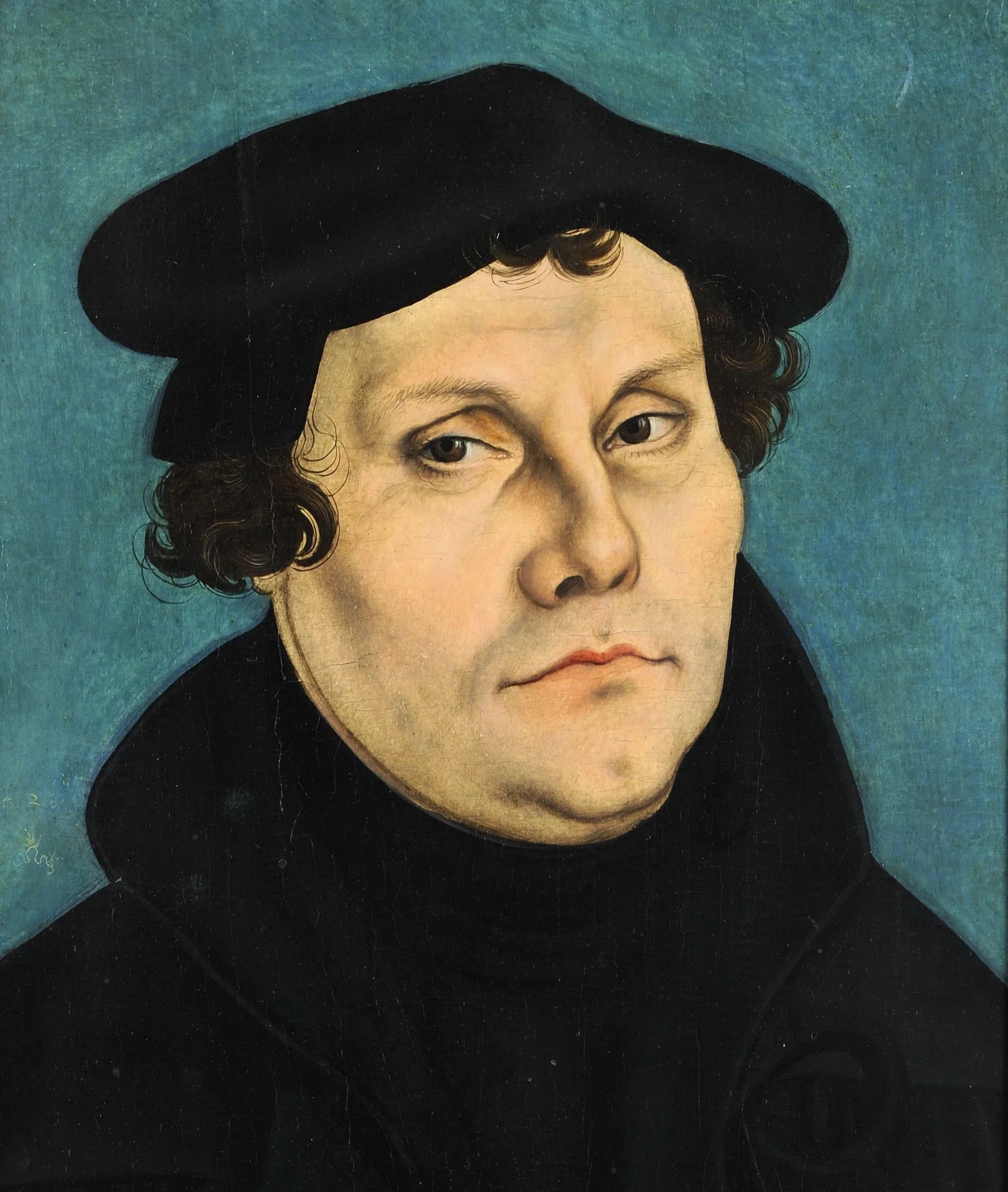
The Reformation 500 years on - Scripture Alone
Reformation 500 years on
A chain of events which changed our whole culture, changed the world as we know it.
The reformation wasn’t all good. There were some tragic events. There were some views that we definitely wouldn’t want to sign up to.
But the rediscovery of the gospel of justification by grace alone, through faith alone, in christ alone has transformed the world beyond individual salvation and a changed church.
Reformation 500 years on
A chain of events which changed our whole culture, changed the world as we know it.
The reformation wasn’t all good. There were some tragic events. There were some views that we definitely wouldn’t want to sign up to.
But the rediscovery of the gospel of justification by grace alone, through faith alone, in christ alone has transformed the world beyond individual salvation and a changed church.
Before the reformation, knowing God and being right with him rested on my good works. I did good works to climb the ladder to God. therefore the best thing you could do with your life was become a monk or a nun devote yourself to God.. any other way of living - a regular job, raising a family - second best!
But the reformation said you are so turned in on yourself even your good works are for yourself not God! The only way you can know God and be right with God is if he gives you righteousness by uniting you with Jesus. A gift of grace, received by faith alone. So All the glory is God’s! And suddenly then all your works that used to be about you become a response of thankfulness to serve others. And the monastery… and the convent become the worst place to be godly. The best place to glorify God is out in the world serving others. The so called sacred/secular divide was broken down. And it’s affected everything. For example the whole way we do work..
Luther spoke about all work being a calling from God. It’s not just monks and priests who are called. God has arranged to care for the world as each person uses their gifts within the circumstances they find themselves to serve others. All work is valuable.
From this conviction flowed the great art of JS Bach who wrote the reformation maxim Soli Deo Gloria - to the glory of God alone on all his musical scores
From it flowed the great christian social reform movements of the 18th and 19th centuries - wilberforce and the abolition of slavery, shaftesbury’s sweeping reforms for the poor and vulnerable.
Martin Luther didn’t just believe in the glory of God in all of life. He sought to live it.
And so on 13th June 1525 one of the most significant events of his life and of the reformatoin happened - Luther the monk got married. He married a nun on the run Katerina Von Borra. Luther was 41 and Katie was 26
she was quite a woman - she probably had to be. she was one of 12 nuns who luther had helped escape from a convent in fish barrels. Luther managed to find husbands and homes for the other 11. And he finally he ended up marrying Katie He gave 3 reasons for marrying her: to please his Father; to spite the pope and the devil; and as a sign of the gospel. The glory of God in all of life! The glory of God in the changing of nappies!
Luther said that marriage not the monastery was the school of godliness.
and the school of cleanliness it seems. Luther said:
‘before i was married my bed was not made for a whole year and became foul with sweat’
Actually Luther suffered with terrible depression all his life and Katie was a great help in his dark times. There was one time when words couldn’t get throught to him. She dressed in black and Luther said are you going to a funeral. No but since you believe that God is dead i thought i’d join you in mourning.
The Luther’s had 6 children - though 2 daughters tragically died. one as a baby one as a teenager. They had a busy open home. Luther built a private bowling alley on their land. Katie, who Luther called the ‘Morningstar of Wittenberg’ because of her early rising ran a small farm and brewed beer in their own microbrewery.
i could tell you so much more about the glory of God alone.. but i want to focus for the rest of our time on the last of the 5 solas
Foundational to the reformation. Sola Sriptura. Scripture alone.
Martin Luther’s rediscovery of the gospel of Justification by faith alone came when he was studying the bible.
In God’s providence the study of the Bible had come back on to the agenda largely via a secular academic movement called Humanism. Very different to modern humanism this was an academic movement that wanted to go back to ancient texts. ‘Ad Fontes’ was it’s strapline ‘Back to the sources.’
And so Luther and the Reformers re-discovered the gospel of grace in the Bible and elevated the bible over all other authorities. As the ultimate source of the revelation of God and the foundation of faith.
They stood on Scripture, studied Scipture and shared and spread Scripture.
The Reformers STOOD on the Bible
because of his beliefs and writings luther came increasingly into conflict with the church’s authority. if you undermine the church’s source of money through indulgences there’s a lot of people who are not going to be happy with you. people wrote against martin luther and called him a drunk german and he wrote against them calling them far worse things. In 1520 The pope issued a bull on Luther (not an animal, this was a decree authenticated by the stamp of the pope’s bulla, or seal). It ordered Luther to recant his beliefs about Justification by grace and faith within 60 days or face excommunication and ban (that is no one could shelter him but would have to give him up for arrest). The church’s unwillingness to even grapple with God’s word convinced Luther that setting herself up above and against God’s word the church of the day could only be a tool of Satan. Luther publicly burned the papal bull, declared the pope the anti-christ and broke with Rome.
In 1521, Luther was summoned to the Diet of Worms - this has nothing to do with a bush-tucker trial on I’m a celebrity get me out of here. A diet was a debate or council and Worms or Vorms was a place, a town.
So Luther was summoned to the Council of Vorms to appear before the Holy Roman Emperor, Charles V - a big deal..
Luther thought he had been invited to a debate. It was basically a trial for heresy, the punishment for which was death.
Luther’s prosecuter in the trial was Dr Eck, the wily old Archbishop of Trier:
And this is what Eck said:
Martin, ..Your plea to be heard from the Scripture is the one always made by heretics. … How will the Jews, how will the Turks, exult to hear Christians discussing whether they have been wrong all these years! Martin, how can you assume that you are the only one to understand the sense of Scripture? Would you put your judgment above that of so many famous men and claim that you know more than they all? You have no right to call into question the most holy orthodox faith, instituted by Christ the perfect lawgiver, proclaimed throughout the world by the apostles, sealed by the red blood of martyrs, confirmed by the sacred councils, defined by the Church in which all our fathers believed until death and gave us as an inheritance, and which now we are forbidden by the pope and the emperor to discuss lest there be no end of debate. I ask you, Martin--answer candidly and without horns--do you or do you not repudiate your books and the errors which they contain?
Luther: Your Imperial Majesty and Your Lordships demand a simple answer. Here it is, plain and unvarnished. Unless I am convinced of error by the testimony of Scripture or (since I put no trust in the unsupported authority of Pope or councils, since it is plain that they have often erred and often contradicted themselves) by manifest reasoning, I stand convinced by the Scriptures to which I have appealed, and my conscience is taken captive by God's word, I cannot and will not recant anything, for to act against our conscience is neither safe for us, nor open to us.
On this I take my stand. I can do no other. God help me. Amen.
in the most pressurised environment, before the most powerful people. facing certain death… Luther said Scripture is my supreme and final authority. Here I stand. I can do no other.
Incredible courage. And Luther didn’t die. He legged it and was then kidnapped. Many thought he was being taken off to be executed privately. The artist Albrecht Durer write in his diary ‘O God, if Luther is dead who will now teach us the Holy Gospel so clearly?’
But Luther was not dead. His kidnapper was a friend. Frederick the wise of Saxony hid Luther away in the Wartburg castle gave him a new identity to enable him to continue to write and teach.
The Reformers stood on the Bible alone.
It’s not that they said that Scipture is our only authority Solo Scriptura or Nuda Sciptura. No, there are other important authorities for the christian - creeds, confessions, the voices of tradition, church ministers - should be listened to and followed. But Scripture alone is our final authority. It is the authority that rules over and governs all other authorities.
Because Scripture is the Word of GOD. It is FROM God the Father ABOUT God the Son, and BY God the Holy Spirit inspired.
Scripture is so important. We are saved by Christ alone but the place where we encounter christ is in and through Scripture, God’s word that brings life and transformation.
The reformers weren’t setting out to change the world. They just wanted to get people back to the Bible. But going back to the Bible changed the world.
Here’s how Luther described how the Reformation happened. He says :
“I simply taught, preached and wrote God’s word; otherwise i did nothing. And while i slept or drank Wittenberg beer with my friends Philip and Amsdorf the word so weakened the papacy that no prince or emperor ever inflicted such losses upon it. I did nothing, the word did everything!”
Or as the Bible itself puts it: Hebrews 4:13
For the word of God is alive and active. Sharper than any double-edged sword, it penetrates even to dividing soul and spirit, joints and marrow; it judges the thoughts and attitudes of the heart.
The Reformers stood on the Bible as our supreme and final authority
The reformers studied the Bible. Not to know things but to have Jesus Christ. In 1533, Luther wrote: ‘for a number of years now i have annually read through the bible twice. If the bible was a great tree with large and tiny branches i have tapped at every branch, eager to know what was there and what it had to offer.’
And the reformers shared the Bible, they spread the word.
In two main ways. First by a commitment to preaching it.
Luther said that he valued preaching the bible more than anything else in life
‘if i could today become king or emperor i would not give up my office as preacher’
Luther regularly preached at the Town church in Wittenberg where his friend, Johannes Bugenhaagen was the Pastor. He’d often preach twice on a sunday and once during the week.
The reformers believed and taught that preaching is also the Word of God.
They pointed to passages like that one in Hebrews 4v13. ‘The word of God is living and active’ and noted that that passage is talking v2 about the preached word. Or they read 1 Peter 1v23 For you have been born again, not of perishable seed, but of imperishable, through the living and enduring word of God. And (v25) this is the word that was preached to you.
Preaching is the Word of God. Not in the same way that the Bible is the Word of God - Preaching is a human act, the Bible is infallible - but as an administration or extension of God’s word. For people to be saved the word needed to be distributed not left as a book on a shelf. More than that, Luther said that merely reading the word is not as fruitful and powerful as it is through a public preacher whom God has ordained to preach. I think we know this in our experience, don’t we? That God’s voice is heard in preaching.
Luther again:
“Would to God that we could gradually train our hearts to believe that the preacher’s words are God’s Word …It is not an angel or a hundred thousand angels but the Divine Majesty Himself that is preaching there. To be sure, I do not hear this with my ears or see it with my eyes; all I hear is the voice of the preacher, and I behold only a man before me. But I view the picture correctly if I add that the voice and words of the pastor are not his own words and doctrine but those of our Lord and God. It is not a prince, a king or an archangel whom i hear; it is He who declares that He is able to dispense the water of eternal life.”
Now none of this meant that the preacher is anything! Both preacher and listener are pupils of the Word. God is everything!
It actually places great responsibility on preachers to know and proclaim the gospel so as not to be in Luther’s words ‘a kind of pest to the church’… a wolf that does violence.
The point is that preaching is not a process of education or a transfer of information. Often we already know the truths contained in the sermon. But we come to the preaching of the word not to learn new things but to hear Jesus’ voice and encounter his presence afresh. What an incentive to be at church to meet Jesus in the preaching of the word as well as at his table.
The Reformers spread the bible by preaching it
They also spread the Bible by translating it.
Few people had access to a bible or could read it because the only official Bible available was the Latin Vulgate which also happened to be a particularly inaccurate translation. So the reformers set about translating the bible from the original hebrew and greek (back to the sources) into easy everyday common languages so that all people ‘might sieze and taste the pure clear word of God.’ Of Luther’s german translation someone wrote that no other had “the same majesty of diction, sweeping vocabulary, native earthiness and religious profundity of Luther.” This is what Luther himself said of his desire to show how relevant the Bible is “I endeavoured” he wrote “to make Moses so german that no one would suspect he was a Jew!”
In England, William Tyndale, wanting others to read the words of life that had saved him, set about his life’s work of translating the Bible into English.
He sailed to Germany, where it was safer to work. And there, within a few short years, Tyndale managed to translate most of the Bible. Accurate and easy to read, it turned out to be a gem of a translation with words and turns of phrase that have influenced spoken and written English more than Shakespeare.
It was illegal in England to own or even read such a translation – and the penalty was death. Some 16,000 copies of Tyndale’s Bible were smuggled into England before he was caught in 1535 and burned to death near Brussels, uttering the immortal last words ‘Lord, open the King of England’s eyes!’
Just two years after Tyndale had died uttering that prayer, it was decreed by the king that an English bible be placed in every church in England. King Henry VIII ordered ‘ye shall discourage no man from the reading or hearing of the Bible, but shall expressly provoke, stir and exhort every person to read the same as that which is the very lively word of God.’
Six English bibles were placed in St Paul’s Cathedral, crowds immediately thronging round those who could read loud enough to make themselves heard. So great was the excitement that priests complained of how, even during the sermon, laypeople were reading the Bible aloud to each other.
The message – and the excitement – were spreading.
with the Bible freely available in common language, Luther said that it was possible for a cleaner to know more of God than 10 professors in the university. You don’t need high intellect to know God, you just need to be able to read or listen - the Holy Spirit speaks
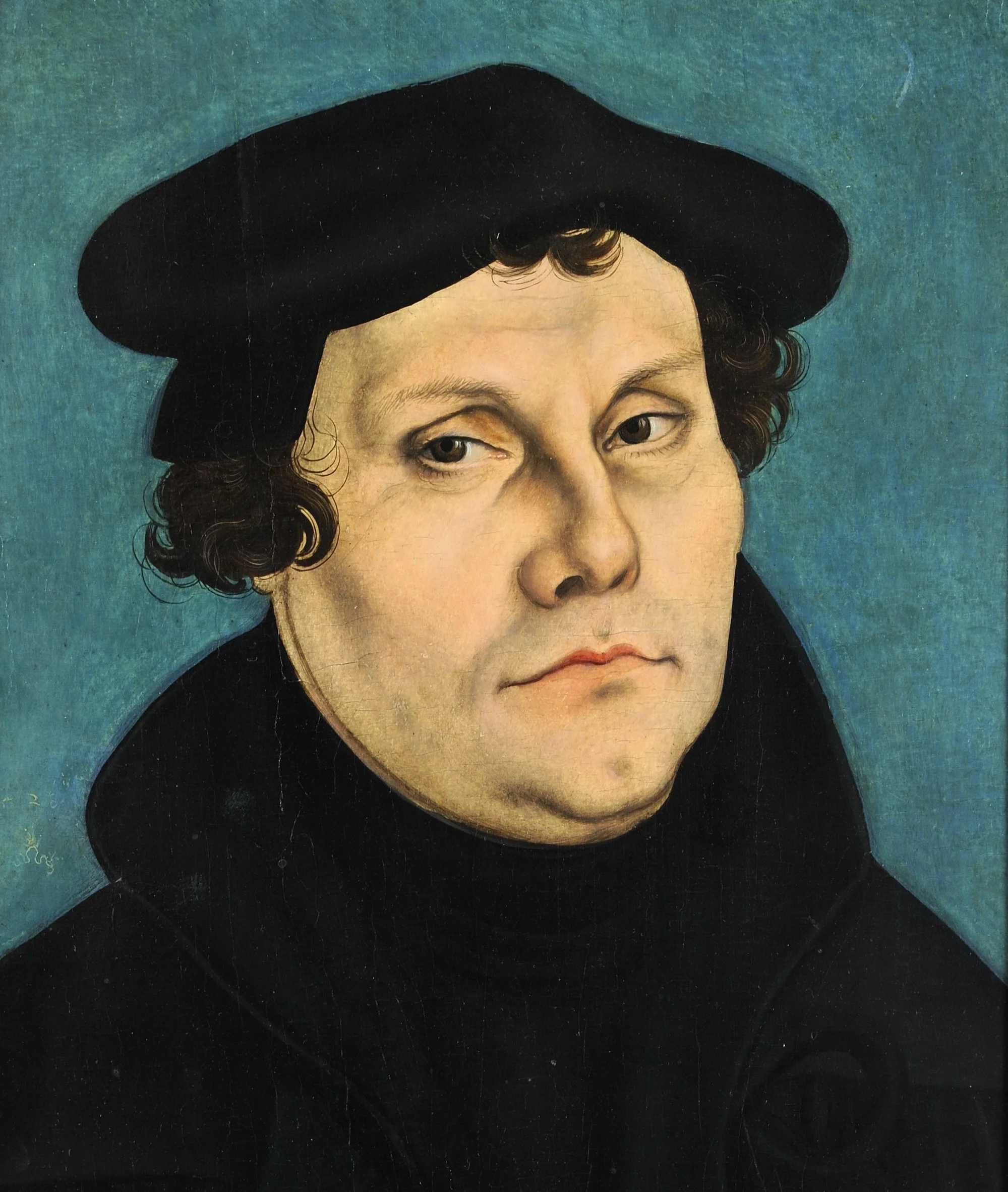
The Reformation 500 years on. Christ Alone
We saw last week that at the heart of the reformation was the rediscovery from the Bible of God’s revelation for how we can know him and how we can be right with him - how we can be justified? - that’s the Bible’s word. And the reformers great rediscovery was that justification being right with God is not a matter of our works and efforts to be holy. no, rather it has to be a free gift entirely from God. Justification is by grace alone, received through faith alone
Because of the depths of our sin, the fallenness of our hearts, we cannot save ourselves. We cannot choose god, we do not want God, we are turned away, curved in on ourselves. And even our good works are not for God but for ourselves. We cannot earn righteousness, neither are we gradually made righteous by cooperating with God’s assistance which was the official view of the church in Luther’s day. No, we must receive righteousness as a gift, totally external to us. Not a gradual change of our state but an immediate change of of our status. When we trust in Jesus God doesn’t remove our sins but he gives us the full righteousness of Christ and fully accepts us on that basis. Full welcome in. We are declared righteous, justified. We can know God, we are right with him. There is no further contribution to be made. there is no condemnation to fear. you are in the clear forever. Even your ongoing sins cannot shake your new status…
But how? How does this work?
We said that it all feels a bit abstract and out there. Can it really be true that God sees me as righteous when let’s face it in my attitudes and thoughts and behaviour - i’m not righteous. And if i’ve been given this righteousness of Jesus that clothes me - well it’s not really me is it that God loves? It doesn’t really work does it? I feel unconvinced
But secondly. If it did work. If i really am seen as righteous and that status never changes so i’m in the clear forever … what’s to stop me just carrying on in sin. Can i keep sinning so that grace may increase? Can i just do as i please? Well in theory yes… It doesn’t sound great does it?
The curial way to answer these concerns and to see that our salvation really works - really sets us in the clear forever AND it really changes us in the here and now. The way to understand this is through the third SOLA. The third of the 5 rallying cries of the reformation. Last week we has Sola Gratia and Sola Fide Grace alone, Faith alone. But the centre of it all is CHRIST ALONE Solus Christus
Salvation is found in no other name than Christ, and Christ alone
In these 3 talks we are thinking about the Protestant reformation which began 500 years ago on the 31 October 1517 when the Augustinian monk, Martin Luther, pinned his 95 theses to the door of the university church in Wittenberg, in what is now Germany. It was the 16th C equivalent of a provocative blog post intended to stir up discussion about the corruption of the church of which Luther was a part. But it was also a watershed moment in the history of Western Europe and perhaps the whole world. It marked the beginning of the end of the middle ages; magic and superstitiion giving way to a new age of reason and truth. The complex series of events that followed in Germany and Switzerland, Scotland and England formed a reformation not just of theology or ecclesiology (the way that the church looks) but also a changing of the whole social order. The reformation.
—
We saw last week that at the heart of the reformation was the rediscovery from the Bible of God’s revelation for how we can know him and how we can be right with him - how we can be justified? - that’s the Bible’s word. And the reformers great rediscovery was that justification being right with God is not a matter of our works and efforts to be holy. no, rather it has to be a free gift entirely from God. Justification is by grace alone, received through faith alone
Because of the depths of our sin, the fallenness of our hearts, we cannot save ourselves. We cannot choose god, we do not want God, we are turned away, curved in on ourselves. And even our good works are not for God but for ourselves. We cannot earn righteousness, neither are we gradually made righteous by cooperating with God’s assistance which was the official view of the church in Luther’s day. No, we must receive righteousness as a gift, totally external to us. Not a gradual change of our state but an immediate change of of our status. When we trust in Jesus God doesn’t remove our sins but he gives us the full righteousness of Christ and fully accepts us on that basis. Full welcome in. We are declared righteous, justified. We can know God, we are right with him. There is no further contribution to be made. there is no condemnation to fear. you are in the clear forever. Even your ongoing sins cannot shake your new status…
But how? How does this work?
We said that it all feels a bit abstract and out there. Can it really be true that God sees me as righteous when let’s face it in my attitudes and thoughts and behaviour - i’m not righteous. And if i’ve been given this righteousness of Jesus that clothes me - well it’s not really me is it that God loves? It doesn’t really work does it? I feel unconvinced
But secondly. If it did work. If i really am seen as righteous and that status never changes so i’m in the clear forever … what’s to stop me just carrying on in sin. Can i keep sinning so that grace may increase? Can i just do as i please? Well in theory yes… It doesn’t sound great does it?
The curial way to answer these concerns and to see that our salvation really works - really sets us in the clear forever AND it really changes us in the here and now. The way to understand this is through the third SOLA. The third of the 5 rallying cries of the reformation. Last week we has Sola Gratia and Sola Fide Grace alone, Faith alone. But the centre of it all is CHRIST ALONE Solus Christus
Salvation is found in no other name than Christ, and Christ alone
This is really the centre that holds together all the other Solas (the others by the scripture and god’s glory alone)
God really accepts me. I am forgive and righteous because he has given me his Son. he has given us Christ
God the eternal son, the second person of the trinity, jesus Christ left his throne in heaven and came down and took to himself our human nature inorder that he might die for our sins and rise for our life - God UNITING himself with our humanity.
He, Jesus …became what we are so that we might become what He is
Though He was rich yet for our sakes he became poor so that we through his poverty might become rich
UNION with Christ
Jesus uniting himself with our humanity and us becoming personally united to Jesus through our faith and by the work of the Holy Spirit. THIS was the key for the reformers for HOW we ARE counted righteous in Christ. HOW it really happens.
The reformers would point to the illustrations or analogies in the Scriptures used to impress upon the Christian the reality of union with Christ that comes when we trust him.
So one of those pictures or anaolgies is the family. We’re all born into familes, parents and grandparents and maybe siblings, uncles, aunts, cousins - a family history. We’re born joined, connected to people whose likeness we bear. And Romans 5 teaches us that this is true of all humanity, the family of humanity. All humanity is born of Adam. The father of the human race who sinned and brought death. We were all born sharing Adam’s doomed status and sinful inclinations. Born in Adam.
But Jesus comes into the world and joins himself to the human family as a new Adam, a new Man - a perfect man. And we through faith and by the power of the holy spirit can leave Adam’s clan and be born again of Christ, sharing his status and his inclinations
1 Cor 15v22 “For as in Adam all die, so in Christ shall all be made alive”
We join a new family
Another picture or analogy that is used - and this was definitely Luther’s favourite. is Marriage. It’s an image used throughout the Bible for God’s relationship to his people. God is a husband to his people. Jesus is the bridegroom. His church is the bride.
When a man and a woman are married - in a very real way they are united. There is a sharing, a joining of lives. “All that I am i give to you” they pledge to one another. “All that I have I share with you” and this really happens. Husband and wife take on each other. All of the wealth, all of the debts, all of the good things, all of the problems and brokenness. They are joined. They share.
Now remember our objection to the idea that believer’s sins are transferred to the Cross and Jesus’ righteousness is transferred to the believer. The two things are sort of beamed across the millenia. And it all sounds a bit weird. It’s all very abstract. Tom Wright says “How can a judge impute, impart, bequeath his righteousness to the defendent? Righteousness is not an object or a substance or a gas that can be passed around ….
BUT if Jesus takes our sin and we take his righteousness because we are united to him, joined to him ‘cemented to him’ said Luther just as (and in fact more deeply than) a husband is united to his wife and they share all things. If this is the case - that we are united to Jesus in his death… in his resurrection - then the objections begin to feel less problematic.
Luther loved to tell the gospel as te story fo the rich and divine bridegroom christ who marries the poor wicked harlot, redeems her from all evil and adorns her with all his goodness.
Listen to Luther “Christ is full of grace, life and salvation. The soul is full of sins, death and damnation. Now let faith come between them and sins, death and damnation will be Christ’s, while grace life and salvation will be the souls; for if Christ is a bridegroom he must take upon him the things which are his bride’s and bestow upon her the things which are his. If he gives her his body and very self how shall he not giver her all that is his? and if he takes the body of the bride how shall he not take all that is hers”
United with Jesus in his death and resurrection - Judgement for sin is removed, Christ’s righteousness is given. His status.
See this in our passage. Romans 6
v2 Joined to Jesus - everything that has happened to him is counted as having happened to us who believe. Jesus died for sin. Therefore Paul can say to us, v2 “We died to sin”
In Christ we have died. We cannot now die. The judgement for our sin has been paid. it can’t be exacted twice. There really IS no condemnation for those who are in Christ.
[Joy Bache - I’ve died already!]
v5 we have been united with Jesus in his death we will be (it’s unavoidable) united with Jesus in his resurrection
v8 If we died with Christ we believe that we will also live with him. Joined to Jesus he takes our death, he gives us his life.
Here’s the thing. At it’s heart, the gospel isn’t the good news that we have been given forgiveness or eternal life or freedom from judgement or the righteousness of christ. The good news is that we have been given Christ himself. The gospel IS Christ and Christ Alone - in whom all our salvation and the riches of grace are found.
This is wonderful news
We naturally place ourselves at the centre of our own solar system. We might think that becoming a Christian means bringing Jesus somewhere into our orbit. But no, when we trust in Jesus, he unites our lives with his and at the centre of our lives it’s not just us but Jesus himself
Listen to the great Victorian preacher and heir of the reformation, Charles Spurgeon preaching to his congregation at the Elephant and Castle:
remember that he sees us now in christ. Beholdhe has put his people into the hands of his dear son… He sees us in Christ to have died, in him to have been buried, and in him to have risen again. As the Lord Jesus Christ is well pleaseing to the Father, so in him are we well-pleasing to the Father also; for our being in him identifies us with him.
If then our acceptance with God stands on the footing of Christ’s acceptance with God, it standeth firmly, and is an unchanging argument with the Lord God for doing us good. If we stood before God in our own individual righteousness our ruin would be sure and speedy. but in jesus our life is hid beyond peril. Firmly believe that until the Lord rejects Christ he cannot reject his people. Until he repudiates the atonement and the resurrection he cannot cast away any of those with whom he has entered into covenant in The Lord Jesus Christ.”
But what about our second question?
Does the secure free gift of salvation just mean that we settle for our sin, we make peace with it?
Does the comfort of the gospel make us comfortable with sin?
Shall we go on sinning so that grace may increase?
No, no way..says the apostle Paul and with him the Reformers
Romans 6v2 We died to sin, how can we live in it any longer?
we haven’t just been given complete freedom, assurance, unchanging righteous status as an abstract thing we have been given those things because we have Christ. He, who loves us and died for us is ours and so will we then easily sin against him? If you have been walked through the death of sin, someone paying it for you and brought to life on the other side. Why oh why would you ever want to go back to play with death causing sin? If he suffered so for our sins, for us why would we heap more pain upon his sacred head? We are christians not for all the free, secure benefits provided but because we came to love Jesus. That’s what eternal life is - knowing and loving Jesus.
Grace will not lead us to shrug our shoulders at sin. the grace of Jesus leads us to gratitude and wanting to know him and be like him and please him.
linked to this is the fact that when Jesus unites himself to our lives and changes our status. although our sinful natures are not removed. our hearts ARE changed, the holy spirit of Christ gives to us new desires within us - our hearts come to life and start fighting sin. Whereas before our hearts were darkened and we wouldn’t, couldn’t desire God. we were fast bound in sin and nature’s night. Now, we have been made alive to God. Our hearts have enlarged - the Lord is at the centre and we now can choose to love him and over time God, for the sake of our joy, will see that we do…
look at v4 we were therefore buried with him through baptism into death INORDER THAT just as Christ was raised from the dead, through the glory of the father, we too may live a new life.
New life! New freedom, power - to choose life. To choose jesus.
no longer slaves to sin v6
no longer inevitable that sin reigns v12 in our lives. sin will no longer be your master v14
Finally, it is as we grasp our true status and identity in Christ - Justified. That we change and grow.
Too easily I forget that Christ is my identity. I think that I am what I do - and i swing between pride and despair. But when I remember that Christ defines me i’m much more immune to both pride and failure. In him, whatever i do, I am no failure at all, I am triumphant, I am loved. And in him what have i really to be proud of but him!
So the apostle Paul in v10 of Romans 6 says count yourselves (or better - reckon yourselves - i love that) dead to sin but alive to God in Christ Jesus.
You are dead to sin. You are alive to God. You are in Christ Jesus. Reckon yourself. Remember who you are. Be who you are.
Prince Charles - 'William, William … remember who you are.' Pulls himself up to the stature of a future king
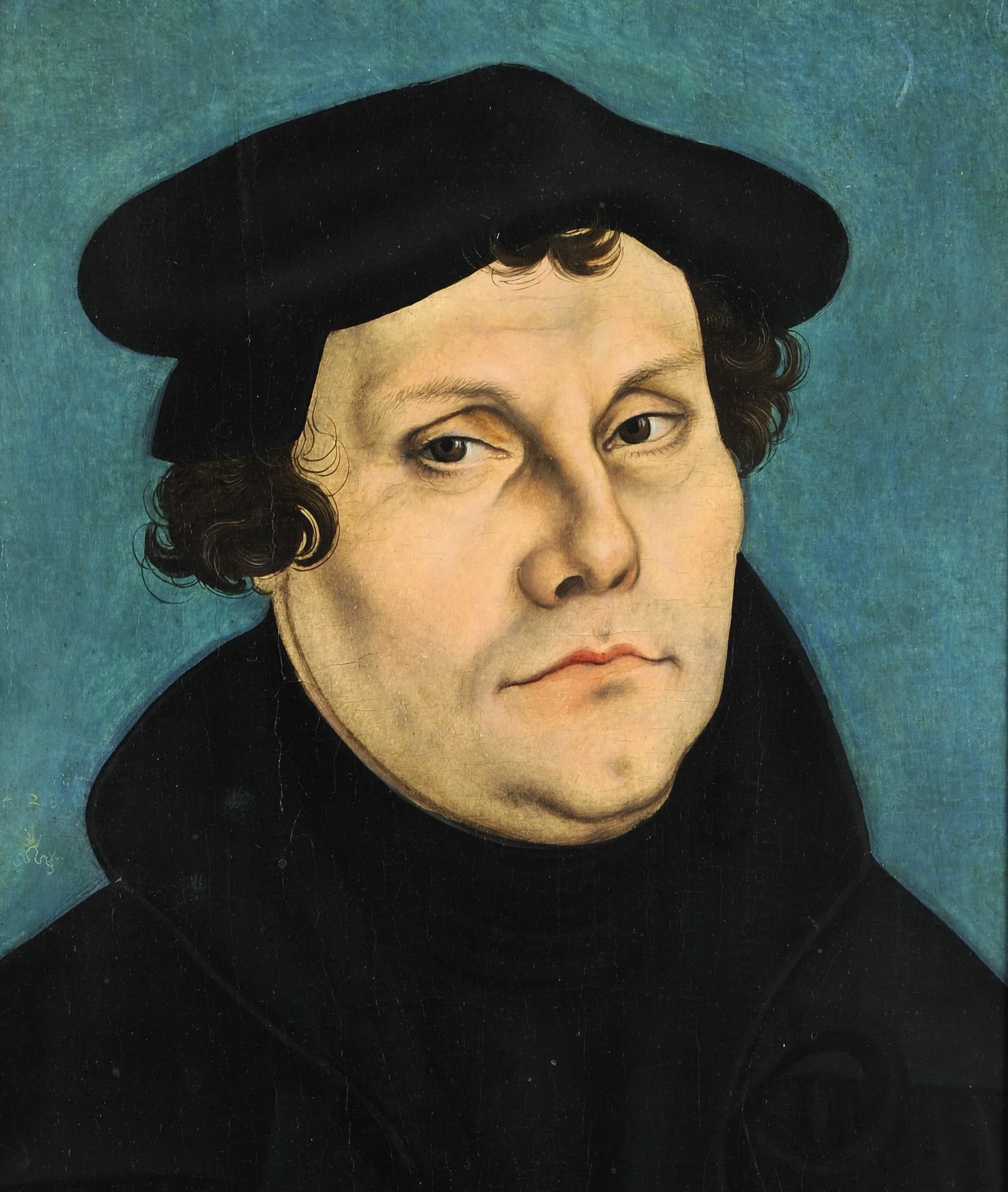
The Reformation 500 years on. Grace Alone, Faith Alone
We are going back 500 years. to the year 1517 October 31st when a german monk called Martin Luther. Nailed a pamplet - 95 theses - to his churches noticeboard - the door of the Castle Church of Wittenberg, Saxony. This action is said to have kick started what is known as the Protestant reformation
We are going back 500 years. to the year 1517 October 31st when a german monk called Martin Luther. Nailed a pamplet - 95 theses - to his churches noticeboard - the door of the Castle Church of Wittenberg, Saxony. This action is said to have kick started what is known as the Protestant reformation
Now, what comes to mind when you hear about the Reformation?
Perhaps you hated history at school and you know nothing about this stuff and you’re not to bothered about whether it stays this way. What on earth does a 500 year old monk have to say to my modern life? It feels very irrelavant. I hope to show that it’s not so please bear with me.
Maybe you do know a bit about the Reformation. You know it was political. Henry VIII took advantage of the unheavals to break with the RC church and start the Church of England thus enabling him to divorce that he didn’t feel like decpitating. That’s the Reformation - the church getting swallowed up into the murky world of politics
Perhaps you know that the Reformation was marked by argument and schism and sometimes and death. Heretics burned at the stake. Monasteries and churches and icons destroyed. Maybe you share the view of the presenter on a recent TV documentary who said, ‘In many ways the Reformation and the bitterness and division it represents reminds us of the worst aspects of our religious instincts.’ Religion is a thing of mystery and claiming to know the truth and challenge other peoples’ perception of the truth only leads to the kinds of extremism and barbarism that blights our world. The reformation was bad news.
Not to mention the fact that wasn’t the Reformation about archaic medieval religious debates about purgatory and indulgences and relics? What on earth does it mean for us??
Well….
It’s true that the Reformation started with a debate about Purgatory. Most people at the time believed in purgatory, a place of torment to which Christians went at their death to be purged of their sins before moving on to heaven. The church at the time had some major building projects going on in Rome (we all know how hard it is to fund building projects) and so a trade had grown up around selling indulgences - promises from the pope that gave people time off in purgatory. If you were particularly minted you could buy a plenary or full indulgence and skip the place altogether! Well Martin Luther in Saxony was particularly provoked by an indulgence broker called Friar Johann Tetzel. Tetzel had advertising jingles such as ‘as soon as the coin in the coffer rings, the soul from purgatory springs.’
Luther’s indignation came from a better understanding of the Bible. Better translations of the Bible were becoming available partly because of the advent of the priniting press but also because of the rise of an academic movement called humanism - a movement back to rediscovering ancient texts including the Bible. The Bible was being taken out of the hands of a corrupt church. And Luther’s 95 theses began to represent a challenge of authority - that the church was not the Supreme authority in matters of faith, rather that place belonged to Scripute Alone. Sola Scriptura was the first rallying cry of a Reformation that was a rediscovery of the Bible!
It’s also true that Henry VIII jumped on the bandwagon of this Protest (from which the word Protestant comes) against the authority of the church as an opportunity to do his own thing. But there was more going on here in England. Thomas Cranmer. Henry’s Archbishop of Canterbury founded the church of England on his Book of Common Prayer which was chock full of new theology of the Reformation. The reformation was a rediscovery of God/
Finally, it’s true that violence and discord and death were part of the Reformation and without doubt leaders of the reformation were sometimes guilty of acting towards those with whom they disagreed in ways that deny the gospel they professed.
But… these were not quarrels about small different opinions. At the heart of the reformation was a rediscovery from the Bible of God’s revelation for how we can know him and how we can be right with him eternally.
this is not a small thing. if our culture thinks it is, it shows how totally obsessed with the material and present world our culture is. For the heart of the Reformation takes us to the very reason why we exist and questions of our etrenal well being. How do we know God and get right with him?
This is why people gave their lives to speed the Reformation - like William Tyndle who had translated the Bible into English. It mattered… and it still does
A culture that blindly focusses on the material and the now at the expense of the spiritual and the eternal desperately needs the gospel of the reformation
And it’s precisely because we are a church in a culture that doesn’t believe in sin and doesn’t value truth.. and doesn’t focus on the eternal that we desperately need to be brought back to the discoveries of the Reformation and to the heart of God.
At the heart of the reformation was a rediscovery from the Bible of God’s revelation for how we can know him and how we can be right with him eternally. The theological term for this is Justification. How can human beings be justified before God, accepted by him as righteous
Martin Luther said that Justification was the doctrine by which the church stands or falls.
Luther’s discovery was that Justification must be by grace alone and through faith alone.
2 more of the rallying cries of the Reformation.
Justification by grace alone through faith alone
Martin Luther was born in Saxony in Germany in 1486
He studied briefly as a Lawyer but after a conversion experience he entered the monastery and became an Augustinian Monk. He was unbelievably zealous. In fact he surpassed all others in his observance of fasting and prayer and confession. Medieval theology taught that only sins that had been confessed could be forgiven and so Luther would soend literally hours in the confession box exhausting his confessors searching his soul for unconfessed sin. For all his righteous endeavours Luther could never find any assurance of wellbeing before God. When a close friend died and Luther took his funeral, Luther became terrified of the righteous judgement of God. He could never do enough.
In 1512 aged 26 he was sent by his order to be lecturer of Biblical studies at the New University of Wittenberg. And it was while lecturing on the Psalms and Galatians and particularly Romans that Luther came to a fresh understanding of the Christian gospel.
One key moment was Luther’s so called ‘Tower experience’ Luther had been musing on Romans 1v17 “In the gospel the righteousness of God is revealed from faith for faith. As it is written “the righteous shall live by faith””
Luther hated this verse; in the gospel the righteousness of God is revealed. How could the righteousness or justice of God be gospel? How could the judgement of God be good news??
But Luther began to see the righteousness of God revelealed in the gospel not simply as a quality of God but as a GIFT FROM GOD by which we can live. The righteousness of God us the righteousness he gives to us so that we may be righteous before him!
What did Luther mean and how did he get here?
Well Luther’s new insight came from
A new understanding of sin
A new understanding of Grace
A new understanding of sin.
Actually it wasn’t so much a new discovery as a rediscovery of something that had been lost. Luther rediscovered the teachings on sin of the 4th C North African Bishop and early church Father St Augustine of Hippo.
The medieval view of Sin was that sin was a weakness of being, a lack of good, a sickness that needed healing. That’s very similar to our culture’s view of sin isn’t it? We are a bit bad. We slip up now and again. But it’s basically a cosmetic problem. We might need some positive thinking to heal ourselves and become our best self.
Desiderus Erasmus was the leading humanist scholar of Luther’s day. In his book On the Freedom of the Will he taught that the problem of sin was basically a problem of spiritual laziness; of sloth. We need God’s grace to free our will to please him.
Well Luther discovered, as he returned to the Bible and Augustine’s commentaries, a very different, much deeper and more radical understanding of Sin.
Romans 3v10 “There is no one righteous, not even one;
11 there is no one who understands; there is no one who seeks God.
12 All have turned away, they have together become worthless;
there is no one who does good, not even one.”
Luther’s discovery from the scriptures was that sin was not sickness but rebellion against God
The problem of our sin is not cosmetic but goes as deep as it possibly can: all the way down to our hearts, shaping what we want and love.
Luther answered Erasmus’s on the freedom of the will, with his, On the bondage of the will, probably his greatest work. Here Luther argued that out intuitive sense of complete freedom with regard to decision making is an illusion. Yes we feel free - we do always do what we want. But… we cannot choose what to want. Underneath our wills, directing and governing our choices lie our hearts with all their inclinations and desires. And our hearts are naturally inclined away from God, we will never choose him. our hearts love darkness. We choose sin because that is what we want. So Luther spoke of slavery to sin, addiction, we are like rotten trees that can only produce rotten fruit - and of course we are powerless to save oursleves. Even our righteous works are not for God but for us!
The reformation’s deep view of sin is rather like the proverbial ugly duckling
Our culture hates the idea that we are rotten to the core - it’s a recipe for self hatred and we might be tempted to be embarassed of such a view. But only if I see that my plight is so bad that i cannot fix myself will i look outside myself for help and find the freedom that Christ brings. The ugly duckling is really a swan.
A new understanding of sin
A new understanding of Grace
In medieval theology, salvation was by grace. You couldn’t save yourself. Your sin needed to be healed and your soul helped by grace. And Grace was seen as a ‘thing’ at work within you; a substance or a force or a fuel administered, or imparted, through the sacraments of the church - of which there were 7 - baptism, holy communion, confirmation, confession, marriage, holy orders and the anointing of the sick. Or infused through prayers to the Saints or to Mary ‘full of grace”. So Church was a bit like a hospital with the Priest a pharmacist dispensing grace as medicine to the poorly or cans of redbull to the spiritually lazy to make them righteous.
Luther’s growing understanding of grace, needless to say, was very very different.
Grace was not a ‘thing’ at work within us but God’s unmerited favour towards us whereby the righteousness of Jesus is gifted to us not as stuff being infused into us that gradually changes our state but as righteousness imputed/given to us that immediately changes our STATUS
Our sins are not removed but - somehow, and we’ll see how in our next talk - they are no longer counted against us. Justification is not about God gradually making us righteous but here and now declaring us righteous. It is language not so much of the hospital as the law courts. Justification is not a process of healing towards God but a declaration that we have a right positive standing before God now.
21 But now apart from the law the righteousness of God has been made known, to which the Law and the Prophets testify. 22 This righteousness is given through faith in[h] Jesus Christ to all who believe. There is no difference between Jew and Gentile, 23 for all have sinned and fall short of the glory of God, 24 and all are justified freely by his grace through the redemption that came by Christ Jesus.
Did you notice that it’s freely given? Salvation is a gift from first to last. We do nothing. It’s not our works plus the essential help of God’s grace. It’s salvation by grace ALONE - all of grace. We contribute nothing. We just receive the gift by faith, by simple trust which itself is a gift of the Holy Spirit. Justification by grace alone, through faith alone.
2 applications
No contribution
Ill. imagine a painter gives you one of her paintings, framed and ready to hang in your house. And before you do so you proceed to break open the frame and get a biro to add a bit of shading to the sky!
Or imagine if you’re invited to a dinner party and the meal is served to you and you take it back to the kitchen to do a bit more work on the sauce
No - when you are given something as a finished, completed gift - The creator has laid down her paint brush, has removed his apron and said this cannot be improved on – it is not only needless but offensive to attempt your own contribution.
salvation is a gift from first to last There is nothing you and can do to contribute. In fact to seek to make a contribution is to undermine the finished work. To add is to subtract.
And yet we do. We do treat grace like a substance that assists our efforts. We do think that God favours us when we’ve read our bible and prayed or because we are a good person, do noble things, or are moral. And God frowns upon us when we’re bad and immoral. Don’t you catch yourself thinking – ‘I don’t really deserve that God should take any interest in me today, because i haven’t been a very good Christian of late..’ – as if we ever deserved anything from God! As if it wasn’t all of grace.
By nature we’re predisposed to reject grace in favour of our works because of our innate pride. You see if salvation is all of grace then all of the glory must go to God. But we are naturally prone to exalt ourselves – surely it is really about me my contribution: God likes me when i’m good, doesn’t when I’m bad. But no, it’s not about us. It is all about God and his free grace towards needy undeserving sinners.
No contribution. Humbles us ..but of course it’s the most wonderful news
and leads to our second glorious point
No condemnation
imagine that you owe a huge amount of money. you have run up a debt that you can never repay and to your shame it has been discovered. you stand before the judge helpless. you know that your debt means your life is ruined, your family is ruined. you will spend the rest of your life in debtors prison ..the rest of eternity..
Imagine how you feel. Suicidal, utterly helpless.
then imagine that your debt is cancelled. it no longer exists. no longer hangs over you. it is gone, completely.. nothing to pay. the world has changed. everything has changed, you can barely believe it
how would you feel?
There is a consistent testimony down through the years that those who have accepted that God saves by grace alone have found the message to be one of unutterably sweet liberation.
Listen to Martin Luther on his discovery of Grace alone:
‘I felt that i was altogether born again and had entered paradise itself through open gates’
or william tyndale speaking of the gospel of grace as “merry, glad and joyful tidings. that maketh a man’s heart glad and maketh him sing, dance and leap for joy.”
or John Bunyan the 17th C author of pilgrims progress on discovering that his righteousness was a gift of God and not of himself, he exclaimed, “Now did my chains fall off my legs indeed, I was loosed from my affliction”
My chains fell off, wrote John Wesley in his famous hymn, my heart was free I rose went forth and followed thee.
No condemnation
Justification by grace alone through faith alone
The only message of true liberation that has the power to make human beings unfurl and flourish
Next week in Reformation talks.
Still some fundamental questions remain:
First. How is it possible? How does it work that God can just give us righteousness and count it as ours? As if righteousness is some kind of ‘thing’? It feels very abstract, something just ‘made-up’? and as such might create some doubts in our minds. Am I right in God’s eyes? Am I?
Second. Does grace mean that sin no longer matters? With salvation in the bag might people feel we can just ‘keep on sinning that grace may increase’ - after all I like sinning and God likes forgiving.. Does the way I live really matter?
Well there is a way of understanding how God gives me righteousness AND the way we live as Christians does matter. The answer to both those questions will be seen in our next talk and our next SOLA of the reformation. Salvation is not an abstract legal transaction, salvation is in CHRIST ALONE
tune in next week ….