
Luke 10: 1-24
Every disciple of jesus is given a message to publicly proclaim, to communciate urging everyone to believe it.
This of course is an incredibly hot issue in our society -
Anyone claiming that they have the Truth; saying that their religion is superior and trying to convert people to it is considered at best arrogant and at worst dangerous. The divisiveness of religion is seen as a major threat to world peace.
And to a certain degree - that fear is absolutely right. There clearly is a danger that religion and ideology can play into the negative human tendencies towards superiority and separation. looking down your nose at ’them’ can lead to the marginalisation of others which can in turn lead to oppression, abuse or even violence against them.
Our modern society’s solution to this problem is to seek to control religion, to privatise religion and silence the religious. We as western Christians feel this pressure very keenly and largely we bow to it. We are silenced; we bow to the dogma that it’s fine to believe what you want to believe as long as you don’t try to persuade or convert anybody else..
But - as we shall see in a bit there are deep internal contradictions and problems with this dogma.
We shall see in this passage that Christian disciples ARE messengers. It cannot be avoided. We are
sent on a Mission
with a Message
and yet it is our Motivation that will affect the whole way we go about our mission and ensure that we are never contributors to oppression or abuse of others ..
We’re looking at the life of Jesus in the gospel of luke
We’ve seen that there’s a shift in theme, a turning point in Luke 9-10
chapters 1-9 Who is Jesus? 9 onwards Since he is who he is - the divine son from heaven- how then shall we live? the answer is become a disciple, follow him. And what does that look like? well what these next chapters tell us..
next week - neighbours to all, following - worshippers
this week - it’s to be a messenger. disciples are messengers
every disciple of jesus is given a message to publicly proclaim, to communciate urging everyone to believe it.
This of course is an incredibly hot issue in our society -
Anyone claiming that they have the Truth; saying that their religion is superior and trying to convert people to it is considered at best arrogant and at worst dangerous. The divisiveness of religion is seen as a major threat to world peace.
And to a certain degree - that fear is absolutely right. There clearly is a danger that religion and ideology can play into the negative human tendencies towards superiority and separation. looking down your nose at ’them’ can lead to the marginalisation of others which can in turn lead to oppression, abuse or even violence against them.
Our modern society’s solution to this problem is to seek to control religion, to privatise religion and silence the religious. We as western Christians feel this pressure very keenly and largely we bow to it. We are silenced; we bow to the dogma that it’s fine to believe what you want to believe as long as you don’t try to persuade or convert anybody else..
But - as we shall see in a bit there are deep internal contradictions and problems with this dogma.
We shall see in this passage that Christian disciples ARE messengers. It cannot be avoided. We are
sent on a Mission
with a Message
and yet it is our Motivation that will affect the whole way we go about our mission and ensure that we are never contributors to oppression or abuse of others ..
Mission, Message , having the right Motivation
- mission
v1 sent them ahead
v3 go i am sending you
chapter 9 v1 the apostles, the 12 sent to preach cast out demons heal the sick
Those are the 3 things jesus does
preach - persuade with the truth
cast out demons = liberate people’s souls from that which is enslaving them
heal the sick = mend bodies and communities, fabric of the world
what jesus does - send apostles, his appointed leaders out with authority to do that
and if we only had chapter 9 and not 10 we could probably legitimately say - ‘there you see that’s what the leaders do, full time christian workers, the clergy, they go out to do those things - we pay them to do it. i’m sure glad they’re doing that…’
but in chapter 10 - jesus gets 72 together. 72. ancient readers would know in the OT Genesis chapter10 table of nations - 72. This is Jesus way of saying it’s not just the clergy
everybody is sent (word is missio). we’re all on mission and it’s a mission to all nations - to the whole world.
all are needed - harvest is plentiful but the workers are few
So pray for more workers, more disciples - that we’d become the workers that we are meant to be. God is in control. He is the LORD Of the harvest.
You see this throughout the Bible - Abraham, Moses, Isaiah, - A disciple is someone who is called radically in - we don’t just know god from afar, closeness, intimacy to be blessed. BUT now at the very same time you are called radically out. go, i send you out
mean? God says “i bless you to be a blessing”
i only call you radically in inorder to send you radically out to care for the needs of others
to be a healing agent, to reweave the fabric of the world where it’s ripping - to meet their needs so they can then do the same thing.
God says before i met you when you were battling that inner sense of lostness and inadequacy it was understandable that you could be self absorbed, lost in your own problems and trying to survive. but now - i have met you, i have dealt with your shame. i have provided for your longings for beauty and love (and of course you don’t experience this like you ought to but it doesn’t matter) there’s no more excuses. you ARE liberated so get out. i am sending you. live for others
Eph 2v10
You are God’s workmanship created to do what God has ordained for you to do
So it’s not that you are sent out in general. there are particular things, people for you to help. You have been shaped to be the instrument for healing that certain people or situations need. It’s Not just your joys but also your sorrows, your age, gender, ethnicity, gift mix, all your experiences put together means that God has shaped so that there are some hands that only you can hold, some needs that only you can meet, some demons out there that only you can drive out.
there’s certain people that God has prepared for you to be the healing agent of God’s grace in their lives.
This is utterly differnt to the reigning worldview that biological life is just here by accident you’re not here for any purpose. Heidigger called it ‘thrownness’ You’ve just been thrown into the world. There’s no meaning, no purpose, no point.
But Jesus says no, not thrownness but sentness is the mark of your life
i send you
everyone has a mission
it’s an urgent mission vv3-4. there will be risk and vulnerability. prayer and dependence is needed.
but we also go with a power and authority vv5-6 as Jesus’ messengers to convey or withold the message of God’s blessing and peace in a tangible way
disciples represent Jesus and therefore:
to reject disciples IS to reject Jesus. very serious as the woes of mourning vv12-15 demonstrate
sent on a mision
2. everyone has a message
v16 ‘Whoever listens to you listens to me; whoever rejects you rejects me;
every disciple is given a message that they are to publicly communicate and urge others to believe it.
now this is the hot issue in our society isn’t it. overt in media
people say this is my only prob with xians
it’s ok that they believe in jesus but they should not try and convert other people
it’s ok that they believe and that they say that they have joy and peace but they should NOT say to other people that they should believe it too. saying this is right this is true, you must believe. that’s so superior, that’s dangerous. keep it to yourself.
but there’s a problem with that problem
first there’s a problem from the christian side
Jesus sends us out to communicate what he calls elsewhere ‘the gospel’
what is that? why was this word chosen to express the christian message?
well, it has a v specific meaning. ‘gospel’ was news of an objective history changing event which changes everybody’s situation. so from ancient antiquity we have a document in greek which goes like this “this is the beginning of the gospel of Caesar Augustus”
What? That’s what the word gospel meant. The gospel of CA was a declaration that he had ascended the throne. Taken out by heralds everywhere. News of a major history changing event that affects everybody.
Another famous example form AD490 the battle of marathon. The athenian army went out on the plains of Marathon to battle against the Persians. Everyone expected the Persians to win and that Athens would subsequently fall. The city was on the verge of desperate anarchy - people preparing to flee for their lives. But incredibly the Athenians won - and as soon as they did they realised that they urgently needed to communicate the gospel. So they sent a single runner to run the 26 and a bit miles from Marathon to Athens to calm the panicking despairing people. The runner raninto the city and all he was able to do was cry out ‘Rejoice, we’ve triumphed” before he fell down dead.
when JC said - go and proclaim my ‘gospel’ to every creature under heaven
do you see what he is claiming? you get a hint of it in v18 when he says ‘I saw satan fall from heaven’
He’s claiming again as he claims on virtually every page of the NT - i was there.. before the creation of the world; before the universe existed, I AM.. I am the uncreated, eternal, second person of the triune God! I am God! The kingdom of God is near..
If Jesus is just a prophet and he had some teaching about God - that’s advice and you could say the message of JC is advice. Heres how you can live, pray, know God and you could say ‘hmm shall i take this advice or not? fine for you not for me thanks.. ‘
But if JC is God. If he saw Satan fall like lightning. If he has come to save us to restore us to God. The his birth into our world is Gospel. The history changing momentous event which changes everybody’s situation. And you have to know about it otherwise history is going to leave you behind.
To not convey this gospel is cruelty.
Like having the cure to cancer and keeping it for yourself and your family and friends. That would be outrageous. To not convey is wicked - and notice i use the word convey deliberately because to run into the street to shout in peoples’ faces may well do the very opposite than convey the Kingdom of heaven is near. How? how do we truly communicate this world changing news when people are so suspicious???
But that’s the problem from the Christian side to being told that we shouldn’t try and persuade others to believe. It’s not just advice - it’s gospel
But there’s also a problem from the Non-Christian side with telling Christians it’s ok to believe in Jesus but you shouldn’t try to convert anyone; you shouldn’t claim that you have the truth.
Because when a person says that. what they’re really saying is that you shouldn’t believe in Jesus. He can’t be the unique God. He isn’t.
what they’re really saying is: YOU have to abandon your view of the universe (that Jesus is God) in favour of my view of the universe (That he is not). And i want to say, OK but how is that any less narrow than me saying to you I want to persuade you to abandon your view of the universe in favour of mine!
The point is we all have our exclusive convictions. everyone is proselytising for their view of the universe. To say ‘stop it’ is to do it.
We as a culture are rightly trying to deal with the superiority, the anger, the violence, the disunity that absolute religious truth claims can create. But The solution of saying ‘everyone can believe what they want to believe but no-one is allowed to claim they have the truth and seek to persuade others’ - is itself an exclusive truth claim. It is ONE view of the universe that trumps and silences all others - doing exactly that which it seeks to outlaw. And that at best is disingenuous at worst it is dishonest - and it doesn’t work. To silence people from talking just drives us further apart.
So how then do we deal with our differences, how do we deal with absolute truth claims that are hurting the world?
how do you make sure that a claim to truth is not destructive?
Jesus does not ignore the problem, he says it has to do you with your
3. motivation
17 The seventy-two returned with joy and said, ‘Lord, even the demons submit to us in your name.’
18 He replied, ‘I saw Satan fall like lightning from heaven. Of course my gospel is going to give you that power
But then 20 However, he says do not rejoice that the spirits submit to you, I don’t like your motivation. I don’t like what is driving your ministry. instead rejoice that your names are written in heaven.’
there’s a kind of motivation that is bad and one that is good
don’t rejoice that the spirit’s submit to you
why not? why not rejoice in that liberation for people. people being healed..
look carefully - they’re not excited about having liberated people. did they say wow lord we’ve helped people, people are free, husbands and wives are back together, children are helped
they don’t say that, they say wow, we’re really something, even demons submit TO US!
to really understand their motivation you have to look at second clause
what does it mean to have your name written before printing?
every town had a town roll - like a census
but only citizens would have their name there. only a person of substance, nobility ..only the powerful had their name written - that was to be a somebody - everybody else they were slaves, servants, artisans nobodies
Jesus says. You’re looking for a sense of self, of substance. But i don’t want you to get your sense of self, your sense that you’re a somebody from power: your gifts, your accomplishments, your achievements, yourself - that’s going to lead to the same thing that made satan fall - pride.
people who rejoice in their ministry; their performance. who say i’m somebody because i’m helping people, theyre listening to me…
…first of all you’re going to be coercive and manipulative towards those people who are believing you because they’re like your trophies, they’re how you know you’re somebody
…but also you are going to be death on the people who reject you because when people reject you they reject your very somebodyness your very self, who you are!
when your self image is based on your performance and people reject you you say things like “lord shall we call down fire on those unbelievers??”
this is the thing the world sees happening with people who have exclusive religious truth claims and they’re scared of it and they should be scared of it and they’re repulsed by it and they should be!
and Jesus begins to see it happening in this group of people and he sys
rejoice not that you’ve got all this power, rejoice not in your performance …. i’ve got a better way … but rejoice that your names are written in heaven.’
what’s that mean?
In the Ancient world the belief was that when you die and face divine judgement in heaven the books would be opened - the divine accounts ledgers - and if your good deeds outweighed your bad (that’s what religion is) then your name would be written into the book of life.
And Jesus Christ says let me tell you what the gospel of grace is and means - the gospel means that your names ARE written in heaven. Already written down. Past tense - are written. How? My life is not over yet.. Not all the accounts are in. How do I know if i’ve done enough??
The gospel says you’re already in, you’re already accepted..
It’s a like going to a classy restaurant in the West End.
You meet the Maitre D at the door, he says Yes??
and you say ‘I think my name is …’
And the Maitre D says ‘Yes, yes it is …come this way’
He ushers you through …into the opulent restaurant to your table
Your name has been written. Rejoice in that unshifting grace
How can it be?
When God, at great cost, rescued his people from Egypt. He sent Moses up the mountain to receive the ten commandments. And when Moses returned back down the mountain the people were already worshipping idols! They’d already cheated on God. And Moses says to God - if you are going to blot them out of the book, blot my name out instead. Let me take the rap for them. And God says I will blot them from my book but now you continue to lead them. How can God blot our names and yet continue to bless us? Because Jesus achieved what Moses offered but could not actually have achieved. Jesus took our sins and was blotted from the book of life for us. So that our names may be written in.
And they are written in. We are saved. We are secure. We are in the clear forever! Rejoice not in your brief successes, achievements, strengths ..Rejoice not in POWER , Rejoice in Grace.
And it’s this motivation that enables Christians to regard and speak to others in a way that is full of peace and humilty, honour and respect. To be agents of peace in our diverse world. We are NOT morally, spiritually superior. Christians are not better people, or even necesarily good people, we’re forgiven people. We would expect therefore to find morally better people who are of other religions and no religion. In the final analysis we’re really not superior. We’ve stumbled upon grace. That we are asked to share.
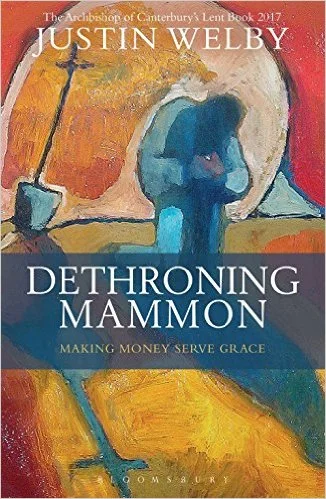
Dethroning Mammon - Matthew 6:19-24
Money is a spiritual issue. The way we think about money and what we do with our money is unavoidably linked to our spiritual life and growth - to our happiness! Jesus said you cannot love both God and money. Whether you’re rich and you have loads of it or poor and you don’t have any, the love of money will suffocate your relationship with God. money. It’s a spiritual issue.
Jesus spoke more about money than any other subject.
Partly because money talks, money -practically- gets things done. the generous giving of people who have been part of our church these past nearly 7 years has enabled us to turn this building from a semi derelict shell into a community resource and there’s much more to do. generosity is vital, we as a church plant receive no denominational funding we are entirely dependent on our congregation’s giving. money is a practical issue. I’ll say a bit more about that at the end.
but money is also a spiritual issue. The way we think about money and what we do with our money is unavoidably linked to our spiritual life and growth - to our happiness! Jesus said you cannot love both God and money. Whether you’re rich and you have loads of it or poor and you don’t have any the Love of money will suffocate your relationship with God. So... money...It’s a practical issue. It’s a spiritual issue.
v24 ‘No one can serve two masters. Either you will hate the one and love the other, or you will be devoted to the one and despise the other. You cannot serve both God and Money.'
Money has spiritual power says Jesus. The word, as you probably know, that Jesus uses is the word Mammon. The personification of wealth, riches, security. Money is just money but Money can rise up and take a form in our lives that rivals the place of God. Mammon - A Master that demands our service. That’s where we begin.
1. Mammon masters us.
Robert Bresson (was a French film director died in 1999. influential. 13 films over 40 year period). theme of money runs through all of his films to the point that his last film is called l’argent. money. It’s the story of a delivery man who gets involved in passing a forged note initially unwittingly and yet as you follow the trail of this forged note and the people who surround it with their love of money this man eventually ends up murdering a whole family. he’s in prison as a result and he has a conversation with one of his fellow prisoners who says to him. “i want happiness now on my own terms. Oh money, visible god, what wouldn’t we do for you?”
It's a powerful image isn’t it. a £50 note - a visible god calling for our allegiance. saying ‘serve me’.
Why would you serve money? seems ridiculous on the face of it - that a wad of notes in your pocket, or a string of numbers on your bank statement - has the power to control your life?
I guess status or significance would cause you to serve money. the things that money can buy!
But probably for most of us in our circumstances it’s about security isn’t it? if i have enough money in the bank, enough treasure stored up ...then i’ll feel safe.
Mammon masters us. A rival god. Well, Jesus sets out the alternatives plainly. You either trust in money to provide for your needs or you trust in the God who created and controls all the worlds resources - who feeds the birds of the air and clothes the grass of the fields.
If you trust in money there is no room for God in your life.
You cannot serve both God and Mammon. Mammon wants to master us.
let’s track back a bit now to vv22-23. pull the lens back and here’s a tough thing. Jesus seems to say in vv22-23 that it’s not obvious when you’re serving two masters. it’s not obvious when you’ve begun to love money.
2. Mammon deceives us
v22 ‘The eye is the lamp of the body. If your eyes are healthy, your whole body will be full of light. 23 But if your eyes are unhealthy, your whole body will be full of darkness. If then the light within you is darkness, how great is that darkness!
The verses sound a little bit strange but i think the point is fairly simple. eyes let in light and allow us to navigate our body around space. so, if i was to turn and walk in that direction... because there’s light coming into my eyes i can navigate my way around the piano etc..
but if you were to blindfold and spin me round and then set me off - i’d crash!
And Jesus seems to say at the end of v23 that you can reach a position where you think that you are in the light and yet you are in darkness. and how great then is that darkness. You have become self deceived. I think he’s saying that money has the power to deceive us. we’re serving it. but we don’t realise that we’re serving it until it destroys us. It’s very subtle. Money has the power to make us spiritually blind to it’s power.
How does Mammon deceive us? What are the destructive lies that we’re being fed? I’ve chosen 3 from Archbishop Justin Welby's excellent new book Dethroning Mammon (Mark Carney was photographed reading it on the tube)
1. Mammon shapes us to value most things that we can see and measure
Justin Welby tells the story of a lawyer friend who was handling the settlement of a divorce for the wife of a very wealthy man. the man had submitted to the courts a figure for his available wealth that seemed to be well below the truth. The lawyer asked the wife whether she had any idea how much he was worth and she was able to immediately respond with what was discovered to be the exact figure. How did she know? Well she knew because this wealthy man’s main occupation had been to weekly calculate the value of his liquid assets so that he could enjoy basking in how much he was worth.
Here’s the great deception: While he sat counting what he had something of far greater value - his marriage - was slipping away. Since he could not count his marriage he did not value it, Since he couldn’t measure it it didn’t define him. Yet he valued and was defined by his money. Mammon had deceived him into calculating everything on the basis of mammon’s values not those of Jesus Christ.
This happens everywhere and has always happened.
Think of the response when Mary anointed Jesus’ feet with perfume worth a years wages - what a waste!
Or, think of the response when a highly gifted woman decides not to go back to her successful career but instead stays home to be a mother or worse starts working for the church - what a waste!
Welby writes: “the problem with materialism - this prioritising of the tangible - is not that it exists but that it dominates. It shouts so loudly that it overides our caring for other things which we cannot see or measure but are of far greater value” (p41)
- relationships, the church, the environment, our children’s future..
Mammon shapes us to value most the things that we can see and measure
2. Mammon preaches an economy of scarcity that compels us to hold on to our money..
Scarcity - we’re using up the world’s resources, jobs are few - we need to accumulate and hold on to money.
The Economy of scarcity of course breeds fear.
Welby again: “Fear is a powerful tool of Mammon …and much of our politics draws on that fear.. So we are taught to fear the outsider and the stranger, especially the needy stranger. Fear has a crippling effect on any country or society. It encourages extremism and populism in politics. It establishes a hermeneutic of suspicion, a way of looking at the world which begins all relationships with the question ‘what are they trying to get out of me?” (p72)
We live in a world of abundance. There is plenty enough for every person’s need. But Mammon causes us to embrace the fear of scarcity, and that fear drives us to selfishness and to grasping what we hold ever more tightly.
third and final deception
3. Mammon teaches us to treat what we receive as ours
It’s my money to dispose of how i choose.
A few years ago in the UK there was a small tax increase for people on the highest levels of income. Quite a number of those affected seemed to find the imposition of extra tax to be entirely unreasonable, describing it as socialist confisaction or quote ‘worse than the nazis’. And some left the country to avoid the oppressive UK system. Now, many of those people, we know, are generous philanthropists. They have set up foundations to give away money to worthy causes. But this is the point - it’s their money to dispose of how they choose. (Welby, p59-60)
Dont’ you think like that? It’s my money. I own it.
But the problem with that belief, which Mammon encourages, is that if we own money, money can own us. If the relationship is that close. We think we’re using money but money is using us. Controlling us through worry. Distracting us from deeper matters…
Mammon deceives us, blindfolds us.. and we don’t know it until it’s too late and we are pierced by many griefs. People come pastorally and talk to me about all kinds of things but nobody ever wants to talk about their problems with money controlling their life..
Mammon masters and deceives us
How then do we
3 DETHRONE MAMMON
our third point
v19 Jesus says ‘Do not store up for yourselves treasures on earth, where moths and vermin destroy, and where thieves break in and steal. (Don’t deceive yourselves. It doesn’t last. It’s not secure. You can’t take it with you) 20 But store up for yourselves treasures in heaven, where moths and vermin do not destroy, and where thieves do not break in and steal. 21 For where your treasure is, there your heart will be also.
What does Jesus mean by ‘store up treasures in heaven?’
Remember, heaven is not a future state, It is the place from which now God rules over all. So i think Jesus is asking us to use money in a life centred around the rule of God.His rule is the most important thing. It’s that which is to grip our hearts not money. that’s why he ends this whole section of teaching, this chapter with v33 seek first God’s kingdom and his righteousness and all other things will be given to you as well.
Dethrone Mammon by Enthroning Christ
What does that look like? Well, by worshipping Jesus we train ourselves to look at the world differently - not by the values of Mammon but of Christ
That will mean:
1. valuing not simply things which we can see or measured because 'what is not measurable may be valuable beyond measure.' (p40)
Mary anointing Jesus’ feet - from one point of view could be seen as the waste of a years wages but from another as the preparation for the burial of the body of God which would be denied Jesus when the time came. A recognition of the act of supreme value (the death of Jesus) enshrined in Scripture for eternity. No wonder Mary poured out her most valued possession. She wanted to pur out her life!
The talented woman who doesn’t return to her career but serves her child and her church (and incidentally i’m not making any judgements about what forms christian motherhood should take! why shouldn't it be a father remaining at home? what i am saying is that that decision) could be seen as a sorry waste of a life. But that would be to dance to Mammon’s tune. Perhaps that woman (or man) has a greater calling. Some things are more valuable than what we can see or measure..
We can’t see the future. We can’t easily see what we are doing to the environment. We can’t readily measure the effect of art, of kindness. And yet these things ARE the truly valuable things. Dethroning Mammon means valuing not simply things which we can see or measure
2. Dethroning Mammon means proclaiming not an economy of scarcity but an economy of abundance
Our creator is not a God of scarcity but a God of abundant ‘ludicrous’ generosity. Of beautiful flowers that bloom only for a day, of sunsets, of rainfall, of more manna in the wilderness than could ever be collected; of the abundance of wine at the wedding at Cana! of the basketfuls of leftovers after the feeding of the 5000, Our God is the Father who gave us THE indescribable GIFT OF HIS OWN SON!!!
Yes, our dismissive attitude to the value of that which we cannot see and measure - the environment, the future, - and our fear of scarcity causing us to accumulate and hold on has resulted in the raping of our planet; the unthinking consumption of resources. In God’s economy there is not enough for man’s greed … but there is more than enough for man’s need. Enough for everyone.
As God’s people we need to repent and retrain ourselves (through worship) to see the world in terms of abundance. Generous giving of our money (and it’s not just money, some of us hardly have any! - it’s also our time, our energy, our talents, our love) sustains and empowers the church and shares with the poor but more than that it dethrones Mammon. Radical Generosity drives out fear and hatred. We need to proclaim an economy not of grasping scarcity but of rich abundance.
finally
3. Dethroning Mammon means treating what we have received not as ours (singular, personal, familial) but as ‘ours’ (plural, everybody, it’s for all)
The possession of wealth (money, talents, time) is a God given gift to serve others, to identify with people, to show solidarity, to build relationships of abundance and grace and to change the world for the better.
That’s what money is for.
[The Bible] is agnostic about the money and power you already have. [What The Bible is interested in is] how you use that money and power - whether you put it in the service of God, and use it to wash the feet of the world; or whether you put it in the service of Mammon, and use it to insulate yourself from those whose feet smell bad. (p97)
Welby says we should not be without hope! He cites numerous examples of what a society looks like in which Christ is enthroned and Mammon Dethroned.
The post second world war ‘Marshall Plan.’ which saw the USAtransfer what would be in todaysterms hundreds of billions of dollars in aid and support for the collapsed economies of both the vanquished and the victors on the continent of Europe.
The National Health Service. ensuring that every sick person would have treatment at the point of need.
The UK government’s Department for International Development which has become a world leader, improving, over the last years, the lives of over 100 million of the world’s poorest children and their families inspite of recession and a remorseless attack by the press and many in parliament.
Jubilee 2000 - the international coalition movement that secured the cancellation of more than a $100 billion of debt owed by 35 of the world’s poorest countries.
All the people who worked to make these things a reality were enthroning Christ over Mammon, whether they knew it or not. And for many of them this was their conscious motivation.
'When Mammon is dethroned and Christ takes his place we do not have cruelty but love and grace. We do not have shortage but abundance and human flourishing. We do not have deception, we have truth.'
How do we dethrone mammon in our own lives? recognising the value of the unseen; noticing the manna that daily God lavishes upon our lives?
It begins with Worship - centering, weekly and daily, our whole attention on the beauty and generosity of God.
And then there needs to be repentance - a practical outworking of generosity in the way in which we live our lives. How are you using the gifts God has given you for others?
I spoke about financial giving to church. Our church relies on congregational giving to exist and grow in a fiercely expensive city. We’re always up against it so please give generously to our church. At Easter we will be 7 years old and after Easter we will have a whole church meeting to present a draft vision for the next 7-10 years. Hopefully a compelling vision from God that you can give to! Enabling us to be a community of celebration and abundance in which , the outsider, the alien and the stranger are welcomed and where they may find company and healing and hope…
Luke 9:43b-62 James May
The future is largely unknown to us, as those of us who followed the Federer, Rafa final today are well aware. We can hope, and we can plan, we can expect, but we can never be sure what is going to happen. We only see life backwards, after the event.
The question the disciples faced again and again in this passage was should they trust themselves and their ideas for the future, or should they trust Jesus and his plans.
Welcome, particularly if you are new here or are visiting, my name is James and I'm on the leadership team here at St Barnabas.
Over the last few weeks we have been looking at the Gospel account of Luke, and today we are looking at this very important passage which indicates a major turning point in Jesus’s ministry when he seems to turn from what seemed to be a highly successful and popular ministry which involved miraculous healing, to directing his journey towards Jerusalem where he knew he would face death. This journey itself begins in verse 51, which says, ‘Jesus resolutely set out for Jerusalem’, but in verses 43-45, he is giving his disciples a warning about what is to come.
I was cycling to work on one of the icy mornings last week, and I was just reminding myself that the only times I have ever come off my bike we're going round corners in conditions like this, when I gently pulled into a turn, a car slowly approached the junction, and in readjusting my turn my wheels slipped from under me in almost precisely the same way as the previous 3 occasions, grazing my knee, tearing my glove, and making me feel more foolish than I had planned when I got out of bed. When I recounted this, a ‘friend’ commented, ‘you, saw it coming and it still got you’.
The future is largely unknown to us, as those of us who followed the Federer, Rafa final today are well aware. We can hope, and we can plan, we can expect, but we can never be sure what is going to happen. We only see life backwards, after the event.
The question the disciples faced again and again in this passage was should they trust themselves and their ideas for the future, or should they trust Jesus and his plans.
For ourselves the question looks something like this. What if our life does not go according to our plans? Do we blame God for things not turning out as we’d hoped? Do we doubt God’s goodness or his kindness? We may experience life to be hard at times, and we may feel that following God makes it harder still – and we are caused to ask – is it worth it?
Our personal struggles may give us enough reason to doubt whether God really cares for us, but even if things are going well for us personally, it doesn't take much reflection to realise that the question about whether God really cares is very profound. The catastrophic disasters of the last century do not really need listing, except that by naming them we can remind ourselves of how bad things can get, from the horrors of trench warfare, to the horrific mass killings, such as the Rape of Nanking, Auschwitz, and the Rwandan genocide, and today the war in Syria is just the most prominent of current conflicts.
How do we have hope, and how do we trust God about the future when the past is so full of disappointments, and terrors? And yet we live with unparalleled wealth and health around the world. For a great many people life seems to be going very well.
Richard Dawkins, looks around the world and eloquently draws this stark conclusion, ‘In a universe of electrons and selfish genes, blind physical forces and genetic replication, some people are going to get hurt, other people are going to get lucky, and you won’t find any rhyme or reason in it, nor any justice. The universe we observe has precisely the properties we should expect if there is, at bottom, no design, no purpose, no evil, no good, nothing but pitiless indifference.’
But despite this, we find it very difficult not to hope, to think that it is all meaningless, that there is no good, or evil, and nothing but indifference. We feel passionate and angry about many of the things that happen in our lives, and we don't aspire to pitiless indifference either in ourselves or in anyone else. If humans are capable of this we call them sociopaths, being pathological because it is a diseased state, rather than a good and natural state of being. Nevertheless Dawkins is pointing out that in the face of the facts it seems we are strictly all deluded to live differently as if there is such a thing as goodness or purpose.
Our passage takes us on a journey which is both very challenging and surprising in its answers to these questions. It seems to me that the most important words in the passage are found in verse 44, when Jesus says, ‘listen carefully to what I am about to tell you.’ Luke did not record these words as a sort of engaging space filler to keep our attention. He understood that Jesus said this in all seriousness, and we would do well to listen ourselves because Jesus is clearly saying something of great importance. We know that because he makes an extended point in verse 45 about how they had apparently not listened to him. He writes, ‘But they did not understand what this meant.’ And then reinforces it again, saying, ‘It was hidden from them, so that they did not grasp it, and they were afraid to ask him about it.’
One conclusion might be that Jesus is not a very good teacher if he cannot convey such a simple message to them. But another is that there are some things that we find so uncomfortable and which have such massive implications, that even though we hear them, we may go into denial, or take a long time to accept the painful truth, or to begin to understand what the consequences are. Until the end of the chapter Jesus has a long list of such lessons which need listening too, but which are truly painful and difficult to hear and understand.
If we try and inhabit the minds and experiences of the disciples, we may begin to see why they could not grasp what Jesus was saying. Luke's words are very sparse, and we need to pause over each phrase if we are to understand what he says. In the second half of verse 43, Luke simply records the background reality into which Jesus’ words were spoken. ‘While everyone, was marvelling at all that Jesus did.’
Now we know that Jesus did have people who opposed and rejected him in earlier chapters such as his home town of Nazareth, and many religious leaders, but even here it is clear that he was having a profound impact on everyone, and it seemed that the vast majority marvelled at all he did. This made it impossible for those who would plot to harm him to do anything for fear of causing a riot and risking bringing down the wrath of the Romans who did not tolerate disturbances in their provinces.
So the disciples seemed to believe that they were following the true Messiah who had such power and such charisma that he would be able to reestablish the nation of Israel and kick out the Roman oppressors. His popular movement could not be going any better at this point. Which is why Jesus needed to ask them to listen carefully, when he predicts that he will be delivered into the hands of men.
We should not give the impression that Jesus was changing his plans at this point, rather it was the disciples understanding of Jesus’s plans that needed changing. In his early ministry his miracles were interspersed with teachings which the authorities and disciples found hard to accept. And on his way to Jerusalem he continues to perform remarkable miracles. Rather this moment was a drawing together of all that had happened and the inevitable outcome was becoming clearer, and more defined, not least in the mind of Jesus himself.
Jesus was never a populist in the sense that we have come to know populism today. Rather the opposite. Today's populists seem to say things which appeal to huge numbers of people, but do not have the capability to follow through in reality, and sometimes haven't lived lives which match up to their grand acclamations. Jesus, however, seemed to teach things which were very hard to accept, and had already predicted his death, but clearly had the power to do great things, and had the kind of life that people couldn't help being attracted by.
His miracles were of such a commanding and remarkable nature that those who witnessed them should have listened to his words more carefully. When he calmed the storm in chapter 8, he asked the disciples, ‘where is your faith?’ because they should have known by this point who it was that they were dealing with. And they asked themselves, ‘who is this that even the wind and the waves obey him?’ This was presumably a rhetorical question. They knew from the Old Testament that it was God alone who controlled the wind and the waves. But they couldn't quite come out and give the answer their question demanded.
Jesus’ life and actions were of a different order from anyone else, and the disciples should have listened to his words carefully, because these were not some contestable words of some dubious populist, but the authoritative words of God himself. His miracles provided indisputable evidence that his words had authority. He is capable of removing the pains from our world, and he will do exactly that in the future, but there is a deeper problem which needs sorting out first – the problem of the human heart – and that is a problem which requires a more painful solution.
However, the disciples seem to have taken a rather selective approach to who Jesus was and what he taught, preferring to suppress the awkward bits of his teachings, and get excited by the more appealing things, perhaps because they were so impressed by the crowds who marvelled at everything he did. So for them there remained very difficult questions. How can it be that Jesus who is so loved by everyone will be delivered into the hands of men? And what about their hopes and dreams for the future? All would be lost. And so they simply could not grasp what Jesus was saying, and even if they had an inkling, they were afraid to ask about it.
Is it possible that even though we know in our heads how events unfolded, and that Jesus was crucified and then was raised to life again, that we also do not want to believe what Jesus is saying here because it is too uncomfortable for us? Jesus I think says to us all, ‘listen carefully to what I am about to tell you.’ We have our dreams and desires for what we want out of life, but this is not the road Jesus takes us down.
You see we easily doubt God's goodness when things don't go our way. This wasn't a new problem that came with Jesus, but it goes back to the book of Genesis and the Garden of Eden, which records the serpent casting doubt on God's words, ‘did God really say do not eat the fruit of any tree in the garden?’ Which of course God did not say in the first place, but the seeds of doubt were sown, and in our hearts we all have the natural inclination to doubt that God has our best interests at heart, which is why Jesus says, ‘listen carefully’. What did God really say?
Did he promise us miraculous healing and relief from the pains of this life? Did he come to swish away all our problems and give us every good gift in this present world? We have our ideas of how the future should look, and we faithfully pray for these outcomes, but we can be discouraged and even lose our faith if things don't turn out as we imagine they should if God really has our best interests at heart.
But the truth is we have never been able to fathom Gods purposes. We live on a tiny planet in a corner of a universe 13.5 billion light years across, so vast that we cannot begin to comprehend it. Psalm 8 says, ‘When I consider your heavens, the work of your fingers, the moon and the stars, which you have set in place, what is mankind that you are mindful of the, human beings that you care for them?’ God’s perspective is so far beyond ours that we cannot begin to grasp it.
It doesn't take much reflection to realise this. God's creation includes genetic mutations which are necessary for evolution to occur, and yet these same mutations cause cancer which can kill us. The tectonic plates that recycle carbon dioxide from the atmosphere and make mountains and oceans also cause earthquakes which destroy. Sickness and death is built into God's world. The universe itself will die in time – it will either grow old and cold, or it will collapse in on itself. And then there is the catalogue of destruction of humans against humans that I have already listed. How do we understand God's purposes in all this? Is Richard Dawkins right? Is it just about whether we get lucky?
In the Old Testament, Job experienced a life of very great suffering, and yet he was in the end rebuked by God for presuming to question God's purposes. In chapter 42 Job says this to God, ‘I know you can do all things, I know that no plan of yours can be thwarted. You asked, ‘who is this who obscures my plans without knowledge?’ Surely I spoke of things I do not understand, things too wonderful for me to know.’ Job concludes, ‘My ears had heard of you, but now my eyes have seen you. Therefore I despise myself and repent in dust and ashes.’
Is Job just being foolish? A vulnerable man who is being bullied by God, when he should just admit that God, if he exists, is a cosmic psychopath who is blindly indifferent to the sufferings of human beings?
We’ll come back to these questions, but for now we'll follow the passage a bit further.
The disciples are often unfairly criticised by modern commentators in my view for having such a vain and foolish discussion in verse 46 about who is the greatest. However, I wonder if there is not a general truth about human nature in their argument, which all of us are capable of and we would be missing the point to think they were being particularly obtuse here.
Their vision for the future sprung from their own wish fulfilment, and was therefore a human construction, in which as Jesus’s inner circle of disciples they could only imagine that they would end up with important jobs with their mate Jesus as boss. The last of the Ten Commandments is, ‘do not envy your neighbour,’ exactly because this is our natural instinct. If we do not define ourselves according to God's word, then we have to find our place in the order of things. Some have said we either reach out for demagogues or dictators who will tell us what to do, or we will follow fashion. But either way we compare ourselves with others in order to give our lives some purpose, and in doing so we feed the disappointment of realising that in such a world, Richard Dawkins is right, some people get lucky and others don't.
Jesus’ answer gently points out that they could not be more wrong. In his world it is the least who is the greatest. This again is hard teaching to hear. Humility is more important than status in his world, when we put so much effort into trying to define our place in the hierarchy. And yet within a moment they are at it again in verse 49, as someone they didn't know was apparently casting our demons in Jesus’ name. Jesus here refuses to create divisions between insiders and outsiders, but rather sees all who are pursuing the right thing as being on the same side.
But yet again the disciples failed to grasp what Jesus was saying, seeing the rejection by the Samaritan village in verse 53 as a reason to condemn because they believed they were defending their masters honour, and again Jesus rebuked the disciples. This too is a hard lesson, since they were now moving from a place where everyone marvelled at Jesus, to a place where he was not appreciated or welcomed. They still had not absorbed the truth that Jesus was to be delivered into the hands of men.
Crowds can be fickle, and adulation at one moment can turn into vitriol the next. When they were to arrive in Jerusalem, they would find that the crowds would welcome Jesus with Hosannas and palm branches and a few days later would be crying out ‘crucify him’.
The disciples themselves who were so keen to defend his honour in the Samaritan village, run away, hide, desert and deny even knowing Jesus.
The purposes of God are simply much bigger than ours. We would want to win these small victories for our own egos but Jesus knows that the biggest problem we have is the problem of our hearts, and this cannot be solved by populist uprisings or quick fixes which appeal to our vanity.
In verses 57-62, Jesus drives his message home more clearly in listing examples of what we might have to give up if we are to follow him. There is a cost to discipleship. We may have all sorts of wishes, to have the normal comforts such as even the animals have in verse 58, with fixes having holes and birds nests, or fulfilling our family duties before following him. Or we may be tempted to turn back and look at what we might have had if we didn't follow him.
The German Theologian Dietrich Bonhoeffer wrote a book called, the cost of discipleship. He opens his book provocatively saying, ‘Cheap grace is the deadly enemy of the church’. He argues that we distort the good message of grace to our own advantage, that Jesus has given us everything for free by dying for us, so that we do not have to do anything to be accepted and loved by God.
He writes, ‘Cheap grace is the preaching of forgiveness without requiring repentance… Absolution without personal confession. Cheap grace is grace without discipleship, grace without the cross, grace without Christ, living and incarnate.’
On the other hand he writes, ‘Costly grace is the treasure hidden in a field; for the sake of it a man will gladly sell all that he has. It is the kingly rule of Christ, for whose sake a man will pluck out the eye which causes him to stumble, it is the call of Jesus Christ at which the disciple leaves his nets and follows him…. Such grace is costly because it calls us to follow,, and it is grace because it calls us to follow him.
The teachings of Jesus in this passage are therefore very hard, and the disciples and followers of Jesus were constantly looking for cheap grace, when all that Jesus has to offer is costly grace.
But it is the great paradox of this story, that the disciples did actually listen. At the beginning of his gospel account Luke writes ‘Many have undertaken to draw up an account of the things that have happened among us, from those who were from the first, eye witnesses and servants of the word. I myself have carefully investigated everything from the beginning.’
So it seems certain that the only way we know about these conversations between Jesus and the disciples would be their own reports to those who compiled the gospel accounts. The disciples present themselves as stubborn fools who failed to listen to the words of Jesus. Years later, after Jesus had been crucified and raised from the dead, they did grasp and understand what he had said to them all those years before. They were no longer competing to be the greatest, or holding onto their sense of pride. Instead they had become like children, putting all their faith in Jesus alone, and telling the gospel writers just how stupid they had been. They present the story of Jesus going to the cross, not Jesus the populist.
Far from being an uncaring God who is indifferent to our sufferings, Jesus participates in our sufferings, and suffers so that our hearts may be healed of their pride and their rebellion, and that we can can follow him by serving others without regard for what it might cost us.
It would be a strange thing to do to invent a religion in which the heroes were such fools, and in which the main character is crucified. But the disciples had learnt the deep truth of costly Grace – following Jesus may be hard, but it is worth it. They could easily be quoting Job saying, ‘My ears had heard of you, but now my eyes have seen you. Therefore I despise myself and repent in dust and ashes.’
Perhaps then we too should wrestle with these truths over months and years because they are so against everything that is instinctive to us. Our human inclinations are for cheap grace, for easy solutions, and for avoiding uncomfortable truths. But the costly Grace of Jesus may lead us to suffer now, for a greater prize in the future. When life seems hard, we need to remind ourselves that Jesus didn't promise it would be easy, but it is worth it because if who he is. We are asked to follow him.
Let us pray, ‘Heavenly Father we confess that we do not listen carefully to your words. We fail to see that you have warned us that there is a cost to following you, and we feel disappointed, and start to doubt your goodness when life does not go the way we feel it should. We pray that we would be reminded that far from avoiding suffering, you chose the road to the cross because you wish to solve the problem of pride in our hearts, and we know you alone have the power to do this. We pray that you would help us to listen carefully to what you say, so that we are not misled by our own desires and plans. In Jesus name we pray, Amen.’
Luke 9:28-45
Life, for the most part, is full of stuggles isn’t it? For many in our world right now their lot is extreme poverty and hunger or violence, war, persecution, homelessness and loss. Even if we do not find our selves in such desperate circumstances we all know what it is to struggle - often alone - with disappointments, deep sadnesses, unrealised dreams, broken or difficult relationships, emotional problems, mental or physical illness, addictions and compulsions. Life is full of pains and griefs.
How are we to think about God and suffering?
Our tendency in our culture is to think that all should be healthy and painless and well. That should be what God would want for us and therefore as contemporary followerers or would-be followers of Jesus Christ when suffering comes we stop trusting that God is in control - he’s absent and we feel that he has abandoned us - He is silent.
In this section of Luke’s gospel Jesus is teaching his disciples how they are to cope in the real world of spiritual struggle. He’s just told them that suffering is coming - that he - the Christ is going to suffer and die! and following him will mean sacrifice for them. But now he takes his 3 closest followers up the mountain to reassure them that he is always in control and that he is not silent.
Martin Scorcese’s new film Silence. Many of you will have seen it. Based on the novel of the same name by the Japanese Roman Catholic author Shusako Endo. It is, i think, a stunning, eviscerating film. It tells the story of two young Jesuit Priests in the mid 17thC who enter Japan, where Christians are undergoing brutal persecutions - torture, beheadings, crucifixions - (The very things incidentally that are happening today to christians in Aleppo). The young Jesuits go in search of an older Priest who had been their mentor and who, it is rumoured, has apostasized: abandoned the faith. It is a story about the challenge of faith in the face of violent persecution. A story about incomprehensible suffering and the silence of God.
Why would God permit these people to suffer so much? Asks the young Father Rodriguez. And why is God silent?
It is suffering which so often causes us to question God - his trustworthiness, his reality.
We come, i presume, to trust and love God because we encounter his goodness, his glory; his love in Jesus Christ. He spoke to us through the Scriptures and became real to us. And we would love to stay in that place. That mountain top experience of God. Peter, on the mount of transfiguration wants to build shelters to keep Moses and Elijah and Jesus there - to hold onto the glory; Make it last forever. But life with God is not lived on the mountain top but in the valley; in the real world of spiritual struggle where the other disciples in our passage find themselves.
Life, for the most part, is full of stuggles isn’t it? For many in our world right now their lot is extreme poverty and hunger or violence, war, persecution, homelessness and loss. Even if we do not find our selves in such desperate circumstances we all know what it is to struggle - often alone - with disappointments, deep sadnesses, unrealised dreams, broken or difficult relationships, emotional problems, mental or physical illness, addictions and compulsions. Life is full of pains and griefs.
Well how are we to think about God and suffering?
Our tendency in our culture is to think that all should be healthy and painless and well. That should be what God would want for us and therefore as contemporary followerers or would-be followers of Jesus Christ when suffering comes we stop trusting that God is in control - he’s absent and we feel that he has abandoned us - He is silent.
In this section of Luke’s gospel. Focus has changed from ‘who Jesus is’ to ‘what it means to follow him’.
Jesus is teaching his disciples how they are to cope in the real world of spiritual struggle. He’s just told them that suffering is coming - that he - the Christ is going to suffer and die! and following him will mean sacrifice for them. But now he takes his 3 closest followers up the mountain to reassure them that he is always in control and that he is not silent.
And there are 2 things that disciples in a broken world must do:
they must [Stop], Look and Listen
Look at Jesus
Listen to Jesus
Keep looking, keep listening
- LOOK at Jesus
If our tendency when suffering comes is to lose our heads - our trust in God goes, he becomes abstract, our belief in his reality wavers, prayer dries up… We need to look to see that he is in control
28 About eight days after Jesus said this [- that is: telling his disciples about his death and the cost of following him], he took Peter, John and James with him and went up onto a mountain to pray. 29 As he was praying, the appearance of his face changed, and his clothes became as bright as a flash of lightning.
What a sight this must have been. as Jesus is transfigured. for a moment the veil is lifted and Jesus’ true identity and glory as the eternal son of God is revealed. the appearance of his face changed, and his clothes became as bright as a flash of lightning.
Look at who he is.
v30 Two men, Moses and Elijah, appeared in glorious splendour, talking with Jesus.
There’s a lot of chat about why Moses and Elijah are here. Moses represents the law, Elijah the prophets - ok. Jesus is like Moses because he’s leading the people of God into a new era and he’s like Elijah because he is promised to come again in the future..
But isn’t it really just because Moses and Elijah are the two most heavyweight dudes from the OT and they’re on Jesus’ team. AndJesus is shown to be far greater even than they!
31 They spoke about Jesus’ departure, which he was about to bring to fulfilment at Jerusalem. And Peter wants to hold onto the glory - he doesn’t want them to leave. The cloud - always associated with the glorious presence of God - comes down. And If the presence of Moses and Elijah wasn’t affirmation enough.. God the Father speaks.. 35 A voice came from the cloud, saying, ‘This is my Son, whom I have chosen; listen to him.’
this is my Son! Jesus is the Son of God. The Father bursts with pride and can’t contain himself. Like that interview with Bert Le Clos by Clare Balding at the 2012 Olympics when His son, Chad Le Clos the South African swimmer had just won the gold medal in the 100m butterfly, Bert sees his son and is just overcome, "Look at my boy, Look at my son, he’s beautiful, he’s beautiful,"
This is my Son - the Father bursting with pride affirms Jesus. Jesus is the Son of God.
But 'Son of God' is also a title that Scripture gives to the Messiah, the promised deliverer King That’s who Jesus is: Son of God, the rescuer King of glory. Nothing escapes his control. Look at who he is - clothed in Lightning!
When suffering comes and remains we do not know what the reason for it is, but we know what the reason is not. It is not because God is not in control, or is not there, or doesn’t care. Jesusis the King. One day his glory will transfigure and heal this whole sad world.
—
The next day v37 Jesus and the 3 come down the mountain. Back into the real world of spiritual struggle. And down in the valley the other disciples have been confronted with the pain of a poor family’s predicament. A man who has a son, his only child. And the child has quote ‘a spirit that seizes him and he suddenly screams; it throws him into convulsions so that he foams at the mouth. It scarcely ever leaves him and is destroying him.’
What a terrible thing. What awful suffering. The disciples have tried to help but their faith has gone even before they even started. "how could God allow this? where is God?" They do not pray..
40 I begged your disciples to drive it out, says the man but they could not.’
Jesus rebukes his disciples for their unbelief. they are a part of a faithless and crooked generation. And then Jesus himself in his compassion and power heals the boy and gives him back to his father.
Look at who Jesus is. He is not absent.
Be reassured. he is in control
It’s not easy to trust in the face of struggle. We need the Holy spirit’s help to see with the eyes of our hearts. To see jesus deeply, trulyin a way that really changes us. We need to Pray.
Pause to pray. Open our eyes to see.
Look at Jesus - he is not absent
2. Listen to Jesus
If our tendency when suffering comes is to despair ..to think that God is silent, that he has abandoned us.. We need to listen to Jesus.. We need to Listen to him about his death.
This is my son, my chosen, listen to him says God the Father in v35 This is my son, my chosen, listen to him
Just as ‘My Son’ is a reference to a title in the OT - a title for the promised deliverer King - the Messiah/the Christ
‘My Chosen’ is also a reference to an OT figure that Jesus is the fulfilment of. The mysterious figure of ‘the servant’ in the prophecies of Isaiah - He is the ‘chosen one of God.’ (Isaiah 41:9, 42:1, 43:10), The servant….Chosen … to suffer ….for US.
Remember Isaiah 53
He was pierced for our transgressions,
he was bruised for our iniquities,
The punishment that brought us peace was upon him,
and by his wounds we are healed
Jesus is the suffering servant - Listen to him
When Jesus speaks with Moses and Elijah on the mount of transfiguration they speak v31 about his departure, his death ..
strange conversation to have. But actually that word there translated departure, if you look in the footnote, is the greek word for 'exodus'. Of course exodus means departure but in the Jewish mind it means so so much more…Because in the exodus/passover event the death of the lambs meant the rescue of Israel - departing the slavery ofEgypt for the freedom of the promised land.
Jesus, in his untimely, unjust death, shows us how seemingly inexplicable suffering can have a redemptive purpose. How suffering will ultimately give way to glory: The death of the lamb will mean the redemption of the world from the slavery of sin and sickness and suffering and death.
Listen to jesus about his suffering. About who he is for you and for the world.
Look at what Jesus says to his disciples down in the valley after he has healed the boy. v43
While everyone was marvelling at all that Jesus did, he said to his disciples, 44 ‘Listen carefully to what I am about to tell you: [literally: let these words sink into your ears] the Son of Man is going to be delivered into the hands of men.’
Listen to Jesus about his suffering for you
There’s a scene towards the end of Scorceses’ Silence when the persecutions are long past, christianity has been suppressed in Japan and one of the priests Father Rodriguez after many years begins to pray again.. And a voice plays in his head, perhaps it is the voice of God. It says. “I suffered with you. I was not silent”
The suffering of Jesus with us, and for us is God’s constant word to us in the midst of our sufferings. God has spoken and continues to speak in the sufferings of the Son of God. He is not silent.
Listen to him. Let these words sink into your ears
This week. Struggling to handle some disappointment: I’d been helping with arts club and hardly anybody turned up! I kept praying and nobody was coming through the door. God was silent. (Actually a handful of lovely people did come and we think people are just not in the pattern of it yet.) But i took it personally. It felt at the time like a rejection. And i found myself saying to God, "Lord, we’re trying to do something for you; make you known - why are you letting this happen?? Why are you silent??" And then I thought about this sermon and what Jesus might say to my 'Why is it so hard. Why do people reject us?'
Jesus would say, 'I was rejected, I was deserted, I’m not silent'
When you’re let down or turned on by colleagues at work or even friends. And you say 'Why is this happening God? Why are you silent??'
Jesus says I was deserted, I was betrayed. I am not silent.
When you Lose everything you have, even your very life. 'How can God allow this?? God, why are you silent?'
Jesus says I was crucified. I am not silent
Listen to Jesus about his suffering for you
Of course just as it is not easy to Look, to see.. it is not easy to Listen and hear . the disciples did not understand v45. They didn’t understand what it meant when Jesus said he would suffer they did not grasp it. v45
We need the Holy Spirit’s help to have ears to hear. To hear Jesus deeply, truly in a way that really changes us. To work his word into our bitter trials and disappointments until they bring a sweetness and a trust.
Let’s pray.
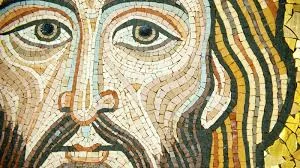
Luke 9:1-27
There is something in the human spirit, i think, that longs for adventure. Even those of us who just want a quiet life need some sense of purpose and achievement. Most of us are inspired by stories of courage and espionage - spy missions and military successes, we’re exhilharated by the achievements of explorers and adventurers and sportsmen and women. It draws out some desire in us for the same. we might compensate for our lack of adventure by starting a business or taking up an extreme sport, going on exotic holidays, or more negatively having an affair or losing ourselves in online fantasy worlds where we can be the potent hero that we are not in the real world.
We can’t all be james bond but surely we can be heros just for one day?
Could it be that this sense that we are made for adventure and courage and sacrifice and joy is within us because we are made to be disciples of Jesus Christ? Because as we shall see, the authentic christian life as Jesus presents it to us is a life lived on Mission; an adventure of radical service and sacrifice and joy.
Welcome.
We're returning to Luke’s gospel. One of the 4 gospels; the 4 accounts of the life, death and resurrection of Jesus Christ. We looked at the first 8 chapters of Luke last year.
There is something in the human spirit, i think, that longs for adventure. Even those of us who just want a quiet life need some sense of purpose and achievement. Most of us are inspired by stories of courage and espionage - spy missions and military successes, we’re exhilharated by the achievements of explorers and adventurers and sportsmen and women. It draws out some desire in us for the same. we might compensate for our lack of adventure by starting a business or taking up an extreme sport, going on exotic holidays, having an affair or losing ourselves in novels or online fantasy worlds where we can be the potent hero that we are not in the real world.
we can’t all be james bond but surely we can be heros just for one day?
Could it be that this sense that we are made for adventure and courage and sacrifice and joy is within us because we are made to be disciples of Jesus Christ? Because as we shall see the authentic christian life as jesus presents it to us is a life lived on Mission; an adventure of radical service and sacrifice and joy.
Here at the beginning of chapter 9 we reach a turning point in Luke’s gospel. Up to this point the main focus has been the Identity of Jesus. Who is he? Now, as we enter the second half of the gospel Jesus begins preparing his disciples for his departure and suffering and the focus shifts to what it means to follow Jesus. What does it mean to be a disciple of Jesus?
Actually the two themes are closely linked and overlap: what it means to follow Jesus is unavoidably connected with Who Jesus is. Questions of Jesus’ identity are sandwiched into this passage about following him. Did you notice? v 8 and then again in v18 Who do the crowds say jesus is? and then in v20 Jesus asks his disciples: who do you say I am? to which Peter answers ‘You are the Christ of God’. And Jesus says that’s right, I’m the promised deliverer SENT from God, to SERVE by SACRIFICING my life (v22) that the world might live.
And around those insights into Jesus’ identity..What will it mean to be a disciple of Jesus?
It will mean being SENT (vv1-6), to SERVE (vv10-17) and it will mean (vv23-27) SACRIFICE
Perhaps you’re thinking about becoming a Christian. Perhaps you already are a Christian.What does it mean to follow Jesus? It means you are sent with Jesus; you serve with Jesus and you sacrifice with Jesus. He leads us on this adventure. He never asks us to do anything he hasn’t already done. And neither does he ask us to do anything alone- He is with us.
Let’s look at each of these in turn
- vv1-6 Disciples are SENT with Jesus’…. authority.
v1 Jesus called the 12 together. his first disciples, his inner circle and he gave them power and authority to drive out all demons and to cure diseases, and he sent them out to proclaim the kingdom of God and to heal those who were ill.”
Now there’s something special and specific happening here: the 12 were sent to extend the very work that Jesus’ was then and there doing. Christians today are not, I believe, sent, in the same way to instantaneously heal the sick and drive out demons in the way that Jesus and his Apostles did. However all disciples of Jesus in all ages are SENT to proclaim and live out the message of Jesus (the gospel) to a world sorely in need of the good news. (incidentally this will almost certainly include praying for healing and working to drive out injustice). Right at the end of Matthew’s gospel Jesus says to his followers. “All authority has been given to me, therefore GO and make disciples of ALL Nations.”
All Disciples are SENT with Jesus’ Authority to make other disciples - who will Go and make disciples. This isn’t just something for keen Christians or Vicars.
We all must Go …because Jesus, with all authority, sends us
Not that we Go in an authoritarian way. This is not a crusade!
Look at the very next verse. ‘Take nothing for the journey – no staff, no bag, no bread, no money, no extra shirt. Whatever house you enter, stay there until you leave that town.
You don’t go resourced and you don’t go collecting from house to house. We are to go in faith and dependence on God and on those who welcome us. Just as Jesus was sent from heaven with nothing for the journey, humble and utterly dependent - a new born child into a hostile world. so we are to go in humility and total dependence.
...But also with proper confidence and conviction: v5 If people do not welcome you, leave their town and shake the dust off your feet as a testimony against them.’ Rejection is NOT a sign to you - ‘you shouldn’t be doing this..what gives you the right? you’re offending people’ no - it’s a sign to them, a warning that they are rejecting God!
If you’re rejected Move on. It’s an urgent mission. Don’t be discouraged or put off. Be humble and confident. You go with the authority of Jesus.
James Bond may have a licence to kill. Disciples of Jesus have a licence to tell. And not by the authority of Queen and country but by the authority of the King of Kings. We bring LIFE!
LIFE! We, as ambassadors, are involved in the greatest adventure of sharing Christ who gives salvation and life eternal! Life saving surgery, daring mountain rescues, military operations to save captives from a siege - they are all one thing. But disciples of Jesus are in the business of the renewal of the world and the salvation of lives for eternity.
What does it mean to be a follower of Jesus? It means to be SENT on Mission with Jesus. As the Father sent me so I am sending you, he says.
This ‘sentness’ is at the heart of what it means to be a Christian, at the heart of what it means to be the church. If it feels like there’s something missing from the heartbeat of your christian life or missing from our church it could be that you, that we are not heeding Jesus’ command to go - beyond our comfort zones, to cross the great divides with him to prayerfully, humbly make Jesus known, to speak of him, to make disciples. Who are you being sent to?
2.
What does it mean to be a follower of jesus?
It means to SERVE with Jesus’……. strength.
10 When the apostles returned, (apostle incidentally means ‘one who is sent’!) they reported to Jesus what they had done. Then he took them with him and they withdrew by themselves to a town called Bethsaida, 11 but the crowds learned about it and followed him. He welcomed them and spoke to them about the kingdom of God, and healed those who needed healing.12 Late in the afternoon the Twelve came to him and said, ‘Send the crowd away so they can go to the surrounding villages and countryside and find food and lodging, because we are in a remote place here.’
Jesus and his disciples have retreated to a remote place but the crowds have followed and Jesusis willing to proclaim the gospel to them and heal those in need. And wonderfully, as the day draws in, the twelve are sensitive to the needs of the crowd: people need something to eat and they suggest to Jesus that he disperses the huge crowd to go and find food and lodging. that’s their solution.
But Jesus sees this ‘problem’ as an opportunity to teach them what it means to be his disciples.
v13 He replied “You give them something to eat.” You Serve
Well the disciples - end of v13 - had thought about serving the people but quickly rejected the idea in favour of their suggested solution of dispersing the 5000 to surrounding villages because a) we have only 5 loaves of bread and two fish - i.e not nearly enough food and b) unless we go and buy food for all this crowd - which of course would be impossible to find a takeaway able to fulfil the order even if we had the cash needed! We don\t have the resources. Solutions exhausted.. let’s send the crowd away.
But of course there is another solution; another way that the disciples could feed the crowd…
They had forgotten who was with them AND they’d forgotten their most basic Bible stories. The Exodus. Bread from heaven. Manna and Quail. They’d forgotten that GOD feeds his people in the wilderness.
Jesus said to his disciples, v14 ‘Make the crowd sit down in groups of about fifty each.’ 15 The disciples did so, and everyone sat down. 16 Taking the five loaves and the two fish and looking up to heaven, he gave thanks and broke them. Then he gave them to the disciples to distribute to the people. 17 They all ate and were satisfied, and the disciples picked up twelve basketfuls of broken pieces that were left over.
Here’s the solution when Jesus asks you to serve. Realise that he intends to do the serving through You. He alone is the provider. He alone has the resources. But he wants to use us as vessels, as conduits of his love and service.
Disciples are called to SERVE with the strength that Jesus provides
It is an extraordinary miracle that Jesus performs. Lots of people have tried to explain it away.
The supply of food came from a group of wealthy ladies. But where are they mentioned in the text? Jesus broke the food into tiny little bits. And everyone was satisfied? Jesus hypnotized the crowd into believing they were filled. I promise you that was a solution presented by two liberal theologians in the 1960s. Or maybe Jesus’ example of sharing led others to get out their packed lunches and share their food. But that’s just not the way Luke presents things and how do you explain the 12 basketfulls of left overs??!
The only sane solution is that Jesus multiplied the food and provided bountifully in the wilderness just as God had done in the Exodus. Who is he?
Disciples of Jesus are called to serve.
But that is because Jesus wants to meet needs and he wants to do so through us!
what an extraordinary thing! what an adventure serving could be if instead of getting exhausted with our own solutions or telling God what to do we asked Jesus to provide and stepped out in faith where we see him leading.
Sent with Jesus, Serve with Jesus
Finally
vv 21-27
Disciples SACRIFICE with Jesus
Jesus is the Christ of God. The promised deliverer King SENT to SERVE
and the way he serves v 22 is by suffering and being rejected and killed before being raised to life
he SACRIFICES his life to bring LIFE
23 Then he said to them all v23 : ‘Whoever wants to be my disciple must deny themselves and take up their cross daily and follow me. 24 For whoever wants to save their life will lose it, but whoever loses their life for me will save it. 25 What good is it for someone to gain the whole world, and yet lose or forfeit their very self? 26 Whoever is ashamed of me and my words, the Son of Man will be ashamed of them when he comes in his glory and in the glory of the Father and of the holy angels.
Sacrifice. The cross, every day, is to shape the disciples life.
The way of the cross is the way of death.
If you’re going to trust God put Him in control of your life, submit to His ways, know His LIFE then you must deny yourself - die to yourself! If you want to save your life; keep control of your life then you’ll lose life because you inevitably say no to God. You might gain the whole world but if you’ve kept God at bay you lose your very self! The way of the cross is the way of death which leads to life.
And The way of the cross is the way of rejection.
Jesus was rejected and despised …so will Christians who speak up for him be. If i want to save face in the eyes of the world i am ashamed of the rejected Jesus. If I choose to publicly associate myself with Jesus, my independent life is at an end. The way of the cross is the way of rejection
It is of course a hard road. To be sent, to serve, to sacrifice.
Jesus asks us for everything because he is everything.
[ill. Going on holiday – one of my jobs is to pack the car. It really is my job, I want to do it with no interference – cos it’s quite scientific. The principle is this all the hard non-negotiables have to go in first – suitcases, travel cots, boxes of books and toys. Then when all of that is loaded – the soft stuff – duvets and coats go in because they sort of fit around the main things.] How do we think about our lives? When we pack our lives what are the non-negotiables that go in first, take the most space? Career, my art, my work [goes in]; relationships [a big one]; home, childrens education big hard heavy things and Jesus Christ well isn’t he kind of flexible? – doesn’t he just fit around everything in my life? won’t he just fit around my plans? Won’t he? He won’t.
Follow me. he says, Follow me,. This life is a journey, there’s an urgency to begin it and it’s all about him and serving; proclaiming his Kingdom with life and lips.
Jesus’ claim on our lives overrides all former claims, all other claims. He is to fill our lives and everything we do and are is to be an outflow of that – an expression of his Kingdom.

Advent Carol Service - Isaiah 9:1-7 Giles Fouhy
For all our great advances in wealth and technology we find it more difficult than ever to find peace.
Peace eludes us. This Christmas the conflicts in the very nations where Isaiah sees peace: Israel, Iraq, Syria… they continue to degenerate into an inhuman brutality.
Brexit and the US elections have exposed deep divides and growing intolerance in western societies. Families and relationships wilt under the pressure.
And our own hearts are mostly restless.
But Isaiah looks and he sees… PEACE breaking upon his nation. Breaking out over what we now call the middle east. Darkness and oppression and the shadow of death give way to dawning light, freedom and rejoicing. Isaiah sees the end of war. Enduring peace.
And why? how?
v6…For to us a child is born, to us a son is given and the government will be on his shoulders… of the increase of his government and PEACE there will be no end..
Welcome to SBD. A joy to see you here.
I’d like us to look for a few minutes at the the prophecy of Isaiah 9 written 700 years before the birth of Christ. which was our second reading (you may want to have a look at it again). The great theme of Isaiah’s prophecy is PEACE.
Isaiah looks and he sees… PEACE breaking upon his nation. Breaking out over what we now call the middle east. Darkness and oppression and the shadow of death give way to dawning light, freedom and rejoicing. Isaiah sees the end of war. Enduring peace.
And why? how?
v6…For to us a child is born, to us a son is given and the government will be on his shoulders… of the increase of his government and PEACE there will be no end..
When the angel visits the shepherds to announce the birth of Jesus Christ this is precisely the accompanying anthem: Glory to God in the highest and on earth PEACE…
Now you might say .. Ok Jesus Christ was born and lived, history at least backs that up. But Peace? One of the great barriers to belief in God is the sufferings of this world. We’re sick of the sorrow, sick of the pain, sick of hearing again and again that there’s gonna be … peace on earth…
But please stay with me… God is not indifferent to our sorrows and our pain. In fact he has taken them upon his shoulders for the sake of our peace.
—
Peace is of course a much broader category than just the absence of war. In Hebrew thinking Shalom described total wellbeing: harmony between the nations, within society and family and even harmony with your own self.
For all our great advances in wealth and technology we find it more difficult than ever to find peace.
Peace eludes us. This Christmas the conflicts in the very nations where Isaiah sees peace: Israel, Iraq, Syria… they continue to degenerate into an inhuman brutality.
Brexit and the US elections have exposed deep divides and growing intolerance in western societies. Families and relationships wilt under the pressure.
And our own hearts are mostly restless.
I read somewhere that the average spend on Christmas presents for children this year will be £400. And the average time those toys will actually be played with before interest is lost? 2 weeks. And we adults are no different are we? We all pursue things to answer the restless yearning of our hearts briefly satisfying our desires..the restlessness comes back. There’s an absence of peace. A great gulf..
Why? Why are we like this? Why the conflict, why the division? why the emptiness?
Surely we ask ourselves why?
—
Here’s the Bible’s explanation. We are like this because there is a God who made us and yet we have wandered from him. We’ve forgotten God. Losing God’s wisdom and counsel we are each left to govern ourselves - a yoke that burdens us. Wandering far we find ourselves lost.. lost in the valley of the shadow of death. Cut off from God’s life we cannot live fully, spiritually.
So, we’re a bit like Christmas trees.. We smell good for a while, We can dress ourselves up to look great on the outside. But uprooted.. we are dying. Spiritually..we are dying.
We have turned our backs on God.. each taken government on our own shoulders - that’s why we clash, that’s why we divide, that’s why we have no peace…
But here is good news of hope and great joy…
God has not turned his back on us.
To us a child is born, to us a son is given and the government will be on his shoulders.
Nothing changes life like a baby. If you’re a parent you’ll know exacltly what I mean. How is it that one so small can turn your world upside down? Well this child turns the entire world upside down.
Choosing names for a child is a big responsibility isn’t it? For many of us in our grandparents generation the names of choice were Mabel and Albert and Winifred. When i grew up in Essex in the 1970s everyone was either called Gary or Sharon. And now things have come full circle and we’re back to Ada and Alfred again. I heard of a tribe in New Guinea who also loved to use English for their babies names but without having a clue what the words meant so one man was called second gear while his good friend went by the name of tinned-fish.
Names are important. You carry your name through life. Names can place expectations on a child.
Well, what about the names this Christmas child, Jesus, is given!
He shall be called… Wonderful Counsellor, Mighty God, Everlasting Father, Prince of Peace..
You can imagine the scene down the local shopping center- people crowding round Mary and Joseph cooing at the new baby ‘aww isn’t he lovely ..what’s his name?’ … Well actually we’ve called him ‘Mighty.. Mighty God..”
What do these extraordinary names mean?
Well, the names tell us how the child brings Peace..
He is Wonderful Counselor. Here is the idea of wisdom. Light for those in darkness. Read a gospel again this Christmas - we have some you can take at the back for free - and just listen to the words of Jesus. And it’s not just his words. Jesus is the wisdom of God which confounds the wisdom of the world. The world says that we solve our problems through power, force, wealth. We idolize the strong and the impressive. But God comes to us as a child, he sets aside his glory and power and wealth and takes upon himself our flesh, he shares our sorrows, he takes the government upon his shoulders - our darkness our problems.. He is wonderful counselor.
He is Mighty God. That word mighty is the Hebrew word for ‘hero’. He is the hero God. Why is it that acts of courage and heroism - the Olympic games; our greatest stories of life laying down love - why do they move us so? Because they all point to the greatest act of heroic love. God came to die for us. On the cross Jesus Christ takes the consequences for all our ignoring of God onto his shoulders that we might be free..
Everlasting Father. Look in the manger, the newborn baby, his tiny fingers and toes - this is who God is. We have all kinds of thoughts about God don’t we? We think of God as distant or angry and disapproving. A God of judgement. Here’s the thing - our darkness and rebellion does deserve God’s judgement. But this is our God - lying in a manger, hanging on a cross. He comes.. he takes the judgement that is ours upon his shoulders.
You know what this is? It is the action of a perfect Father towards his child. A good Father, in love, will do anything for his child.. even, or perhaps especially, for a wayward child.
Incredibly the baby in the manger is your everlasting Father…
And he is Prince of Peace. Vladimir Putin? Xi Jinping? Donald Trump? Jesus Christ is on the throne of the world. He is establishing his peace on earth - i’ll say a bit about that in a moment. And one day, the Scriptures promise, he will come again in glory to fully establish justice and Peace How we long for that day. We need it now but he holds back for the present - why? because he waits for people like you and me to be reconciled to him.
See, it’s To you that a child is born. To you a son is given.
He came for you. Discover what it means to know him. This New Year - maybe come along to our Open to Question group in the Prince Arthur. It’s designed for skeptics and seekers. no one will know (details on the beer mats).
As I end let me tell you about Maryam Benham. She is an eleven year old Iraqui Christian girl who fled the slaughter of ISIS in her home city of Mosul. When asked "What are your feelings towards those who drove you out of your home and caused you hardships?” Maryam responded, "I won't do anything to them, I will only ask God to forgive them. .. You have to forgive them. Jesus is my father, and He is my creator. I have no one else better than him.”
Here is how Jesus Christ even now establishes his kingdom of peace.
When the light breaks upon you that you have been forgiven at great cost then you find resources to forgive - yourself and others whatever the cost. The cycle of violence is broken.
When the light breaks upon you that you are loved by God beyond your deepest imaginings - then the yoke of trying to govern your own life is shattered.. You’re free.
And If to you this child has been given then truly you want for nothing, forever... your heart can finally rest…

Advent - 2 Peter 3:11-18 Nigel Beynon
I think today it’s probably true to say that as a culture we do quite a lot of wanting – and not much waiting. There are some things we wait for - there’s the holiday we’ve booked that we’re looking forward to – maybe we buy a flat and can’t wait to move in – there’s sometimes of ‘I can’t wait’ waiting.
Yet there’s quite a lot of I want – a better job, fulfilling relationship, more money – but there’s little chance it’s going to happen. It’s not wrong – we might want very good things. But it’s a can’t have/probably won’t get sort of wanting.
Well Peter here says that Christians – those who trust in Jesus if that’s us tonight – are people or should be people – who are dominated by waiting - filled with a can’t wait – sort of waiting. And actually being filled with that sort of waiting will change our wanting.
In particular - we are waiting for what Peter calls righteousness....
I want to start by thinking about the difference between waiting and wanting. But I’m not happy with those words. Waiting sounds passive and boring and wanting sounds active and more exciting – and I want it to be the emotions to be the other way round. Let me explain.
Imagine a child on Christmas Eve – looking at presents under the tree – and feeling this desperate excitement – they can barely sleep – it’s in their mind all the time - they just can’t wait – to open their presents.
What they are doing is waiting – but it’s not passive and dull – it’s not waiting for a bus type of waiting – it’s an excited, eager, can’t wait – sort of waiting.
Compare that with a child who passes the window of a toy shop in July. They look in – and see things they like. Great toys. They want them but there’s little chance of getting them – it’s a ‘can’t have’ sort wanting – or probably won’t get – sort of wanting.
In those terms – I think today it’s probably true to say that as a culture we do quite a lot of wanting – and not much waiting. There are some things we wait for - there’s the holiday we’ve booked that we’re looking forward to – maybe we buy a flat and can’t wait to move in – there’s sometimes of ‘I can’t wait’ waiting.
Yet there’s quite a lot of I want – a better job, fulfilling relationship, more money – but there’s little chance it’s going to happen. It’s not wrong – we might want very good things. But it’s a can’t have/probably won’t get sort of wanting.
Well Peter here says that Christians – those who trust in Jesus if that’s us tonight – are people or should be people – who are dominated by waiting - filled with a can’t wait – sort of waiting. And actually being filled with that sort of waiting will change our wanting.
In particular - we are waiting for what Peter calls righteousness. That’s first thing we’re going to focus on – we’re people who:
Waiting – in a can’t wait way - for righteousness
V11-12, READ.
That phrase, look forward, is literally, wait, as you wait for the day of God. But ‘look forward’ is a good translation because there is anticipation to the waiting – you’re expectant and longing – it’s waiting in a - can’t wait - sense.
We’re waiting for the ‘day of God’ or the day Jesus returns to this world - Peter has been describing that day throughout this chapter. So far he’s said it will be a day of judgement for the enemies of God. In this second part of the chapter he focuses on it being a day of recreation. Lets go on in v12-13 READ.
It’s the most extraordinary day. A day of judgement, destruction - the end of this world as we know it, and the start a perfect new world. What we sometimes call heaven – but is better called a new creation.
And Peter says three times - Christians are waiting for it. V12 we’ve seen – we look forward to the day of God. V13 we are looking forward or waiting to his new world. And v14 – since you are looking forward – waiting.
That’s why I say that for Peter, Christians are waiting people – this is his assumption – that we’re waiting for this day – in an expectant – eager – can’t wait sort of way.
So the question that makes me ask – is that true of us? True of me? Am I waiting –longing - for God’s new creation.
I remember someone asking me – do you think about heaven? Can’t remember what the context was now – but it was a good question. It led to realise – and say – it’s in my thinking, but not in my thoughts.
It’s in my thinking – that is, it’s in my theology, I believe it, I would say it’s true. But it’s not in my thoughts, my day to day musings – my longings.
Peter isn’t just thinking of right theology – he’s talking about looking forward to this – so it’s in our minds – we’re looking forward to this - longing for this.
As I say that’s often not true of me – and you may feel similarly. Now why is that? Why aren’t we looking forward to this day?
Well I think there are two reasons you might not look forward to something. One is because you don’t think it will happen. Very unlikely – so why get excited? Or because you don’t think it’s going to be that good. It doesn’t grab you, it’s not worth being excited about.
If we’re going to long - God’s new creation – we’ve got to see it’s both certain and very, very good.
First of all it’s certain. V13 READ. God has promised this new world. And he’s made that promise throughout the Bible. The OT prophets constantly look forward to this new world – picture it and promise it. Jesus talks about this perfect world – and promises it. The apostles in the epistles – John in Revelation – describe it and repeat God’s promise.
Now after making all those promises - can we imagine God saying – I know I promised but I don’t think I’ll bother. I know I’ve promised again and again – over hundreds of years – I know I’ve given foretastes and pictures of this future in Jesus – I know I’ve shown I always keep my promises throughout Bible history – I know my son died to make this new promise possible – but I’ve changed my mind, let’s not.
It’s ridiculous isn’t it? We should feel how ridiculous that is. If we don't feel certain of this new creation – if it doesn’t feel like a reality coming towards us - we must ask what am I saying about God's promise? Am I saying he won't keep it?
God has gone on record – I promise I will perfect this world. And he’s acted in Jesus to bring it about. So after all he’s said, and all he’s done – it’s certain. We just have to wait.
But secondly - and perhaps more importantly - this new creation will be very good – perfect. V13 READ. I love that phrase – the home of righteousness. It’s the home of everything right.
We often think of righteousness in a moral sense. And that’s right - this new creation will be morally perfect - everything will be as God wants it to be – perfectly right.
But righteousness is also a relational word. Being righteous means in right relationship. So in this new creation - every relationship will be right.
Our relationship with God will be right. We’ll love him, obey him, serve him, adore him, be captivated by him.
And our relationships with each other will be right – we’ll know and love and serve, and enjoy and appreciate each other.
So what this means is - this new creation - is everything we could ever want.
If you’re anything like me you could sum up a lot of your life as a search – a search to make things right. There’s getting the right job, and living in the right place, and achieving the right goals – but actually more than that – I want to be right - do the right thing – day dream that if only I could stop doing that, and be more like this, and always do that.
And not only do the right thing – but to do the right thing – in right relationships. To treat others well – receive from them – give to them – and to be right with God – to be filled with love for him and adore him and want to praise him – and know his love for me – and be overwhelmed by that. Be filled with a sense of his amazing grace to me and care. That would be good wouldn’t it!? To get all those things right.
One day that search will be over – in the home of righteousness. We get a taste of those things now – but something always spoils it, we’re often left wanting – searching. But one day – everything will be right – and it will be all we ever wanted – and much more – everything bad in this world gone – everything good in this world perfected - the home of righteousness. It’s wonderfully good.
As we get that – as we fix our eyes on that – as we remember it’s certain and it’s good - we’ll grow in waiting – a can’t wait waiting for righteousness.
I’ve got a suggestion about all of this which might be useful, I’m not sure. My suggestion is - this week every time we notice we want something – we think if only I could have that. Or every time we notice we’re waiting – looking forward to something. We try and use that as a stepping stone – to waiting for God’s new creation.
So say we think – I wish I had a job that suited me better – groan inwardly. We can then we can say to ourselves – one day it’s going to much better than I could ever believe - I’m going to be perfectly fulfilled in my work. One day – when Jesus returns – my work and role and gifts – will be perfectly used and fulfilled.
Or maybe we think I can’t wait to go on holiday next month – we can say to ourselves – that’s a good thing to wait for – but one day it’s going to better than I could ever believe - this holiday is little a taste of what is to come and how good it is going to be in the home of righteousness.
The here and now feels so real to us – this future feels thin – so we need to keep reminding ourselves it’s certain and its good – my little suggestions is - as we want or wait for things here – we use that as a stepping stone – we keep saying to ourselves it’s going to be so much better – and we pray that it will become more real to us – and we’ll grow in waiting for righteousness – we grow in our - can’t wait - sort of waiting.
Now having said that – let’s go on to the effect this waiting has now? Peter says this waiting should lead us to keep working at righteousness.
Keep working at righteousness
Lets read v11 READ. Holy and godly lives - lives that are like God’s character - righteous lives.
Or v14 READ. Spotless and blameless – that’s how Peter describes Jesus – the lamb with blemish or spot. So he’s saying – be like Jesus – in his perfect character.
Be like God, be like Jesus – be righteous in how you live.
Now why do we do that? Peter gives two reasons – one more negative v11 READ.
Your home, your job, your car, your bank account – none of it is going to last. So why live for those things. Why make them the centre of life? Rather doing the right thing – being the right thing – that is what really matters.
Second reason is more positive – I want to focus on this – v13, 14 READ
Peter’s saying – you’re looking forward to the home of righteousness – one day being made righteous – so you are right in all you are and do - that hope – that certainty – should lead you to live right lives today.
Now how does that work? How does becoming righteous in the future - mean we work at it now?
If you said to someone – you’re going to become a billionaire – going to be given huge amounts of money – guaranteed – so what you ought to do now is earn as much money as you can. They’d probably think – why bother – I’m going to be a billionaire.
If you said to someone – you’re going to move to live in a mansion – a palace - so work at that extension to your flat. Why bother?
Why does the guarantee of something – the certain fulfilment of something – mean you work for it now?
Well money or houses aren’t the right way to think. We need something more relational.
Imagine a couple who are engaged. They are looking forward to their wedding day – to being married. Maybe it’s a can’t wait sort waiting. Marriage to them is about being united with each other – belonging to each other – exclusive – beautiful enjoyment of each other.
The bloke goes on his stag night – friend says – see that girl over there – she’s single - it’s your last chance before you get hitched – fancy a final fling?
Well – to talk like that – shows you don’t get what marriage is. What it’s about. If you understand where you’re going – if you’re looking forward to this wonderful exclusive union. Then a last fling – just doesn’t fit – to say the least.
Christians are looking forward to the home of righteousness. Being made right – in behaviour – in relationships – in every part of life. And it’s going to be wonderful – it’s going to be life itself.
As we wait – what about a quick fling – a sin or two?
Well to talk like that - shows we don’t get it. We don’t understand where we’re going –what we’re caught up in. If we see where we’re going – the home of righteousness – where like a marriage – we will belong to God – be right in ourselves and right in relationships and right with God - seeing that – being gripped by that – shows us how we live now.
As we wait for righteousness – we work at righteousness. Because we see that’s where we’re going – that’s what God is doing in us – that’s what life is about.
We fail of course – we do sin – we’re weak and we fall. The language Peter uses shows that he expects it to be hard – make every effort – this isn’t going to be easy. Going to be a struggle and you’ll fail. But God is gracious – forgives the past – and says look to the future – look where you’re going.
And as we say - one day I will be perfectly righteous in the home of righteousness - that is where I'm going, that is what I’m part of, and my life is about. As we get that - we work at righteousness.
This changes what we want now. Or what we work at.
We might want our job to be better suited to us – but Peter is saying make every effort to be righteous in the job you’ve got. We want the satisfying relationship – Peter says make every effort to be righteous in the relationships you’ve got. We might want to change our home, or situations – Peter says what really matters is being blameless and spotless in the situation we are in.
Not that changing all those things is wrong - we can do that - but what really matters is being righteous in those things.
We wait for righteousness – with a can’t wait waiting – as we do that – as we see where we’re going and what life is about - we keep working – making every effort to be righteous now.

Advent - Matthew 3:1-12 Alexandra Lilley
My earliest, perhaps most vivid childhood memory involves the excitement of receiving an advent calendar aged around three – and not being able to bear the anticipation, opening each and every door on 1st December - counting down to Christmas – and then deep disappointment that I hadn’t brought the big day any closer.
A new appreciation of the advent season as an adult – not least because I’m now responsible for the practical preparations – card-writing, present-wrapping, tree-decorating, food shopping, bed-making… sermon-writing…
But more so, that this is a season of interior preparation for the coming Saviour – so that when Christmas actually arrives, we can sing that wonderful line from ‘O Little Town of Bethlehem’ with heartfelt gusto: Cast out our sin, and enter in, be born in us today.
My earliest, perhaps most vivid childhood memory involves the excitement of receiving an advent calendar aged around three – and not being able to bear the anticipation, opening each and every door on 1st December - counting down to Christmas – and then deep disappointment that I hadn’t brought the big day any closer.
A new appreciation of the advent season as an adult – not least because I’m now responsible for the practical preparations – card-writing, present-wrapping, tree-decorating, food shopping, bed-making… sermon-writing…
But more so, that this is a season of interior preparation for the coming Saviour – so that when Christmas actually arrives, we can sing that wonderful line from ‘O Little Town of Bethlehem’ with heartfelt gusto: Cast out our sin, and enter in, be born in us today.
Particularly if you have children, it may be that the herald of Advent, prompting us to prepare - to get ready – with all the edible and material preparations, is that ubiquitous, chubby, red-suited guy, cheerfully dishing out gifts. If Father Christmas or Santa is in one corner, then we are this evening going to consider his absolute antithesis in the opposite - this obscure, wild, skinny prophet, dressed in camel skins, handing out warnings and insults and threats.
John the Baptist, the figure in today’s gospel reading, is the one who helped prepare a people for the arrival of Jesus those two millennia ago and he is one who can help us prepare as the Christmas season rolls around again. John arrives on the scene, aged probably around 30, and began preaching and baptizing in the River Jordan. There was huge significance in that location; crossing the River Jordan in the history of the people of Israel signified entering into the Promised Land. Now, that promised land – long-lost through years of exile and occupation – that promised land where God’s perfect rule had its way was coming into being.
As we prepare this season to encounter Christ afresh at Christmas; as we prepare for the coming kingdom of God in all its fullness, there are three paradoxes that John the Baptist draws to our attention.
Six spokes of a wheel
Three ways to prepare this advent:
Prepare our hearts (water and fire)
Prepare our minds (justice and mercy)
Prepare our posture (stillness and action)
Firstly, prepare our hearts with
WATER & FIRE
“I baptize you with water for repentance. But after me comes one who is more powerful than I, whose sandals I am not worthy to carry. He will baptize you with the Holy Spirit and fire.”
As I mentioned, Advent is a time of inner preparation as we look to welcome Jesus, our Lord and Saviour, God-as-a-human-person coming amongst us. Being aware, just like the throngs of people on the banks of the River Jordan, of our own fallen, broken, sinful ways, we confess our sin again, and seek the wonderful cleansing and forgiveness that God gives freely to us all, without limit, whatever we have done.
John offers the baptism of water – of repentance – turning from what is past and being washed gloriously clean.
But John tells us that Jesus offers something more - the baptism of fire, of the Spirit.
The writer Dallas Willard lamented what he termed: “the gospel of sin management”, which purely seeks to deal with our mistakes, with the past but does not offer a transformed life with God, lived out day-to-day. John offered a one-off turning point in the water of baptism, but Jesus offered the in-filling of the Holy Spirit. In Luke’s gospel, when the angel Gabriel tells John the Baptist’s father, Zechariah, about the son he will have, who will make a people prepared for the Lord – we have this wonderful throwaway line: that even before he is born he will be filled with the Holy Spirit. That the Holy Spirit – the very presence of God – the same Spirit who hovered over the waters of creation – can fill an unformed, unthinking, unborn foetus is remarkable – and should encourage us, if we feel too small or too weak to be filled ourselves with the Holy Spirit.
The water of baptism will wash us…..
but the fire of the Spirit will fill us and transform us.
What needs to be washed out of our lives? What caked-on habits, behaviours or attitudes need to be soaked in the Jordan?
And what emptiness, lack, hopelessness or uncertainty within us could be filled with the fire of the Spirit, bringing hope and direction to our lives.
The first paradox – an invitation for water and fire in our hearts.
Secondly, this passage encourages us to prepare our minds with
JUSTICE & MERCY – the second spoke on the wheel.
We see justice and mercy in John’s response to the different people who come to him. Some people arrive on the banks of the River Jordan aware of their separation from God, aware of their weakness, their brokenness, seeking forgiveness. They came confessing their sin and receiving baptism into new life. There is mercy shown freely to them.
Just finished running Alpha at church last week – those for whom this has been most transforming, are those who are perhaps at the bottom of the heap… Mercy is shown to those who are humble.
The Pharisees and Sadducees – the religious leaders – turn up too, maybe with a different motivation, since John does not mince his words with them. They are told quite plainly that their religious credentials – their status holds them in no stead, when faced with the coming judgment. As Jesus’ words will later reveal – justice needs to be meted out here, as the religious leaders are actually putting obstacles in the way of ‘the wrong kind of people’ meeting with God. Justice is coming for the proud.
The quoted words in our gospel reading come from Isaiah chapter 40:
A voice of one calling:
“In the wilderness prepare
the way for the Lord;
make straight in the desert
a highway for our God.
4 Every valley shall be raised up,
every mountain and hill made low;
the rough ground shall become level,
the rugged places a plain.
5 And the glory of the Lord will be revealed,
and all people will see it together.
For the mouth of the Lord has spoken.”
Preparing means a leveling of the land – a reversal of the current order. What does that look like? I think Mary gives us some of the answer in her celebratory Advent song, as she anticipates the birth of Jesus:
“He has brought down rulers from their thrones
but has lifted up the humble.
He has filled the hungry with good things
but has sent the rich away empty.”
Terrifically satisfying in the light of some less-than-humble leaders in our current times. But before I get too smug, I need to recall that in the global scale, I am far and away in the richest sector of the world’s population. These are words of comfort and challenge in equal measure.
Continuing Isaiah 40 – once the highway is prepared for God, this is the kind of God who arrives on the scene (from verse 10)…
10 See, the Sovereign Lord comes with power,
and he rules with a mighty arm.
See, his reward is with him,
and his recompense accompanies him.
11 He tends his flock like a shepherd:
He gathers the lambs in his arms
and carries them close to his heart;
he gently leads those that have young.
Here is this beautiful contrast between the military might of a powerful warrior God, establishing justice, and the pastoral image of the vulnerable little lambs being drawn to the heart of the shepherd God.
As we prepare our minds for the arrival of Christ, can we hold together an understanding of the God who is both mercy and justice?
Which side do you tend to emphasise?
If we lean in our imaginations towards considering God as our cosmic comfort blanket, then this might be the time to meditate on God’s almighty power, that will override our current political turmoil.
If you primarily consider God’s immense might, then may you be encouraged to meditate on God’s gentleness and intimacy. Could you let your (British) defences down, imagine yourself being gathered up and carried close; being drawn into the very heart of our merciful God?
In the news last week, Leonardo Da Vinci’s portrait of John the Baptist was unveiled, having undergone restoration – 15 layers of varnish removed. John, as he is often depicted, is pointing, but the dark varnish had concealed the object to which he pointed. The restoration revealed a cross in the darkness. This paradox of characteristics is revealed ultimately in the cross of Christ where justice and mercy meet.
Prepare our hearts with water and fire
Prepare our minds meditating on God’s mercy and justice and finally,
Prepare our posture in
STILLNESS & ACTION
The Greek philosopher and mathematician Archimedes is credited with these famous words: Give me a lever and a place to stand and I will move the earth… describing the disproportionate strength that comes from balancing a lever on a fulcrum or pivot and applying a force – however heavy the object, theoretically anything can be moved with a long enough lever balanced over a fixed pivot.
The Franciscan theologian Richard Rohr uses this image to describe the necessary relationship between stillness and action in the Christian life – or contemplation and activism – or engagement and retreat.
Advent is a time to recalibrate that scale of stillness and action. And depending on our temperaments, one of those ends of the spoke will feel like a more comfortable place to be. Being busily engaged in the world or being quietly on retreat with God. I hazard a guess, that the latter is harder for most of us in our full London lives.
We are told in the passage that people left the busy city of Jerusalem and the surrounding regions – they would have walked for a couple of days to find this wild prophet in the wilderness – to encounter one who was immersed in the presence of God. John’s wild appearance and unusual lifestyle indicates that he has been outside of civilisation for a while – retreating – and there is a holiness that emanates from him as a result.
And yet John is fulfilling the active call on his life – to be a herald for Christ. Even in the womb, before language has formed, he leaps for joy at the presence of his cousin Jesus, performing his job as herald before he was born. Again, in Isaiah 40, the prophet states:
You who bring good news to Zion,
go up on a high mountain.
You who bring good news to Jerusalem,
lift up your voice with a shout,
lift it up, do not be afraid;
say to the towns of Judah,
“Here is your God!”
That disembodied voice in Isaiah calling out in the wilderness has flesh put on it in John the Baptist. This herald for God who is both a still, fixed point, fixed on God – and a lever, fulfilling the active call on his life.
In a way, the church today is like a reincarnation – in the truest sense – of John the Baptist - proclaiming to the world to prepare, prepare, prepare for the coming king. Ignatius: “He who goes about to reform the world must begin with himself, or he loses his labour”.
There is much good news for us to share and Christmas services to invite people to; yet only by making room for even moments of stillness – that place to stand – will we be able to be truly active and engage and able to move the world.
I’ve asked us to imagine these three paradoxes like spokes of a wheel – fire and water, justice and mercy, stillness and action – and at the centre is, of course, Jesus Christ, offering us to be washed clean with the water of baptism and an in-filling of the fire of the Spirit. Holding together – even embodying – the characteristics of justice and mercy; inviting us to meet him in the stillness of the wilderness and to go out into the world with him to proclaim his kingdom.
Before I close, let’s take a moment of quietness to consider, what one way am I to prepare this coming week?
To be washed clean? To be filled up?
To marvel at the power and justice of God?
To be gathered into his arms and held close to his merciful heart?
To find a moment to be still and just be?
To raise up my voice and herald the coming king?
Prepare (A Blessing for Advent) —Jan Richardson
Strange how one word
will so hollow you out.
But this word
has been in the wilderness
for months.
Years.
This word is what remained
after everything else
was worn away
by sand and stone.
It is what withstood
the glaring of sun by day,
the weeping loneliness of
the moon at night.
Now it comes to you
racing out of the wild,
eyes blazing
and waving its arms,
its voice ragged with desert
but piercing and loud
as it speaks itself
again and again:
Prepare, prepare.
It may feel like
the word is leveling you,
emptying you
as it asks you
to give up
what you have known.
It is impolite
and hardly tame,
but when it falls
upon your lips
you will wonder
at the sweetness,
like honey
that finds its way
into the hunger
you had not known
was there.
2 Kings 6:8-23
The great theme that runs through this episode is the theme of blindness and sight. God sees, Elisha sees, The servant is blind and sees, The enemy are blind and they see.
Seeing, sight and blindness. I can remember when i began to lose the clarity of my sight. I kept complaining about the overhead projector at church being out of focus! It was only when borrowing my sister's glasses at an art gallery that i discovered that i was the one with the sight problem!
None of us sees clearly, spiritually. Only God sees perfectly. We on the other hand are blind and need to receive the gift of sight and even when we have been given the gift of spiritual sight we need to go on daily having our sight clarified, properly focussed; the eyes of our hearts opened.
We're continuing with our study in the lives of the great prophets Elijah and Elisha in 1 and 2 Kings. It's a crucial period of Biblical history. One of the few points in Biblical history where God intervenes in miraculous ways. The Bible is not - as populalry believed - FULL of miracles. Miracles are clustered at key points in salvation history when God is defending or progressing his kingdom. So this is a key point of the Bible where we can expect to learn much about God’s work in his world to restore humanity and all creation to himself.
Here we have an episode of war avoided. Of clememcy (mercy, forebearance) that leads to an armistice (a ceasing of hostilities)
And the great theme that runs through this episode is the theme of blindness and sight. God sees, Elisha sees, The servant is blind and sees, The enemy are blind and they see.
Seeing, sight and blindness. I can remember when i began to lose the clarity of my sight. I kept complaining about the overhead projector (OHP) being out of focus! It was only when borrowing my sister's glasses at an art gallery that i discovered that i was the one with the sight problem!
None of us sees clearly, spiritually. Only God sees perfectly. We on the other hand are blind and need to receive the gift of sight and even when we have been given the gift of spiritual sight we need to go on daily having our sight clarified, properly focussed; the eyes of our hearts opened.
Let’s look at the passage
3 scenes
Scene 1 vv8-13 is a split screen between the enemy king of Aram (Syria) and his advisors and the hometeam King of Israel and Israel’s prophet Elisha. And the scene is rich in comedy.
v8 The King of Aram was at war with Israel
Of course war is never a laughing matter, as we remember today those who made the ultimate sacrifice for us. War is tragic and often inexpicable. This war no less than any other because the chapter that immediately precedes this one - we looked at it over the last two weeks - tells the story of how the commmander of the army of Aram, a man called Naaman received extraordinary grace from the God of Israel. Healed from his leprosy, Naaman had come to know the God of grace for himself. Maybe the obscuring of grace perpetrated by Gehazi, Elisha’s assistant, going after Naaman to take payment from him (last week’s passage) had stumbled Naaman and he was no longer a Christian. Maybe this episode happened many years after Naaman’s day, (Elisha seems older - the King calls him Father). We don’t know. All we know is that the King of Aram was at war with Israel. And in his war rooms in a bunker in his palace in damascus he is building a military strategy with his senior advisors. moving models of chariots and horsemen and foot soldiers around a great map of Israel and then sending out coded orders to his officers in the field to make camp in such and such a place. But back in Israel Elisha the man of God is also taking strategy to his commander in chief - the Arameans are there and there.. now there …Time and again Elisha warned the King so that he was on guard in such places.
And the King of Aram is pulling his hair out. Outfoxed every time. And he demands to know who is the spy in his senior ranks leaking top secret intelligence!!?? But his advisors somehow know about Elisha v12. “Elisha, the prophet who is in Israel, tells the King of Israel the very words you speak in your bedroom.”
Some commentators conclude that Elisha must have had an informant among the executive office of the King of Aram. A senior staff that would have consisted of the Kings most trusted confidants - family members and the like (let the reader understand). But the passage is deliberately pointing us in the direction that Elisha has prophetic sight, miraculous sight given by the God who sees and (hears) all.
Many times the Bible affirms that God, of course, sees everthing. Nothing escapes his gaze. It’s one of the reasons why he is qualified to judge perfectly because he sees perfectly. He even sees the thoughts and attutudes of our hearts.
Is this a discomforting thought? In a way yes of course. We don’t want someone to see us do we? That’s what makes this time of year so terrifying as Christmas approaches and Santa’s arrival in town is imminent. “he sees us when we’re sleeping, he knows when we’re awake, he knows if you’ve been bad or good so be good for goodness sake!” It’s sinister isn’t it. A young Jean Paul Sartre upon realising that God sees him was so disturbed that he rejected the whole idea of God.
Of course whether the omniscience of God is a cause of discomfort or fear very much depends on the character of the God who sees us.
At a time of great uncertainty th ereality that a God of abundant grace, compassion and goodness sees all and cares for all is a source of great hope and great strength.
Scene 2 vv14-18 The siege of Dothan
The King of Aram resolves to capture Israel’s secret weapon - Elisha. Intelligence reveals that Elisha a is in the small hill station of Dothan. Aram sends a strong task force of horsemen and chariots by night to surrround the city v15 When the servant of the man of God rose early in the morning and went out, behold, an army with horses and chariots was all around the city. And the servant said, “Alas, my master! What shall we do?” The servant is understandably alarmed by the turn of events. Dothan has no defences to repeal this sort of attack. Surrounded and hopeless. But Elisha is calm and assured and utters these enigmatic words v16 “Do not be afraid, for those who are with us are more than those who are with them.”
And Elisha prays his first prayer for sight. “O Lord open his eyes that he might see.” So the Lord opened the eyes of the young man, and he saw, and behold, the mountain was full of horses and chariots of fire all around Elisha.
Elisha’s servant was not blind and yet Elisha prays for him to see. And God answers that prayer.
There is a deeper seeing than just physical sight; seeing the physical world. There is a seeing that none of us have by nature. The foreign enemy - we shall see - didn’t have it. But neither did the good and faithful servant. None of us have spiritual sight whether we’re nasty or nice, wicked or moral. All of us by nature have hearts that are darkened (Ephesians 4). We’re all insensitive to spiritual realities, we can’t see them, we actually suppress them, we’re blind.
And therefore Spiritual sight - has to be a gift. A miracle.
This means that becoming a Christian is not - as some think - an extension of a current way of living - turning over a new leaf, a resolution to live the way i ought to live. an extension: becoming morally better; religiously more active.
No - becoming a Christian is much more like receiving a new faculty; a sixth sense. Being ushered into a whole realm of reality you never knew existed! Its’ more radical than just becoming a good person!
Imagine a person born totally blind. they have no concept of colour or shade (light or darkness). And they’re talking to you and you’re talking about colours and they say, “So, Is red like the sound of a trumpet or the feel of wool?” and you want to be sensitive by the only answer is ‘No..” because sight is NOT an extension of hearing or feeling. It’s something utterly different. It enables you to perceive realities that hearing and touch cannot perceive and therefore there is no way for you to even imagine what colour or shade is like until you have that faculty.
Spiritual sight. “O Lord open his eyes, so that he might see” Then the Lord opened the servants eyes and he could see.. Spiritual sight is the begiining of faith. A whole new realm. Where ideas that were so abstract, even silly to you become compelling and real to you. So real that they change you permanently. That they begin to govern your priorities, your decisions, the whole way you live your life..
And we’ll see in a bit that that spiritual sight is always a process. It often comes gradually, sometimes it can be instant like with Elisha’s servant. But often it’s a gradual seeing. An dit needs to continue throughout the Christian life - clarifying your sight .. but we’ll come back to that.
Spiritual sight is a gift.
Third Episode vv19-23 Capture and Grace
In v18 the enemy forces of Aram begin to descend from the city walls to … take Elisha. Would they have been obstructed.. would there have been death, pillage, rape - the horrors of war? Would Elisha have called upon the fiery hosts of heaven to destroy the enemies of God?
Elisha prays his second prayer. This time for blindness. “Please strike this people with blindness.” So [the LORD] struck them with blindness in accordance with the prayer of Elisha.
Imagine the scene as these great warriors are suddenly completely disarmed by the loss of their sight. Plunged into darkness. How terrifying it must be to suddenly lose your sight. Murderers instantly become helpless, dependent, like little children. Perhaps some swung their swords around aimlessly in fear and desperation. But they are quickly disarmed and have no choice but to follow Elisha’s lead.. who marches them down the road and leads them to the astonishment of all that watched into Israel’s capital, Samaria. What an extraordinary scene it must have been. Presented to the King of Israel who says to Elisha, “Shall I kill them, my father, shall i kill them?”
The physical blindness disarms the enemy. But in the Bible. God always strikes people with physical blindness inorder to open their eyes to their spiritual blindness. The classic example is the Apostle Paul on the road to Damascus searching out Christians to have them arrested (Acts 9). He is blinded by the Jesus. God’s way of saying: Paul, you are spiritually blind.
What is it that we are spiritually blind to? What is the nature, the condition of our spiritual blindness.
Well, firstly we are blind to our sin
The Aramean soldiers, attacking, killing - they thought they were just following orders they didn’t know they were fighting God.
In the same way unless i am given spiritual sight I cannot see the depth of my own sin. I will see sin as breaking rules and regret sin only when it messes up my life. But when and as spiritual sight is given i will understand sin not just as breaking rules but as a pervasive attitude of heart. I am NOT a good person. Even the good i do, i see that i do for my own sake. CSlewis in his book Mere Christianity says, you know how you can tell when someone s not yet a Christian. They will never say consistently (might say it in a moment of self deprecation but not consistently) that they are self centred, self absorbed. Non Christians might say “I don't like to have to ask for forgiveness. I am good. I don't do a lot of things that are bad. I try to do nothing that is bad.”
The more Christians grow the more they will say, ‘I am not good. I am self centred’.[extended training course for ministers, lovely old couple retired missionaries, most godly woman, tears in her eyes, ‘i’m so proud’ You’re not proud at all!.. She saw that she was..] seeing the depths of your sin.
And when and as spiritual sight is given i will regret sin not just when it gets me into trouble (which means that when trouble goes i’ll go back to it).. I’ll regret sin because it grieves the God I love and who loves me. And because that never goes away i really might not go back to my sin so easily. Spiritual sight can bring change that lasts.
blind to our sin - that’s the first part of our condition
but the second is that we are blind to our own blindness
In John chapter 9 when Jesus heals a man born blind on the sabbath the religious leaders are incensed and Jesus says to them. ‘for judgement i have come into the world so that the blind will see and those who see will become blind. And the religious leaders say, “What? are we blind too?” And Jesus says since you say you can see, you’re doubly blind!!”
One of the ways that you know you’re blind is that you don’t think you are.. If you don’t think you are blind today - You are
And the third thing that we are tragically by nature blind to is the beauty of grace.. But of course here also is the way out of our blindness.
The Aramean soldiers had no idea that Elisha -public enemy number one - was actually the greatest friend they ever had. Elisha - on all the wanted posters of Aram, hated would be the instrument of amazing grace
The Aramean army, the enemy who had been ravaging Israel is led helplesly into the lions den - Samaria. The King of Israel bounces with excitement, Shall i kill them? Shall I kill them? And Elisha answers NO .. give them a feast. Elisha prays for the third time v20 “LORD open the eyes of these men so that they can see.” This army that deserved to die by every rule of war instead are given a feast.. A radical shocking act of clemency that stops the War
This is the gospel.
We deserve to die for our utter rejection of God. We’ve abused his glory. Made him our enemy.
We deserve to die by every rule of war and instead we are given a Feast
How?
Because there was another prophet. Hundreds of years after Elijah who too was surrounded by an army in a garden. And when his followers resisted he stopped them saying, Do you think I cannot call on my Father, and he will at once put at my disposal more than twelve legions of angels? But how then would the Scriptures be fulfilled that say it must happen in this way?’ (Matthew 26:53-54)
All recipients of grace receive grace beacuse their sin was put on Jesus Christ.
Jesus was executed so that we will never be
He was executed for our war crimes that we might receive a feast
He was plunged into deepest darkness that we might be brought into the light
Oh that the Lord would open our eyes again - or maybe for the first time - to the beauty of his grace.
How can God offer spiritual sight to blind people? - because of Jesus.
How do we receive that sight?
We just ask. Like Elisha did. “LORD open his eyes so he can see, her eyes so she can see. My eyes that i might see.
And it’s a process.. For all of us.. The process of coming to believe; seeing who Jesus is ...Is an ongoing process of having our eyes opened to the glory of God
Elisha’s servant - he was already a believer.. he would have known God, known a lot about God, a lot of right theology and doctrines. He panics when he sees that Dothan is surrounded by the enemy..He knew the promise that God is always with his people but he didn’t see it. And because he knew it just in his head and not with the eyes of his heart it didn’t deeply affect him. But when he had his eyes opened… When he saw it ..he knew it not just with his head but with his heart. He saw the reality of an idea that previously was just an abstraction. And when he saw it - it gripped his heart and changed him
See it’s possible to believe in a God if forgiveness and yet still be wracked with guilt. It's possible to believe that God says don’t commit adultery but then get embroiled in an affair
You believe something but you don’t SEE it
Cos if you saw it … it would change you
We need God’s ongoing help to clarify our vision. to be people who are constantly saying - i've heard this before but now i see it!
That’s why the great apostle Paul prays in Ephesians 1 for christians that the eyes of your hearts will go on being enlightened that you might see Jesus, know Jesus.
If you’re a Christian you’ve been wonderfully given the gift of sight to overcome your blindness, so that you might see the depth of your sin and the beauty of God’s grace.. but your sight needs to be constantly clarified (cleaning my glasses) and constantly improving. We slip back into spiritual short sightedness and so Everyday we need to pray as we look at Jesus in the Scriptures. every day ..”Open my eyes Lord so that I may see.”
2 Kings 5: 15-27
It doesn’t take much to distort a message with huge consequences:
a wealthy american lady was travelling in europe and found a piece of jewellry she wanted. the price was outrageous but she emailed her husband any way telling him of her desire and the cost of the item. upon receipt of the message her husband instructed his secretary to immediately email back : “No, price too high” The problem was that the secretary omitted the rather important comma. the message the wife received from her husband was “No price too high” and there were celebrations in Europe.
It doesn’t take much to distort a message with huge consequences. A comma. A couple of bags of silver and a couple of changes of clothes..
we come the second half of the Naaman story the first part of which we looked at last week...
It doesn’t take much to distort a message with huge consequences:
a wealthy american lady was travelling in europe and found a piece of jewellry she wanted. the price was outrageous but she emailed her husband any way telling him of her desire and the cost of the item. upon receipt of the message her husband instructed his secretary to immediately email back : “No, price too high” The problem was that the secretary omitted the rather important comma. the message the wife received from her husband was “No price too high” and there were celebrations in Europe.
It doesn’t take much to distort a message with huge consequences. A comma. A couple of bags of silver and a couple of changes of clothes..
we come the second half of the Naaman story the first part of which we looked at last week.
Naaman is a foreigner. He is the commander of the Aramean army. Aram is modern day Syria. He’s hugely successful and highly regarded but he suffers with leprosy. There’s a young Israelite slave girl in his household. We never learn her name. She was taken captive by Syrian raiders. You know that story that continues in the news about the Nigerian schoolgirls kidnapped by Boko Haram - this girl is like one of those. Naaman is like a Boko Haram general and yet she speaks up to help him. She directs him to Elisha, the prophet of God in Israel. Naaman turns up at Elisha’s place with a huge entourage and huge amounts of cash - gold, silver and changes of clothing for a great exchange - Naaman’s wealth and greatness for a grand healing! And Elisha sends out a message via his assistant Gehazi - go and wash in the Jordan river 7 times and you’ll be restored. Naaman is furious with this nothing-something - as Nigel called it last week. But eventually he is persuaded to do it and his skin is totally restored, not just improved, his skin becomes like that of a young boy. Elisha refuses ANY payment for this healing. This is God’s gift - given not because you deserve it Naaman - because you DO NOT.. and not because you bought it, Naaman because you DID NOT. And Naaman sets off back to Syria resolved to worship the God of Elisha, changed not only outwardly but inwardly. He has begun to know for himself the true God of power and grace …
And then we come to the second part of the story
The greed of Gehazi
Elisha’s servant, Gehazi, his personal assistant goes dishonestly after the clothing and silver that Naaman had offered to Elisha. and he covets and lies and steals as one sin leads to another and is compounded. and he does so at a terrible price. We shall see that something terrible arises from Gehazi’s sin which justifes the punishment that Gehazi receives. The leprosy of Naaman will cling to you and your descendents throughout all generations!
This will be a very sobering story
It’s important to remeber who Gehazi is. Gehazi is NOT the bad guy. Naaman was the bad guy! Naaman, healed of his leprosy.. his skin restored was the pagan, the idol worshipper. Naaman was the Boko Haram general responsible for murder and the kidnap of young girls. Gehazi was an Israelite, a worshipper of God - a Christian. He is described every time we see him as the servant of elisha drawing parallels with the earlier relationship between elisha and elijah. We’ve seen Gehazi in action. He is Elisha’s representative 2 Kings 4:13, his right hand man. Elisha seeks advice from Gehazi 4v14. He acts through Gehazi and sends him on missions for him 4v29.
So Gehazi is NOT the bad guy. He is a devout individual. Part of the company of the prophets. companion and servant of the greatest prophet of the time. So gehazi was a man of faith. One who was willing to endure material deprivations and endure persecutions and support elisha. Remeber this waspost jezebel israel a very difficult and dangerous environment in which to administer the truth amidst all of the idolatry of Israel which Elijah and Elisha had been so vigorously combatting and denouncing
So Gehazi is definitely a good and faithful and godly man up to this point
This is why this is such a sobering story for US. Because Gehazi is an example of what can happen to even a devout individual. In fact the great sin that Gehazi is guilty of is a sin that only a christian can commit!
The apostle paul warns in 1 Co 10:13 “if you think you’re standing firm .. be careful you don’t fall” You can be confident of your strength, that you’re beyond reproach, a strong Christian, clued up. That confidence can deteriorate into a self confidence and self assurance and you become careless and let down your guard..
gehazi is a tragic example of that. he succumbs to the sin of greed and covetousness
what we need to understand is that we are people who are living with a fallen human nature even if our hearts have been changed and we’ve been born again by the spirit of god, the old nature remains within us.
the minute you let down your guard you’re in trouble
this we see as we look at gehazi.
see first, his rationalisations
v20 After Naaman had traveled some distance, Gehazi, the servant of Elisha the man of God, said to himself, “My master was too easy on Naaman, this Aramean,
there’s probably an ethnic slur there. it doesn’t say Naaman the dirty Syrian but that’s probably the sense of it. ‘this Aramean.’ This is the enemy who owes much to us for his actions.
“My master was too easy on Naaman, this Aramean, by not accepting from him what he brought. As surely as the Lord lives, I will run after him and get something from him.”
Gehazi had seen and heard his master, Elisha refuse any gift from Naaman. 5v16 As surely as the Lord lives, whom I serve, I will not acceot a thing.” And even though Naaman urged him he refused. The example of the prophet was clear but Gehazi rationalises his actions to go after some of those tantalising riches.
he rationalises need and self pity
this is such a waste! Naaman is so rich he has all of that wealth, he’s not going to miss any of that and he’s our enemy, he’s put us in this place! we could use it - we’re so poor we’re always on the run, our lives are constantly under threat because of these wicked kings of israel it’s time to spread the wealth around a little bit. we could use a little clothes, we could use a little money. we’re struggling out here. We deserve this..
I’m sure Gehazi was rationalising that this wasn’t just for him - this was for all the community he was with - although of course when he returns he tries to hide the booty from Elisha. Quite how he was going to explain the new wealth of the community we have no idea. I rather think that the wealth was for him.. but he rationsalised that it was for the common good.
Here’s the point: every sin has its plausible explanation. by plausible i mean one that makes sense to us at the moment that we determine to commit it
that is true from Hitler to Hollywood. from genocide to pornography and everything in between we rationalise. Hitler wanted to create the perfect germanic workers’ paradise and the world could enjoy the benefits of german genius exercised from the top
we’re always rationalising that 'after all we really deserve it' or 'they deserve what their getting' or 'i need it' or 'it won’t be missed they have so much' or 'i had to because …'
and it all seems to us at that moment at least very reasonable, very excusable very understandable. we minimise the act we maximise the pressures on us that make it necessary
it all makes such perfect sense to gehazi and look at the ultimate cherry on the cake - he puts a spiritual gloss on his sin. v20 As surely as the Lord lives, I will run after him and get something from him.” God would want this. God is gracious he doesn’t hold back from us. To honour God.. I will do this..
Gehazi provides for us an example of that which we are always doing. rationalising and in the process we’re letting down our guard; and in the process weakening our own character. and the likelihood of yet another transgression in that direction as we are corrupted by those little decisions and make future decisions that are of greater consequence.
there’s the rationalisations - then comes the act itself v21 So Gehazi hurried after Naaman. When Naaman saw him running toward him, he got down from the chariot to meet him. “Is everything all right?” he asked. 22 “Everything is all right,” Gehazi answered. “My master has sent me
is that true? no that wasn’t true. it’s a lie. so he’s adding to the breaking of the 10th commandment ‘you shall not covet’ with breaking the the 9th commandment ‘you shall not bear false witness’
My master has sent me to say, ‘Two young men from the company of the prophets have just come to me from the hill country of Ephraim.
now is that true? there’s no evidence that it’s true. it’s never mentioned in the text. this seems to be a story he just made up. a plausible story for a plausible sin.
Please give them a talent of silver and two sets of clothing.’”
Now notice this? he doesn’t ask for the gold remember there were vast amounts of gold, he doesn’t ask for that. there were ten talents of silver that Naaman had brought with him. he only asks for one of those Naaman had ten sets of clothing he only asks for 2 of those.
why didn’t he ask for more? why didn’t he ask for a bag of gold as well? that would have gone a long way..
well it’s all part of the rationalisation isn’t it? Gehazi is being restrained. very modest in what he’s requesting. i’m not being like a greedy person who would go and ask for all of that gold and silver- instant millionaire - that would be sinful! i’m not a greedy individual. I’m not taking more than would be a reasonable amount. I’m a godly individual, i’m a good christian so i’m just asking for what is reasonable and sensible payment for us poor starving sons of the prophets
i’m not going to ask for ten changes of clothing just 2; and i’m not going to ask for ten talents of sliver, no no just one will be fine; and i’m not even going to touch the gold. aren’t i virtuous!
see how our sinful minds work? in the midst of the commission of this crime he is rationalising and convincing himself of his virtue in not taking more like a truly sinful person would do.
whenever you or i are stepping in a direction away from God we will find some way of justifying it.. and to find a way even in the commission of the act to convince ourselves that we are somehow virtuous. that there is virtue in what we do!
v23 “By all means, take two talents,” said Naaman. He urged Gehazi to accept them, and then tied up the two talents of silver in two bags, with two sets of clothing. Gehazi i’m sure with great protestation, unlike his master Elisha, allows Naaman to press upon him an extra bag of silver and then v23 [Naaman] gave them to two of his servants, and they carried them ahead of Gehazi. Naaman even provides Gehazi with grand free delivery to carry off the loot
v24 When Gehazi came to the hill, probably in samaria he took the things from the servants he doesn’t after all want elisha to see this and put them away in the house. He sent the men away and they left. Then he went in ..
You can see what Gehazi is doing here. If his actions HAD been righteous he would have presented them to Elisha. BUt It’s a bit like when i come back from a slightly indulgent shopping trip. Letting himself silently in the back door, sticking the stuff quickly in the wardrobe in his bedroom. And then going around to arrive by the front door. ‘Hi Elisha, I’m home!”
25 When he went in and stood before his master, Elisha asked him, “Wherehaveyoubeen, Gehazi?” Gehazi answered. “Your servant didn’t go anywhere,”
every parent has to love that response
it’s midnight - where have you been? i haven’t been anywhere
who were you on the phone with? no-one
such a guilty answer. irrefutable proof that something is up
where have you been?
how that question makes the guilty tremble.
Gehazi knows his number is up as soon as that question is asked
the weakest answer since adam in the garden
what have you done?
i don’t want to be asked that question on judgement day. what have you done? the answer won’t be pretty. i don’t want to answer the question where have you been? those are very threatening questions that expose our souls
and gehazi is exposed and he knows it
in the last 2 verses we see the judgement that results
v26 But Elisha said to him, “Was not my spirit with you when the man got down from his chariot to meet you?
literally ‘did not my heart go with you?’ meaning my awareness about where you were going, my concern about where you were going… i saw your eyes when you looked at that vast treasure and i saw the longing, and it told me that you were thinking ‘oh no, don’t let it all get away’ i could see the covetousness, i could see the yearning . and when you slipped out my heart went with you … i thought ‘oh no ..where is he going ? what will he do? and i knew what you were after’ Elisha knew it either because he was a careful observor of human nature or he knew it because God gave him prophetic insight - whatever the case … he knew. …
27 Naaman’s leprosy will cling to you, Gehazi, and to your descendants forever.” Then Gehazi went from Elisha’s presence and his skin was leprous—it had become as white as snow.
perpetual leprosy is God’s judgement upon Gehazi. Naaman, the leper, is cleansed. Gehazi, the servant of God, is made leprous!!
a moment of weakness can destroy your family, your career, your whole life.
YET the seriousness of this judgement implies that a deeper sin has been committed here.
Look at Elisha’s words again in v26 “Was not my spirit with you when the man got down from his chariot to meet you? Is this the time to take money or to accept clothes—or olive groves and vineyards, or flocks and herds, or male and female slaves?
is this the time, Gehazi to receive gifts? there may be such a time. there’s nothing inherently wrong with ministers receiving gifts. but this was not the time
remember that Naaman had arrived to do a deal with God. My wealth and and greatness in exchange for a grand healing. this was the pagan view of the gods: you brought the gift and by doing so you purchased for yourself the assurance; the certainty that the god would intervene on your behalf. God as a divine vending machine – put in your money – choose your gift – in this case healing – and press the button with the right prophet.
This view of God is not limited to the ancient world. Bus journey in the Himalayas in NW India. Terrifying roads. Bus driver stop at a shrine offer some gifts and then really put his foot down!
Neither is this view of God limited to Eastern religions. All religion is based upon my doing enough, giving enough to warrant God’s favour. Enough religious practice, enough good deeds to outweigh my bad. It’s about me climbing the ladder by my actions and gifts to get to God.
But Christianity says religion can never work. This solution has way too high a view of myself and way too low a view of God. The Bible says that God is more holy and perfect and glorious than we can possibly imagine. The very idea that we - flawed and broken and selfish human beings can climb our way into the presence of God, win or buy his admiration and favour is utterly preposterous. Deep down we know it, deep down we know we’re lost - it’s why we desperately cling to what we have our importance, our wealth, our benevolent acts..
But the radical message of Christianity is grace. That we do not climb the ladder up to God.. we cannot! Instead God descends to us. Not that he lowers his standards or compromises his character. No, in love, he came down in the person of Jesus Christ to pay for our failures that he might offer us mercy, forgiveness, healing, relationship with himself freely. FREE grace.
Grace is the only way to know God.
It’s humbling - you can do nothing ..you can only receive it
Which means that the tiniest implication that we have to do something to win God’s favour or give something in return for God’s favour is toxic to relationship with God. As soon as you trust in yourself you are not trusting in Christ. You’re pursuing self salvation which doesn’t work. Whenever you think ‘God owes me, i’ve served him, I’ve given, I’ve paid my dues’ then you know you are no longer relating to the true God but some slot machine idol of your own making.
Remember how adamant Elisha was that he wouldn’t pander to Naaman’s sense of his own greatness. Just go and dip in the jordan in your yfronts. And Elisha wouldn’t receive one sheckel of Naaman's wealth.
Not because gifts are wrong but because this was NOT the time
not when you have a pagan syrian who does not understand the ways of God and who doesn’t understand the grace of God and thinks he can bribe his way into God’s favour. We didn’t want to obscure the gospel, gehazi This was not the time!
And now what happens with Naaman and his new faith as he returns to Syria with news of the God who had totally healed him for the price of two bags of sliver and two sets of clothes. What happens when Naaman serves the God of Elisha and gives his money to God’s work and then something goes wrong in his life? Does he give up on God?
Obscuring the gospel of grace is a matter of life and death! It has eternal consequences in people’s lives. Listen to the Apostle Paul in his NT letter to the Galatians (1:8) if we or an angel from heaven should preach a gospel other than the one we preached to you, let them be under God’s curse! 9 As we have already said, so now I say again: If anybody is preaching to you a gospel other than what you accepted, let them be under God’s curse! That is - eternally damned!!
At the time of the reformation in Europe, heretics - preaching salvation by works were executed. it was universally accepted that if you were preaching heresy you were killing people spiritually and therefore guilty of murder - a capital crime deserving capital punishment.
Gehazi, you could say therefore, standing there, a leper.. was fortunate.. it could have been worse.
His family’s leprosy would bear witness to the need not to obscure the gospel of grace.
It doesn’t take much to distort a message with huge consequences
A warning for church leaders and any who teach and convey the christian message by our words and by our lives..
Grace is glorious. and grace is dangerous
2 Kings 5:1-18 Nigel Beynon
There is huge pressure today to be inclusive – not to draw boundaries. Not to tell someone they are wrong. At the same time, being totally inclusive can end up in a very confused place. There are realities that bring boundaries and exclusions. Yet we can find that exclusivism – that marking that things are right or wrong – often is rather ugly or arrogant. We see that particularly in area of politics at the moment.
That often feels like the choice – inclusivism that welcomes but ends up confused. Or exclusivism which has boundaries that might fit reality but is often harsh and ugly.
I think our passage tonight helps us with these issues of a confused inclusivism, or an ugly exclusivism.
I recently watched a guy interviewing American students about people identifying as a different gender and whether they should have access to the toilets they wanted.
Everyone answered that we should be inclusive - people should be able to use the toilet they want to.
He then pushed it – what if I told you ‘I am a woman’ – would you agree with that - most say - ‘fair enough if that’s what you want’
What about ‘I am Chinese’ – he clearly isn’t – and now a few have some problems agreeing with that.
I am 7 years old
I am 6 foot 5 tall. He’s clearly 5 foot something. Most people are really struggling now.
But when he says ‘would you tell me I’m wrong’ – nearly all say – ‘no, that’s not my place, I can’t draw boundaries’.
He finishes by saying to the camera – it shouldn’t be hard to tell a 5 foot 9 white guy he’s not a 6 foot 5 Chinese woman - but it clearly is - what does that say about our culture?
Well our culture isn’t too different – there is huge pressure today to be inclusive – not to draw boundaries. Not to tell someone they are wrong.
At the same time that interview showed that being totally inclusive can end up in a very confused place. There are realities that bring boundaries and exclusions. Yet we can find that exclusivism – that marking that things are right or wrong – often is rather ugly or arrogant. We see that particularly in area of politics at the moment.
That often feels like the choice – inclusivism that welcomes but ends up confused. Or exclusivism which had boundaries might fit reality but is often harsh and ugly.
Giles has mentioned that this book of Kings was written to Israelites in exile in Babylon. God’s people are living in this foreign place – exiles from their true home. The Bible describes Christians as exiles too. Our true home – is heaven – or the new creation – but now we live as exiles – or strangers - in this world.
And Kings is written to help them and us live for God – in exile. I think our passage tonight helps us with these issues of a confused inclusivism, or an ugly exclusivism.
First of all let’s walk through the story again.
V1 Now Naaman was commander of the army of the king of Aram. He was a great man in the sight of his master and highly regarded, because through him the Lord had given victory to Aram. He was a valiant soldier, but he had leprosy
Naaman is a success story. He’s a success in his career – he probably got top marks at school, graduated with honours - now commander in chief of Syria.
He’s a success in his reputation and connections – the king thinks he is a great man.
He’s a success militarily – he’s highly regarded – because he’s won battles for Syria.
He’s a success personally – a valiant soldier. He doesn’t just command well – he fights well.
But there is one personal battle he can’t win – but he had leprosy.
V2 Now bands of raiders from Aram had gone out and had taken captive a young girl from Israel, and she served Naaman’s wife. 3 She said to her mistress, “If only my master would see the prophet who is in Samaria! He would cure him of his leprosy.”.
Notice this girl is an exile – living away from home in a foreign place. And she’s going to show us how to live for God in exile. For now she directs Naaman to Elisha.
Naaman asks the king for permission – gets a letter requesting healing – packs his money and gifts – and goes to the king of Israel.
It turns out all the king can say v7 “Am I God? Can I kill and bring back to life? Why does this fellow send someone to me to be cured of his leprosy? See how he is trying to pick a quarrel with me!”. Now the king is right – only God can give life – heal of leprosy – but it doesn’t occur to him to call for Elisha – God’s prophet. Which is a sad reflection on his state - this little girl in Syria thinks more of God’s prophet than the king at home.
But Elisha says send him to me – v9 So Naaman went with his horses and chariots and stopped at the door of Elisha’s house.
This reminds me of scenes from House of Cards – where Kevin Spacey - the President - arrives in his motorcade – he’s in a limo, there are 2 or 3 four by fours in front and behind him – motorbike outriders – lots of men in suits wearing shades. It’s all very impressive.
Well Naaman arrives like that – it’s horses and chariot, maybe donkey outriders. But it’s impressive. They pull up and the dust settles – there’s a pause – then the door opens and a boy comes out knocks on the window of the limo – gives them a note – go down there about 20 miles, river is on the right.
V11 But Naaman went away angry and said, “I thought that he would surely come out to me and stand and call on the name of the Lord his God, wave his hand over the spot and cure me of my leprosy.
Turns out Naaman is very proud. All that success – made him think he really was a great man, so surely he’d come out to me and give me the right respect.
But his servants persuade him – so v14 he went down and dipped himself in the Jordan seven times, as the man of God had told him, and his flesh was restored and became clean like that of a young boy.
And this healing leads to the most amazing change in Naaman.
V15 Then Naaman and all his attendants went back to the man of God. He stood before him and said, “Now I know that there is no God in all the world except in Israel.” That is an amazing confession. As a pagan Naaman who have believed in lots of gods – gods who were in charge of different parts of life or different parts of the world. But he doesn’t say – wow – your god is really amazing in the skin department – or wow – your god is really powerful here in Israel - I’m going to add him to the gods I worship. No – v15 “Now I know that there is no God in all the world except in Israel.”
In fact v17 “please let me, your servant, be given as much earth as a pair of mules can carry, for your servant will never again make burnt offerings and sacrifices to any other god but the Lord. He’s only going to worship Yahweh now – wants to do so on home turf. It’s as though he’s become an exile too.
We could sum this is up with v14 – ‘clean like that of a young boy’ – that word ‘young boy’ – that is used in v2 – young girl – only this time it’s the masculine. We’re being told Naaman has become like her.
Much more than Naaman’s skin has changed – he’s become an exiled Israelite worshipping Yahweh.
So what we learn about how to live for God in exile?
First thing that stands out is that,
Grace from Jesus means anyone can be saved
Or if you like – grace from Jesus is totally inclusive – everyone can be included.
I’ve said grace from Jesus – in the OT the God of Israel is called Yahweh – but by the NT we meet that God in Jesus. By saved I mean being forgiven and coming to know God.
Grace from Jesus means anyone can be saved.
We see this played out in two ways – first of all think about our servant girl.
She’s probably a young teenager – who went to school and played in the street. She had her family, friends, her hopes and dreams. But one day some scary foreign men turned up – they were rough and violent – probably killed people. Maybe they killed her parents. And they grabbed her and carted her off to Syria.
Now – how would you expect her to feel towards Naaman? She’s lost her home, her family, her friends, her dreams. And he was the one in charge of that raiding party - he might have been the one who killed her parents.
She could look at Naaman and see the man responsible for devastating her life. You’d have thought she’d hate him for that. It’s easy to imagine her crying herself to sleep far away from home - thinking at least he’s got leprosy – I hope some more bits fall off him tomorrow. I hate him for what he’s done to me.
Then we read v3 She said to her mistress, “If only my master would see the prophet who is in Samaria! He would cure him of his leprosy.” You expect to find hate and bitterness instead you forgiveness and love. She cares for him – she wants him to get better.
It’s the most incredible - counter intuitive - grace.
Now why is she like that? Well it’s not explained to us – but I can only think she’s got some sense that this is what God is like – he is God of incredible counter intuitive grace.
We saw how Naaman goes to the king and then to Elisha – and from him gets a message from God.
Now let’s ask – what would God think of Naaman? Well – Naaman is a pagan - he doesn’t worship Yahweh – he worships other gods – lots of them. And he thanks them and praises them for all of the things that actually Yahweh does for him.
More than that this is the commander in chief of the enemy. He’s organized attacks on God’s people. He’s killed God’s people.
So God can look down on him if you like and say – you ignore me, you don’t give me the time of day – you worship other gods in my place – you attack my people - you kill my people. And now you come and say you want me to heal you!
You’d think it would bring some sort of a divine slap across the face. How dare you ask me that! Naaman is the last person God would help.
And then God says – go and wash and v14 his flesh was restored and became clean.
It’s extraordinary grace. That God would look at a pagan, enemy, killer, and say – I’ll help you.
And if someone like Naaman can get grace – be healed or saved – that means anyone can. Doesn’t matter who you are, what you’ve done. Grace is totally inclusive – it’s for anyone.
You may know the very definition of grace is being good to someone who doesn’t deserves it. But more than just a dry definition of grace – here we get a worked example of grace. Here we get grace ‘enfleshed’ – worked out. As we see someone as bad as Naaman being healed - we should think – wow – grace really is for anyone. There is no barrier of morality, or ethnicity, or age, class, sexuality, intelligence, wealth, background – if Naaman can be saved – anyone can.
I’ve thought this week about who Naaman is today. Who is the proud, successful, rich, attacking God’s people. Who’s the last person you’d think God would have mercy on? Could think of the religious terrorist, Islamic State? The secular celebrity atheist – a Richard Dawkins attacking Christians. The rich, successful city banker who ignores God - until they get ill.
In some ways they are Naaman’s in an outward way. Yet Jesus said ‘light has come into the world… but everyone who does evil hates the light’ – he’s saying that left to ourselves – we hate Jesus. We’re instinctively and naturally enemies of God.
In other words we are all Naaman – we can all say, I’m the last person you’d think God would help.
And as we think – how amazing that God would have mercy on Naaman – we should think – how amazing God would have mercy on me. Grace means anyone can be saved. Even us.
Now there is a second theme I want us to look at. While grace from Jesus means anyone can be saved. At the same time
Grace from Jesus is the only way you can be saved – it’s exclusive
Grace from Jesus is inclusive – it’s for all. But it’s also exclusive – it’s the only way you can be saved.
Again this girl gives us a sense of that – she says – v3“If only my master would see the prophet who is in Samaria! He would cure him of his leprosy.” She doesn’t direct him to the Syrian gods or any other prophets. It’s specific and particular – it’s Elisha – Yahweh’s prophet – that is where he’s got to go.
That particularity reaches its height in v15 Now I know that there is no God in all the world except in Israel. That’s pretty exclusive isn’t it? There is no God but Yahweh – who leads us to Jesus. There is no God but Jesus.
Now – how did Naaman come to that conclusion? It’s interesting that he seems to have been expecting some sort of healing. He travels a long way, he brings lots of money, he says v11 “I thought that he would surely come out to me and stand and call on the name of the Lord his God, wave his hand over the spot and cure me of my leprosy.
So in some way – he expected healing. But when he gets it – he’s amazingly changed. Why is that?
Part of the reason is the totality of his healing. He might have been expecting some improvement - the skin sores to get a bit better – the colour to come back a little.
This week I got some L’Oreal skin moisturizer – I was taken by their blurb “At L'Oréal Paris we know your skin inside and out. Proven science captured in luxurious textures for a sumptuous skin care experience. For beautiful skin today and more youthful looking skin tomorrow.”
I’ve been using this this week – I’m a bit upset actually that since I’ve been here tonight – no one has commented – on how youthful I was looking.
But v14 he went down and dipped himself in the Jordan seven times, as the man of God had told him, and his flesh was restored and became clean like that of a young boy. This isn’t some L’Oreal improvement – he gets the skin of a child. He doesn’t get a bit better – he gets totally better. His skin was dying – and now it’s new.
And that is something only the real God can do. The totality of this – shows him – Yahweh is a God like no other– this can only be the one true God.
Think of the exiles in Babylon surrounded by foreign gods – or Christians today – surrounded by other religions – or the gods of our culture.
In exile there’s a temptation to join in with other gods. Or if not join in – at least keep Yahweh or Jesus private – downgrade him in our minds so that while he’s my God - he doesn’t affect anyone else.
Well to exiles we get v15 there is no God in all the world except in Israel.
That exclusivity – can feel too much today – Jesus is my God yes, but the only God – so that everyone else is wrong? – that’s feels too much.
I feel the same to be honest. But as we said earlier it helps to remember being totally inclusive – ends up in confusion. Religious pluralism – saying everyone is right – means you end up saying contradictory things. There is a God or there isn’t, Jesus died and rose again or he didn’t. To say we all agree is just wrong. I find it helpful to remember that.
But more than that here is a miracle – convincing a pagan, Yahweh is the one true God. We see the same in Jesus’ miracles – in Jesus’ resurrection – proving, convincing sceptics he is the one true God in the flesh.
We should read this and be reminded – be challenged – be assured – Christianity is exclusive - there is only one God who can do these things.
Grace from Jesus is the only way you can be saved
But there is a second part to this exclusivity – we’ve said grace from Jesus the one true God – is the only way. But secondly grace from Jesus that is the only way. So accepting that grace is the only way.
Naaman is told to go and wash – he responds v11 “I thought that he would surely come out to me and stand and call on the name of the Lord his God, wave his hand over the spot and cure me of my leprosy.
We see how he expected a prophet to operate. He would come out and do his magic – wave his hand, call on his God – there would be an impressive ceremony or ritual.
Added to that – remember he’s brought money with him v5 ten talents of silver, six thousand shekels of gold – in today’s money that’s about 2 million pounds.
He sees God as a divine vending machine – put in your money – choose your gift – in this case healing – and press the button with the right prophet.
And notice that with that – Naaman stays in control – and he stays great. The great man – pays his great money – the prophets does his great magic – and he’s healed - becoming greater.
But God won’t heal him like that – God only saves by grace. And grace is for the undeserving – grace is for those who aren’t great. So to receive this grace – you have admit that – you have to give up on yourself – and give yourself to God’s grace.
We see this in what his servants say: v13 “My father, if the prophet had told you to do some great thing, would you not have done it? How much more, then, when he tells you, ‘Wash and be cleansed’!” Literally they say ‘has he told you to do a great thing’. Well – no.
If Elisha had told him to do a great thing – defeat this country in battle – climb this mountain – Naaman would have done it – he was a great man.
Instead he’s told to do no great thing - just to wash 7 times. That is what I want to call a ‘nothing something’.
It’s a something – it’s something he has to do. He’s not told ‘don’t do anything’ – it’s not – ‘do what you like’ – it’s ‘do this’. It’s very specific – in the Jordan, 7 times. So it’s a definite something.
But it’s a nothing – by that I mean - it’s of no merit – it’s doesn’t deserve anything. Naaman thinks - anyone could do that - and I’m not anyone – I’m someone. But he’s right – anyone could do it – it’s a nothing.
God is saying - this will only happen by grace – that means giving up being great – admitting you can’t deserve this – stop being in charge and trying to control me – submit to me and what I say – all that is captured in this nothing something.
Naaman humbles himself and he receives grace.
And then he confesses – there is no God in all the world but this God. Partly because it’s total healing. But I think also because it’s by grace. It’s though he says - I’ve never known a god like this. A God I can’t control, a God I submit to, a God where I don’t deserve anything, a God who acts in grace to the humble. It convinces him – this is the true, the only God.
Message is the same today – if you’re someone who wants to become a Christian – it’s no great thing God asks you to do – it’s a nothing something. We admit we don’t deserve it, humble ourselves, and we put our trust in a crucified savior and his grace.
The message to exiles – to Christians today is the same. As exiles, trying to live for God amongst those who don’t – you can become focused on what you do for God, trying to stay pure for God, distinctive from those around you. And if you do well at that – you can become proud. And if you do badly – you can want to give up. Well here’s a reminder to exiles - however much you live for God – or fail to live for God – you only know him by grace.
In a bit we’re going to take communion - it’s a nothing something. It’s something – we eat a bit of bread and drink some wine. But it’s a nothing – it doesn’t earn anything – it doesn’t bring any merit – it’s a nothing something and so it expresses our dependence – it says – no matter how this week has been – good or bad – I come empty handed and submit myself to God’s grace. And as we do that – God promises his grace to us continues.
So inclusivism or exclusivism? Inclusivism is lovely and welcoming but often ends up confused. Exclusivism can have right boundaries – but often ends up harsh and ugly.
Jesus brings both. He’s totally inclusive - the door is open wide – anyone is welcome in.
But at the same time it’s a particular door – it’s only Jesus who is the true God. And it’s only his grace that means you can enter.
Grace from Jesus means anyone can be saved.
Grace from Jesus is the only way to be saved.
2 Kings 4:8-37
The Christian life is a journey from life to death to resurrection. That’s the shape - like the Nike swoosh!
Now what on earth is that all about? Life, death, resurrection.
Well the bible tells us in a hundred different ways
And our passage today from the depths of the Old testament - 600 years before the life of Jesus Christ - just so happens to trace this journey, this salvation for us.
We’ve just witnessed the baptism of Seth Herbert Mulryne. And as I said, baptism is a symbol, a picture of the Christian life. The journey that Seth has begun. The journey from life to death to resurrection. In some churches rather than pouring water on the child. They submerge the child in the waters and then lift the child up high. A picture of new birth! From Life to death to resurrection. That’s the shape - like the Nike swoosh!
Now what on earth is this all about? Life, death, resurrection.
Well the bible tells us in a hundred different ways
And our passage today from the depths of the Old testament - 600 years before the life of Jesus Christ - just so happens to trace this journey, this salvation for us.
The story focusses around three moments that are the same and yet so different
3 moments of A child in his mother’s arms.
A promised child v16 ‘about this time next year you will hold a son in your arms.’ A promised child
who becomes
A dead child v20 'the boy sat on her lap until noon and then he died.' A dead child
who becomes
A risen child v37 'she took her son and went out.' A risen child.
promised, dead, risen
Let’s consider each of these in turn
First then the promised child.
In our passage we meet a remarkable woman. We never learn her name. She lives in the town of Shunem and so is known simply as the Shunemmite woman. She’s remarkable for her spiritual poise and hunger for God after all that she’s been through. This hunger for God is seen in the way that she treats Elisha - the prophet of God. Yes, she was a woman of means but it still takes a lot to build an extension on your home purely to provide a resting place for a travelling missionary. To welcome him into their home and life. Because she loves his teaching about God. v23 implies that when Elisha wasn’t with them she would go to him every sabbath or holy day to learn.
Not only this, she is a woman of great contentment. When Elisha wants to do something for her v13, put in a word with the King or the commander of the army.
She replies. ‘I have a home among my own people’
Now i say this contentment and spiritual vitality is a surprise because actually there was a great shadow of sadness over this woman’s life, v14 she has no son and her husband was old. This couple had never been ever to have children and it’s not going to happen now. Which must have been a source of great sadness and strain for them as it is for any couple, any person who’d love to have kids. But it was doubly a problem in that culture. With no son and heir who would support you in your old age? But worse still was the social shame and stigma. A commonly held false religious superstition was that childlessness was a sign of God’s displeasure. You’ve done something to offend God - that’s why you can’t have children. Social shame is one thing. Social shame in the context of religion is the worst kind. My late father had the misfortune to be conceived out of wedlock in 1930s southern Ireland. His mother came to England to give birth as so many Irish girls did and she left him here in an orphanage. He was later reunited with his parents but kept a secret from Irish relatives for the whole of my grandmother’s life. Shame.
It’s a terrible damaging thing.
It’s extraordinary that this woman is who she is.
And Elisha gets to reveal something wonderful to her. v16 God wants to take away her shame.
“About this time next year,” Elisha said, “You will hold a son in your arms.”
Her response reveals something of the depths of her desire for a son and also her fear of further disappointment. No my Lord .. don’t mislead your servant, O man of God.
But she didn’t need to fear. God is true to his promises.. she became pregnant and the next year about the same time she gave birth to a son, just as Elisha had told her.
Can you see her in your minds eye? A promised child in her arms.
Miracle births. the promise of a child to barren parents is a common motif in the Bible. In fact that little phrase “About this time next year” is the exact phrase that God spoke to Abraham when he promised that his barren wife Sarah would have a son. Genesis 18v10. Our minds are meant to be sent there.
God had made a promise. He’d made a perfect world - no shame, no sickness or dying AND human disobedience had sent that world spiralling into death. The event known as THE FALL. But God then made a promise to childless Abraham that through his offspring God would bless and ultimately restore the world - no more sickness, no more tears, no more death. Death would be conquered. Life - death - resurrection
Now, Every time through the Bible that God gives life to a barren womb and brings a promised child - and he does it time and time again it is as if to confirm that the bigger promise to give life back to the world is still on track
until we come to the ultimate miracle birth. not an ageing woman, but a teenager. not a barren womb but a virgin womb. Mary bears Jesus Christ. The promised son she holds in her arms is the focal point of that promised blessing and restoration for the world.
But before there can be resurrection.. there has be death..
in the space of 3 verses the Shumanite’s child is born, the child grew and then he died
A promised child becomes
2. A dead child
How awful this is. the small lad is struck by some kind of illness as if from nowhere and he just dies on his mother’s lap. can you see her, holding her dead son in her arms. [funerals for children]
life can be so cruel can’t it? and God’s ways so inexplicable. many people say how can i believe in God when he permits suffering? When he premits even to fall upon the people who trust him and live for him!!??
Well, God certainly never in Scripture promises that if you trust him he’ll shelter you from pain. Scripture is full of stories like this. In the Spirit of the writer of psalm 102 who wrote God, You have taken me up and thrown me aside’ our Shunemmite woman says to Elisha v28 ‘did i ask you for a son my Lord? Didn’t i tell you, don’t raise my hopes?”
You know, questioning God, saying why God? in the face of suffering and pain is not actually a sign of a lack of faith. It actually reveals faith in us. Richard Dawkins, the atheistic Oxford professor of public science says that “in a universe of selfish genes, blind physical forces and genetic replication, some people are going to get hurt, other people are going to get lucky, and you won't find any rhyme or reason in it, nor any justice. The universe that we observe,’ he says, ‘has precisely the properties we should expect if there is, at bottom, no design, no purpose, no evil, no good, nothing but pitiless indifference.”
To which i want to say, but Richard, that is not the universe that I observe. When we encounter the untimely death of a child or when we lose someone that we have loved and shared life with for decades - and they are gone. We do not feel pitiless indifference. Far from it, we cry out 'why?' Death seems so evil, so unnatural. In the words of Dylan Thomas, we 'rage against the dying of the light.' And who are we crying out to in those moments if it is not God?
We can run from him in grief and despair but where then do we run to?
The Shunemmite woman runs to God’s representative because she believes that in spite of all the unknowns God is the God of the living not the dead; of life, not death. And her hope resides in him alone.
She lays the child v21 on Elisha’s bed in Elisha’s room and sets out to find him telling her perplexed husband ‘Shalom’ : All is well; telling Elisha’s servant who is sent out to meet her, ‘Shalom’ All is well’ Taking hold of Elisha and not letting go even when he sends his servant with his staff. I’m not leaving you until you come Elisha..
And when Elisha comes he is faced with our human helplessness in the face of death. The staff has not worked. And Elisha prays.
And he lays himself out on top of the boy mouth to mouth, eyes to eyes, hands to hands..
what on earth is this?
In the Old Testament law - a dead body was considered unclean. If you, a living person touched a dead body - you became symbolically unclean and couldn’t meet others or enter the temple to worship God for a period of time and until you went through a ritual of cleansing. It spoke of the unnaturalness of death originally caused by human disobedience.
What Elisha is doing here is he’s making himself unclean. It is as if he’s saying give me your death so I can give you my life. I’ll take your uncleanness - you take my life.
Now if you know the bible.. It’s uncanny. You almost have the sense that the shadow of the cross of Jesus is coming down the centuries. The reason this is here is not that the stretching out mysteriously brings life to the boy. God restores him in response toElisha’s prayer. But the stretching out is a symbol that life can only return through someone taking your death.
It’s all pointing forward to another son who died - the Lord Jesus Christ. Jesus Christ came inorder to take our death, our uncleaness to himself. To die the death that we deserve for us so that we might have his life. To pay death off, to send death away. To defeat death and bring life to the world.
Life can only return through someone taking death.
As he stretched himself out on him, the boy’s body grew warm. 35 Elisha turned away and walked back and forth in the room and then got on the bed and stretched out on him once more. The boy sneezed seven times and opened his eyes. Sneezes never sounded so good! Here we come to the last scene. A promised son. A dead Son. Now..
A Risen son.
36 Elisha summoned Gehazi and said, “Call the Shunammite.” And he did. When she came, he said, “Take your son.” 37 She came in, fell at his feet and bowed to the ground. Then she took her son and went out.
It’s an extraordinary miracle isn’t it? What do you make of miracles? Is the bible - 'full of miracles' - really history? Surely it’s legend? How can the laws of nature be overturned?
Well it’s important to state that the Bible isn’t full of miracles. Within the 3000 years of history that the Bible records all the Bibles’ miracles are clustered within 4 crucial periods each of no more than50 years each: The times of Moses, Elijah&Elisha, Daniel, Jesus and the Apostles. So miracles in the scriptures are extra-ordinary.
But the other thing to say is that when God brings miracles he is not overturning the laws of nature. When God miraculously heals sicknesses or raises the dead ( and if God is God he can do this) - he is not overturning nature.. He’s overturning the results of the fall. He’s restoring nature, restoring life to the world. A sign of what he will one day complete.
Death is not natural to the world. It is not the way things are meant to be. Death is the rotten fruit of our fall into sin. But death will not have the worst word. Take your son.. She took her risen son in her arms and went out. God is able to deliver us even from death.
And that ultimate deliverance takes place in the death and resurrection of the ultimate son. Jesus Christ. In his death Jesus takes upon himself our death, the fruit of our sin. He pays death off fully. He sends death away. And to prove that death has lost its hold - Jesus Christ rises from the dead never to die no more.
Baptism is the pledge that he did this for us - that he did this for Seth. Jesus died our death that we might have his life - starting now and enduring forever.
Jesus like a needle pierces the thick tapestry of death breaking through to life on the other side. We, who receive this gift, any of us who trust Jesus. Like thread through the needle we will be pulled through our death to life beyond. To participate in the new life that Jesus will one day bring to the whole world.
life - death - resurrection.
Seth has begun that journey. Joined to Jesus. we pray he will live his whole life trusting in the promised, dead and risen Son. What about you?
1 Kings 21
I wonder what’s your attitude towards the Bible? Have you read all of it? Are some bits better than others? Old testament? New Testament? Is God the same God in each? Aren’t some bits in the Old testament a little extreme? The God of he Old testament. Is the God of the Bible really in charge of the world? No one believes that any more do they?
Well should they? That’s the first question we’re asking as we continue our series in the book of Kings. Who’s in charge?
I wonder what’s your attitude towards the Bible? Have you read all of it? Are some bits better than others? Old testament? New Testament? Is God the same God in each? Aren’t some bits in the Old testament a little extreme? The God of he Old testament. Is the God of the Bible really in charge of the world? No one believes that any more do they?
Well should they? That’s the first question we’re asking as we continue our series in the book of Kings. Who’s in charge?
Who’s in charge?
There are a number of characters and a series of dialogues in this historical episode and we begin with a noble citizen and a greedy King. Noble Naboth, Greedy Ahab.
Ahab, the King of Israel is enjoying life in his summer palace in Jezreel. the troubled years of drought and famine are a distant memory - 6 years ago. Ahab has been developing his home and wants to extend his gardens and he has approached this man, Naboth, with a request v2 Let me have your vineyard to use for a vegetable garden, since it is close to my palace, and in exchange i will give you a better vineyard or, if you prefer, I will pay you whatever it is worth. It actually sounds a reasonable request and a pretty good deal: A better vineyard in exchange for your old one. Or- name your price. Come on!
But Naboth replied v3 The Lord forbid that I should give you the inheritance of my Fathers. 4 So Ahab went home, sullen and angry because Naboth the Jezreelite had said, “I will not give you the inheritance of my ancestors.” He lay on his bed sulking and refused to eat.5 His wife Jezebel came in and asked him, “Why are you so sullen? Why won’t you eat?”6 He answered her, “Because I said to Naboth the Jezreelite, ‘Sell me your vineyard; or if you prefer, I will give you another vineyard in its place.’ But he said, ‘I will not give you my vineyard.’”7 Jezebel his wife said, “Is this how you act as king over Israel?
It reminds me of visiting a preschool nursery when my kids were small. one toddler forces another off the trundle truck and then remains fixed to it screaming as the teacher tries to gently lift him off it. Ahab and Naboth look like a couple of squabbling pre-schoolers.
You’ve got Naboth the pious busybody - ‘the Lord forbid that you should have my land.’
I remember driving along the motorway and the carriageways divide and rise up and as you look down there in a sort of island is a farmhouse. the story goes that the owner simply refused to sell up and get out when the motorway was being built. He wouldn’t budge so they built it around him. Is that Naboth?
And then you’ve got Ahab - the grown up child. His heart gnawed an vexed with frustration at Naboth’s refusal. Throwing his infantile paddy. he wants something and he can't have it and like a spoilt child he goes into a sulk, lying on his bed facing the wall and refusing to come down for dinner.
Actually there’s much more going on here than first meets the eye. Remember who Naboth is standing up to/refusing - The King of Israel. The King of Israel! He asked nicely and Naboth is saying NO! What does he think he’s doing? Well.. what we have here is a clash of authorities. A clash of Kings. Who is in charge?
See Naboth read the Bible. (The Scriptures they had were the first 5 books of the Bible that we have. the Pentateuch or Torah - Genesis, Exodus, Leviticus, Deuteronomy, Numbers.) And Naboth had read there things like Numbers 36:7 where God said every Israelite shall keep the land inherited from his forefathers. Or in Deuteronomy where God said to Israel that the land he was providing wasn’t like the land of Egypt that had to be cultivated for food. It would be a land where God provided; a land flowing with milk and honey where you’d gather in the grain and the fruit of the vine. Land wasn’t to be sold. Land was to be a permanent inheritance. And vineyards were not to be turned into vegetable gardens! This was Ahab all over you see. He’d welcomed into Israel foreign powers and foreign gods. Taking Israel back to Egypt; back into slavery spiritually and physically.
And Naboth says, I will never do it King Ahab, because God says so.
Naboth is Mr Old School. He’s one of those funny chaps who still really believes in the God of the Bible to the extent that he does what God says. he could have made himself a pretty packet out of this deal. The rising price of land around the summer palace. You can imagine the estate agents hovering like vultures - you can name your price! But no. Naboth really believes that God has revealed himself to Israel; that the God of the Bible is King over all.. He is in charge.
Well, Ahab went home sullen and angry and not a little disturbed by Naboth’s old school faith. Oh people still worshipped the LORD in Ahab’s multi-faith Israel but the idea of doing everything that God said in the covenant documents - small print and all - that’s not something that Ahab had thought much about since that prophet Elijah had been around 6 years earlier making fireworks on Mount Carmel and calling people back to full covenant obedience. That kind of stuff was for fundamentalists.
Ahab sulks. He’d set his heart on that vineyard. But interestingly he’s not gonna do anything about it - just sulks on his bed like a teenager. It’s so unfair! Could it be that part of him thinks that the God of the Bible is in charge? That there is a higher lawer than ‘I do as I please’?
But then, in marches the vicious Queen - Jezebel, the God hater v7 “Is this how you act as king over Israel? Get up and eat! Cheer up.
Who’s in charge around here. God? You’re the King Ahab. Want to know if God’s the boss? I’ll show you who’s boss. I’ll get you the vineyard of Naboth the Jezreelite.”
And so she did. It was a masterpiece of a frame up. She organises a false accusation against Naboth. Letters in Ahab’s name bearing Ahab’s royal seal to the elders and nobles. “Proclaim a day of fasting that will communicate to the people that God is seriously displeased with Israel for something gather the people and seat Naboth in a prominent place among the people. Have Naboth accused of cursing God and the King with a witness to back up the accusations. Yes Naboth.. Noble Naboth would you beleive it - he is the bad apple that’s poisoning the city. Take him out and stone him to death.
2 Kings 9 tells us that in his own vineyard Naboth and all his sons perished - the victims of this horrific abuse of power.
As soon as he is dead, this 6th Century BC Lady Macbeth is inciting her husband to take advantage of the situation. v15. And finally, the child gets up from his bed from where he has watched the whole sordid plot unfold and he gets up to go and get his new toy.
It’s a grimy tale. they really are a despicable pair. And yet, they are closer to you and me than we would probably care to admit. They are presented to us here in the bible as illustrations of the human heart expressing it’s independence from God.
The notion that someone else has rights over my life. Someone other than me. That doesn’t sit well with us does it? We say other peoples lives might not be my business. But my life is mine to do with as i please. I’m in charge of my life. Do you see that’s why the idea of a God who is in charge if the world and who’s words must be obeyed is very unpopular. I’ll keeo that at arms length. It’s my life. I choose how to live it. Some people might choose theft with murder. others might choose voluntary work - and both can equally be acts of defiance against God.
Because he does exist - the story tells us. there is a God who rules with justice. They thought they’d got away with it. Where’s your God now Naboth?
But God sees
God sees everything
Elijah - the prophet has not been seen in Israel for 6 long years - bursts in on Ahab. Ahab chokes on his grapes v20, “So you have found me, my enemy”
God has seen it all, says Elijah. The way you’ve sold yourself to sin. This is what the Lord says: v19 In the place where dogs licked up Naboth’s blood, dogs will lick up your blood—yes, yours!’”‘I am going to bring disaster on you. I will wipe out your descendants and cut off from Ahab every last male in Israel—slave or free. 22 I will make your house like that of Jeroboam son of Nebat and that of Baasha son of Ahijah, because you have aroused my anger and have caused Israel to sin.’
It is both sobering and chilling to read on into the book of 2 Kings to see each part of God’s judgement unavoidably come to pass. Ahab is killed in battle. Dogs lick up his blood.
Ahab’s corrupt son Joram takes the throne. But God has chosen a new King for Israel - Jehu, the commander of the army. he’s a nutter, who drives his chariot like a madman. Jehu kills Joram and dumps his body on the ground of Naboth’s vineyard.
Jezebel is thrown from a window her body trampled by horses and eaten by dogs to deny her a burial. Then Jehu wipes out the whole royal house of Ahab and the entire priesthood of Baal. Tearing down Baal’s temple and the people, the author of 2 Kings 10 tells us, have used it to this day as a latrine.
God is just. God sees
I don’t know what you think of God’s judgement? Often people say, i hate the idea. And yet we do cry for justice don’t we?
I have a friend who was in Bosnia shorthly after the long war there and she met many people in agony after the atrocities done against them - they’d watched loved ones raped and murdered. One woman spoke to my friend after discovering she was a Christian. the woman wanted to know one thing: was God Just? will he deal with the men who had killed her family? And my friend was able to assure. Yes, there is Justice, God will judge with righteousness. But my friend also had to warn her. None of us have lived up to god’s standards of perfection - we’ve all hated, betrayed, caused hurt and waht’s more we have said to the God who is in charge of the world - I refuse to have you as God in charge of me. An act more serious than we can possibly imagine. God is just. He will judge … me
But there’s something more we know from this story. This God who rules with justice is also loving, is also kind. Look at v27 27 When Ahab heard these words, he tore his clothes, put on sackcloth and fasted. He lay in sackcloth and went around meekly. 28 Then the word of the Lord came to Elijah the Tishbite: 29 “Have you noticed how Ahab has humbled himself before me? Because he has humbled himself, I will not bring this disaster in his day, but I will bring it on his house in the days of his son.”
It seems a bit harsh on Ahab’s son - until you see what his life is like. But from this story we see God’s longing is to show compassion, kindness - to find away to justly forgive. Ahab, this horror of a man humbles himself and God is right there at his side. It almost doesn’t seem fair - Ahab deserves all he gets. But God is a God of grace. he loves people. He cares about sin and he must judge it. He will not sweep it under the carpet, judgement must happen. But in love, he diverts some of the judgement from a humbled Ahab.
In the story there are strong glimmers of what God will do through his son Jesus by his willingly dying on the cross. God diverst his judgement for human sin onto Jesus so that people who humble themselves before God can be freely forgiven.
Did you see the glimmers of Jesus in the life of Naboth?
A man who lives faithfully by God’s word alone, who is pulled up in front of the elders and nobles of the city, falsely accused by scoundrels for a crime he did not commit, and led like a lamb to the slaughter.
Whether you are hearing this for the first time or the five thousandth time. Please do not fail to see the extraordinary love of our just and holy God for you. Who is this who gives himself to suffer your judgement for you so that you might go free.
Who is this God??
Don’t you want him in charge of your life?
Humble yourself again, and he is right there at your side. Seek his forgiveness and you are clean. Give him back his proper place who’s service is perfect freedom.
Who’s in charge?
Just as we end I want to take a brief closer look at Naboth and Ahab and their attitude to the word of God, the Bible
If Naboth is Mr Old School. The Ahab is Mr Cut and paste
Remember, Ahab is not just anyone. He is part of the people of God - Israel - and more than that he is the King of Israel! The people of God today is the church of Jesus Christ - Christians. So the examples of Ahab and Naboth are in turn a warning and encouragement.
One of the ways we bring God under our control - sometimes even while we say we are obeying him - is ..we do an Ahab. Mr Cut and Paste.
Reading the Bible... 'I like that about God, but I don’t like that. I’ll do that but I won’t do that.' Cutting and Pasting Ahab had wandered away from God’s word. Does it matter? It does. Was God just wasting his breath when he poured out his heart to Israel about how he wanted them to live? Time and again in the Torah God says fix these words in your mind, write them on your doorposts, teach them to your children. Be careful to obey everything i have said. But instead, Ahab was selective. Mr Cut and Paste.
God said, do not marry outside of my people (he still does say that actually) but in a political move Ahab married a pagan princess and look at the pain that followed. God said don’t have other gods alongside me. But Ahab promoted the worship of other gods alongside the LORD throughout Israel. God said do not covet your neighbours property, do not give false testimony, do not murder.. and Ahab said technically if i’m lying on my bed while it all happens i’m not responsible..
Mr Old school, Noble Naboth says this: If God is in charge of the world obey him in everything. Be careful to do everything God has said. If you’re selective about what you want to obey then ultimately you are putting yourself in charge of God. If you’re selective about what you want to believe then actually the God you are serving is not the God of the Bible but a false god. A God of your own making.
Jesus believed in the whole Bible as the word of God. 'I haven’t come to abolish the OT' he said. It all applies. Not one word of it is going to disappear. 'Man does not live in bread alone buton every word that comes from the mouth of God.'
What’s your attitude to the bible? The Old Testament? Every word. Are you allowing every word from God to shape your knowledge of God? Or are you Mr Cut and Paste? Because we in the church, just like Ahab are under tremendous pressure from the pagan world around us to take scissors to the truth.
You cannot say Jesus is the only way to God
You cannot say that God will judge people
You cannot say that homosexual practice is- like all sex outside marriage -always wrong
Our bishops of the Anglican communion continue to state lovingly and clearly that homosexual practice is incompatible with what God has said in the Bible. That’s the position of the church. But there are many dissenting voices among those Bishops and others.
Now it’s a personal and painful issue. Gay people feel utterly rejected by the church!
We as a church have said recently that in a culture that idolises sex and romantic relationships, unless the church which idolises marriage and the nuclear family changes to uphold biblical priorities of friendship and christian community - then our call for unmarried people, whether gay or straight, to remain celibate just feels unliveable.
We need to change as we obey God who says clearly in his word that sex outside of heterosexual marriage is always wrong.
Bishops and others who, under the prevailing pressure, revise God’s word to say something else .. we have to say that they are the Ahab’s of today. Cutting and pasting God’s word.
Ahab’s wandering away from the covenant had a disastrous effect on his own life and in the moral life of the nation. From the King down to the elders and nobles who arrange Naboth’s death down to the layabouts who lie in court. Israel has been corrupted by greed. They are a nation of thieves and murderers because the god they worship is not the True God.
In the same way where the church historically has taken the scissors and prit stick to the Bible - moral corruption follows. It’s the same in our day and age. A church that supports extra marital sex which God says causes pain. A church that accepts all religions as equally valid. It’s just lying to people.
If in our church and nation, in our generation.. if we’re going to hand on to the next generation the worship of the true God. Then we need to be Naboths. People of faith in an unbelieving world. People of the book. The whole book. Of course we will increasingly look old school. Out of place. People will call us intolerant, narrow minded. We might suffer for the truth. Naboth did. But we mustn’t be moved. Just like Naboth, we serve a higher King. Lovingly and clearly we must keep speaking the truth to one another and where appropriate to the wider church and culture. Like Naboth - we have no other choice.
1 Kings 19
The book of Kings is a compelling case FOR the true God in an age of many gods and multiple spiritualities.
So who is the true God? What is he like compared with all the idols?
In this chapter we see the way that God deals with Elijah in his despondency and depression. Elijah feels that God has failed him; that he doesn’t know who God is anymore. But God comes again and he treats and corrects Elijah’s depression and in so doing He reveals his Glory.
The book of Kings is a compelling case FOR the true God in an age of many gods and multiple spiritualities.
It was a history book written to and for the people of God when they were in Exile in Babylon recording the events that had led to the Exile: the decline of the Kings of Israel into idolatry and godlessness.
The section that we’re looking at is concerned with the reign of Ahab, who married the princess of Sidon, Jezebel, who introduced foreign gods into Israel. Elijah the prophet of God turns up to demonstrate that these gods that promise so much, that we give up the worship or our lives and money and time and energy and hopes, that wound us when they fail us .. These gods - for them the baals, for us the gods of success, power, money, beauty - they are not gods at all. Only the LORD is God.
The book of Kings warns us and calls us to turn our hearts away from useless, life draining idols back to the singular worship of the living God.
So who is the true God? What is he like compared with all the idols?
In this chapter we see the way that God deals with Elijah in his despondency and depression. Elijah feels that God has failed him; that he doesn’t know who God is anymore. But God comes again and he treats and corrects Elijah’s depression and in so doing He reveals his Glory.
- Elijah’s depression and despondency
it’s a rapid decline/fall.
Elijah has just experienced the power of God in the great victory at Carmel (1 Kings 18). The prophets of baal had called on their god to bring fire on the sacrifice and nothing happened. Elijah had prayed for fire and fire had come. God had proved his reality and the people, 18v39, fall on their faces and confess that “the LORD is God.” The prophets of Baal are slain as traitors to the nation. It’s something akin to a REVIVAL. Then Elijah prays for rain: the lifting of God’s curse on the land, further evidence of his reality. It hasn’t rained for three years… and the rain comes!
And Elijah tucks his cloak into his belt and he outruns Ahab’s chariot back to the capital Jezreel. Elijah, a wanted man, an enemy of the state runs to the capital because he expects total victory. Ahab and Jezebel will either repent and come back to the true God, or the people will overthrow them. The gates of Jezreel will swing open to a new dawn. A new age of the Kingdon of God. The worship of Baal eradicated. That’s the completion of the plan. That’s what Elijah expects.
But he has made a serious miscalculation: Jezebel. If it had been Ahab alone it might have happened. Ahab is a weak man; a go with the flow sort of man. But only one person wears the trousers in this royal household. Only one person controls the war chariots…. and that’s Jezebel. Imagine the scene. Ahab arrives back at the palace soaked to the skin by rain. Jezebel dances down the steps. Surely Baal - storm god, god of the rains - has won! But no, Baal hasn’t sent this rain. Baal is defeated and his prophets slain. We’ve lost, Jezebel. Pahhhh! Jezebel doesn’t lose. She’d got the king, she’d introduced idol worship. She still had her 400 prophets of Asherah. Where are the prophets of the LORD? She’s slaughtered them. And she gives her word to Elijah, “May the gods deal with me, be it ever so severely, if by this time tomorrow I do not make your life like that of one of them.”
The plan has failed. Nothing has changed. Jezebel has not changed.. there’s no uprising.
The shock of this failure, the crushing disappointment for Elijah… is like the straw the breaks the camels back. Suddenly this man of faith is knocked off his spiritual moorings. He who had the courage to face Ahab and the prophets of Baal is suddenly overwhelmed with fear. He who knows and listens for and acts upon the word of God ..listens to and acts upon the voice of Jezebel. And he runs.
Disappointment has led to instability which leads to fear which leads to flight…which leads to anger and bitterness.
He goes to Beersheba. Dan to Beersheba denotes the furthest most points of the promised land. (From lands end to John O Groats.) This was the land of blessing. Stay in the land said God and you will be blessed. And Elijah who knows the word of God. Leaves the land!
He sends his servant back. Elijah had a servant not because he was rich but because he was a prophet. This is his PA. He’s firing his staff. ‘I’m out of the ministry.’ he’s saying
And he goes on into the wilderness and he falls down and he prays that he might die. ‘I have had enough Lord.’ ‘This is too much for me.’ Anger.. bitterness.. disobedience..despair.
An angel comes and tends him - we’ll think about this in a moment - and he has the energy to journey to Horeb where Elijah makes his threefold complaint.
Where were you God?
I have no friends.
and
I don’t know who you are anymore God!
Those 3 things:
I’ve been very zealous for the LORD -i fulfilled my part of the plan, where were you God?
I am all alone - I don’t have a friend in the world
And I don’t know who you are anymore God! That statement is implicit in his journey to Horeb, the mountain of God, 40 days and 40 nights a mountain better known as Sinai. Where he went into literally ‘THE cave,’ or better translated ‘THE cleft in the rock.’ THE very place that Moses came to in Exodus 34 when he said to God.. ‘I need to know who you are!’ and God put him in the cleft in the rock and passed by
Where were you God?
I have no friends
I don’t know who God is anymore.
I can’t tell you the number of times i’ve heard these statements from disappointed, despondent believers. I’ve thought and said them myself..
Elijah’s dsepondency
But secondly.. what then is beneath/the cause of Elijah’s deep despairing depression and oppression? What might be beneath ours? God begins to treat the causes, he becomes doctorand pastor to Elijah, so we’ll see what are the causes of Elijah’s depression. Which will be instructve for us about ourselves and also about God himself.
the first thing that God does is he sends an angel.
and what does that angel do? does he say, ‘fear not’? No; does he say ‘i bring you good tidings?’ no; does he say ‘repent!”? no; does he say ‘do you wanna talk about it?”? NO!
what does God do first? He cooks!
He touches elijah. He reflects back - ‘you’re tired’
He listens
What are you doing here Elijah? God’s questions are not to give him information. As if God doesn’t know. God’s questions are to give you information. Elijah rants. God listens
here are some of the natural causes of Elijah’s depression:
physical exhaustion: he’s been on the run for three years. he’s spent himself in the great high of Carmel. he’s been like a tightly pulled spring that has just stretched and stretched until it snaps. He’s exhausted. Burned out. And before he needs a lecture or advice or even prayer .. he needs a rest and good food and a walk on the beach.
there are psychological causes: why are you here Elijah. Elijah speaks and God listens. Someties you just need to be listened to; to listen to yourself.
there are relational causes: I’m the only one left! God sends an angel because Elijah needs a gentle cheerful friend. Have you ever heard of a melancholy angel? Elijah’s companions had all been melancholics hadn’t they? the ravens at the Kerith ravine, the widow, obadiah, his servant who had to be sent back again and again to look for the rain. Melancholics tend to flock together - we understand each other. But if you are someone of a melancholic disposition you need a couple of gentle cheerful friends.
Look at the way God attends to the whole person. Before he speaks about spiritual issues or sin or prayer. God wisely addresses the physical, psycholgical, relational. What a God our Creator is.
See depression and despondency in the believer - we need to make some distinctions - can have natural and spiritual causes.. and can also have sinful or holy causes.
To be depressed as a christian is not wrong. it doesn’t imply a lack of faith in fact it may be an evidence of faith.
Take Jesus for example - there were moments in his life when he was deeply depressed. teh most obvious being in the garden of gethsemane when the language that is used is that of deep darkness overwhelming, life threatening sorrow as Jesus contemplated the horror of the cross. The depths of human sin that he was about to carry for us. Sin is serious and awful poisoning our lives and our world and to mourn over our own sin and a world outside of Christ is indeed a holy melancholy. the christian life is a war it is not happy happy happy. It’s sometimes about profound sorrow co-existing with profound hope.
Elijah’s melancholy …was a mixture
God addressed first the natural, understandable causes which were basically neutral, maybe godly.. now God comes to the spiritual causes and exposes Elijah’s sin
The passing by of God in mount Sinai is bookended by Elijah’s complaint. I was zealous.. the plan worked - where were you God. I’m all alone. I don’t know who you are. Bookended by the complaint .. so the passing is the answer to the complaint
God tells Elijah, v11 to come out and stand on the mountain before the LORD. But we know from v13 that Elijah didn’t or couldn’t come beyond the mouth of the cave. he stays insie the ROCK. And it’s just as well that he does because …
a hurricane comes down .. like the one we have seen wreaking destruction on that poor island of haiti this week. a wind that breaks pieces off that rock in which Elijah hides. And after the wind an earthquake - shaking the earth ..splitting the rock in which elijah hides. And after the earthquake a fire - rolling, billowing, consuming flames, lighting up the cave with intense heat scorching the rock in which elijah hides.
The statements that God was not in the earthquake wind and fire does not mean that he was not behind them. They weren’t just a just chance occurences. Neither does it mean that God is never in these things. At the burning bush God appeared as fire. At Sinai an earthquake signalled is presence and at pentecost he showed up in the wind. These are all ways that God appears and reveals his glory. And in this instance they teach us that before such a powerful, glorious, HOLY and PURE God, sinful human beings cannot stand. we would be broken to pieces, split apart, consumed.
And yet God was not in these things, we are told, presumably because he was in the still small voice that followed. That brought Elijah out from the cleft in the rock to stand before the living God.
What is happening here? What is God teaching here?
He’s teaching Elijah.. He’s teaching us … the gospel.
What is the gospel:
You are more sinful than you ever dared believe ..but
You are more loved than you ever dared hope
See, what is the cleft in the rock? or rather who is the rock?
Hundreds of years later 3 of Jesus closest disciples followed Jesus up a mountain and there they saw him transfigured, they saw his divine glory and they saw Jesus in conversation with 2 figures.. one was Moses .. the other Elijah .. and they spoke to Jesus, On the mountain about HIS death.
You and I are more sinful than we ever dared believe. Because of our sins we cannot stand before the earthquake, wind and fire of God’s holiness. And so God hides us in the cleft of the rock. On his cross, in his death, Jesus shields us. He our rock, reaps the wind and is broken for us, He, our rock is shaken and split apart for us. He our rock, is scorched and consumed in the flames. So that we might get the still small voice of grace.
You are more sinful than you ever dared believe and more loved and accepted in Christ than you ever dared hope.
But what finally does this have to do with Elijah’s despondency? What has this got to do with our disappointent with God?
Remember Elijah’s complaint?
I have been very zealous
Now i’m the only one left
Here’s Elijah’s problem. I wonder if it’s mine or yours?
he’s forgotten the gospel. He’s shrunk Sin and Grace
Regarding himself - He’s far too optimistic -
Regarding God - He’s far too pessimistic -
Elijah thinks way to highly of himself. I have been very zealous. My plan worked. Where were you God?
Elijah thinks to way too lowly of God - i’m the only one left - the plan is gone. You don’t love me God. You don’t care. You didn’t keep your side of the plan God. You didn’t give me what I deserve.
But God, the god of earthquake wind and fire says, Elijah - don’t put me in a box. Why are you here Elijah? Why do you think so highly of yourself that you know all? Why do you think so lowly of me that as soon as your plan doesn’t work - i have failed??
I’ve not let you down Elijah. Your plan let you down and you’ve wrongly identified me with your plan.
I do have a plan Elijah v15. The next stage will involve Hazael and Jehu and Elisha and you Elijah if you’ll get over thinking you’re the only one left. I do have a plan Elijah - it’s just it’s not your plan.
We are too often like babies who scream at their parents when they are taken for innoculations, you know, those injections to protect them from disease. Hey!!!!! This is not the plan! The plan is I cry and you hug me or feed me or change my nappy. how dare you do this!! How dare you hurt me!!! You don’t love me! Waaaaah! Like babies with their parents, so we are with God. We can never see or comprehend the full, detailed, good plans of God for his world, for our lives. they will always be beyond us a mystery to us.
We should be very skeptical of our own plans for what God should do in our lives. Because we, sinful as we are, will almost certainly be making God a god of our making, forging God as just another idol who will let us down and wound us when the plans fail. No Let God tell us who he is. Let God be God. And be thankful for God’s supreme wisdom and his undoubtable love. he loves us, he is with us, he’s in charge, he never takes his eyes off us.
What a perspective to lift us from despondency.
Sorry Lord for how stupid i can be. Stop me blaming you. Give it up. Thank you for your love.
1 Kings 18
God in his grace will will not leave his people to suffer in bondage to mute idols. he will shatter our idols and show himself to be the true God. It will hurt us but it might just save us. How long will you waver between two opinions? If the LORD is God follow him; but if Baal is God, follow him.
This is the second in a series of nine sermons charting a crucial period in biblical history: the lives and ministries of the prophets Elijah and Elisha during the reign of Ahab and Jezebel who had led Israel away from the knowledge of God to worship idols.
Elijah and Elisha are radical examples of people of FAITH IN AN AGE OF UNBELIEF. People who know God’s words, pray God’s words, act upon God’s words - that’s what God calls us to be and do.
God in his grace will will not leave his people to suffer in bondage to mute idols. he will shatter our idols and show himself to be the true God. It will hurt us but it might just save us. How long will you waver between two opinions? If the LORD is God follow him; but if Baal is God, follow him.
You may remember the story of Daniel James. He loved to play rugby. He’d represented England at junior levels and a promising career lay ahead of him until an accident in training left him paralysed from the neck down. After several of his own attempts, his family took him to mainland europe to be assisted in his suicide. he had lived to play rugby and died age 23
Or pehaps you know of the woman who had experienced periods of poverty as she grew up. As an adult she was so eager for financial securitythat she passed over many good prospective relationships in order to marry a wealthy man who she did not really love. This led to an early divorce and to all theeconomic struggles she feared so much.
After the global economic crisis began in 2008, there followed a string of suicides of formerly wealthy and well connected individuals. The inconsolable despair that comes from losing the ultimate source of your meaning or hope. The problem of idolatry.
The contest at Carmel; the baal worship, the shouting, the dancing, the slashing with knives, the blood that flowed, the fire that consumed the sacrifice. It all seems so far removed from 21st London and yet ..human beings do not really change and thankfully neither does the God who is known in the fire falling on the sacrifice.
Let’s start by thinking about idol worship.
The worship of the Baals.
vv17-19 When Ahab saw Elijah, he said to him, “Is that you, you troubler of Israel?” 18 “I have not made trouble for Israel,” Elijah replied. “But you and your father’s family have. You have abandoned the Lord’s commands and have followed the Baals. 19 Now summon the people from all over Israel to meet me on Mount Carmel. And bring the four hundred and fifty prophets of Baal and the four hundred prophets of Asherah, who eat at Jezebel’s table.”
The arrangements for the contest are made and agreed upon. The name of the respctive gods will be called upon. the god who answers will fire to burn up the sacrifice he is God. So the prophets of Baal, v26 go first. they called on the name of Baal from morning till noon. “Baal, answer us!” they shouted. But there was no response; no one answered. And they danced around the altar they had made.27 At noon Elijah began to taunt them. “Shout louder!” he said. “Surely he is a god! Perhaps he is deep in thought, or busy, or traveling. Maybe he is sleeping and must be awakened.” 28 So they shouted louder and slashed themselves with swords and spears, as was their custom, until their blood flowed. 29 Midday passed, and they continued their frantic prophesying until the time for the evening sacrifice.
Idol worship in Ahab and Jezebel’s New Israel is incredibly well resourced isn’t it? Elijah feels like he is the only one of the LORD’s prophets left v22 because Jezebel has been killing off the LORD’s prophets 18v4. but there are 450 prophets of Baal and 400 prophets of Asherah, Jezebel’s god of choice. We said last week that the particular Baal that it is thought was being worshipped in Israel was the fertilty Baal, god of rain and life. That’s why the LORD, in answer to Elijah’s prayer sends drought upon the land and gives life to Elijah and the widow and the widows dead son where the baal cannot. But actually 18v18 there were multiple baals. Baal was not a single god but a generic name meaning ‘spiritual lord or master’ The pagans had hundreds of baals: beauty baals, success baals, wisdom baals, military baals. Anything ..anything could be a baal.
You see the ancient pagans knew something; admitted something that our modern secular culture just will not admit and that is that human beings are unavoidably religious. Our hearts crave meaning and fulfilment and we will devote the worship of our time, our money, thoughts, hopes, dreams to whichever ‘god’ has captured our trust be that career success, a perfect relationship, a dream future..
We dance for our god - we work ourselves into the ground, we give our lives, we perform. And when the god fails to deliver what we so deseperately need - as it inevitably will fail - then we slash ourselves….
Listen to this quote from someone called Mary Bell who is a counsellor who works with high-level executives. She’s speaking about achievement and success but she could easily be speaking about beauty or relationships..
Achievement, she says, is the alcohol of our time. These days the best people don’t abuse alcohol. They abuse their lives… You’re successful, so good things happen. You complete a project and you feel dynamite. The feeling doesn’t last forever, and you slide back to normal.. But you love the feeling of euphoria so you’ve got to have it again. The problem is you can’t stay on that high. Say you’re working on a deal and it doesn’t get approved. Your self esteem is on the line, because you’vebeen gathering your self worth externally. Eventually in this cycle, you drop to the pain level more and more often. The highs don’t seem quite so high. You may win a deal that’s even bigger than the one that got away, but somehow that deal doesn’t take you to euphoria. next time you don’t even get back to normal, because you’re so desperate about clinching the next deal… An achievement addict is no different from any other kind of addict..
The greatest cruelty of counterfeit gods is that they just don’t deliver the things that we so desperately need. they let us down. we invest so much and they deliver us nothing because they are no god at all. we lean on them for things that they were never designed to deliver - meaning and fulfilment - and they collapse under the weight of our expectations.. God in his mercy shows up the emptiness of our idols that we might turn away from them.. be done with them..
27 At noon Elijah began to taunt the propehts of Baal “Shout louder!” he said. “Surely he is a god! Perhaps he is deep in thought, or busy (literally - on the toilet), or traveling. Maybe he is sleeping and must be awakened.” 28 So they shouted louder and slashed themselves with swords and spears, as was their custom, until their blood flowed. 29 Midday passed, and they continued their frantic prophesying until the time for the evening sacrifice. But there was no response, no one answered, no one paid attention.
No one.
These are not gods. There’s nothing there. And yet these good things. The desire for security, satisfaction, success, beauty when they enter into our souls and become ultimate things they take on a kind of spiritual authority. They master us..
What will break that addiction?
2. You have to see the God who is made known in fire falling on the sacrifice.
He has to win your affections so that you will follow him exclusively and wholeheartedly.
30 Then Elijah said to all the people, “Come here to me.” They came to him, and he repaired the altar of the Lord, which had been torn down. 31 Elijah took twelve stones, one for each of the tribes descended from Jacob, to whom the word of the Lord had come, saying, “Your name shall be Israel.” 32 With the stones he built an altar in the name of the Lord, and he dug a trench around it large enough to hold two seahs of seed. 33 He arranged the wood, cut the bull into pieces and laid it on the wood. Then he said to them, “Fill four large jars with water and pour it on the offering and on the wood.”
34 “Do it again,” he said, and they did it again.
“Do it a third time,” he ordered, and they did it the third time. 35 The water ran down around the altar and even filled the trench.
36 At the time of sacrifice, the prophet Elijah stepped forward and prayed: “Lord, the God of Abraham, Isaac and Israel, let it be known today that you are God in Israel and that I am your servant and have done all these things at your command. 37 Answer me, Lord, answer me, so these people will know that you, Lord, are God, and that you are turning their hearts back again.”
38 Then the fire of the Lord fell and burned up the sacrifice, the wood, the stones and the soil, and also licked up the water in the trench.
39 When all the people saw this, they fell prostrate and cried, “The Lord—he is God! The Lord—he is God!”
Elijah has the sacrifice doused with water - he stacks the odds against himself. He wants it to be beyond doubt that this is the LORD - he rules out any accusation that this could be some kind oftrick or illusion where he surrepticiously drops a match on dry tinder. The flames fall and consume everything!
It’s an extraordinary and alarming miracle isn’t it? Look at the reaction of the people! We said last week that miracles are not, contrary to popular opinion, commonplace in the Bible. They occur only at very specific times. times of crisis. Like this time when the knowledge of the LORD is in peril. He acts to turn hearts back to himself by making himself known.
But look at the very specific way that God makes himself known here. To win hearts back to himself. Notice the nature of the contest that Elijah sets up. It’s not just a competition to see who’s God is bigger. It’s to see who’s God provides and accepts a sacrifice. Elijah in v30 repairs and rebuilds the altar of the Lord that had been torn down. And it is at the time of sacrifice v36 that Elijah prays. And the fire of the Lord falls upon the sacrifice.
God accepts a sacrifice to pay for the sins of the people.To provide their forgiveness and open up the way for repentance - for them to turn their hearts back to him and follow him.
God is made known in the fire falling on the sacrifice.
At the end of the gospel of Luke chapter 9 .. Jesus is spitefully rejected by a small samaritan village and his incensed disciples say, “Lord, Do you want us to call down fire from heaven (do an Elijah) to destroy them” And Jesus we are told rebukes his disciples. But then a few chapters later in Luke 12:49 Jesus says this. “I have come to bring fire on the earth and how i wish it was already kindled but - and here’s the very next verse - I have a baptism to undergo and how distressed I am until it is completed.” Jesus is going to call down fire on the earth, do an elijah, call down the righteous judgement of God deserved by all who have rejected him and run after false gods.. But here’s the shock - Jesus will call down the fire upon himself - the baptism - the immersion in the flames - he will undergo for US. He is the sacrifice. he will be consumed that we might be forgiven. That we might turn our hearts back to the living God.
This is our God.
Every other god demands that you lay down your life, that you shed your blood for it.
Here is the true God.. and he lays down his life, and he sheds his blood for you
Jesus is the only LORD that if you find him can truly fulfil you and if you fail him can truly forgive you.
So, why do you waver between two opinions? if the LORD is God follow him, if Baal is God follow him.
If the message of Kings is that the LORD is God in a culture full of idols
Then the application of Kings is to exercise Elijah-like faith in age of unbelief. Love and obey God. Put him first in all things. You can’t waver between two opinions. You can’t sit on the fence says Elijah.
Or as Jesus put it in Matthew 5. You can’t serve two masters, either you hate one and love the other or you’re devoted to one and despise the other.
God and idols are diametrically opposed. Jesus uses the example of Mammon. The god that can be worshipped with our money. You cannot serve both God and mammon. Like all spiritual Lord’s mammon, greed, covetousness masters us. And mammon hates God’s ways. Mammon hates that God’s ministers should be provided for so that the gospel would be heard, Mammon hates that the hungry should be fed, the sick made well. So Mammon plays on our affections, calls for our worship, consumes our money. And as our income grows – so our spending grows and we buy bigger (and more) houses, newer (and more) cars, fancier (and more) clothes, better (and more) meat and all manner of trinkets and gadgets and containers and devices and equipment to make life more fun. While the misery of unevangelized, uneducated, unmedicated, unfed millions remains unalleviated.
If mammon is god, follow him. But if the LORD is God….
You have to know your idols.. and you have to put them to the sword before they kill you.
And thanks be to God there is a way back to the true God, through repentance and forgiveness because the fire fell on the sacrfiice for us. And so follow the LORD wholeheartedly. Put him first. Put your relationship with him first. Put his people, the church, first. Listen to his word and pray his word and act upon his word. And you will know life..
“We have left everything to follow you!” Peter says to jesus in Mark 10 v28 and Jesus replies 29 “Truly I tell you no one who has left home or brothers or sisters or mother or father or children or fields for me and the gospel 30 will fail to receive a hundred times as much in this present age: homes, brothers, sisters, mothers, children and fields—along with persecutions—and in the age to come eternal life.
1 Kings 17
In these miracles we see the LORD God demonstrating in an Age of Unbelief that he is the living God who provides. He confronts Baal and ALL idols and he shows them to be impotent. False gods. lifeless. these are NOT the things that bring us life. Only God. Only Jesus brings life.
In these miracles we also see the courageous growing faith of Elijah. Growing because God is testing and training that faith in his servant as God always does with us to make us more effective for him in the adventures he calls us to
Today we’re starting a new 9 week series of sermons in the Old Testament. The Old Testament sometimes gets bad press. With its violence and angry God it’s just too difficult and unpalateable. But I think if we look closer we will find these objections to be unfounded. the God of the Old testament is the same God as the God of the New Testament revealed in Jesus. The God who gets involved. A God of justice and mercy. A God of faithfulness and truth.
In fact we need to keep in mind that the Old and New Testaments constitute one book. We will neither fully understand the story of God’s redeeming grace in the world nor will we see the fulness of who Jesus is unless we read the Old Testament. Jesus said that All of Scripture, the whole Bible, is about HIM!
Now the books of 1 and 2 Kings are history books. They chart the reigns and moral decline of the Kings of Israel over a period of 370 years. Kings and their sins. But one quarter of the books of Kings, from 1 Kings 17 to 2 Kings 10 slows down and focuses in on a period of 70 years or so and on the activities of 2 crucial figures. The prophets Elijah and Elisha.
This was the period when King Ahab was on the throne of Israel and his rule signified an absolute moral low point in the times of the Kings. The kind of moral touchstone for all Kings was whether they ‘walked in the ways of their forefather King Jeroboam son of Nebat.' Look at how Ahab is described in 1 Kings 16 v30 Ahab son of Omri did more evil in the eyes of the Lord than any of those before him. 31 He not only considered it trivial to commit the sins of Jeroboam son of Nebat, but he also married Jezebel daughter of Ethbaal king of the Sidonians, and began to serve Baal and worship him. 32 He set up an altar for Baal in the temple of Baal that he built in Samaria. 33 Ahab also made an Asherah pole and did more to arouse the anger of the Lord, the God of Israel, than did all the kings of Israel before him.
So the ministries of Elijah and Elisha take place at a time of National apostasy. The nation under Ahab and Jezebel has abandoned the knowledge of the Lord, the God of Israel to worship idols.
Baalism was basically a nature religion. Baal was the god of fertility, the rider of teh storms, his voice heard in the thunder. The natural cycle of the year was taken up into the stories of the canaanite gods. In the dry season Baal was briefly defeated by the God Mot but them Baal’s consort would arise and - effected by the worship of the people with shrine prostitutes - Baal’s union with his consort would defeat Mot and once again bring rain and life to the land.
The abandonment of God the creator in Israel led to the worship of these idols and the accompanying moral behaviour.
Over the last two weeks in the talks we have heard here on the subject of Truth we’ve heard that having liberated ourselves from the old belief in God our culture finds itself floating in space with no touchstone for morals. meaning or identity worshipping our idols of consumerism, celebrity, pleasure in our desperate search for satisfaction, significance and security. We, like Israel, live in an age of Unbelief.
The book of Kings came to it’s original recipients - Israel in Exile in Babylon - and comes to us as an appeal. A gracious demonstration of the absolute reliability and supremacy of the God of Israel, the God revealed in Jesus as against the impotency of idols to give us the life we need. To give rain on our parched souls.
God, we will see, always delivers on his promises. God says he will do things - that’s the bible - and he does them.
What would it be like if a person like you or me took God’s promises - everything he says - at face value; believed God’s promises, prayed God’s promises; acted upon God’s promises? That’s Elijah and Elisha. They take the LORD at his word and blessing and spiritual authority and grace and the extraordinary provision of God is available to them.
These sermons will be about FAITH IN AN AGE OF UNBELIEF. That is what this section of the Bible is about. That is what God is seeking to grow in us.
We will never fully be like Elijah and Elisha. the New Testament makes clear that Elijah foreshadows John the Baptist because he, just like John, prepares the way for another prophet, Elisha. But really Elijah and Elisha are types of Christ, they point us to Jesus. And yet God wants to build our trust and excitement and conviction about him that we would be effective people of faith in an age of unbelief, stretching ourselves out for others..
So let’s see how that works in today’s passage
And here we see three episodes and 4 miracles Elijah’s answered prayer - no rain; The provision of food at the Keith Ravine; The provision of food through the widow's never ending jar of oi and bag of flour; and the raising of the widows son
In these miracles we see the LORD God demonstrating in an age of Apostasy that he is the living God who provides. He confronts Baal and ALL idols and he shows them to be impotent. False gods. lifeless. these are NOT the things that bring us life. Only God. Only Jesus brings life.
In these miracles we also see the courageous growing faith of Elijah. Growing because God is testing and training that faith in his servant as God always does with us to make us more effective for him in the adventures he calls us to
episode 1 vv1-6
We’re introduced to Elijah. And the first thing we notice is that Elijah is a nobody from nowhere. He has no titles, no background it seems, no qualifications to be spoken of. He’s a nobody. The writer searches around for something to say about Elijah and all he can come up with is that Elijah is a Tishbite from Tishbe. Which is like saying that you are a Dalstonite from Dalston except that Dalston is very much somewhere whereas Tishbe was nowhere - not even locateable on a map. Here’s the thing: God doesn’t use somebodies from somewhere. He uses nobodies from nowhere. So that - we won’t ever make the fatal error of thinking that salvation can come from human pedigree or strength or goodness. No, God uses the weak, so that we’ll know that we depend on him for everything. So … if you are weak, if you are flawed .. you are in exactly the right place for God to use you.
Elijah may be weak but he knows he is loved by Almighty God. ‘Whom i serve’ there in v1 is better translated ‘before whom i stand.’ Elijah knows he’s accepted and loved by God - that gives him great courage. AND Elijah knows and believes God’s promises (Faith). Elijah knew his Bible and he knew God’s solemen promises in the book of Deuteronomy that if God’s people were faithful they would know blessing in the land - rain, fruit.. But if they were unfaithful and turned away from the living God to worship idols God wouldn’t let them run into destruction forever he would intervene and they would know curse in teh land - drought. famine
Elijah takes God at his word. And he comes to the seat of power - into great Ahab’s presence - and he declared the word of the Lord “As the Lord, the God of Israel, lives, whom I serve, there will be neither dew nor rain in the next few years except at my word.”
Do you see the nature of God’s merciful judgement? No rain no dew no crops no life. It’s a direct challenge to baal the fertility god, the rider of the storms the provider of rain and life. God will not let us languish in bondage to mute idols. he will shatter our idols. It will hurt but it might just save us.
Here then from Elijah is a lesson in prayer. Listen to James 5 from the new Testament. v16b The prayer of a righteous person is powerful and effective.17 Elijah was a human being, just like us. He prayed earnestly that it would not rain, and it did not rain on the land for three and a half years.
What is the prayer of a righteous person that is powerful and effective? It is prayer inline with God’s word. Suing God for his promises and it is prayer confronting the idols of the unbelieving age which keep people in bondage.
v2 Then the word of the Lord came to Elijah: 3 “Leave here, turn eastward and hide in the Kerith Ravine, east of the Jordan. 4 You will drink from the brook, and I have directed the ravens to supply you with food there.”5 So he did what the Lord had told him. He went to the Kerith Ravine, east of the Jordan, and stayed there. 6 The ravens brought him bread and meat in the morning and bread and meat in the evening, and he drank from the brook.
Elijah flees for his life. he is sent into hiding by God away from Ahab’s death squads. And here’s the second miracle building Elijah’s faith. Rewarding him with the blessing of divine provision. Bread and meat. Morning and evening. Not by Uber eats or deliveroo but by Raven.
Elijah comes to know the reality of Psalm 23 That Even though i walk through the valley of death … you, God prepare a banquet for me in the presence of my enemies .. my cup overflows." You know, if you never step out on the risky adventure of trusting God’s word then you’ll never discover how he is sufficient when you trust him. that he is ALL you need. Your idols cannot provide. Why do you serve them. Throw them away make God your God. Serve him. Put him first in every aspect of your life. Here his word and do it and you will find yourself in a totally different world. “We have left everything to follow you!” Peter says to jesus in Mark 10 v28 and Jesus replies 29 “Truly I tell you no one who has left home or brothers or sisters or mother or father or children or fields for me and the gospel 30 will fail to receive a hundred times as much in this present age: homes, brothers, sisters, mothers, children and fields—along with persecutions—and in the age to come eternal life.
Episode 2 vv7-16
Look at this: Elijah’s water source - the brook - dries up in the drought and though presumably meat and bread keeps arriving morning and evening by express raven, God does not provide miraculous water for Elijah. he takes him into a time of dryness and affliction in order to stretch his faith again and move him on. And he sends him beyond the border of Israel to Zarephath in Sidon to beg food and rink from a vulnerale widow who is preparing her last meal for her and her son from the last of their meagre food - a handful of flour a drop of oil - before she expects them to die. The famine has extended beyond Israel and remarkably at a time when God’s own people have abandoned God to worship idols, an idolatrous foreigner trusts the word of God from Elijah’s mouth. v14 Elijah said to her, “Don’t be afraid. …For this is what the Lord, the God of Israel, says: ‘The jar of flour will not be used up and the jug of oil will not run dry until the day the Lord sends rain on the land.’”
And incredibly she does what Elijah asks and it is as he says.
And so this weak, vulnerable household of a widow, her son and an asylum seeker are provided for in the midst of a punishing famine by another daily miracle! the jar od flour is never used up, the jug of oil never runs dry!
PAUSE for a second totalk about miracles (because in our next episode we are going to witness a raising of the dead!)
A few things to say:
Miracles are by definition extraordinary. that sounds obvious but the reason i say it is because tere have been times in church history when some have claimed that miracles should be ordinary for christians “throughout the bible we see miracles. Elijah was a person just like us. God wants us to work miracles!”
Let me answer that. God wants us to pray for healing, for people to become christians, for idols to fall, for his kingdom to come. But miracles are not the normal way in which God operates in his world. Actually in the course of 3000 years of biblical miracles are extraordinary. All teh miraces of the bible are clustered within 4 short periods each of 20-60 years. 4 short periods - the miracles of moses in the Exodus. Elijah and Elisha here. Daniel and his friends during the Exile. and Jesus and the Apostles. 4 periods of kingodm necessity when God stepped in to preserve or advance his kingdom. So miracles are not the norm. they’re specific to these tines - defending the kingdom of God making invasions into the kingdom of darkness
That’s exacltly what God is doing through Elijah here. Notice again where God has sent Elijah? To Zarephath in Sidon. Does Sidon ring a bell? 16v31 Ahab not only considered it trivial to commit the sins of Jeroboam son of Nebat, but he also married Jezebel daughter of Ethbaal king of the Sidonians, and began to serve Baal and worship him.
Sidon was the home turf of Baalism. The king of Sidon had Baal in his name! God sends Elijah into teh enemies own back yard! God feeds his prophet through one of Sidon’s own daughters in Baal’s own fertile land that God has struck with famine and drought. God has floored Baal with one punch and placed a blazing beacon of his saving reality in the heart of Sidonian darkness. Isn’t it brilliant?
Don’t you see that he is the true provider? the Sovereign Lord. Not your idols!
God sends his servants into the heart of darkness, the enemy’s stronghold, the lions mouth inorder to demolish the enemy’s power.
Jesus entered the ultimate darkness, the enemy’s ultimate stronghold .. the consequence of all our sin .. he entered death for US ALL. A pure innocent taking the place of billions. He carried death for us to pay death off. To break death’s power. To win us life! (won’t you trust him?)
which brings us to our final episode. Elijah’s greatest test yet. Episode 3. the death and resurrection of the son vv17-24
7 Some time later the son of the woman who owned the house became ill. He grew worse and worse, and finally stopped breathing. 18 She said to Elijah, “What do you have against me, man of God? Did you come to remind me of my sin and kill my son?”
19 “Give me your son,” Elijah replied. He took him from her arms, carried him to the upper room where he was staying, and laid him on his bed. 20 Then he cried out to the Lord, “Lord my God, have you brought tragedy even on this widow I am staying with, by causing her son to die?” 21 Then he stretched himself out on the boy three times and cried out to the Lord, “Lord my God, let this boy’s life return to him!”
The tragic death of the boy reflects the death of the lamd under God’s curse. Death that Baal, god of fertility and life, is doing nothing about. Wake up Baal! It’s time for the rains. The circle of life. Time to defeat Mot. Unite with your consort and do it!! But no. Our idols can do nothing about our ultimate enemy death. That’s why we don’t think about death isn’t it.
By now we know that Baal is nothing. baal is on the canvas, Baal is out for the count. the LORD, the God and Father of Jesus Christ. He provides but can he bring life from the grave?
v22 The Lord heard Elijah’s cry, and the boy’s life returned to him, and he lived. 23 Elijah picked up the child and carried him down from the room into the house. He gave him to his mother and said, “Look, your son is alive!” 24 Then the woman said to Elijah, “Now I know that you are a man of God and that the word of the Lord from your mouth is the truth.”
Wonderful, Remarkable
The woman knows v18 that we are all sinners and that sin leads to a debt and we pay that debt with our lives. But God answers our cry for mercy and life and because Jesus, the innocent has destroyed death by paying for sin in our place. God is the God who brings life from the grave.
The boy rises back to life. We will all rise forward to new Life in Christ our Lord.
So there it is. God calling us to faith in an age of Unbelief and idolatry. Calling us to his service.
Elijah stretched himself out over the boy because he believed that God is the Living God who would stretch out his arms for us.
Knowing the power and love of the Lord before whom you stand will you go into enemy territory and live by his word and stretch yourself out for the sake of others?
Truth and Our Experience - James May
what is truth? what impact does that have on what we believe and how we live?
Philippians 4 verse 8
We are now in the second part of two weeks of thematic talks, reflecting on the question, ‘What is Truth?’ Last week we looked a bit at the nature of Truth, and then also at how it came to be that our culture is suspicious of Truth claims, particularly as a result of the influence of Post modern ideas and beliefs. Today the aim is to see what sort of impact this has on our lives.
In our reading from Philippians the apostle Paul points us to what we should spend our time thinking about, and the first on his list is truth. It is clear that the nature of truth is of first importance in the thinking of Jesus, and of Paul. I remember being advised by one wise old man, that what matters in life is not what I feel is true about myself at any given moment in time, but what I know is true about God at every moment. However, it is clear that our culture seriously doubts whether truth is important and far prefers to think about what I feel is true about myself, than what I know is true about God.
So today we will explore whether this radical difference in our beliefs about reality actually have radically different effects on the way we live.
Last week I mentioned that the leader article in the Economist was called, “Post-Truth Politics and the Art of the Lie”. The article suggests that the lies of today’s Politics are worse than the past, because there seems to be no attempt even to give the impression of telling the truth. One commentator says that the aim is ‘truthiness’, which is to say the sort of things that sound like they should be true, whether or not they actually are. This is supported by social media where it is always possible to find people as weird as yourself to confirm your wacky ideas. Of course this is a kind of populist politics. Rather than trying to justify what they say as true, what politicians are increasingly doing is tapping into the word on the street, or the memes that go viral on social media.
The article points out that our natural human tendency is to prefer lies to the truth. It says we prefer what is called, ‘cognitive ease’ – that is we like things not to disrupt our cherished beliefs, and try and make things fit into our framework, whether or not they actually do. In other words, when Paul exhorts us to think about what is true, and noble and admirable, he is doing this because he knows it is not our natural inclination and we need encouraging to pursue what does not come easily to us. Pursuing our instinctive desires is less like hard work.
Some Post modern thinkers have said that one reason we are unable to know truth, is because we are born into a particular social context which colours the way we look at the world so much that we cannot see it as it really is, and we are never able to see beyond this context. There is something to be said for this view, particularly if we prefer the easy route of just going with the flow. We are often like fish who don’t know what water is, because we live in it all the time. We are Postmodern people, even if we don’t realise it.
I work in North Lambeth, and on my way to work I cycle past London South Bank University. On Friday I noticed they have a new slogan, which reads, ‘Become who you want to be.’ I imagine it is quite effective advertising – since universities try to offer opportunities for us to develop the knowledge and skills we believe we want for later life. But there may be more to this than meets the eye.
Last week we looked at the ideas of the 19th century German philosopher Nietzsche, who anticipated post-modern ideas, and who has had a vast influence on the way we see the world today. The catchphrase, ‘Become who you want to be’, could almost be lifted straight out of Nietzsche’s writings. For example he said, ‘Dare to believe only in yourself’, which has a very similar feel.
Well, the thing about Nietzsche, is that he was one of those radical and controversial thinkers who didn’t only upset Apple carts, but turned them completely upside down, and probably then swapped the apples for oranges, as well as rearranging the furniture whilst he was at it. I mean, he wasn’t the sort of guy who stated the downright obvious as if it was clever. ‘Become who you want to be’ for Nietzsche would be an upsetting the apple cart sort of statement, and yet it doesn’t seem radical or odd to us at all today.
As we saw last week, Nietzsche rejected the old authorities, Christianity in particular, which informed the way we live our lives, and said, that we are on our own, making decisions for ourselves and creating our own meanings. He says that God is dead, and instead we become gods ourselves, determining good and evil for ourselves. It is dramatic stuff, ripping up the rule book and turning reality inside out. And yet, for us, it has become part of the air we breathe, so much so, that when we read, ‘Become who you want to be’ we don’t give it a second thought, except perhaps to be impressed by the positive vision of life that this university seems to promote.
These ideas are very radical, and deeply disturbing, paradoxically undermining our very sense of who we are. It is said that in our modern world we often use words and phrases which sound impressive, butare actually hard to pin down, words and catchphrases of indeterminate meaning. This has been called, the ‘Jargon of Authenticity’ by Theodore Adorno. It sounds profound and good, until you try and look at it closely.
A core belief today is the idea of ‘freedom’. It is used very powerfully in support of all sorts of campaigns for individual rights, and our desire to become what we want to be. We want to be ‘free’. It is related to other popular words, like autonomy, or self-determination. Freedom and autonomy have good and important meanings, but in our culture we don’t attempt to give any definition to freedom, and it sort of runs riot in our lives causing huge problems.
Freedom has traditionally been freedom from something, and freedom for something. It used to mean that we have been released from something bad, and have the opportunity for something good. But in Nietzsche’s vision, what we have freed ourselves from is the belief that there is good or bad. We create our own moralities. There is no true moral order, only relativism.
As a result we say, ‘it is my body, and my life, and I can do what I want with it’, we tell ourselves, that our highest aim is, ‘be true to yourself’, and we defend our beliefs by saying, ‘it feels true to me’. A recent slogan I saw said, ‘Have faith, believe in yourself’. The catchphrases which express this today are often from advertisers who like politicians try to capture the spirit of the times such as Nike’s ‘Just Do It’, or Dior, ‘Because you Are Worth it’.
Nietzsche’s ‘Dare to believe only in yourself’, doesn’t feel radical anymore simply because it is how we think today.
But what are we free from, and what are we free for? Last week I read a passage from Nietzsche’s madman which vividly describes how we are freed from our foundations in God. In case you missed this amazing passage he asks, ‘What did we do when we unchained the earth from its sun? Where is it moving now? Where are we moving now? Away from all suns? Are we not plunging continually? Backward, sideward, forward, in all directions? Is there any up or down left? Are we not straying as through an infinite nothing? Do we not feel the breath of empty space?’
Nietzsche’s freedom seems like the freedom of an astronaut drifting in space, unattached to anything. This is absolute freedom on one level since there are no constraints or limitations, just empty space. But actually this is a prison. What we really need to be free is gravity to hold us to the surface of a planet, which has places to explore. We could then propel ourselves by walking, and we would be silly to complain the gravity holds us back.
So what does this mean for the way we live?
Clearly this impacts how we live sexually. There seems to be no sense of moral taboos with sexuality any more. We simply experiment with experiences in the pursuit of personal happiness because we believe our bodies are our own to do with as we wish. In the Bible Paul teaches exactly the opposite, saying you are not your own, therefore honour God with your bodies. For Christians there is a moral landscape for all of life including sexuality. We are free to use our bodies within this framework which is there to protect us and bring good, but because we are under the influence of our culture, it is easy to be tempted to feel we are missing out on sexual experiences.
Post modernism also changes the way we think about money and possessions. It is a remarkable coincidence that Postmodernism coincided with large scale consumerism and advertising. They seem odd companions in one sense because Postmodernism has a very dark European sense of scepticism and emptiness, whereas consumerism seems to have a kind of bouncy American optimism. However, they complement each other as ways of trying to find personal fulfilment. Consumerism offers the accumulation of possessions as a way of defining ourselves in what we call lifestyle choices. Shopping gives us the illusion of buying our way out of meaninglessness; we even call it retail therapy, as if it heals a kind of sickness in our souls. There are seemingly infinite possibilities, and as many promises of perpetual happiness as advertising executives can think of. Today we can buy gadgets which themselves offer the promise of untold possibilities – tablets and phones whose potential are only limited by the power of our imagination, which is probably why I find myself constantly flicking between my email inbox and the BBC news website.
Experiences are as as prized as possessions as ways of pursuing significance in our lives, and today we feel the need to authenticate our experiences by taking selfies and posting them on social media. In doing so we often seem to be bragging about how amazing our experiences are, and how unique and remarkable our lives are in comparison to others. Which is fine except that we cannot stop comparing our lives to those of our neighbours. We don’t learn of the mundane realities of day to day life of most of them, although some people do insist on sharing these too, and so we compare ourselves to sort of composite realities of thousands of people doing extraordinary things, and imagine that our own lives are pale and boring in comparison. Celebrity culture has the same effect on us, showing us lives we find more exciting than our own. So we aim to accumulate possessions and experiences in order to feel our lives are meaningful.
But Postmodernism keeps driving us inwards to find answers, and it is no surprise to find that identity has become a huge question in our day. If seems that the European referendum was won in part because the leave campaign correctly realised that identity was a bigger issue than the economy. We don’t like being defined by external forces we can’t control, and instead we want to define our identities in our own ways, according to our own preferences. ‘Become who you want to be’, no longer seems just like a piece of careers advice for those heading off to university, but a statement of our absolute freedom. Not only are we free to do what we wish with our own bodies, but we are free to think that what we are is whatever we feel like we want to be.
Gender identity has rapidly become the most important area in campaigning for human rights and freedoms in recent times. But identity as a concept has exploded far beyond gender. We are told that who we are is who we feel ourselves to be by an inner exploration, rather than by reference to external realities. But it is very difficult by looking inwards to work out what our true self is, and we always look outwards at the world around us to create our identities. There is an increasing trend in America to self identify as animals such as cats or horses. If we are so free that gravity doesn’t hold us down, then anything seems possible.
But there is reason to think that all is not well in our unconstrained inner worlds of absolute freedom. Earlier we read the writer of Ecclesiastes who tells us the truth about our attempts to make our lives meaningful. He says, ‘I denied myself nothing my eye desired; I refused my heart no pleasure’ and yet in chapter one verse 8 he realises, ‘all things are wearisome, more than one can say. The eye never has enough of seeing, nor the ear it’s fill of hearing. He concludes everything is meaningless, a chasing after the wind.’
These are not words that a Post-modern society which seeks cognitive ease want to hear, and yet they fit reality rather better than our delusion that our freedom makes us happy.
In the 1990s people talked of Generation X, who were often described as being bored and indifferent. They had been entertained to death, and some like Kurt Cobain seemed genuinely angry about it.
200 years ago a Frenchman called Alexis de Tocqueville visited America and noticed that despite increasing wealth, there was a sense of what he called ‘melancholy’. He put this down to social inequality, where everyone knew someone more wealthy than themselves, and therefore felt that things could be better than they were. The 10th commandment is that we should not covet our neighbours lives, and yet we do. Envy doesn’t make us happy, and yet in trying to work out how to measure the value of our lives in the absence of God, we end up comparing ourselves to others and envying all the more. As the writer of Ecclesiastes says, ‘There is nothing new under the sun’.
Today perhaps young people seem rather filled with anxiety. There is not the same sense of rebellion that consumed their parents generation, partly because reality has begun to bite. There seems to be a more sensible approach to education and trying to get a good job, but it seems to be driven by anxiety rather than hope. Bookshops are bursting with self-help books, and there are more and more programmes designed to boost what is called ‘self-esteem’. We can’t seem to stop thinking about ourselves, but it no longer seems to have the courageous sense of Nietzsche’s ‘Dare to believe only in yourself’. Instead it feels more like a timid, ‘dare not believe in anything other than yourself’ because reality has a nasty habit of hurting our self-esteem.
If we follow Paul’s advice and think about what is true, noble and admirable, we might think about what sort of things our society needs, what good can be done for the benefit of others, we might reflect on what we are good at as well as what we enjoy, and think how we can best use our abilities in the service of other people. However, we often worry about how we feel, and whether we are fulfilled and happy, whether our lives are meaningful enough. So we turn inwards and become anxious and fearful rather than turning outwards and being bold and courageous.
Another result of postmodern freedom, is to undermine our beliefs. The desire for freedom of belief, has meant that we insist on tolerating all beliefs as equally valid. Tolerance used to mean that we tolerate things that we disagree with, but has come to mean that we do not allow disagreement, but insist that every belief has the same validity. This seems respectful, but is actually disrespectful, since it doesn’t really take any beliefs seriously, since it doesn’t let anyone believe that their belief is actually true.
But we give tolerance such an optimistic spin, that we pretend to approve or admire the things we disagree with and therefore we no longer discuss what our disagreements are. This ends up paradoxically decreasing mutual understanding and increasing resentment for the views of the others which seem increasingly alien and incomprehensible to us. Instead of explaining why we disagree, we are more likely to retreat behind a relativist statement such as ‘well, it’s true for me’.
There is a strong sense in society that there are certain things that we just can’t say for fear of offending others. We often call this political correctness. Sexuality, Identity, and Religion are all areas in which it is almost impossible to even raise questions without risking disapproval. Beliefs are therefore marginalised, and not listened to.
As well as the pressure to be tolerant, we also find we know longer know why we believe things, because we are told that there is no such thing as truth. If we feel passionate about our beliefs, we find it difficult to justify them or explain them. Instead we just feel them to be true, and we assert our beliefs, sometimes with an aggressive or insistent tone. As time passes and our rationalisations fall upon deaf ears, we find no-one listens to our outbursts, and we fade away into silence. Our beliefs become fully private. As a result we either simply hold onto the beliefs whatever anyone else might say, or give them up in favour of some more popularly acceptable beliefs.
We have lost any confidence to discuss religion publicly anyway, because we don’t believe that there is any independent reality which we can point to as a ground for the truth of what we believe. We fear that presenting reasons for our belief is the same as argument or confrontation, but in fact failing to talk about our private beliefs actually increases the possibility of misunderstanding.
If truth is not hidden in my private experience, but is out there, shared by all of us, then we have something to talk about. We can look out at our shared reality of this world, and instead of arguing face to face, or retreating and hiding, we can stand shoulder to shoulder with other people and compare notes. It is not my truth that I am trying to foist on you, it is truth that is publicly available, that we all have access to. That is after all what truth is. It is not just my opinion, but the way things actually are. Postmodernism has therefore done enormous harm to public discussion and mutual understanding both by denying that there is such a thing as truth, and insisting our beliefs should be kept private in the name of tolerance and freedom.
But there are other consequences for religious faith than the pressure to privatise our beliefs. Nietzsche declared that God is dead, and it often seems to be true even for apparent believers in God, this nevertheless seems to be functionally true.
The God of the Bible is a God who stands before us, or beyond us, and transcends our experience and our universe. However, in our post-modern world, even if we pay lip service to that idea, we cannot stop thinking about God as the product of our internal worlds. A few observations may help see how this happens.
Firstly, we believe God exists to make us feel happy. The Health and Wealth gospel, which has considerable influence around the world, suggests that God’s main interest is our own personal happiness, measured primarily in materialistic terms. To many of us, this may seem obviously mistaken, but it actually feeds directly from our consumer culture which strongly influences how we all make sense of our lives, and we cannot help measuring our experience of life against these materialistic markers of happiness. In less extreme forms it is easy for us to see Gods purpose is to make life work for us somehow, that he owes us something for the faith and trust we place in him. Our faith can then easily be shaken when life doesn’t go the way we think it should. The problem is really that our final reference point becomes ourselves and our experience, and we expect God to conform to us, rather than us conforming to God. Some have observed how this might be reflected in the content of our songs of worship which use words referring to the self, such as I, me, and my, far more than more songs in the past.
Secondly many people who self identify as Christians are sceptical of Christianity’s institutionalforms. For this reason many people describe themselves as spiritual, but are fiercely opposed to ‘religion’. Many Christians whose final court of appeal is their individual experience of faith, no longer see being a part of a community of believers as essential, and prefer to explore faith on their own. Faith becomes internalised and individualised, and privatised to our own experience.
Thirdly, even believers who participate in institutional Christianity, often no longer have a strong sense that their faith impacts their day to day lives. This seems partly because we don’t have a sense of God being really there in an objective sense, and so our day to day decisions are determined in much the same way as those of non-believers, by our personal preferences and choices. When this happens, we cannot avoid a sense of alienation which comes with modern life, and so our religious faith turns into a sort of retreat or refuge on Sundays. We look to experience God if we can find the time away from the hustle and bustle, in order to settle our troubled minds, but faith no longer serves us in the day to day grind of life which carries on as if God is not really there, a sort of functional atheism. This contrasts with the view of the writer CS Lewis who says that true faith is when what is believed on a Sunday is put into practice in the challenges of the week on a Monday.
These are a few examples of how Postmodern rejection of Truth impacts our lives negatively, and I am aware this seems a bleak picture of our society. The reality is that every society in history has had huge blind spots. Last week the historian Tom Holland wrote in the New Statesman of how he came to realise that the good morality in our society today is mainly derived from Christianity. But there does seem to be a trajectory of abandoning Truth in our society which makes it increasingly difficult to live as Christians, and there is a worrying sense of personal and social fragmentation as a result.
Currently we do seem to be profoundly attached to the Jargon of Authenticity. We can’t stop ourselves being impressed by catchphrases like ‘Become who you want to be’, and these conceal from us the the tremendous harm that happens as a result of these feeble and unexamined beliefs which promise us everything and give us nothing. The writer of Ecclesiastes warned us about these misguided experiments we make with our lives, and reminds us that for all our excitement at promised possibilities in the future, there is nothing new under the sun. Paul on the other hand pulls us back to reality, to the more difficult, but more infinitely rewarding work or pursuing what is true, what is noble and what is admirable. Despite everything that we are told to the contrary, what really matters in life is not what we feel is true about ourselves at any given moment, but what we know is true about God at every moment.
The tragedy is, that whilst we believe that we live freer and more exciting lives because we have been freed from oppressive beliefs in God, that our lives become more superficial and more uncertain and anxiety filled as if we have lost the ground beneath our feet.
Let us pray: Heavenly Father, we struggle to admit that there is nothing that we have received that we haven’t been given by you. We confess that we are not our own even though we think and act as if we are, and we pray that you would help us ask for forgiveness for living as if you are not really there. We acknowledge that our lives become more selfish, and more wearisome, frustrating and fear filled when we reject you. We pray that you would give us courage to speak about your truth in our world which needs to hear good news of hope, and to have a foundation for deciding what to do with the lives we are given. We praise you for being the source of all that is true, noble and admirable in our world. In Jesus name we pray. Amen.
The Nature of Truth - James May
what is truth? what impact does that have on what we believe and how we live?
John 18:37-38
What is Truth?
The plan over the next two weeks is to explore the way our world understands what Truth is, and what impact that has on what we believe and how we live. I have personally been interested in the subject of Truth and what is called Relativism since about the age of 17 as a result of reading a book by a theologian called Francis Schaeffer. Partly because of this I am now involved in a charity called HealthWatch which promotes evidence based medicine, and combats false health claims. But the question of Truth has far wider implications than purely scientific claims as I hope we will see.
As a sermon this is probably best seen as an extended reflection on Pilates question, ‘what is truth?’. This week we will focus on what we think Truth is, and next week on the impact of our view on our beliefs and our lives. It is a fundamental question in our culture: this weeks economist front page leads, Post-Truth Politics, and the Art of the Lie, arguing that the lies of today’s politics are worse than the past, because they don’t even try to appear true, and they point to social media as a major cause of this, because people reinforce their own misconceptions by being fed ideas by like minded people. The question of Truth also profoundly affects how we view religious faith, and Christian faith in particular. It is therefore worth spending time analysing the nature of Truth in some depth.
If we think some things are really true, then what we generally mean is that they exist independently from our ideas and our beliefs, and are as they are irrespective of what we think or feel. In other words, we believe that there is a reality which exists outside of our own minds, which is not my subjective impression, but is objectively real.
If we believe that there is such a reality outside of our minds, then there is the question of whether we are capable of knowing anything about this external reality. A true statement, would then be true if it truly describes this reality. The statement ‘snow is white’ is true if in reality there is such a thing as snow, and, if snow is white. When what we believe is the same as reality, we call this ‘knowledge’.
This may sound obviousand straightforward. But we hit problems fairly quickly. In our society we are very wary about people who claim to ‘know the truth’ about anything. Immediately a number of very negative words and associations pop into our minds. Authority, tradition, intolerance, arrogance, power, paternalism and imperialism, all capture the idea that the person making the truth claim is unjustifiably imposing their opinion on the other person.
Instead we often use the word, ‘perspective’ which can suggest that there is no correct understanding of reality, but just a variety of different views which are equally justified, as if there is no reality ‘out there’, but only subjective ideas and perspectives. We carelessly say, ‘it just depends on your point of view’ as if that explains why people say two contradictory things, and therefore ends the argument. But actually different perspectives can increase knowledge of reality, as we increase the vantage points we have to look at it. The word perspective is helpful if it gets us to realise that as finite human beings we do not have a sort of gods eye view of reality, which is singular and correct. We are finite subjects, and we see from our perspective, but by adding the perspectives of others we can actually increase our understanding of reality.
In multicultural London we are very familiar with talking to people who see the world quite differently from us. My world is General Practice, so I will use some illustrations from my experience, but there will be parallel experiences in many places of work, so please translate what I say into experiences familiar to you.
As a GP we are taught that rather than being doctor centred and paternalistic we should be patient centred and explore the patient’s ideas, concerns and expectations. What do patients understand about their illness, what worries them about it, and what did they hope I would do about it? When we talk with anyone else we find that they see things differently from us, and any sensible communication requires constant clarification, and checking of understanding to ensure that we are being understood, and that we understand what is being said. This is even when you know someone very well, with your own spouse or children. It is a core human ability to be empathetic, to put yourself in someone else’s position and to try to make the see the world as they see it. Many problems in relationships between individuals and between countries happen because of a failure to see the other person’s perspective.
In General Practice this ‘patient centred’ approach does not mean that we leave ourmedical knowledge at the door. Patient’s don’t make the effort to sit in a doctor’s waiting room just to bounce a few perspectives around. They have expectations of professional help and assistance for a problem that they feel unable to solve themselves.
We all depend on the knowledge of other people. If we are crossing the road, and someone grabs us and shouts, ‘look out! Bus!’ and as we step back we see and feel the bus brushing past our nose, we wouldn’t react by saying, ‘that’s just your perspective, you arrogant, authoritarian, imperialistic, paternalistic, traditionalist!’ We would hopefully say, ‘thank you very much for saving my life.’
So it seems that in normal life we do act and speak and behave as if there is a knowable reality out there which is independent from our subjective perspective. But that isn’t to say it is all plain sailing. Sometimes doctors are wrong, and patients know this. Patients sometimes quite rightly ask, ‘how do you know it isn’t cancer’? The question of how we know something is entirely appropriate, and it is helpful if the doctor gives reasons for their conclusions, just like when maths teachers say, ‘show your working’.
It is far more reassuring for the patient if the doctor doesn’t simply assert that their cough isn’t cancer, but also explains why they think this. Our reasons and justifications are not watertight, and they never can be. We aim to make them good enough, good enough to reflect the training of a professional doctor, good enough to convince and reassure the patient that they are in safe hands, and good enough if a judge in a court of law asks us to defend out actions. We are not claiming certainty, but we are claiming that our behaviour makes sense with what we know about the reality at the time.
However, the person who saves our life from the big red bus, wouldn’t have to explain how they knew, and we wouldn’t ask them. In this case, the ‘perspective’ of the other person, is what will save our life – they just happen to be looking in the right direction, whilst we are not.
Nevertheless you may already be feeling irritated that I am standing in front of you, explaining my views on the subject of Truth. I recently attended a course on medical education which was heavily influenced by post-modern educational theory, much of which I believe contains truth (paradoxically). The course started by describing the difference between traditional education where the lecturer would stand 6 foot above contradiction dealing out facts, whereas in the latter so called adult education would be lead by the learner so that they figure out what things they need to know and what learning methods they preferred. Clearly a sermon such as this talk, falls heavily into the traditional model that they rather decried. I do not have the opportunity to ask you what your ideas, concerns and expectations might be on this subject, and I have to kind of hedge my bets and speak to what I perceive to be the average man or woman on the street in Dalston. The best I can offer is that next week after the service we will be having a question and answer time in which you can tell me I am wrong, or at least we can turn this into a discussion. It seems to me that sermons and lectures main advantage is efficiency, which is why universities stick to the model much of the time, since having this conversation with every individual would take a very long time, even if it would have the advantage of more closely addressing personal concerns.
For now though, if you will allow me to keep going, we will explore the big cultural picture behind our view of the question, ‘what is Truth?’
Historically there are a number of trends that have fed into each other to create what seems to me to be a well established standard model of what is often called ‘cultural relativism’. I will very quickly touch on a few key moments.
The first steps were a series of explorations and discoveries which enabled to to form maps in our minds of the world we live in.
This summer I visited Lisbon with my family which was the place where Vasco Da Gama sailed from in his journeys around the cape of Africa to the Far East in 1498. Even in ancient times there was trade with the Far East along the silk roads, but the opening of the Sea routes around the world, far more than ever before, brought Christian Europe into contact with the rest of the world. Merchants and missionaries would have to learn the language and ways of living of the countries they visited and were exposed to very different ways of looking at the world.
Forty- five years later Nicolas Copernicus transformed our understanding of the universe by placing the Sun, rather than the Earth at the centre of the Solar system. Two hundred years after Da Gama Isaac Newton created a different kind of map of not just the world or the solar system, but of the whole universe, out of mathematics.
These developments inevitably changed how we view our place in the world. The physicist Arthur Eddington was once asked, ‘Sir, is it not a fact, that Astronomically speaking man is but an insignificant speck in the universe?’ To which Eddington replied, ‘Astronomically speaking man is the Astronomer.’ We are the explorers and discoverers of an impossibly vast and complex universe. Are we then humbled, or made arrogant? Or as we will see, could it be both at the same time?
Philosophy quickly caught up with events and began to think that human reason was capable of grasping and knowing the truth about the world. But this confidence increasingly became man centred, and displaced God from our picture of reality. The poet Alexander Pope wrote in the years shortly after Newton, ‘Nature and nature’s laws lay hid in night; God said, ‘let Newton be!’ And all was light’.
He shifted our perspective from thoughts about God, to thoughts about man. He wrote, ‘Know then thyself, presume not God to scan. The proper study of mankind is man.’
Pope captured what was to become the spirit of the Enlightenment in Britain and France at the time, that human beings were capable of explaining the world and themselves without reference to God, even though Copernicus and Newton themselves were devout theists.
In the mid 19th century Darwin showed that human beings were part of a tree of life, which some took to mean that human’s no longer had a special status in the story of the universe. In the book of Genesis, it seems to me that the main distinction is between the creator and the creation, and mankind is made from the dust of the earth. Humanity definitely belongs on the side of creation, which fits Darwin’s theory better than the impression that is often given.
In the nineteenth century, and particularly in Germany, Romanticism reacted against what was seen as the Rationalism of the French Enlightenment and quickly abandoned what was seen as the arrogant spirit of the age, in favour of a darker, less rational, and more intuitive sense of the world. Cutting a long story short, this German reaction eventually brought us Nietzsche, and as I will explain, I think we have been playing catch up ever since.
Many people think that Nietzsche was the first person to truly anticipate what we now call Post-modernism. Perhaps the passage of Nietzsche that most clearly captures this is what is known as ‘the madman’. For Nietzsche the madman is actually the one who sees most clearly, and who is seen as mad because he has come before his time, and no one really understands him. I will quote the madman at length because it not only captures the concept, but also the drama and awesome significance of what has happened.
“The madman jumped into their midst and pierced them with his glances. ‘Where is God’ he cried. ‘I shall tell you. We have killed him – you and I. All of us are his murderers. But how have we done this? How were we able to drink up the sea? Who gave us the sponge to wipe away the entire horizon? What did we do when we unchained the earth from its sun? Where is it moving now? Where are we moving now? Away from all suns? Are we not plunging continually? Backward, sideward, forward, in all directions? Is there any up or down left? Are we not straying as through an infinite nothing? Do we not feel the breath of empty space? Has it not become colder? Is not night more night coming on all the while? Must not lanterns be lit in the morning?... Is not the greatness of this deed too great for us? Must we not ourselves become gods simply to seem worthy of it? … My time has not come yet. This tremendous event is still on its way…’”
The idea was that in getting rid of God, we have abandoned any foundation for Truth, and as a result we are left not knowing anything for sure anymore. Nietzsche didn't think this was a bad thing. Instead of what he called a slave morality where we do what we have been told by traditional authorities, he thought we should create our own realities and lives, and become what he called, the ‘super man’. It seems to me that for all that has happened subsequently in western thought, and culturally in society, this analysis remains remarkably insightful and accurate.
Whilst Nietzsche advocated the madman, it was explicitly in the face of the infinite nothingness of empty space, where the night has become more night, and reality has become cold. Nietzsche was in this sense a nihilist, which is why he acknowledged that people would not understand the madman, and I am not sure we have yet understood him, even if we have believed many of his teachings. The vacuum of nothingness is to be fulfilled by our own ambitions to become gods ourselves. Nietzsche combines both the humbling and despair of humanity and arrogance in one very unsettling combination.
In the early years of the twentieth century the wheels started coming off the modernist enlightenment project. The sinking of the Titanic in 1912 represented the dark forces beneath the waves that could destroy our greatest achievements and the First World War had the most advanced and supposedly civilised countries in the world using their very finest and most up to date technology to destroy themselves. In his book ‘Modern Times’, the historian Paul Johnson says that ‘The modern world began on the 29th May 1919’. He says Newtonian cosmology was ‘the framework for the Enlightenment, the Industrial Revolution, and the vast expansion of human knowledge freedom and prosperity which characterised the nineteenth century’ but on this date it was destroyed with confirmation of Einstein’s theory of relativity. In addition to the enormity of overthrowing Newtonian physics, it suggested that truth depended on where you stood when you made the observation, in other words, on your perspective. In reality this is a carefully worked out theory of physics and doesn’t have the social applications that were thought, but it did shake a world which thought it knew how we should look at reality.
The Second World War, Nuclear Weapons, and now Climate Change have each provided huge challenges to our sense of who we are and our place in the world. In the twentieth century Nietzsche’s nihilism transformed into Existentialism, which is sometimes referred to as Nihilism with a smile. A very brief summary is that in the face of meaninglessness we need to make our own choices, to create morality, and to create meaning. Again our humiliation becomes the background for pride in ourselves.
Alongside the discoveries and events of the last few centuries, there has been a development in how we believe we know truth about reality based on science which has been called scientism. It springs from David Hume in the eighteenth century who believed that you cannot derive an ‘ought’ from an ‘is’. This became what is often called the fact:value split. Science describes the way the world is -the facts, but it cannot prescribe the way it should be - the values. Science deals in objective facts, and values become mere subjective preferences. Morality is therefore relativised, meaning that it is not absolutely true, but only true in our own opinion, or ‘true for me’.
Hume has a point depending on your background assumptions. If you assume that there is no God, and that ultimate reality is purely material or physical then consciousness is a secondary phenomenon which means that it it is not really a fundamental part of reality. The atoms that build the universe don't care what we do with our lives, and the feeling that we are important is merely an illusion built on our desires and feelings. These values are purely human constructions or inventions. Human life therefore has no intrinsic value – it is not inherent in our being or in our nature. It is something we decide to be the case, or decide not to be the case. This is what the existentialist Albert Camus concludes in his book, the outsider – that the universe does not care, and that this realisation creates the opportunity to decide meaning for yourself.
This view of the dominance of scientific knowledge is surprisingly strong today, even in a post-modern world which has supposedly rejected all knowledge claims. Academic departments in universities have the strange habit of adding sciences to their name in order to increase the sense that they are a proper subject that studies facts. So you get the department of biological sciences, or earth sciences, or social sciences. Some scientists I know feel that government policy should be exclusively determined by scientific research rather than the alternative which seems to be ‘opinion’.
The problems with this view are simply huge. Science is based on observations on what seem to be arbitrary and trivial facts. They are not in themselves important, it just is the way things are. It is a wonderful thing that Alexander Fleming discovered penicillin in a mouldy Petri dish. It is amazing to be able to preserve human life by killing bacteria, but it really is not that important how we do it. If he had discovered another way of killing bacteria then we would be just as happy.
It is intrinsic to the fact value split that facts themselves have no value! Why should we be a scientist? Why should we try to understand the universe? According to this view there is no reason at all. The word ‘should’ is a foreign concept and an invention. If science is the only place we find truth, then we find that truth is not important and not worth finding.
Climate change is interesting, because of climate change denial. Even climate change deniers don’t seem to deny that if climate change is happening because of human activity then we need to do something about it as a matter of urgency. The moral case is clear and agreed by everyone. What climate change deniers say is that the science is wrong. So there is agreement on the values, but apparently not on the facts, which is surprising if we think that science is the only means of finding knowledge.
When we reflect we find that morality is such a compelling reality, that it is sometimes used as an argument for the existence of God. One way of arguing is to say, firstly, Objective Morality can only exist if God exists – and agree with David Hume and Post-modernists, that values are relativised if there is no God. The second statement is that objective morality does exist – and then give examples of morality which most people agree are true whether or not eveeryone agrees with them. So for example, Hitler was wrong to kill Jews, even though he believed he was right, and torturing children for fun is always objectively wrong and not a matter of opinion. You don’t need to list many examples for people to feel very uncomfortable with moral relativism. The conclusion then logically flows – that since objective morality does exist, then God exists.
Really this argument is simply turning Nietzsche’s statement of the madman on its head. Nietzsche concludes that the death of God, means that we cut ourselves off from objective truth, and we become gods ourselves, inventing reality. His logic is very good, but the argument flows both ways. If we look at the world, and find that there is such a thing as truth, then we can trace the argument back and find that God is not dead after all.
Whilst the impact of post modern thinking seems to grow, there are important areas of resistance. In many academic disciplines the challenges of post modernism have been fought through and thought through. In science for example philosophers have acknowledged the validity of many critiques of old modernist certainties. Science does have its revolutions as new ideas replace old ones.
The modernist view of science might have been that science progressively discovers facts about the universe and will eventually know all the facts. Einstein put an end to this thinking.
The post modernist view might be that Einstein too will be overthrown one day, and that actually these theories are actually social constructs which do not actually describe reality and are not true in any meaningful sense.
But philosophers of science don’t throw the baby out with the bath water. Neither of these views hold sway either in philosophy of science or in science itself. Scientists both seem confident in the reality of their fields of research, whilst frequently seeking to find out some aberration which will lead to a new understanding. This view of knowledge is more like a asymptotic curve which keeps getting closer to the goal of truth, with some ups and downs on the way, but which never finally obtains truth.
One alternative model has been called ‘critical realism’, which acknowledges that there is a real reality which can be known to some extent, but is critical of our subjective and finite attempts to comprehend the reality. It has been called a humble epistemology since it assumes that we might be wrong, but also believes in the possibility of being right. We may never be certain of anything, but we can be confident.
The English language uses the word ‘understand’ when it speaks of grasping some truth or other. The word literally means to ‘stand under’ – it is a humble way of acknowledging how reality is above us, and beyond us, but remarkably is something that gives away some of its secrets to us. Einstein said, ‘the most incomprehensible thing about the universe is that it is comprehensible.’ Einstein may have turned the world upside down, but he did it by understanding it better, not by denying that comprehension is possible.
Comprehension takes us out of ourselves. We remain tiny subjective observers in a huge and vastly complicated universe (and this universe includes the universe of our lives and experiences in all their complexity). Nietzsche may think we have become gods, and post modernism may insist that we are the centre of our own personally constructed realities. But this does not make sense of the world of our experience. There is such a thing as Truth, and it can be known by us. We are not the Truth, and Truth provides no basis for human arrogance, rather it is humbling. Our capacity to comprehend the universe is an incomprehensible marvel, but it to is a reason to be humbled by since we did not give ourselves this capacity. In the New Testament book of one Corinthians, chapter 4 verse 7, the apostle Paul asks, “What do you have that you did not receive? And if you did receive it, why do you boast as though you did not?” We understand ourselves even less than we understand the universe.
For GPs and patients this can both be anxiety provoking and reassuring. Truth needs to be handled carefully and with humility when it comes to diagnosing and treating illness. There is plenty of room for error, but with care and concern it is possible to narrow down the options, and remarkably it seems possible to provide treatments which often work. I know as a GP that some things I thought were effective are actually ineffective. There are constant adjustments and improvements in medical knowledge. There are blind alleys, and there are fruitful avenues, but both GPs and patients seem to value medical knowledge, not for its own sake as science, but because of the human purposes it can serve.
Jesus makes a very remarkable statement, ‘the reason I was born and came into the world was to testify to the truth. Everyone on the side of truth listens to me.’ Jesus seems to have both a very high view of truth, and a very high view of himself. Pilate asks, ‘What is truth?’ and the question is left hanging as Jesus is condemned to death and crucified on the basis of false charges.
Nietzsche rejects what he calls the ‘slave morality’ of Christianity, that is willing to die for some greater external cause which is above us, and has authority over us. He seems to agree that everyone on the side of truth listens to Jesus. But he rejects Jesus and Christianity, and then he also rejects truth.
For Nietzsche and existentialism the universe does not care, and we are in the dark, unable to find truth. But Jesus cared so much he was prepared to deny himself, and die in service of others, under false charges.
Blaise Pascal wrote prophetically in the seventeenth century, “The man who knows God, but does not know his own misery becomes proud. The man who knows misery, but does not know God, ends in despair… the knowledge of Jesus Christ constitutes the middle course because in him we find both God and our own misery. Jesus Christ is therefore a God who we approach without pride, and before whom we humble ourselves without despair.”
If I can tentatively draw some conclusions. As we go through life we gradually form maps which make sense of our experience of the world. We are tempted to despair, and to put ourselves at the centre of our maps, and the maps become our own inventions, and we become their gods. Nietzsche anticipated this, but we have still not fully grasped the significance of this. Post truth politics seems to be one of the latest out workings of this view of the world.
Jesus, however, shows us another way. In humbling us, he helps us to understand the Truth. The capacities we have for comprehending the world are truly remarkable, but we have not given them to ourselves, they are gifts from God for the service of others. As subjects our knowledge is increased by being in community with others and listening to the perspectives of others.
We can therefore give up our pride, and realise that we are astronomically insignificant specks, but that the vast universe is created by God to be our home. We are not the centre of reality, which is a relief, but there is a ‘God’s eye view’, a creator who holds reality together and gives it coherence. Therefore we have a firm foundation for knowledge of the Truth in Jesus who variously claims to be the light of the world, the foundation stone, and the Truth.
Next week we will look at some of the values that accompany postmodernism and relativism, such as autonomy, freedom, tolerance and personal choice, and explore what they mean. We will also hopefully discuss how the arts and humanities explore truth.
Obviously I am aware that people will not necessarily agree with what I have said, and that I have grossly simplified some very complicated areas, but I hope that in raising the subject that it provokes further discussion, and as I said, we will have time for questions after the service next week, and I would be happy to discuss after the service today over coffee .
Luke 8v22-26
We are a culture marked by suppressed fear. A reservoir under surface makes us very Fragile.
This is what makes this encounter in Luke chapter 8 so essential. Because here we do not find platitudes for feeling better; relaxation techniques - the Bible is not a a little book of calm. On the contrary this passage of Scripture is an encounter with God who drives out fear. If you come to know - better and better - the God of Luke 8. Then you will be able to say with the Psalmist even when your whole world falls apart - we will not fear.
In the days before we bought all of our books online. I used to go into bookshops a lot. And for a long time in waterstones and Borders and foyles - cash till - little book of calm - platitudes and comforting words.
Recently i rewatched the opening episode of Dylan Moran’s comedy series Black Books. Moran plays a hopeless bookshop owner called Brendan Black. The first time we meet Bill Bailey’s character Manny is when he rushes into the bookshop agitated and panic stricken and desperately asking for ‘little book of calm’. Later in the episode Manny accidentally ingests the little book of calm after it falls into his cup of chunky soup and having absorbed the book becomes this ethereal guru bestowing platitudes and advice for calmness.
i wonder what would be your advice for keeping calm?
The very topical theme of our passage this afternoon is FEAR
Jesus rebukes his disciples for misplaced faith in the face of fear.
we all know what it is don’t we to encounter fear and anxiety. i recall the couple of occasions when my children were very young and i thought they had wandered off in the street, disappeared under my care and the sudden throat rush of panic which then begins to level out into my worst fears.
sometimes the bottom really does fall out of our world. bad news of an uncertain future.
perhaps more usually fear sits within us in the sickening anxieties and dread of decisions and responsibilities and unknowns.
We are a culture marked by suppressed fear. reservoir under surface. makes us very Fragile.
Why are we afraid? What causes fear?
2 things always present when you’re afraid
1. the fact that you have no control over your life
2. the fact that the world is a dangerous place, place of trouble..
that’s why we fear
think about every scary movie and those two elements are always in place
there’s a scary monster in the house, and you don’t know where he is, and you have no way of protecting yourself and at any moment he can jump out of the wardrobe - boo!
You are not in control and the world’s a dangerous place. If either of those were sorted - if you had eyes in the back of your head, perfectly knew the future so you could prepare - or if the world was basically good and whole - then there’d be nothing to be afraid of, there’d be no more scary movies. But as it is life can become a scary movie at any point.
In such a world we have to find some way of dealing with fear so that we don’t simply become paralysed by it. Right and good. But the problem is we tend to deal with fear in ways that don’t actually help us. We deal with fear through escape into all kinds of distractions - work, pleasure, endless activity. We deal with fear by creating the illusion that we are actually in control - so we fill our lives and we fill our calendars and we plan our futures and we tell ourselves that everything’s gonna be ok in the end but how do you know that?
It’s a recipe for disaster clinging to a false belief. Actually we leave ourselves hopelessly unprepared and under-resourced for living in the real world.
S Cali, Eucalyptus trees. Tall impressive, ‘widow makers.’ Lookstrong and impressive but shallow roots and the least storm sends them crashing down. Describes us in our culture. Young Londoners. On the surface of things v strong, v impressive v together but no roots really. And deep down we know it and we’re a reservoir of fear and then when the doctor does break the news, ‘im sorry its a tumor’ or when the organization that you’ve just spent 15 years building your reputation in just goes belly up or when something happens to our children… when our world falls apart we fall apart as well … crashing down..
And all of this is what makes this encounter in Luke chapter 8 so essential. Because here we do not find platitudes for feeling better, relaxation techniques - the Bible is not a a little book of calm. On the contray this passage of Scripture is an encounter the God who drives out fear. If you come to know - better and better - the God of Luke 8. Then you will be able to say with the Psalmist even when your whole world falls apart - we will not fear.
How do we begin to get there?
Think about the passage in 3 parts
1. vv22-23 Knowing God does not remove you from fearful times
Get into the boat with Jesus and the storm may still come down. The life threatening, earth shattering storm. Jesus does not promise to protect you from the storm. Christians are not immune to suffering and stress and danger. Christians go through the storm.
22 One day Jesus said to his disciples, “Let us go over to the other side of the lake.” So they got into a boat and set out. 23 As they sailed, he fell asleep. A squall came down on the lake, so that the boat was being swamped, and they were in great danger.
Notice that’s it’s Jesus who suggests the journey! Jesus leads them into the boat. Jesus leads them into the storm.
In Jewish thought dry ground and particularly mountains symbolised security, protection, solidiity. The sea on the other hand symbolised chaos, danger fear - forces against nature and against God’s people. So listen to Psalm 46 for example
1 God is our refuge and strength,
an ever-present help in trouble.
2 Therefore we will not fear, though the earth give way
and the mountains fall into the heart of the sea,
3 though its waters roar and foam
and the mountains quake with their surging.
This is Hebrew for - the bottom has just fallen out of my world- the earth gives way and the mountains fall into the heart of the sea. The raging sea - chaos, fear, opposition. This is why in the book of revelation when John looks at the New Creation - the world perfect and restored and he says ‘there is no longer any sea!’ - bad news for beach lovers but he’s talking about the absence of FEAR
the disciples get into a boat with Jesus and as sometimes happens on the sea of Galilee because of its size and topography storms can blow up at any moment. And this is a storm like no other - violent and life threatening.
Knowing God in this present age does not remove you from fearful times.
The question is - what will you do with your fear?
2. Make God your refuge
When my kids were smaller we used to go quite often to the Natural history museum. Dinosaurs. Screech from our 4 year old little lad. End 12’ animatronic T REX gnashing teeth.. ‘very little arms’ helps.. but approach .. getting darker and the roars louder.. ‘Daddy carry’ Daddy is big enough (then at least) to pick up that 4 year old and make it possible to go past that TRex and not be afraid. See I was his refuge to run to in the face of animatronic dinasours]
But what about in the face of this worlds dangers? Beyond our control when the world is falling apart. Who? Who is big enough to pick you up and make it possible to go past that monster and not be afraid.. ?
We all have refuges that we run to..
Jesus’ disciples several of them were experienced fishermen. They knoew these waters. They knew how to sail. They’d weathered storms before. They knew what to do. What does Jesus know? Lying asleep while we sail the boat. Imagine … as the storm blows up they turn from one failing solution to the next to the next until the boat is just about breaking up; until they are in great danger. Only then do they finally turn to Jesus and wake him up. In the other gospels: ‘Master don’t you care that we’re going to drown?” Perhaps they want Jesus to grab a bucket and start pailing too. all hands on deck. or grab a rope to try and hold the creaking boat together. To assist them in their solutions.
In the face of fear we seek our own refuges it might be our work that we construct to be our refuge or our possessions our home that’s where i can run to. Or perhaps relationships - our family. But of course the problem is when we take those things and make those things give us ultimate meaning … the problem is, i mean its obvious, those things themselves are vulnerable to the uncertainties and dangers of this world. The problem is when we make anything other than God our refuge (and we do this all the time) we’re more vulnerable to fear than we ever were before.
i have 3 children. Bring great joy and great worry. Things i could listen to on the radio in the past .. now i have to switch off, walk out - knife crime; bullying addictions - walk out - because i think that could be my kids!! And i have to think about that, go back to God. Because here’s the thing - if i make my family my refuge and strength my all in life then two things will happen.. 1. i will be a reservoir of worry and will seek to control my kids (looking into convents) and 2 if and when my children do become victims of the things i so deeply fear then it will crush me and i will never recover. No do you see when we try and make good things ultimate things that just perpetuates our fear. These things do not have the strength to shield us. ONLY God. Only God has the strength. He is the sovereign, The king of the world. Only God is big enough.
v24 The disciples went and woke him, saying, “Master, Master, we’re going to drown!”He got up and rebuked the wind and the raging waters; the storm subsided, and all was calm
BUT Why does God sleep while we are in trouble? Is he not interested? Does he not care about our fear? Of course he cares. But Jesus sleeps in the midst of the storm - such a contrast - because He is not afraid of the things we are afraid of. He sleeps like a baby because he’s not worried. HE can handle these things ….can’t he? with a word.. the violent wind and waves obey him instantly .. ‘down!”
BUT why did Jesus allow such terror? why didn’t Jesus come to their aid sooner? They didn’t ask him. They didn’t wake him. They wanted to handle it themselves. They took refuge in; put their faith in their own resourcefulness It’s only when things are absolutely desperate; when the terrors of death are upon them that they think to wake Jesus…
“Where is your faith?” he asks them. After he makes the waves “sit!” like an obedient puppy.
listen again to Psalm 46
God is our refuge and strength,
an ever-present help in trouble.
Therefore we will not fear, though the earth give way
and the mountains fall into the heart of the sea,
though its waters roar and foam
and the mountains quake with their surging
what are you afraid of at the moment?
how are you trying to solve that fear?
how well is that working out for you?
Jesus is present in the boat
He is not afraid of the things that you are afraid of
He can handle these things
the question is ‘Where is your faith?’
Will you wake him up? see what he might do?
The Lord almighty is with us. The God of Jacob is our fortress.
3. vv24-25 Fear Jesus.
See him exalted
Enter again for a final time into this scene
As they sailed, Jesus fell asleep. A squall came down on the lake, so that the boat was being swamped, and they were in great danger.24 The disciples went and woke him, saying, “Master, Master, we’re going to drown!” He got up and rebuked the wind and the raging waters; the storm subsided, and all was calm. 25 “Where is your faith?” he asked his disciples. In fear and amazement they asked one another, “Who is this? He commands even the winds and the water, and they obey him.”
the disciples fear is transferred isn’t it? to a new and different kind of fear
It’s a bit like the fear of FIRE. we are rightly afraid of fire aren’t we? it’s powerful. It can kill. We are taught to fear it. But the fear of a fire raging through your house is different to the fear of a fire raging in your fireplace. One is a fear that leads to flight - causing you to run from the flames. the other is a fear that leads to wonder and causes you to draw near to the flames to gaze at their beauty and enjoy their warmth.
Be amazed at Jesus’ power. Even the wind and the waves obey him. The nations in uproar. Destructive forces are at his beck and call. See him exalted as King over all. Fear him.
BUT even this is not what is most amazing about Jesus.
See, Is God only powerful? Does he not know what it is to be afraid? Because if he doesn’t, if he’s only ever in complete poise and control …well that makes him very distant to us. He doesn’t understand us. Does God know what it is to be afraid?
Yes he does. In fact he has known fear unlike anything we have ever known. In that Garden …just before he died …he encountered the terror - not of his imminent death, that would not frighten Jesus. No, he faced the reality of what uniquely was to happen in his death. That he would bear HELL - the righteous punishments for the sins of the whole world - to win our forgiveness. There the chaos would fully break upon him. And he would know no refuge as God the Father would turn his back on our sin. Abandoned …for us.
So often our fears don’t actually materialise into the things that we’re most afraid of. Jesus suffered a fear so great that the fear itself nearly killed him. AND he met the full realisationof those fears on the cross for us.
He did it so that you and I should not be afraid - though the earth give way and the mountains fall into the heart of the sea, nothing NOW can separate us from the love of God in Jesus Christ.
Be amazed at Jesus power
But be amazed at his love
Where is your faith? Fear Him alone. Call on him. Draw near to him.
Let’s pray
Luke 7v36-50 James May
The solitude of crying in our rooms at night on our own seems desperately lonely and tragic. Sometimes this is needed, but it feels healthier to cry with someone close to us, someone who understands us and what we feel. The word, ‘cry’ has the sense of crying out, of expressing outwardly what is happening inside us. Tears are physical expressions of internal sorrow andthey literally flow out from within us. If we are fortunate we may have people close to us to share our pains and sorrows with. However, as a GP I know that many people can't or don’t do this...
Jesus anointed by a sinful woman
This afternoon we are continuing our series of sermons on the gospel account of Luke and today we’re looking at this passage about a woman who anoints Jesus’ feet with her tears. The account is very short, almost to the point of being terse, and yet is amazingly rich.
We can explore our pride and our miseries, our hopes and our fears, but Luke has a clear intention in recording this story to make us ask who Jesus really is.
It is difficult with our modern eyes not to read the story with a critical distance which might see problems in the woman being the emotional wreck in the story who seems to feel guilt, and a need for a man to console her whilst the other man is proud and aloof and happy with his lot. Of course that isn't to deny that the woman at least seems to be positively cast as being in touch with her feelings, whilst the proud man is embarrassed for his lack of care.
We may also think that this belongs to a pre modern world before humankind had come of age and learned to determine our own fates. We used to be fettered by guilt, by a sense of obligation to a deity, but now we have grown up, we have become the free masters of our own destinies, and we no longer need to submit and weep about a failed sense of obligation or guilt.
This story therefore may interest us as a historical curiosity, or it may touch us with its humanity, but it would alarm us to think that it had anything substantial to say about reality or truth.
We will look at some of these objections in more detail shortly, but it seems to me that the story is so radical, that it addresses them directly itself.
We need to get a feel for the historical and social context of the story to fully appreciate what is going on, and we may be surprised how the story has the potential to subvert our assumptions.
It is a remarkable feature of the stories Luke tells that they contain so many elements which seem mundane and earthed descriptions of recognisable life at the time, and yet the stories are so profound that they have an almost mythical quality, that is timeless and infinite and speak directly to our deepest needs.
Why did the Pharisee Simon invite Jesus around for a meal? Was it a genuine desire to spend time with this renowned teacher, or because of a desire to meet the man whom was being talked about across the land for miracles he was apparently performing? Or was it a cynical attempt to show who Jesus really was, a man who taught great things, but kept bad company, and shouldn't really be allowed into respectable society.
We all I guess have had the experience of being embarrassed by our hidden agendas. One of my daughters walked into my bedroom the other morning, and I said ‘good morning’, and she started complaining about something that was going on that day, to which Karin my wife said, ‘you didn't say good morning to your daddy.’
Perhaps Simon was caught up in the great event he organised, that he forgot basic courtesies. He had probably invited his more highly respected friends from the temple, priests, teachers of the law, officials and the like. When Jesus arrived you can imagine the introductions. ‘Jesus, meet, so and so, a very distinguished academic...’, ‘yes, that's Jesus over there, the one who everyone’s talking about at the moment. It is a good opportunity to see whether he lives up to the hype don't you think. I'm pleased I have arranged this event to check out his credentials, aren't you?’
But there is this detail about Jesus’ feet which seems to have escaped Simon’s attention. In first century towns, the streets were filthy, covered in animal faeces, and were probably dry and dusty. It was normal practice to welcome someone into your house by arranging for a servant to wash your guests feet, particularly I suspect if they were coming round for food. Another tradition which would be a bit like offering a cup of tea, or a light pre dinner refreshment would be to anoint someone's head with oil. Again, the hot and dusty streets, might leave your skin dried and cracked and some oil would serve to freshen you up.
For formal meals people used the Roman model of reclining at the table rather than sitting. That is they would lie down, with their heads at the table end, and their feet pointing away from the table.
Ancient near Eastern society did not operate with the same rules of privacy at home that we have today, and other people seemed fairly free to pop in and see what was going on. Perhaps for great banquets this was even encouraged as part of the show. Without TV, or Wimbledon or the European championships, and in small villages and towns such events were presumably an important source of entertainment and interest for everyone.
At any event a woman came in and had with her a small alabaster jar of perfume. This would have been a luxury item, and was clearly brought deliberately, perhaps with the intention of anointing Jesus’s head. But because he was already reclining when she arrived, she firstly wept at his feet so much that she made them wet, and then she dried these smelly, unwashed, dirty feet, with her long hair, and then poured her perfume on them.
But her presence wasn't welcomed by all, and her attention to Jesus raised eyebrows. Firstly women were regarded as second class citizens at the time, and would not be welcome at the table in such esteemed company, and secondly she was known as someone who was a sinner, someone whose life was a bit of a mess, whose behaviour was publicly known to fall short of accepted standards. Traditionally she has been thought to be a prostitute with herlong hair been drawn attention to in artistic representations. We know that the word sinner was a widely used and generic term for such people, who were also considered second class citizens.
All these details root this story firmly in its 1st century, near eastern context. This unembellished account contains strong evidence that it is an authentic story, describing real events. But the story tells us a lot more about perennial human realities, than these quirky first century historical details. Like wise men and women down the ages when Jesus speaks, he speaks beyond his local context to wider humanity. But perhaps distinctively from most of these other wise people his words seem to be directed very personally at the depths of our individual humanity. And in a way that is clearly distinct from all other teachers who have commanded any sort of respect he has a view of who he is himself which is breathtaking in scope.
So not only does he address human misery in his comments about the woman, but he turns Simon's criticisms into a very personal observation about Simon himself in a way which can make us all identify with him. But then he puts himself at the centre of the discussion as the one who is able to offer the forgiveness which all people need but which only some admit the need of. We will need to examine the dialogue in detail to appreciate this, but it is for reasons like this that the writer CS Lewis draws this conclusion:
‘I am here trying to prevent anyone saying the really foolish thing that people often say about Him: I'm ready to accept Jesus as a great moral teacher, but I don't accept his claim to be God. That is the one thing we must not say. A man who was merely a man and said the sort of things Jesus said would not be a great moral teacher. He would either be a lunatic – on the level of a man who says he is a poached egg – or else he would be the Devil of Hell. You must make your choice. Either this man was, and is, the Son of God, or else a madman or something worse. You can shut him up for a fool, you can spit at him and kill him as a demon or you can fall at his feet and call him Lord and God, but let us not come with any patronising nonsense about his being a great moral teacher. He has not left that open to us. He did not intend to. … Now it seems to me obvious that He was neither a lunatic nor a fiend: and consequently, however strange or terrifying or unlikely it may seem, I have to accept the view that He was and is God.’
Now this opinion may seem far fetched, but this passage, which seems so gentle and charming on the surface, does in fact carry the weight of CS Lewis’ argument when looked at closely. But even more than that, there is a profound level that it would be desirable to find that these claims made in this passage are in fact true, even if our initial reaction is to find it detestable. I am not saying that there are not good reasons to disagree with CS Lewis on this, but I would suggest that a mature discussion of this passage would involve addressing Lewis’s challenge.
But first let us step back and consider how this woman's misery speaks more widely of human misery which we all experience. The woman who anointed Jesus’s feet with her tears has no recorded words in this account, but because of this Luke allows us to read in our own stories.
On Friday night Karin and I watched the cellist Sol Gabetta on TV playing Elgar’s cello concerto on the first night of the proms. After the terrible events of the week it felt cathartic to listen to this piece which was written the year after world war 1. Music can sometimes say far more than words which can seem inadequate to express our deepest feelings.
In our self-driven, success oriented society it is difficult sometimes to admit weakness. We may suppress the desire to cry, we may say, ‘what's the point in crying, what does it achieve?’, but we are emotional beings. We are not unaffected by life's events as if life is a string of dry facts to be understood with our minds, but not felt in our hearts. We may be busy, we may not stop to reflect much, or pause to absorb the full impact of events, but sometimes reality does break through and touch us. The referendum seems to have struck emotional cords that few of us anticipated, whether anger, or joy, or sadness, or guilt, or fear and apprehension. The devastation in Nice is so incomprehensible that words are clearly inadequate and spending time pondering what happened seems so distressing it almost feels inappropriate to try.
It is however a dangerous thing to see the problems out there without recognising that we all have problems much closer to home, in our own hearts. Our own internal worlds tragically mirror events in the world outside. We often hurt the people closest to us; we act selfishly, or out of misguided ideological thinking, or from jealousy or anger, or fear. We are not the calm, rational, benevolent beings that we like to project to the outside world. If we like to see Jesus as just a good moral teacher, we also like to see ourselves as basically nice people who have the best interests of others at heart.
But this leaves us with a gap in our explanatory framework. When things go wrong, if we deny that the cause is ever us, then we must attribute blame elsewhere. This is a well recognised psychological phenomenon called ‘confirmation bias’, and if you don't think that it applies to you, well that is exactly what the theory predicts. A failure to acknowledge responsibility when things go wrong, or a tendency to take on the victim role, or to have self-righteous disapproval or anger are not signs of a healthy centred person. Living or working with such people is challenging to say the least, especially if that person is you! We all have the tendency to accuse others before acknowledging our own responsibility, but some find it harder to admit failure than others.
Whether in the world out there, or deep in our own souls there are plenty or reasons for sorrow, and sadness, and sometimes tears too.
But crying is not easy. It speaks of unfathomable sorrow which is a very difficult thing for any individual to bear. Our culture does not cry publicly often, unlike some cultures which express grief very loudly in public.
Yet the solitude of crying in our rooms at night on our own seems desperately lonely and tragic. Sometimes this is needed, but it feels healthier to cry with someone close to us, someone who understands us and what we feel. The word, ‘cry’ has the sense of crying out, of expressing outwardly what is happening inside us. Tears are physical expressions of internal sorrow andthey literally flow out from within us. If we are fortunate we may have people close to us to share our pains and sorrows with. However, as a GP I know that many people can't or don’t do this. Even if they have close friends or family they feel they do not want to burden them with their sorrows, often saying that their friends have enough troubles of their own, or are simply too busy, or that they don't want to be seen as the party pooper who is always miserable. So in their desire to have a shoulder to cry on people often go to their GP, which I think shows how modern society often lacks appropriate ways of dealing with distress.
Depression and sadness can be very lonely experiences at exactly the time when we most need someone else. Tomorrow, Shacklewell community choir are having their summer concert here, and among other things we’ll be singing Prince’s “when doves cry”, which opens with the lines, ‘how can you just leave me standing, alone in a world that's so cold?’
Freud points out that we often suppress our deepest feelings and they are redirected into pathologies in our souls. We deny pain, and we pretend it is all ok, we subconsciously seek reassurances, or distractions, or project blame elsewhere. We might drink too much, or pursue busyness or entertainment, or take on a victim role to deny the pain we feel.
In western thought there is a long tradition since the German philosopher Ludwig Feurbach in the early 19th century of seeing religion as a psychological projection. Feurbach influenced in turn Karl Marx, and Sigmund Freud who in different ways denied that religion had any element of objective reality or truth, but operated as a kind of pathological psychological crutch, as Marx put it, ‘the opiate of the people’. The same idea exists in Richard Dawkins book, ‘the God Delusion’. Religion is said to believed by the psychologically vulnerable, who can't face the truth about reality, and project a divinity as a way of coping with their problems.
At any rate the tears of this woman did not impress Simon, but rather confirmed in his mind that the people Jesus spent time with were not consistent with the claim made about him, that he was a great teacher, or prophet. He seemed pleased that despite all the fabulous stories about Jesus, he had seen the miserable reality at his banquet.
Jesus is neither surprised by these mutterings nor remotely disturbed. He informs Simon he has something to tell him, and Simon replies, ‘tell me teacher.’ Perhaps Simon was performing in front of his friends, thinking he had shown up this ‘teacher’ already, and was about to deliver another blow. Luke's sparse account doesn't tell us, but does leave space to consider what we think. Do we assume a default scepticism of religious authorities or indeed any kind of authority figure?
So Jesus told the Pharisee a story from which Simon would have to draw the obvious conclusion. The man who has been forgiven the bigger debts would be more grateful. But Jesus turns this naïve and simple story into a compassionate but devastating critique with conclusions and consequences which role on and on not just for Simon, but for all humanity.
If I can fill in some unspoken but perhaps implicit comments of verses 44 to 48. ‘Look at this woman, the one you think of as such a sinner. You invited me as a guest of honour to this banquet, and yet you didn't offer me even the basic courtesies which a decent host would offer. Why was that Simon? Is it not the case that you had another agenda to entrap me, and were pretending to be the magnanimous host? Well, be that as it may, this woman is sinful as you say. That is the reason she has washed my feet with her tears, and anointed me. She has been forgiven a bigger debt than you have, and so she is more grateful.’
Within a couple of sentences the tables have been turned in the most dramatic of ways. Simon who was seemingly proud of bringing Jesus’ reputation down, is now the one being asked the searching questions. Among those questions, the most searching is the implicit one about who Jesus really is. Simon was keen to undermine Jesus’ authority as a teacher and prophet, but now finds that the basis he used to undermine Jesus, is used by Jesus to make a far more massive claim about himself. All Jews would know that only God has the power to forgive sins. Jesus points out that the woman is weeping because as a sinner she recognises Jesus has the power to forgive her sins, and so he turns to her in verse 48 and says, ‘your sins are forgiven.’ The other guests clearly understand what is being claimed in verse 49. And Jesus concludes by telling this woman whose life was a mess, who faced the judgement of her society and of God, to go in peace because her belief in him has saved her.
It is difficult to begin to grasp what effect these few sentences would have had. Simon's important guests may well have initially been rather amused by how the tables had been turned on Simon, and how Jesus had the directness to point out his faux pas. The guest of honour didn't even get his feet washed. But beyond this we can only imagine that all who heard what was said would have been left with gaping mouths, completely stunned as the implications of Jesus interpretation of events. You can imagine once they'd recovered their speech some would have wanted to check with the woman whether her tears were indeed tears of gratitude for her forgiveness. Others would have been forced to consider their own status as sinners in need of forgiveness or whether they preferred to identify with Simon and superior religious authorities, despite his public embarrassment. For others their shock and surprise at events would quickly give way to anger and disgust. It would be one thing if people weren't taking Jesus seriously, you could then leave this madman on the sidelines. But the banquet was arranged exactly because he was being taken seriously, and the woman crying at his feet was testimony to this. He could not be ignored, he had deeply offended respectable society, and was making claims that were outrageous.
Those who have watched the life of Brian might be under the impression that it was common place for wacky people at the time to be going around saying they were the Messiah. But in fact although people in many places in the ancient world talked about messianic claims, there is not evidence that these related to anyone other than Jesus. Certainly the authorities took his claims exceptionally seriously. It was for this reason that they had Jesus executed. The greatest paradox of all is that the followers of Jesus understood his crucifixion to be the reason he had the power to forgive sins, for it was there that he bore the punishment that we deserve.
So what are we to conclude? CS Lewis would seem to be right. This man was either mad, or evil, but his teaching was surely not compatible with being just a good moral teacher. And yet his teaching does seem to be very good. Social outcasts are forgiven whilst the proud and arrogant are taught humility.
We might conclude that the story was made up years later by Luke to consolidate the evolving beliefs of so called Christians. But the story doesn't seem made up. It's historical details seem authentic and plausible, and the dialogue would belong to a story teller of unparalleled genius. Luke gave so few sentences to tell this story because he had more stories to tell. He did not sit and glory in his literary achievement, in his radical social critique or his insightful analysis of deepest human needs and longings to be accepted despite our failures. Nor does he spend time pointing out that the anointing can be seen as having the additional purpose of symbolically preparing Jesus future dead, decaying and smelly body for burial.
Within the story it is clear that people came to it from a variety of different positions, with different assumptions about who they were, and of who Jesus was. Today we come with different questions and perspectives, but still we can't help thinking that Jesus really isn't going to live up to the hype. Like Simon we are suspicious to the point of doubting the events described even occurred. So we can stand from the sidelines like Simon, not engaging with who Jesus really is, but pursuing our own hidden agendas.
Even Christian believers can be tempted to think that Jesus’ teachings are not relevant to our lives today. We all enjoy keeping up the façade of our respectability. We'd probably be delighted to invite Jesus round for a meal to meet our friends. But who of us would humiliate ourselves by walking in off the street to clean his stinking feet with our tears and our hair? And yet, perhaps deep down that is what we want most of all – to stop pretending, to stop suppressing the tears, and our inner doubts and fears, and to be accepted fully for who we really are, rather than who we pretend we are.
We prefer to be the ones on control. We want to be the ones asking the questions, demonstrating that our theories are correct, justifying ourselves.
We don't want to admit our need of forgiveness, or our dependance on God.
But it is the wonder of this story, that it turns everything upside down. Just when we think we have Jesus where we want him, he turns the tables, and we find that he has us just where he wants us. He wants us to see our own sin and need for forgiveness. He wants us to see that we cannot keep him in a safe and tidy box. He is not merely the nice guy, or good teacher that we want him to be. The more we insist on being the one to be doing the questioning, the more we find the questions come back to us.
We may go away still denying that Jesus’ claims are true, but if we have integrity, we cannot do so without recognising that the story makes us look at our deeper motivations, and sense of who we are.
Ultimately Luke records the story because he believes it is good news when often there seems to be unresolvable bad news. In the end Luke has words to say when we are speechless because of our problems we face. The world is filled with tears and pain, but rather than suppressing our tears Jesus offers a way of facing reality directly, and of having hope and peace even through all of life's difficulties. The question ‘who is this who even forgives sins?’ is the question Luke records for all his readers to consider.